Loading...
Louis the German vs Ntare I Rushatsi
Louis the German leads by 2.8 pts · 2 figures compared
…
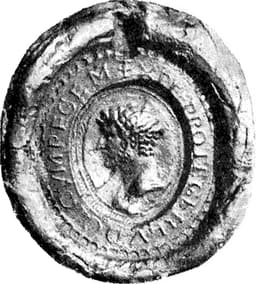
Louis the German
Emperor · Medieval
48.6Total

Ntare I Rushatsi
Emperor · Medieval
45.8Total
Basic Information
Born
806
1500
Died
876
1550
Era
Medieval
Medieval
Nationality
East Francia
Burundi
Occupation
Emperor
Emperor
Civilization
Western
Other
Score Comparison
Military (10%)
30.0
50.0
Political (20%)
54.7
29.3
Influence (20%)
54.1
51.8
Legacy (20%)
47.5
42.5
Leadership (15%)
40.0
55.3
Strategy (15%)
60.0
45.0
TOTAL
48.6
45.8
Louis the German — Complete Timeline
841 AD
Battle of Fontenoy (841)War◆ Major
Louis the German allied with Charles the Bald to defeat their brother Lothair I at the Battle of Fontenoy. This battle was a decisive conflict in the Carolingian civil war that followed the death of Louis the Pious. The victory led to the Treaty of Verdun.
Civil WarBattleCarolingian
Impact: regional
842 AD
Oaths of Strasbourg (842)Political Action◆ Major
Louis the German and Charles the Bald swore mutual allegiance against Lothair I at Strasbourg. The oaths were recorded in both Old High German and Old French, providing early evidence of the linguistic divergence between German and French. This alliance solidified their partnership.
AllianceOathLinguistic Record
Impact: regionalconstructive
843 AD
Treaty of Verdun (843)Political Action
Louis the German, along with his brothers Lothair I and Charles the Bald, signed the Treaty of Verdun, dividing the Carolingian Empire into three kingdoms. Louis received East Francia, comprising roughly modern Germany, laying the foundation for a distinct German kingdom.
TreatyDivision of EmpireEast Francia
Impact: global
844 AD
Campaigns against the SlavsWar◆ Major
Louis the German led multiple campaigns against Slavic tribes along his eastern borders, including the Obotrites, Sorbs, and Bohemians. These campaigns expanded East Frankish influence and secured the frontier, but faced mixed success and frequent rebellions.
ExpansionSlavic WarsFrontier
Impact: regional
876 AD
Death of Louis the GermanOther
Louis the German died on August 28, 876, at Frankfurt. His kingdom of East Francia was divided among his three sons: Carloman, Louis the Younger, and Charles the Fat. His death led to further fragmentation of the Carolingian realm.
DeathSuccessionDivision
Impact: regional
Ntare I Rushatsi — Complete Timeline
1530 AD
Foundation of the Burundian KingdomPolitical Action
Ntare I Rushatsi, according to oral tradition, established the first centralized kingdom in the region of present-day Burundi. He unified several Hutu and Tutsi clans under his rule, creating the foundation of the Burundian monarchy that lasted until the 20th century.
FoundingKingdomUnification
Impact: regionalconstructive
Expert Analysis
Origins
Louis the German (c. 806–876) was a grandson of Charlemagne, born into the Carolingian dynasty. His father, Louis the Pious, inherited the vast Frankish Empire. Louis the German's early life was shaped by dynastic struggles, as his father sought to divide the empire among his sons, leading to repeated rebellions. He was given the sub-kingdom of Bavaria in 817 and later acquired more territories through conflict with his brothers. His education was typical for Carolingian nobility, emphasizing military training and Latin literacy.
Ntare I Rushatsi (c. 16th–17th century) is a semi-legendary figure in Burundian oral tradition. He is believed to have been a member of the Tutsi ethnic group who migrated from the north, possibly from the Karagwe region. His early life is shrouded in myth, but he is credited with unifying various Hutu clans and establishing the first centralized kingdom in the area that is now Burundi. He founded the Ganwa dynasty, which ruled Burundi for centuries.
Rise to Power
Louis the German's rise was tied to the Carolingian civil wars. In 841, he allied with his brother Charles the Bald to defeat their elder brother Lothair I at the Battle of Fontenoy. This victory forced Lothair to negotiate. In 842, the Oaths of Strasbourg solidified the alliance between Louis and Charles, recorded in both Old High German and Old French. The following year, the Treaty of Verdun (843) divided the Carolingian Empire into three kingdoms: West Francia (Charles), Middle Francia (Lothair), and East Francia (Louis). Louis thus became the first king of East Francia, a realm that would evolve into Germany.
Ntare I Rushatsi's rise is based on oral traditions. He is said to have arrived in the region with a group of followers, gaining support from local Hutu chiefs through marriage alliances and military conquest. He established his capital at Bujumbura or other locations. The exact dates are unknown, but he is considered the first king of Burundi, founding a dynasty that lasted until the 20th century.
Leadership & Governance
Louis the German focused on consolidating his kingdom. He led campaigns against Slavic tribes (Obotrites, Sorbs, Bohemians) to secure his eastern borders, scoring 30.0 in military ability. Politically, he scored 54.7, reflecting his skill in managing internal dissent and maintaining unity among the East Frankish nobility. He issued charters and supported the Church, but his governance was largely reactive to external threats and internal rebellions. His strategy score of 60.0 indicates a cautious approach, avoiding overextension.
Ntare I Rushatsi's leadership is credited with founding a centralized monarchy. He established the concept of a divine king (mwami) and created a feudal system where Tutsi nobles controlled land and Hutu peasants worked it. His political score of 29.3 suggests limited institutional innovation, but his influence score of 51.8 reflects his foundational role. He is remembered as a unifier, though his methods likely involved coercion and assimilation of local chiefs.
Triumph & Tragedy
Louis the German's triumph was establishing East Francia as a viable kingdom despite the collapse of Charlemagne's empire. He successfully defended against Viking raids and Slavic incursions. However, his tragedy was the division of his kingdom on his death in 876 among his three sons, leading to further fragmentation. He failed to create a lasting unified German state.
Ntare I Rushatsi's triumph was founding a kingdom that endured for centuries, shaping Burundian identity. His tragedy is the lack of historical records, making his life legendary rather than factual. His legacy also includes a rigid social hierarchy that contributed to later ethnic tensions between Hutu and Tutsi.
Character & Destiny
Louis the German was pragmatic and persistent, often allying with his brother Charles against Lothair. He was a capable administrator but not a visionary. His character led him to focus on short-term stability over long-term unity. Historical assessments note his role in the birth of Germany but criticize his inability to prevent fragmentation.
Ntare I Rushatsi is portrayed as a wise and strong founder in oral traditions. His character is that of a unifier and strategist, though his destiny is intertwined with myth. He is revered as a cultural hero.
Legacy
Louis the German's legacy is the foundation of East Francia, which became the Holy Roman Empire's core and eventually modern Germany. His political score of 54.1 and legacy score of 47.5 reflect his importance as a transitional figure. The Treaty of Verdun set a precedent for the division of large empires, and his German-speaking realm influenced the linguistic and cultural development of Central Europe.
Ntare I Rushatsi's legacy is the Burundian kingdom, which lasted until 1966. His legacy score of 42.5 is lower due to the lack of written records, but his influence on Burundian culture and governance is profound. The Ganwa dynasty he founded ruled for over 400 years.
Conclusion
Louis the German had a greater impact than Ntare I Rushatsi when measured by historical evidence and broader influence. His actions directly contributed to the formation of a major European power, while Ntare's kingdom, though enduring, remained a regional entity. Louis's total score of 48.6 surpasses Ntare's 45.8, reflecting his higher political and strategic scores. While Ntare is a symbol of Burundian unity, Louis's legacy is more concrete and globally significant. Therefore, Louis the German is the more impactful figure.
Rankings
🥇
Louis the GermanLeader
Mil: 30.0Pol: 54.7Inf: 54.1
48.6
🥈
Ntare I Rushatsi
Mil: 50.0Pol: 29.3Inf: 51.8
45.8
+2.8 behind
How This Comparison Works
Algorithm
Each figure is scored on 6 dimensions (0—100 scale) based on structured historical data: Military (10%), Political (20%), Influence (20%), Legacy (20%), Leadership (15%), Strategy (15%). The weighted total produces the final ranking.
Data Sources
Scores are computed from structured sub-indicators in the database. Scale factors adjust for era (Ancient ×0.85, Modern ×1.0) and civilization size (Eastern ×1.05, Other ×0.80) to account for differences in population and military scale.
Maximum 3 Figures
Comparisons are limited to 2—3 figures to ensure readability and statistical meaningfulness.
Error Margins
±5 points per dimension — Sub-scores are derived from historical records with inherent uncertainty. Two figures within 5 points on a dimension should be considered roughly equivalent in that area.
Total Score Accuracy
±3 points overall — The weighted combination of 6 dimensions produces a total score with approximately ±3 points of uncertainty. Differences of less than 3 points are not statistically significant— the figures are effectively tied.
Known Limitations
- Historical records are incomplete and uneven across civilizations
- Figures from oral-tradition societies may be underrepresented
- Occupation labels can misclassify multi-role figures
- Scores measure capability and impact, not moral character
- Quantitative scoring is a comparison tool, not absolute truth
Capability Radar
Military (10%) — Battles & Warfare
Battles
45
15
Win Rate
50
15
Expansion
35
25
Political (20%) — Governance & Reform
Reform
40
20
Diplomacy
55
20
Economy
45
15
Influence (20%) — Cultural & Global Reach
Cultural
35
30
Global
30
10
Legacy (20%) — Historical Impact
Historical
45
30
Longevity
40
25
Leadership (15%) — Power & Stability
Tenure
65
30
Stability
50
20
Strategy (15%) — Tactics & Innovation
Strategy
45
10
Tactics
40
10
Reform
30
10
Similar Comparisons
Comments & Discussion
No comments yet. Be the first to share your thoughts!