Loading...
Chlothar I vs Marquis Wen of Wei
Marquis Wen of Wei leads by 2.8 pts · 2 figures compared
…
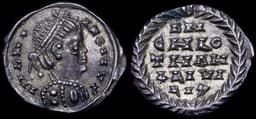
Chlothar I
Emperor · Ancient
48.0Total

Marquis Wen of Wei
Emperor · Ancient
50.8Total
Basic Information
Born
497
-445
Died
561
-396
Era
Ancient
Ancient
Nationality
Frankish Empire
China
Occupation
Emperor
Emperor
Civilization
Western
Eastern
Score Comparison
Military (10%)
55.0
47.5
Political (20%)
40.8
45.0
Influence (20%)
49.4
54.1
Legacy (20%)
43.3
48.3
Leadership (15%)
65.0
53.2
Strategy (15%)
35.0
57.5
TOTAL
48.0
50.8
Chlothar I — Complete Timeline
531 AD
Conquest of the ThuringiansWar◆ Major
Chlothar I, alongside his brothers Theuderic I and Childebert I, led a campaign against the Thuringian kingdom. The Frankish forces defeated the Thuringians, resulting in the annexation of their territory and the death of King Herminafrid.
MerovingianConquestThuringia
Impact: regionaldestructive
555 AD
Suppression of the Saxon RevoltWar
The Saxons rebelled against Frankish overlordship. Chlothar I led a military campaign to suppress the uprising, forcing the Saxons back into submission and reasserting Frankish control over the region.
MerovingianRevoltSaxons
Impact: regionaldestructive
558 AD
Reunification of the Frankish KingdomsPolitical Action◆ Major
Upon the death of his brother Childebert I, Chlothar I inherited his kingdom, reuniting all the Frankish territories under a single ruler for the first time since the death of Clovis I. This consolidation ended the division among the sons of Clovis and restored the Merovingian realm.
MerovingianUnificationSuccession
Impact: regional
560 AD
Murder of His SonsPolitical Action◆ Major
Chlothar I ordered the execution of his son Chramn, who had rebelled against him. Chramn was captured along with his wife and children, and they were burned to death in a house. This act eliminated a rival and secured Chlothar's sole rule.
MerovingianDynastic ConflictExecution
Impact: nationaltragic
Marquis Wen of Wei — Complete Timeline
422 BC
Appointed Li Kui as ChancellorReform◆ Major
Marquis Wen of Wei appointed the Legalist reformer Li Kui as chancellor. Li Kui implemented the 'Book of Law' (Fajing), a comprehensive legal code that became a model for later Qin law, and promoted agricultural reforms to strengthen the state's economy and military.
Legalist ReformLaw CodeAgriculture
Impact: nationalconstructive
420 BC
Patronized Confucian scholarsCultural◆ Major
Marquis Wen established an academy at the Wei court, attracting Confucian scholars such as Zixia, a disciple of Confucius. This patronage helped spread Confucian teachings in Wei and contributed to the cultural flourishing of the state during his reign.
ConfucianismPatronageEducation
Impact: nationalconstructive
412 BC
Appointed Wu Qi as generalPolitical Action◆ Major
Marquis Wen appointed the military strategist Wu Qi to command Wei's armies. Wu Qi reformed the army, introduced new tactics, and led successful campaigns against Qin, capturing the Hexi region and significantly expanding Wei's territory.
Military ReformExpansionWu Qi
Impact: regionalconstructive
405 BC
Defeated Qi at the Battle of GuilingWar◆ Major
Wei forces under Wu Qi defeated a Qi army at Guiling, securing Wei's dominance over the central plains. This victory established Wei as the leading state during the early Warring States period.
BattleWei HegemonyMilitary
Impact: regional
Expert Analysis
Origins
Chlothar I (c. 497–561) was a son of Clovis I, the founder of the Frankish Merovingian dynasty. He grew up in a fractured kingdom divided among his brothers after Clovis's death in 511. His early life was shaped by the constant warfare and political maneuvering typical of the Merovingian court. He received little formal education but was trained in military command and Frankish traditions.
Marquis Wen of Wei (died 396 BCE), personal name Wei Si, was the ruler of the state of Wei during the Warring States period in China. He ascended to the throne around 445 BCE. Unlike Chlothar, Wen was deeply influenced by the intellectual currents of his time, including Confucianism and Legalism. He actively sought out scholars and reformers to strengthen his state.
Rise to Power
Chlothar I became king of Soissons in 511 upon Clovis's death. Over the next decades, he expanded his territory through a combination of military campaigns and inheritance. His major turning point came in 558 when his brother Childebert I died without heirs, allowing Chlothar to inherit his kingdom and reunite all Frankish lands under one ruler for the first time since Clovis. This reunification was achieved more through political luck than military conquest.
Marquis Wen's rise was more deliberate. He inherited a relatively small and weak state but quickly demonstrated ambition. He appointed Li Kui as chancellor around 422 BCE, initiating a series of Legalist reforms that centralized administration and codified laws. He also appointed the military strategist Wu Qi, who reformed the army and led successful campaigns. By the time of his death, Wei had become the dominant state in the central plains.
Leadership & Governance
Chlothar I ruled as a typical Merovingian king: his authority rested on personal loyalty, military prowess, and the distribution of plunder. He maintained control by eliminating rivals, including his own son Chramn, whom he had executed after a rebellion. His governance was ad hoc, with no systematic reforms. His political score of 40.8 reflects this lack of institutional development.
Marquis Wen, in contrast, was a reformer. He implemented Li Kui's 'Book of Law' (Fajing), China's first comprehensive legal code, which standardized punishments and rewards. He also established an academy that attracted Confucian scholars like Zixia, promoting education and meritocracy. His leadership score of 53.2 and political score of 45.0 reflect his systematic approach, though his state ultimately declined after his death due to reliance on individual talent rather than enduring institutions.
Triumph & Tragedy
Chlothar's greatest triumph was reuniting the Frankish kingdoms in 558, a feat that would not be repeated for decades. He also successfully suppressed the Saxon revolt and conquered Thuringia. However, his greatest tragedy was the internal strife within his own family. He executed his son Chramn, along with his wife and children, after a rebellion. This violence underscored the fragility of Merovingian succession. His military score of 55.0 is modest, reflecting limited strategic innovation.
Marquis Wen's triumphs include the appointment of Wu Qi, who led Wei to victory at the Battle of Guiling (c. 354 BCE) against Qi, establishing Wei's hegemony. His patronage of Confucian scholars spread cultural influence. However, his tragedy was that his reforms were not institutionalized. After his death, Wei's power waned as other states adopted similar Legalist policies. His strategy score of 57.5 indicates competent planning, but his overall impact was constrained by the era's instability.
Character & Destiny
Chlothar I was pragmatic and ruthless. He did not hesitate to kill family members to secure his position. This trait allowed him to outlast his brothers but also sowed the seeds of future conflict. Historical assessments note that his reign was marked by continuous violence and limited cultural achievement. His total score of 48.0 reflects a leader who was effective in the short term but left no lasting institutions.
Marquis Wen was intellectually curious and open to new ideas. He actively sought out the best minds of his time, which allowed Wei to punch above its weight. However, his reliance on individual talent meant that his state's success was personal rather than systemic. His total score of 50.8 is slightly higher, but his legacy is also mixed because Wei did not survive the Warring States period.
Legacy
Chlothar I's legacy is minimal. The Merovingian dynasty continued, but the reunification he achieved was temporary. After his death, the kingdom was divided among his sons, leading to more civil war. He is remembered primarily as one of the many Frankish kings who fought for supremacy. His influence score of 49.4 reflects his limited long-term impact.
Marquis Wen's legacy is more significant. His patronage of Li Kui and Wu Qi contributed to the development of Legalist thought, which later influenced the Qin unification of China. The 'Book of Law' served as a model for later codes. His academy helped spread Confucianism during the Warring States period. His influence score of 54.1 is the highest of the two, indicating a greater lasting impact.
Conclusion
While Chlothar I briefly reunited the Frankish kingdoms, his achievements were ephemeral and based on violence and inheritance. Marquis Wen of Wei, with a total score of 50.8 compared to Chlothar's 48.0, had a greater impact because his reforms influenced Chinese political thought and governance for centuries. Wen's deliberate cultivation of Legalist and Confucian ideas created a model that later dynasties would emulate. Chlothar's reign, by contrast, was a typical Merovingian saga of bloodshed and division. Therefore, Marquis Wen of Wei is the more significant historical figure.
Rankings
🥇
Marquis Wen of WeiLeader
Mil: 47.5Pol: 45.0Inf: 54.1
50.8
🥈
Chlothar I
Mil: 55.0Pol: 40.8Inf: 49.4
48.0
+2.8 behind
How This Comparison Works
Algorithm
Each figure is scored on 6 dimensions (0—100 scale) based on structured historical data: Military (10%), Political (20%), Influence (20%), Legacy (20%), Leadership (15%), Strategy (15%). The weighted total produces the final ranking.
Data Sources
Scores are computed from structured sub-indicators in the database. Scale factors adjust for era (Ancient ×0.85, Modern ×1.0) and civilization size (Eastern ×1.05, Other ×0.80) to account for differences in population and military scale.
Maximum 3 Figures
Comparisons are limited to 2—3 figures to ensure readability and statistical meaningfulness.
Error Margins
±5 points per dimension — Sub-scores are derived from historical records with inherent uncertainty. Two figures within 5 points on a dimension should be considered roughly equivalent in that area.
Total Score Accuracy
±3 points overall — The weighted combination of 6 dimensions produces a total score with approximately ±3 points of uncertainty. Differences of less than 3 points are not statistically significant— the figures are effectively tied.
Known Limitations
- Historical records are incomplete and uneven across civilizations
- Figures from oral-tradition societies may be underrepresented
- Occupation labels can misclassify multi-role figures
- Scores measure capability and impact, not moral character
- Quantitative scoring is a comparison tool, not absolute truth
Capability Radar
Military (10%) — Battles & Warfare
Battles
40
45
Win Rate
55
50
Expansion
50
50
Political (20%) — Governance & Reform
Reform
30
70
Diplomacy
45
60
Economy
35
65
Influence (20%) — Cultural & Global Reach
Cultural
20
55
Global
15
30
Legacy (20%) — Historical Impact
Historical
35
60
Longevity
25
50
Leadership (15%) — Power & Stability
Tenure
60
65
Stability
40
55
Strategy (15%) — Tactics & Innovation
Strategy
45
45
Tactics
35
40
Reform
20
60
Similar Comparisons
Comments & Discussion
No comments yet. Be the first to share your thoughts!