Loading...
Alexios I Komnenos vs Chlothar I
Alexios I Komnenos leads by 30.4 pts · 2 figures compared
…
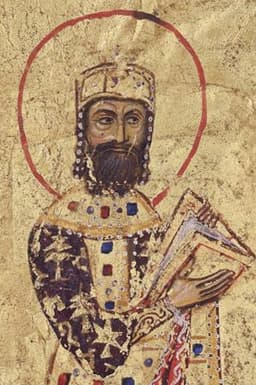
Alexios I Komnenos
Emperor · Medieval
78.4Total
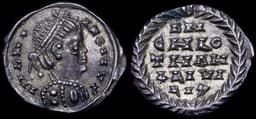
Chlothar I
Emperor · Ancient
48.0Total
Basic Information
Born
1048
497
Died
1118
561
Era
Medieval
Ancient
Nationality
Byzantine Empire
Frankish Empire
Occupation
Emperor
Emperor
Civilization
Western
Western
Score Comparison
Military (10%)
61.7
55.0
Political (20%)
78.0
40.8
Influence (20%)
88.0
49.4
Legacy (20%)
80.0
43.3
Leadership (15%)
78.0
65.0
Strategy (15%)
68.0
35.0
TOTAL
78.4
48.0
Alexios I Komnenos — Complete Timeline
1081 AD
Battle of DyrrhachiumWar◆ Major
Alexios I Komnenos was defeated by the Norman army under Robert Guiscard at Dyrrhachium. The Byzantine forces were routed, and Alexios barely escaped. This loss allowed the Normans to occupy much of the western Balkans, though Alexios later recovered some territory.
Norman InvasionDefeatBalkans
Impact: regionaltragic
1090 AD
Reforms of the Byzantine Military and EconomyReform◆ Major
Alexios I implemented a series of reforms to restore Byzantine power. He reorganized the army by relying more on foreign mercenaries, reformed the currency (the hyperpyron), and granted tax exemptions to the Church. These measures stabilized the empire after decades of decline.
Military ReformEconomic ReformKomnenian Restoration
Impact: nationalconstructive
1095 AD
Appeal to the West: Council of PiacenzaPolitical Action
Alexios I sent envoys to Pope Urban II at the Council of Piacenza, requesting military aid against the Seljuk Turks. This appeal contributed to Urban's call for the First Crusade at the Council of Clermont later that year, initiating the Crusader movement.
First CrusadePope Urban IISeljuk Turks
Impact: global
1097 AD
First Crusade: Siege of NicaeaWar◆ Major
Alexios I cooperated with the Crusader army to besiege and capture Nicaea from the Seljuk Turks. The city was surrendered to Byzantine control, and Alexios used the Crusaders to recover key territories in Anatolia, though tensions later arose over land claims.
First CrusadeNicaeaByzantine-Crusader Relations
Impact: regionalconstructive
Chlothar I — Complete Timeline
531 AD
Conquest of the ThuringiansWar◆ Major
Chlothar I, alongside his brothers Theuderic I and Childebert I, led a campaign against the Thuringian kingdom. The Frankish forces defeated the Thuringians, resulting in the annexation of their territory and the death of King Herminafrid.
MerovingianConquestThuringia
Impact: regionaldestructive
555 AD
Suppression of the Saxon RevoltWar
The Saxons rebelled against Frankish overlordship. Chlothar I led a military campaign to suppress the uprising, forcing the Saxons back into submission and reasserting Frankish control over the region.
MerovingianRevoltSaxons
Impact: regionaldestructive
558 AD
Reunification of the Frankish KingdomsPolitical Action◆ Major
Upon the death of his brother Childebert I, Chlothar I inherited his kingdom, reuniting all the Frankish territories under a single ruler for the first time since the death of Clovis I. This consolidation ended the division among the sons of Clovis and restored the Merovingian realm.
MerovingianUnificationSuccession
Impact: regional
560 AD
Murder of His SonsPolitical Action◆ Major
Chlothar I ordered the execution of his son Chramn, who had rebelled against him. Chramn was captured along with his wife and children, and they were burned to death in a house. This act eliminated a rival and secured Chlothar's sole rule.
MerovingianDynastic ConflictExecution
Impact: nationaltragic
Expert Analysis
Alexios I Komnenos vs Chlothar I
# The Emperor and the Barbarian King
On a dusty battlefield in 1081, Alexios I Komnenos watched his elite Varangian Guard—Norsemen armed with massive battle-axes—charge forward against the Norman knights of Robert Guiscard. Minutes later, they lay dead in the mud, their charge broken by a feigned retreat. The Byzantine emperor, barely a year on the throne, fled for his life. Nearly five centuries earlier and a thousand miles to the west, another ruler faced a different kind of crisis: Chlothar I, a Frankish king in his fifties, ordered his own son burned alive along with his wife and children for the crime of rebellion. Two rulers, two worlds, yet both faced the same fundamental question: how does a leader hold power when everything—foreign invaders, ambitious relatives, the very structure of society—threatens to tear it apart?
Origins
Alexios Komnenos was born into the Byzantine military aristocracy at a time when the empire was bleeding from every border. The Battle of Manzikert in 1071 had shattered the imperial army, and Turkic tribes roamed deep into Anatolia. His family had produced emperors before, but the throne had become a revolving door—seven emperors in twenty years. Alexios grew up in a world where survival meant mastering the art of the possible, where the empire was a corpse that needed resurrection.
Chlothar I came from a very different world. Born in 497, he was the youngest son of Clovis I, the Frankish king who had converted to Christianity and unified the Gallo-Roman population with his Germanic warriors. The Merovingian kingdom was not a state in the Byzantine sense—it was a personal possession, divided among sons like a family estate. Chlothar’s education was that of a warrior-chieftain: the sword, the hunt, the feud. His world was one of blood loyalty and blood vengeance, where a king’s power was measured in the number of warriors who would die for him—or kill for him.
Rise to Power
Alexios did not seize the throne through a glorious coup. He and his older brother Isaac led a rebellion against the incompetent Emperor Nikephoros III in 1081, but only after careful maneuvering. They bribed the army, won over the clergy, and marched on Constantinople with the appearance of reluctant saviors. Alexios was crowned at age thirty-three, but his position was precarious: the treasury was empty, the army was a skeleton, and the Normans were already landing in the Balkans.
Chlothar’s rise was simpler and bloodier. Upon Clovis’s death in 511, the kingdom was divided among four sons. Chlothar spent decades in a brutal game of fraternal chess—allying with one brother against another, then betraying the ally. He conquered Thuringia alongside his brothers in 531, each taking a share of the spoils. When one brother died, Chlothar murdered his nephews to claim their lands. When another died, he bribed the nobles to reject his brother’s son. By 558, after nearly half a century of scheming, Chlothar stood alone as the sole ruler of all Francia.
Leadership & Governance
The contrast in their ruling styles is stark. Alexios governed through diplomacy and institutional reform. His military reorganization, begun in 1090, replaced the unreliable native army with foreign mercenaries—Varangians, Turks, Normans—bound by contracts rather than loyalty. He granted land grants (*pronoia*) to aristocrats in exchange for military service, creating a feudal-like system that stabilized the empire at the cost of future centralization. His economic reforms stabilized the currency and revived trade.
Chlothar ruled through terror and personal authority. The Merovingian state had no bureaucracy, no tax system, no standing army beyond the king’s war band. When the Saxons rebelled in 555, Chlothar crushed them with overwhelming force and imposed a brutal tribute: every year, the Saxons had to deliver 500 cows to the Frankish court. When his own son Chramn rebelled, Chlothar had him executed—along with his wife and children—without hesitation. This was not cruelty for its own sake; it was the logic of a system where a king’s power was only as strong as his willingness to shed blood.
Alexios, by contrast, was a master of soft power. When the First Crusade arrived at Constantinople in 1097, he did not fight them—he charmed them, extracted oaths of fealty, and guided them toward Nicaea, which he then persuaded the Crusaders to surrender to him rather than plunder. The city fell without a sack, and Alexios gained both a victory and a reputation.
Triumph & Tragedy
Alexios’s greatest triumph was surviving. He held the empire together through the Norman invasions, the Pecheneg raids, and the chaos of the First Crusade. The Siege of Nicaea in 1097 was a masterpiece of political warfare: he used the Crusaders as a battering ram while ensuring the city returned to Byzantine control. But his greatest tragedy was that the Crusaders he summoned would eventually turn on Byzantium. The Fourth Crusade, a century after his death, would sack Constantinople itself.
Chlothar’s triumph was the reunification of Francia—but it lasted only three years. When he died in 561, his four surviving sons divided the kingdom again, plunging it into another half-century of civil war. His tragedy was that his entire life’s work—the bloody accumulation of power—collapsed the moment he stopped breathing.
Character & Destiny
Alexios was a pragmatist. He wrote in his memoirs that he “preferred to achieve by persuasion what others attempted by force.” His personality was shaped by the Byzantine court’s endless intrigues: he was patient, calculating, and capable of deep deception. He knew that the empire could not be saved by the sword alone—it needed alliances, trade, and the careful manipulation of enemies against each other.
Chlothar was a survivor. He outlived all his brothers and most of his children. He was ruthless but not needlessly cruel—the murder of his son was a political necessity, not a personal pleasure. His world was simpler than Alexios’s: loyalty was bought with gold and fear, and power was a zero-sum game. There was no room for compromise because there was no state to compromise for—only the king’s will.
Legacy
Alexios founded the Komnenian dynasty, which restored Byzantine power for a century. His reforms shaped the empire’s military and economy for generations. He is remembered as a savior who bought time—time that ultimately ran out. His appeal to the West in 1095 set in motion forces he could not control, and the Crusades became a curse as much as a blessing.
Chlothar is a footnote—the Merovingian who briefly united the Franks before the dynasty decayed into the “do-nothing kings.” His legacy is not a restored empire but a cautionary tale: power based on personality alone dies with the person.
Conclusion
Standing at the edge of their worlds, Alexios and Chlothar faced the same problem—how to rule in an age of chaos—but their solutions were shaped by the tools their civilizations gave them. Alexios had a bureaucracy, a church, a thousand years of Roman law to lean on. Chlothar had only his sword and his reputation. One built a dynasty; the other built a funeral pyre for his own son. In the end, both did what they had to do. The question is not who was better—it is who had a better world to work with. And that answer, perhaps, is the cruelest judgment of all.
Rankings
🥇
Alexios I KomnenosLeader
Mil: 61.7Pol: 78.0Inf: 88.0
78.4
🥈
Chlothar I
Mil: 55.0Pol: 40.8Inf: 49.4
48.0
+30.4 behind
How This Comparison Works
Algorithm
Each figure is scored on 6 dimensions (0—100 scale) based on structured historical data: Military (10%), Political (20%), Influence (20%), Legacy (20%), Leadership (15%), Strategy (15%). The weighted total produces the final ranking.
Data Sources
Scores are computed from structured sub-indicators in the database. Scale factors adjust for era (Ancient ×0.85, Modern ×1.0) and civilization size (Eastern ×1.05, Other ×0.80) to account for differences in population and military scale.
Maximum 3 Figures
Comparisons are limited to 2—3 figures to ensure readability and statistical meaningfulness.
Error Margins
±5 points per dimension — Sub-scores are derived from historical records with inherent uncertainty. Two figures within 5 points on a dimension should be considered roughly equivalent in that area.
Total Score Accuracy
±3 points overall — The weighted combination of 6 dimensions produces a total score with approximately ±3 points of uncertainty. Differences of less than 3 points are not statistically significant— the figures are effectively tied.
Known Limitations
- Historical records are incomplete and uneven across civilizations
- Figures from oral-tradition societies may be underrepresented
- Occupation labels can misclassify multi-role figures
- Scores measure capability and impact, not moral character
- Quantitative scoring is a comparison tool, not absolute truth
Capability Radar
Military (10%) — Battles & Warfare
Battles
75
40
Win Rate
70
55
Expansion
60
50
Political (20%) — Governance & Reform
Reform
85
30
Diplomacy
90
45
Economy
70
35
Influence (20%) — Cultural & Global Reach
Cultural
70
20
Global
75
15
Legacy (20%) — Historical Impact
Historical
85
35
Longevity
80
25
Leadership (15%) — Power & Stability
Tenure
80
60
Stability
75
40
Strategy (15%) — Tactics & Innovation
Strategy
85
45
Tactics
80
35
Reform
75
20
Similar Comparisons
Comments & Discussion
CRISIS MANAGER MAXIMUS6/16/2026
People comparing a Byzantine emperor who actually restored an empire to a Merovingian fratricide machine? Come on. Alexios faced existential threats from Normans, Pechenegs, and Turks, yet reformed the military, forged alliances, and sparked the Komnenian restoration. Chlothar? He inherited a stable kingdom from his father Clovis and spent decades murdering his own relatives. Burning your son alive isn't crisis management—it's animal cruelty with a crown. Alexios earned his "Savior of the Empire
数字铁幕6/16/2026
拿一个重建帝国的拜占庭皇帝和只会搞家庭屠杀的墨洛温国王比?搞笑。亚历克修斯面对诺曼人、佩切涅格人、突厥人三重围攻,硬是改革军制、编织外交网,开启了科穆宁中兴。克洛塔尔一世呢?他继承老爹克洛维的稳定王国,五十多岁了还把亲儿子全家活活烧死。这不是治国,这是变态碎尸。亚历克修斯靠的是战略头脑挽救了破碎的帝国,克洛塔尔只是命长熬死了所有亲戚。把这种人放一起比较,简直是侮辱拜占庭的余晖。
THE AXE FALLS ON HISTORY6/16/2026
Let's cut through the romanticism: Chlothar's brutality reflects a world where Roman civility had decayed into survival-of-the-fittest chaos. Alexios operated within a sophisticated bureaucracy and Christian ideology that demanded he legitimize power through law, not pyres. The real comparison isn't moral—it's institutional. Alexios had the Senate, the Church, the tax system. Chlothar had war bands and blood oaths. So when Alexios failed, he negotiated; when Chlothar failed, he burned. Different
铁血考据派6/16/2026
说克洛塔尔野蛮?先看看你家亚历克修斯玩的花样:雇佣十字军去耶路撒冷,却暗中煽动他们洗劫匈牙利。这叫权谋?这叫借刀杀人的老油条。克洛塔尔至少是真刀真枪跟兄弟打架、跟撒克逊人打仗。他们所处的权力逻辑根本不同:拜占庭是用金钱、阴谋、外交捏合帝国;法兰克王国是用暴力、血缘、婚姻堆积王朝。别用现代道德批判中世纪铁腕。真要比,亚历克修斯才是那个把腐败当成制度用的阴险政客,克洛塔尔反而有点让人看得起的直率。
CLASSICAL SKEPTIC6/16/2026
The comparison misses the fundamental difference: Alexios faced systemic collapse requiring reconstruction of imperial institutions, while Chlothar operated in