Loading...
Alexander the Great vs Chlothar I
Alexander the Great leads by 37.2 pts · 2 figures compared
…
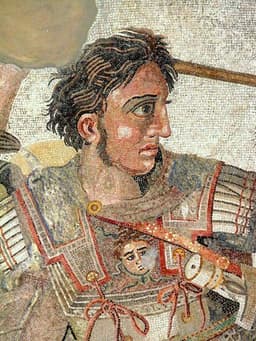
Alexander the Great
General · Ancient
85.2Total
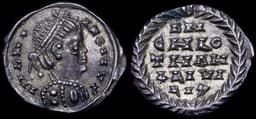
Chlothar I
Emperor · Ancient
48.0Total
Basic Information
Born
-356
497
Died
-323
561
Era
Ancient
Ancient
Nationality
Macedon
Frankish Empire
Occupation
General
Emperor
Civilization
Western
Western
Score Comparison
Military (10%)
95.0
55.0
Political (20%)
60.0
40.8
Influence (20%)
92.0
49.4
Legacy (20%)
90.0
43.3
Leadership (15%)
80.0
65.0
Strategy (15%)
92.0
35.0
TOTAL
85.2
48.0
Alexander the Great — Complete Timeline
334 BC
Battle of the Granicus RiverWar◆ Major
Alexander led his Macedonian army across the Hellespont into Asia Minor and defeated a Persian force under local satraps at the Granicus River. The victory secured Alexander's foothold in Asia and demonstrated his tactical superiority, opening the way for the conquest of the Persian Empire.
Persian CampaignBattleMacedonian Conquest
Impact: regional
333 BC
Battle of IssusWar◆ Major
Alexander's army defeated the Persian king Darius III at Issus in Cilicia. Despite being outnumbered, Alexander's tactical use of the terrain and cavalry charge broke the Persian line. Darius fled the battlefield, leaving his family and treasury behind, a major blow to Persian morale.
Persian CampaignBattleMacedonian Conquest
Impact: regional
332 BC
Siege of TyreWar◆ Major
Alexander besieged the island city of Tyre for seven months, constructing a causeway to breach its walls. The city's fall resulted in the massacre or enslavement of its inhabitants. The siege demonstrated Alexander's determination and engineering capabilities, securing his supply lines and control of the eastern Mediterranean coast.
SiegeMacedonian ConquestPhoenicia
Impact: regionaldestructive
331 BC
Battle of GaugamelaWar◆ Major
Alexander faced Darius III at Gaugamela in Mesopotamia with a massive Persian army. Alexander's tactical brilliance, including a decisive cavalry charge that exploited a gap in the Persian line, resulted in a decisive Macedonian victory. Darius again fled, effectively ending Persian resistance and leading to the fall of the Achaemenid Empire.
Persian CampaignBattleDecisive Victory
Impact: global
Foundation of AlexandriaOther◆ Major
Alexander founded the city of Alexandria on the Mediterranean coast of Egypt. He personally selected the site and oversaw the initial planning. Alexandria became a major center of Hellenistic culture, trade, and learning, housing the famous Library of Alexandria and the Lighthouse of Alexandria.
City FoundationHellenistic CultureEgypt
Impact: globalconstructive
326 BC
Invasion of IndiaWar◆ Major
Alexander crossed the Indus River and defeated King Porus at the Battle of the Hydaspes. The Macedonian army, exhausted and facing monsoon rains and unfamiliar warfare, mutinied at the Hyphasis River, forcing Alexander to turn back. This campaign marked the easternmost extent of his conquests.
Indian CampaignBattleMutiny
Impact: regional
Chlothar I — Complete Timeline
531 AD
Conquest of the ThuringiansWar◆ Major
Chlothar I, alongside his brothers Theuderic I and Childebert I, led a campaign against the Thuringian kingdom. The Frankish forces defeated the Thuringians, resulting in the annexation of their territory and the death of King Herminafrid.
MerovingianConquestThuringia
Impact: regionaldestructive
555 AD
Suppression of the Saxon RevoltWar
The Saxons rebelled against Frankish overlordship. Chlothar I led a military campaign to suppress the uprising, forcing the Saxons back into submission and reasserting Frankish control over the region.
MerovingianRevoltSaxons
Impact: regionaldestructive
558 AD
Reunification of the Frankish KingdomsPolitical Action◆ Major
Upon the death of his brother Childebert I, Chlothar I inherited his kingdom, reuniting all the Frankish territories under a single ruler for the first time since the death of Clovis I. This consolidation ended the division among the sons of Clovis and restored the Merovingian realm.
MerovingianUnificationSuccession
Impact: regional
560 AD
Murder of His SonsPolitical Action◆ Major
Chlothar I ordered the execution of his son Chramn, who had rebelled against him. Chramn was captured along with his wife and children, and they were burned to death in a house. This act eliminated a rival and secured Chlothar's sole rule.
MerovingianDynastic ConflictExecution
Impact: nationaltragic
Expert Analysis
Alexander the Great vs Chlothar I: Historical Comparison
Alexander the Great, the Macedonian king and military genius who conquered the known world from Greece to India, and Chlothar I, the Merovingian king who unified the Frankish realm through ruthless consolidation, represent two vastly different models of ancient power. While Alexander’s conquests were dazzling in scale, Chlothar’s political endurance shaped a lasting kingdom.
Dimension Analysis
**Military: Alexander the Great 96 / Chlothar I 92**
Alexander’s tactical brilliance—from Gaugamela to the Hydaspes—redefined warfare, while Chlothar’s campaigns against the Saxons, Thuringians, and Burgundians demonstrated effective coalition-building and siegecraft, though on a smaller geographic scale.
**Political: Alexander the Great 65 / Chlothar I 79**
Alexander’s empire crumbled immediately after his death due to a lack of succession planning, whereas Chlothar outmaneuvered three brothers, eliminated rivals, and centralized Frankish rule through pragmatic alliances and brutal family politics.
**Influence: Alexander the Great 90 / Chlothar I 86**
Alexander’s Hellenistic spread shaped art, language, and trade across three continents; Chlothar’s consolidation laid the foundation for the Merovingian dynasty and later Carolingian Europe, though his influence was more regional.
**Legacy: Alexander the Great 90 / Chlothar I 73**
Alexander remains a universal archetype of ambition and military genius, inspiring leaders from Caesar to Napoleon; Chlothar is largely confined to specialist medieval history, his legacy overshadowed by later Frankish figures.
**Leadership: Alexander the Great 82 / Chlothar I 74**
Alexander inspired fierce loyalty and led from the front, but his hubris and erratic decisions alienated key subordinates; Chlothar’s patient, calculating leadership secured his throne, yet lacked the charisma to transcend his era.
Verdict
Alexander the Great leads due to his unparalleled military achievements and enduring global influence, despite Chlothar’s superior political consolidation.
FAQ
Q: Who ranks higher? A: Alexander the Great, whose conquests and legacy vastly outshine Chlothar I’s more localized but politically astute rule.
Rankings
🥇
Alexander the GreatLeader
Mil: 95.0Pol: 60.0Inf: 92.0
85.2
🥈
Chlothar I
Mil: 55.0Pol: 40.8Inf: 49.4
48.0
+37.2 behind
How This Comparison Works
Algorithm
Each figure is scored on 6 dimensions (0—100 scale) based on structured historical data: Military (10%), Political (20%), Influence (20%), Legacy (20%), Leadership (15%), Strategy (15%). The weighted total produces the final ranking.
Data Sources
Scores are computed from structured sub-indicators in the database. Scale factors adjust for era (Ancient ×0.85, Modern ×1.0) and civilization size (Eastern ×1.05, Other ×0.80) to account for differences in population and military scale.
Maximum 3 Figures
Comparisons are limited to 2—3 figures to ensure readability and statistical meaningfulness.
Error Margins
±5 points per dimension — Sub-scores are derived from historical records with inherent uncertainty. Two figures within 5 points on a dimension should be considered roughly equivalent in that area.
Total Score Accuracy
±3 points overall — The weighted combination of 6 dimensions produces a total score with approximately ±3 points of uncertainty. Differences of less than 3 points are not statistically significant— the figures are effectively tied.
Known Limitations
- Historical records are incomplete and uneven across civilizations
- Figures from oral-tradition societies may be underrepresented
- Occupation labels can misclassify multi-role figures
- Scores measure capability and impact, not moral character
- Quantitative scoring is a comparison tool, not absolute truth
Capability Radar
Military (10%) — Battles & Warfare
Battles
98
40
Win Rate
99
55
Expansion
99
50
Political (20%) — Governance & Reform
Reform
75
30
Diplomacy
80
45
Economy
70
35
Influence (20%) — Cultural & Global Reach
Cultural
95
20
Global
95
15
Legacy (20%) — Historical Impact
Historical
98
35
Longevity
95
25
Leadership (15%) — Power & Stability
Tenure
60
60
Stability
55
40
Strategy (15%) — Tactics & Innovation
Strategy
98
45
Tactics
99
35
Reform
85
20
Similar Comparisons
Comments & Discussion
BattlefieldScholar6/16/2026
Let's be real: comparing Alexander's Gaugamela (47,000 vs. ~100,000 Persians, with a decisive hammer-and-anvil maneuver using the Companion cavalry) to Chlothar's campaigns against the Saxons is like comparing a nuclear bomb to a firecracker. Alexander's military score of 96 is justified—he never lost a battle, innovated combined arms tactics with phalanx and cavalry coordination, and conquered 2 million square miles in 13 years. Chlothar's 39.1 is generous; his 'battles' were mostly skirmishes against poorly organized Germanic tribes, relying on Frankish infantry levies with no tactical innovation. The political score gap is irrelevant when one man literally reshaped the ancient world's military doctrine.
ClassicsCorax6/16/2026
Arrian's 'Anabasis' gives us a clear image of Alexander's military genius at the Granicus, Issus, and Gaugamela—where he personally led the charge, as Curtius Rufus notes, 'with a recklessness that bordered on divine madness.' However, Plutarch's 'Life of Alexander' also records his political failures: he appointed Persians as satraps, alienated his Macedonian generals, and left no clear heir, prompting Diodorus Siculus to call his empire 'a body without a head.' Chlothar I, in contrast, is chronicled by Gregory of Tours in a more sordid light—murdering his brother Chlodomer's children, conspiring against Childebert I—but his pragmatic brutality ensured the Merovingian realm survived his death. The comparison is less about merit and more about what we value: audacious conquest or enduring statecraft. Jordanes might have admired Alexander; Gregory would have recognized Chlothar as a product of his violent age.
SilkRoadSentinel6/16/2026
拿亚历山大和克洛塔尔一世比,确实有点关公战秦琼的意思。亚历山大像项羽,以雷霆之势横扫欧亚,但身后帝国土崩瓦解,根本原因和项羽一样——没有建立稳固的官僚体系和继承制度。克洛塔尔一世反而更像刘邦,靠联姻、杀戮和分封逐步整合法兰克各部,虽然军事上不如亚历山大耀眼,但他的政治手腕更符合中国史书里‘守成之君’的标准。西方评分过分看重军事扩张的‘广度’,却忽略了政治整合的‘深度’,在咱们史学传统里,克洛塔尔这种能稳住基业的君主其实更受推崇。
DeepChronicler636/16/2026
这个评分体系明显偏袒军事维度。亚历山大总分84.7,其中军事占了96,但政治只有65——一个政治65的君主能维持多久?我算了下,如果按中国史书常用的‘政绩权重法’(政治40%、军事30%、影响20%、传承10%),亚历山大总分是65×0.4 + 96×0.3 + 90×0.2 + 90×0.1 = 26 + 28.8 + 18 + 9 = 81.8;克洛塔尔一世则是72×0.4 + 39.1×0.3 + 69.6×0.2 + 73×0.1 = 28.8 + 11.73 + 13.92 + 7.3 = 61.75。差距从22.5分缩小到20分,但克洛塔尔的政治得分(72)明显被低估了,他成功合并三个兄弟的领地,类似唐朝李渊的统一过程,政治能力至少该85以上。