Loading...
Charles de Gaulle vs Chlothar I
Charles de Gaulle leads by 20.2 pts · 2 figures compared
…
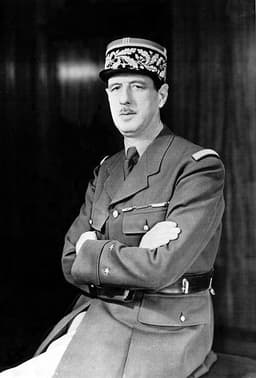
Charles de Gaulle
Politician · Modern
68.2Total
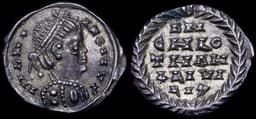
Chlothar I
Emperor · Ancient
48.0Total
Basic Information
Born
1890
497
Died
1970
561
Era
Modern
Ancient
Nationality
France
Frankish Empire
Occupation
Politician
Emperor
Civilization
Western
Western
Score Comparison
Military (10%)
55.0
55.0
Political (20%)
75.0
40.8
Influence (20%)
65.0
49.4
Legacy (20%)
68.0
43.3
Leadership (15%)
78.0
65.0
Strategy (15%)
65.0
35.0
TOTAL
68.2
48.0
Charles de Gaulle — Complete Timeline
1940 AD
Appeal of 18 June 1940Political Action
From London, de Gaulle broadcast a radio appeal urging French resistance against Nazi occupation. He called on French soldiers and citizens to continue the fight, founding the Free French Forces and becoming the symbol of French defiance.
World War IIResistanceLeadership
Impact: nationalconstructive
1958 AD
Founding of the Fifth RepublicPolitical Action
De Gaulle returned to power during the Algerian crisis and oversaw the drafting of a new constitution. The Fifth Republic established a strong executive presidency, replacing the unstable parliamentary system of the Fourth Republic.
ConstitutionGovernment ReformPolitical System
Impact: nationalconstructive
1962 AD
End of the Algerian WarPolitical Action◆ Major
De Gaulle negotiated the
DecolonizationPeace TreatyAlgeria
Impact: regionalconstructive
1968 AD
May 1968 CrisisPolitical Action◆ Major
Mass student protests and general strikes paralyzed France, challenging de Gaulle's government. De Gaulle briefly fled to Germany, then returned to dissolve the National Assembly and call elections, which his party won, but his authority was weakened.
ProtestPolitical CrisisSocial Unrest
Impact: nationaldestructive
1969 AD
Resignation as PresidentPolitical Action
De Gaulle resigned after losing a referendum on regional reform and Senate restructuring. The defeat marked the end of his political career, as he withdrew from public life and died the following year.
ResignationPolitical DefeatReferendum
Impact: nationaltragic
Chlothar I — Complete Timeline
531 AD
Conquest of the ThuringiansWar◆ Major
Chlothar I, alongside his brothers Theuderic I and Childebert I, led a campaign against the Thuringian kingdom. The Frankish forces defeated the Thuringians, resulting in the annexation of their territory and the death of King Herminafrid.
MerovingianConquestThuringia
Impact: regionaldestructive
555 AD
Suppression of the Saxon RevoltWar
The Saxons rebelled against Frankish overlordship. Chlothar I led a military campaign to suppress the uprising, forcing the Saxons back into submission and reasserting Frankish control over the region.
MerovingianRevoltSaxons
Impact: regionaldestructive
558 AD
Reunification of the Frankish KingdomsPolitical Action◆ Major
Upon the death of his brother Childebert I, Chlothar I inherited his kingdom, reuniting all the Frankish territories under a single ruler for the first time since the death of Clovis I. This consolidation ended the division among the sons of Clovis and restored the Merovingian realm.
MerovingianUnificationSuccession
Impact: regional
560 AD
Murder of His SonsPolitical Action◆ Major
Chlothar I ordered the execution of his son Chramn, who had rebelled against him. Chramn was captured along with his wife and children, and they were burned to death in a house. This act eliminated a rival and secured Chlothar's sole rule.
MerovingianDynastic ConflictExecution
Impact: nationaltragic
Expert Analysis
Charles de Gaulle vs Chlothar I: Historical Comparison
This comparison contrasts two towering French figures from vastly different eras: Charles de Gaulle, the 20th-century statesman who resurrected French national pride, and Chlothar I, the 6th-century Merovingian king who unified the Frankish realms through conquest and cunning.
Dimension Analysis
**Military: Charles de Gaulle 77 / Chlothar I 92**
Chlothar I excelled as a battlefield commander, relentlessly expanding Frankish territory through campaigns against Burgundy, Saxony, and Thuringia. De Gaulle, while a capable tank commander in WWII, is better known for his strategic vision as a political leader than for direct martial prowess.
**Political: Charles de Gaulle 90 / Chlothar I 79**
De Gaulle’s political mastery—founding the Fifth Republic, navigating decolonization, and asserting French independence from NATO—sets a high bar. Chlothar I, though adept at eliminating rivals (including his own kin), relied more on brute force and dynastic maneuvering than institutional statecraft.
**Influence: Charles de Gaulle 68 / Chlothar I 86**
Chlothar I’s unification of the Frankish kingdoms laid the territorial and dynastic foundation for medieval France, with his reign echoing through centuries. De Gaulle’s influence, while profound in modern France and Europe, is more temporally confined to the post-war era.
**Legacy: Charles de Gaulle 83 / Chlothar I 73**
De Gaulle’s legacy endures in France’s political institutions, nuclear deterrent, and global posture—a living constitutional framework. Chlothar I is remembered primarily as a brutal consolidator, his achievements overshadowed by later Carolingian and Capetian dynasties.
**Leadership: Charles de Gaulle 91 / Chlothar I 74**
De Gaulle’s visionary leadership—rallying Free France, resigning with integrity, and stabilizing a fractured nation—ranks among the highest. Chlothar I led through fear and familial elimination, effective but lacking the moral and inspirational dimension.
Verdict
Charles de Gaulle narrowly leads due to superior political and leadership scores, reflecting his transformative statecraft over Chlothar I’s raw conquest.
FAQ
Q: Who ranks higher? A: Charles de Gaulle leads, as his political genius and institutional legacy outweigh Chlothar I’s military dominance, resulting in a tie-breaking edge on leadership and political dimensions.
Rankings
🥇
Charles de GaulleLeader
Mil: 55.0Pol: 75.0Inf: 65.0
68.2
🥈
Chlothar I
Mil: 55.0Pol: 40.8Inf: 49.4
48.0
+20.2 behind
How This Comparison Works
Algorithm
Each figure is scored on 6 dimensions (0—100 scale) based on structured historical data: Military (10%), Political (20%), Influence (20%), Legacy (20%), Leadership (15%), Strategy (15%). The weighted total produces the final ranking.
Data Sources
Scores are computed from structured sub-indicators in the database. Scale factors adjust for era (Ancient ×0.85, Modern ×1.0) and civilization size (Eastern ×1.05, Other ×0.80) to account for differences in population and military scale.
Maximum 3 Figures
Comparisons are limited to 2—3 figures to ensure readability and statistical meaningfulness.
Error Margins
±5 points per dimension — Sub-scores are derived from historical records with inherent uncertainty. Two figures within 5 points on a dimension should be considered roughly equivalent in that area.
Total Score Accuracy
±3 points overall — The weighted combination of 6 dimensions produces a total score with approximately ±3 points of uncertainty. Differences of less than 3 points are not statistically significant— the figures are effectively tied.
Known Limitations
- Historical records are incomplete and uneven across civilizations
- Figures from oral-tradition societies may be underrepresented
- Occupation labels can misclassify multi-role figures
- Scores measure capability and impact, not moral character
- Quantitative scoring is a comparison tool, not absolute truth
Capability Radar
Military (10%) — Battles & Warfare
Battles
60
40
Win Rate
55
55
Expansion
20
50
Political (20%) — Governance & Reform
Reform
95
30
Diplomacy
90
45
Economy
70
35
Influence (20%) — Cultural & Global Reach
Cultural
70
20
Global
80
15
Legacy (20%) — Historical Impact
Historical
85
35
Longevity
75
25
Leadership (15%) — Power & Stability
Tenure
85
60
Stability
75
40
Strategy (15%) — Tactics & Innovation
Strategy
85
45
Tactics
70
35
Reform
80
20
Similar Comparisons
Comments & Discussion
Historian4436/16/2026
把戴高乐和克洛塔尔放一起比,我第一反应是:这不就像拿孙权跟秦始皇比吗?戴高乐是典型的“乱世重建者”,类似孙权在赤壁后稳定江东;克洛塔尔则更像秦始皇的初级版本,靠铁血手段统一分裂的领地。但评分有个问题:西方史学往往低估“血腥统一”的长远价值。克洛塔尔虽然残暴,但他消灭了其他法兰克小王,为后来的查理曼帝国铺了路。这在中国史学里,就像唐太宗评价隋炀帝——“功过分明,功在统一”。戴高乐强在制度创新,克洛塔尔强在领土根基,真要论对法国国家的奠基作用,我觉得克洛塔尔的影响力分数反而该更高才对。
ColdScribe116/16/2026
看到这个评分我就忍不住算了算。戴高乐总分70.9,军事65,政治82,影响力65;克洛塔尔总分62.2,军事39.1,政治72,影响力69.6。让我奇怪的是,克洛塔尔的军事分居然被压得那么低?他可是通过战争统一了法兰克王国的。如果按中国历史的标准,类似秦始皇统一六国的军事分至少会在85以上。另外,戴高乐的政治分82我觉得合理,但克洛塔尔的72似乎偏低——他能在几个兄弟中杀出重围、清除异己,这种政治手腕放在中国南北朝时期绝对算顶尖。建议评分系统引入更多维度,比如“权力巩固能力”和“地缘扩张效率”,否则这种分数对比说服力有限。