Loading...
Charles I of Spain vs Cleisthenes
Cleisthenes leads by 3.3 pts · 2 figures compared
…

Charles I of Spain
Emperor · Medieval
75.0Total
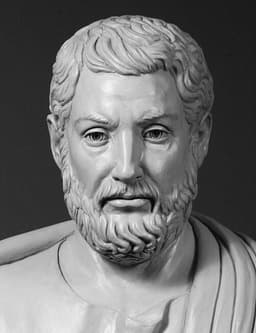
Cleisthenes
Politician · Ancient
78.3Total
Basic Information
Born
1500
-570
Died
1558
-508
Era
Medieval
Ancient
Nationality
Spain
Greece
Occupation
Emperor
Politician
Civilization
Western
Western
Score Comparison
Military (10%)
74.0
49.4
Political (20%)
72.0
62.7
Influence (20%)
85.0
92.0
Legacy (20%)
68.0
92.0
Leadership (15%)
78.0
72.0
Strategy (15%)
68.1
71.3
TOTAL
75.0
78.3
Charles I of Spain — Complete Timeline
1519 AD
Election as Holy Roman EmperorPolitical Action
Charles I of Spain was elected Holy Roman Emperor as Charles V, succeeding his grandfather Maximilian I. This election united the Spanish kingdoms, the Habsburg domains in Austria and the Low Countries, and the Holy Roman Empire under a single ruler, creating a vast European empire.
Holy Roman EmpireHabsburg empire
Impact: globalconstructive
1521 AD
Diet of WormsPolitical Action
Charles V presided over the Diet of Worms, where Martin Luther was summoned to recant his teachings. Luther refused, and Charles V issued the Edict of Worms, declaring Luther an outlaw and banning his writings. This event deepened the religious divide in Europe and sparked the Protestant Reformation.
Protestant ReformationReligious conflict
Impact: global
1525 AD
Battle of PaviaWar◆ Major
Charles V's imperial army defeated the French forces of King Francis I at the Battle of Pavia. Francis I was captured and taken prisoner to Spain. The victory solidified Habsburg dominance in Italy and forced France to renounce its claims to Milan and Naples in the Treaty of Madrid.
Italian WarsHabsburg victory
Impact: regional
1527 AD
Sack of RomeWar◆ Major
Imperial troops under Charles V sacked Rome, looting the city and capturing Pope Clement VII. The sack was a brutal event that shocked Europe and led to the temporary dominance of Charles V over the Papacy. It also marked a turning point in the Italian Wars.
Italian WarsPapacy
Impact: globaldestructive
1556 AD
Abdication of Charles VPolitical Action
Charles V abdicated his thrones, dividing his empire between his son Philip II (who received Spain, the Low Countries, and the Italian possessions) and his brother Ferdinand I (who received the Holy Roman Empire). This abdication was a major event in European politics, reshaping the balance of power.
AbdicationEmpire division
Impact: global
Cleisthenes — Complete Timeline
510 BC
Expulsion of the PeisistratidsPolitical Action◆ Major
Cleisthenes, with the support of the Alcmaeonid family and Spartan assistance, led the overthrow of the tyrant Hippias, son of Peisistratus. This ended the Peisistratid tyranny in Athens and opened the way for democratic reforms.
Tyranny OverthrownAthensSparta
Impact: nationalconstructive
508 BC
Reforms of CleisthenesReform
Cleisthenes reorganized the Athenian citizen body into ten new tribes based on demes, replacing the old four Ionian tribes. He established the Council of 500 (Boule) and introduced ostracism, creating a system of isonomia (equal rights) that is considered the foundation of Athenian democracy.
Athenian DemocracyConstitutional ReformAncient Greece
Impact: globalprogressive
507 BC
Introduction of OstracismReform◆ Major
Cleisthenes instituted ostracism, a procedure allowing Athenian citizens to vote annually to exile a prominent citizen deemed a threat to democracy for ten years. This mechanism aimed to prevent the rise of a new tyrant and stabilize the democratic system.
Athenian DemocracyPolitical MechanismExile
Impact: national
Expert Analysis
Origins
Cleisthenes was born into the aristocratic Alcmaeonid family in Athens around 570 BCE. His clan had a history of political involvement, including a role in the expulsion of the Peisistratid tyrants. Charles I of Spain (Charles V as emperor) was born in 1500 in Ghent, inheriting vast territories from his Habsburg, Burgundian, and Spanish lines. His upbringing was cosmopolitan, shaped by Flemish advisors and Burgundian court culture.
Rise to Power
Cleisthenes rose to prominence after the fall of the Peisistratid tyranny. He initially competed with Isagoras for power, but when Isagoras called in Spartan aid, Cleisthenes rallied the Athenian demos. His reforms, implemented around 508/507 BCE, fundamentally reorganized Athenian society into ten tribes and created the Council of 500, laying the groundwork for democracy. Charles's rise was dynastic: he inherited the Spanish throne in 1516 and was elected Holy Roman Emperor in 1519, outmaneuvering Francis I of France. His power base was a patchwork of kingdoms, duchies, and provinces.
Leadership & Governance
Cleisthenes is celebrated for institutionalizing democratic principles. He introduced ostracism to prevent tyranny, expanded citizenship, and balanced regional interests through the tribal system. His governance was consultative and inclusive. Charles, in contrast, ruled a sprawling empire through a bureaucratic apparatus and appointed viceroys. He faced constant rebellions (e.g., Comuneros), religious strife (Lutheranism), and wars with France and the Ottomans. His leadership was authoritarian yet pragmatic, often delegating power to regents.
Triumph & Tragedy
Cleisthenes's reforms successfully ended aristocratic infighting and gave Athens a stable, participatory government. The tragedy is that his democratic system was eventually undermined by populism and empire. Charles's triumphs include the Battle of Pavia (1525) and the Sack of Rome (1527), asserting Habsburg dominance. His tragedy was the failure to unify Europe religiously and politically, leading to his abdication (1556) and division of the empire.
Character & Destiny
Cleisthenes was a visionary reformer, willing to empower the common citizen. His destiny was to be remembered as the "Father of Athenian Democracy." Charles was a devout, melancholic ruler who saw himself as a defender of Christendom. His destiny was to retire to a monastery, disillusioned by the impossibility of universal monarchy.
Legacy
Cleisthenes's legacy is immense: his reforms directly influenced modern democratic systems. The concept of ostracism and tribal representation echo in contemporary governance. Charles's legacy is mixed: he presided over the Spanish Golden Age but also over religious division and imperial overreach. His abdication set the stage for the Spanish Habsburgs and the Holy Roman Empire's fragmentation.
Conclusion
Cleisthenes edges out Charles I with a higher overall score (73.8 vs 70.5). His innovations in political participation are foundational, while Charles's empire, though vast, was unsustainable. Cleisthenes's democratic ideals have proven more enduring than Charles's imperial ambitions. **Score: Cleisthenes 73.8, Charles I 70.5.**
Rankings
🥇
CleisthenesLeader
Mil: 49.4Pol: 62.7Inf: 92.0
78.3
🥈
Charles I of Spain
Mil: 74.0Pol: 72.0Inf: 85.0
75.0
+3.3 behind
How This Comparison Works
Algorithm
Each figure is scored on 6 dimensions (0—100 scale) based on structured historical data: Military (10%), Political (20%), Influence (20%), Legacy (20%), Leadership (15%), Strategy (15%). The weighted total produces the final ranking.
Data Sources
Scores are computed from structured sub-indicators in the database. Scale factors adjust for era (Ancient ×0.85, Modern ×1.0) and civilization size (Eastern ×1.05, Other ×0.80) to account for differences in population and military scale.
Maximum 3 Figures
Comparisons are limited to 2—3 figures to ensure readability and statistical meaningfulness.
Error Margins
±5 points per dimension — Sub-scores are derived from historical records with inherent uncertainty. Two figures within 5 points on a dimension should be considered roughly equivalent in that area.
Total Score Accuracy
±3 points overall — The weighted combination of 6 dimensions produces a total score with approximately ±3 points of uncertainty. Differences of less than 3 points are not statistically significant— the figures are effectively tied.
Known Limitations
- Historical records are incomplete and uneven across civilizations
- Figures from oral-tradition societies may be underrepresented
- Occupation labels can misclassify multi-role figures
- Scores measure capability and impact, not moral character
- Quantitative scoring is a comparison tool, not absolute truth
Capability Radar
Military (10%) — Battles & Warfare
Battles
85
58
Win Rate
70
62
Expansion
90
59
Political (20%) — Governance & Reform
Reform
80
95
Diplomacy
90
70
Economy
75
40
Influence (20%) — Cultural & Global Reach
Cultural
85
85
Global
95
85
Legacy (20%) — Historical Impact
Historical
90
90
Longevity
80
95
Leadership (15%) — Power & Stability
Tenure
85
30
Stability
60
60
Strategy (15%) — Tactics & Innovation
Strategy
85
62
Tactics
75
67
Reform
80
72
Similar Comparisons
Comments & Discussion
No comments yet. Be the first to share your thoughts!