Loading...
Charles de Gaulle vs Franklin D. Roosevelt
Franklin D. Roosevelt leads by 2.8 pts · 2 figures compared
…
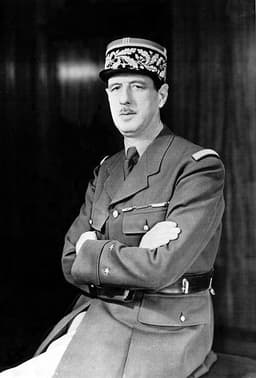
Charles de Gaulle
Politician · Modern
68.2Total
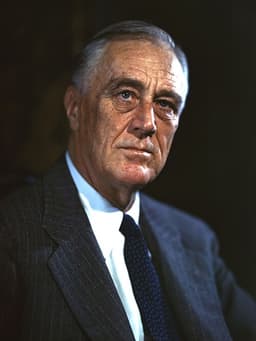
Franklin D. Roosevelt
Politician · Modern
71.0Total
Basic Information
Born
1890
1882
Died
1970
1945
Era
Modern
Modern
Nationality
France
United States
Occupation
Politician
Politician
Civilization
Western
Western
Score Comparison
Military (10%)
55.0
45.0
Political (20%)
75.0
85.0
Influence (20%)
65.0
75.0
Legacy (20%)
68.0
65.0
Leadership (15%)
78.0
85.0
Strategy (15%)
65.0
60.0
TOTAL
68.2
71.0
Charles de Gaulle — Complete Timeline
1940 AD
Appeal of 18 June 1940Political Action
From London, de Gaulle broadcast a radio appeal urging French resistance against Nazi occupation. He called on French soldiers and citizens to continue the fight, founding the Free French Forces and becoming the symbol of French defiance.
World War IIResistanceLeadership
Impact: nationalconstructive
1958 AD
Founding of the Fifth RepublicPolitical Action
De Gaulle returned to power during the Algerian crisis and oversaw the drafting of a new constitution. The Fifth Republic established a strong executive presidency, replacing the unstable parliamentary system of the Fourth Republic.
ConstitutionGovernment ReformPolitical System
Impact: nationalconstructive
1962 AD
End of the Algerian WarPolitical Action◆ Major
De Gaulle negotiated the
DecolonizationPeace TreatyAlgeria
Impact: regionalconstructive
1968 AD
May 1968 CrisisPolitical Action◆ Major
Mass student protests and general strikes paralyzed France, challenging de Gaulle's government. De Gaulle briefly fled to Germany, then returned to dissolve the National Assembly and call elections, which his party won, but his authority was weakened.
ProtestPolitical CrisisSocial Unrest
Impact: nationaldestructive
1969 AD
Resignation as PresidentPolitical Action
De Gaulle resigned after losing a referendum on regional reform and Senate restructuring. The defeat marked the end of his political career, as he withdrew from public life and died the following year.
ResignationPolitical DefeatReferendum
Impact: nationaltragic
Franklin D. Roosevelt — Complete Timeline
1933 AD
Inaugurated as 32nd PresidentOther◆ Major
Franklin D. Roosevelt was inaugurated as President of the United States on March 4, 1933, during the Great Depression. His inaugural address declared 'the only thing we have to fear is fear itself,' and he immediately called Congress into special session to address the banking crisis.
Great DepressionPresidencyInauguration
Impact: national
Enacted the New DealOther◆ Major
Roosevelt launched the New Deal in 1933, a series of federal programs including the Civilian Conservation Corps, the Agricultural Adjustment Act, and the Tennessee Valley Authority. These measures aimed to provide relief, recovery, and reform during the Great Depression, fundamentally expanding the role of the federal government.
Great DepressionEconomic PolicySocial Reform
Impact: nationalconstructive
1935 AD
Signed the Social Security ActOther◆ Major
Roosevelt signed the Social Security Act into law on August 14, 1935, establishing a federal system of old-age pensions, unemployment insurance, and aid for dependent children. This created the modern American welfare state and provided a safety net for millions of citizens.
Social WelfareLegislationNew Deal
Impact: nationalconstructive
1941 AD
Lend-Lease ActOther◆ Major
Roosevelt signed the Lend-Lease Act on March 11, 1941, authorizing the transfer of military equipment and supplies to Allied nations, particularly Britain and the Soviet Union. This program provided critical material support to countries fighting the Axis powers before U.S. entry into World War II.
World War IIForeign PolicyMilitary Aid
Impact: globalconstructive
Declaration of War on JapanPolitical Action◆ Major
Following the Japanese attack on Pearl Harbor on December 7, 1941, Roosevelt delivered his 'Day of Infamy' speech to Congress the next day, requesting a declaration of war. Congress approved the declaration, bringing the United States into World War II.
World War IIPearl HarborDeclaration of War
Impact: globaldestructive
1942 AD
Executive Order 9066Other◆ Major
Roosevelt signed Executive Order 9066 on February 19, 1942, authorizing the forced relocation and internment of Japanese Americans living on the West Coast. Over 110,000 people, mostly U.S. citizens, were incarcerated in camps for the duration of the war, a decision later widely condemned as a violation of civil rights.
World War IICivil RightsInternment
Impact: nationaldestructive
1944 AD
Elected to Fourth TermOther◆ Major
Roosevelt was elected to an unprecedented fourth term as president in November 1944, defeating Republican Thomas E. Dewey. This election occurred during the final stages of World War II, and Roosevelt's continued leadership ensured stability in the war effort and post-war planning.
PresidencyElectionWorld War II
Impact: national
1945 AD
Yalta ConferenceOther◆ Major
Roosevelt met with Winston Churchill and Joseph Stalin at the Yalta Conference in February 1945 to discuss post-war Europe. Agreements included the division of Germany, Soviet entry into the war against Japan, and the creation of the United Nations, shaping the post-war world order.
World War IIDiplomacyPost-War Planning
Impact: global
Expert Analysis
Charles de Gaulle vs Franklin D. Roosevelt
# The Two Faces of Western Leadership
In the spring of 1945, as Franklin D. Roosevelt lay dying in Warm Springs, Georgia, Charles de Gaulle was marching through liberated Paris, a man who had willed his nation back into existence. One had led the world’s most powerful democracy through its darkest hours; the other had become the living symbol of a country that had fallen, yet refused to stay down. Both were giants of the twentieth century, yet their paths, their methods, and their ultimate legacies could not have been more different. What drove these two men, and why did their fates diverge so sharply?
Origins
Franklin Delano Roosevelt was born to privilege in 1882, a Hudson Valley aristocrat who never knew want. His was a world of quiet certainty, of summer homes and private tutors, of a patrician sense of duty that saw public service as a natural obligation. He entered politics during the Progressive Era, a time when Americans still believed that government could be a force for moral good. His polio diagnosis in 1921, at age thirty-nine, was a crucible that forced him to develop a resilience he had never needed before. The man who emerged from that trial was not the same charming, slightly shallow politician who had entered it.
Charles de Gaulle, born in 1890 in Lille, came from a different kind of elite—a Catholic, monarchist, military family that had never fully accepted the French Revolution. His father taught him that France was destined for greatness, that its fall was always temporary, that honor was everything. De Gaulle grew up in the shadow of the Franco-Prussian War, a national humiliation that burned in his memory. He became a soldier, a writer of military theory, a man who saw tanks and mobility as the future while his superiors clung to the Maginot Line. Where Roosevelt learned to bend, de Gaulle learned to stand rigid.
Rise to Power
Roosevelt’s ascent was almost preordained. He became governor of New York in 1928, and by 1932, as the Great Depression swallowed America, he offered a “New Deal” to a desperate nation. He won in a landslide. His genius lay in his willingness to experiment, to try anything, to use the full weight of the federal government to put people back to work. He was a pragmatist, not an ideologue. When one program failed, he tried another. His radio “fireside chats” made him a presence in every American home.
De Gaulle’s rise was the opposite—a story of defiance against all odds. In June 1940, as France collapsed before the German blitzkrieg, he was a little-known brigadier general. From London, on June 18, he broadcast an appeal that would define his life: “France has lost a battle, but France has not lost the war.” He was a voice in the wilderness, condemned as a traitor by the Vichy regime, dismissed as a nuisance by Churchill and Roosevelt. Yet he built the Free French Forces from nothing, a government-in-exile that insisted on French sovereignty even as it depended on Allied charity.
Leadership & Governance
As president, Roosevelt governed through sheer political mastery. He built a coalition of Southern Democrats, urban immigrants, labor unions, and African Americans that would define American politics for decades. His New Deal created Social Security in 1935, regulated Wall Street, and brought electricity to the rural South. He was not a military strategist in the traditional sense, but he was a superb commander-in-chief who understood that World War II was a war of production and morale. His score of 85 in political leadership reflects a man who could read the public mood and move the levers of power with unmatched skill.
De Gaulle governed through the force of his personality and his vision of France. When he returned to power in 1958, during the Algerian crisis, he was sixty-seven years old. He founded the Fifth Republic, a system designed to give the president near-absolute authority in times of crisis. His military score of 65 reflects his genuine strategic mind, but his true genius was political: he understood that France could not hold Algeria, and he had the courage to end the war, surviving multiple assassination attempts from French colonists who called him a traitor. His leadership score of 78 is perhaps too low—no other Western leader so completely embodied his nation.
Triumph & Tragedy
Roosevelt’s greatest triumph was leading the United States through the Great Depression and to victory in World War II. He was the only president elected to four terms, a testament to his hold on the American imagination. His greatest failure was his internment of Japanese Americans in 1942, a decision born of wartime hysteria that violated every principle he claimed to defend. He also failed to confront racial segregation head-on, fearing it would fracture his coalition.
De Gaulle’s triumph was the restoration of French pride. The Évian Accords of 1962 ended the Algerian War, and his 1963 veto of British entry into the Common Market was a declaration of French independence from Anglo-Saxon dominance. His tragedy came in May 1968, when student protests and a general strike paralyzed France. De Gaulle briefly fled to Baden-Baden, Germany, to consult with French generals—a moment of panic that shattered his aura of unshakeable resolve. He resigned in 1969 after losing a referendum on minor reforms, a sad end for a man who had once saved his country.
Character & Destiny
Roosevelt was a man of masks. He was charming, elusive, and deeply private. He told people what they needed to hear, not necessarily what he believed. His polio forced him to develop a will of iron hidden behind a smile. He trusted his instincts and his inner circle, and he was willing to deceive—as when he promised Americans he would keep the country out of war while secretly preparing for it.
De Gaulle was the opposite: cold, aloof, and utterly convinced of his own rectitude. He once said, “The graveyards are full of indispensable men,” but he did not believe it for a moment. He saw himself as the living embodiment of France, and he acted accordingly. He was impossible to work with, infuriating to allies, and yet he was indispensable. His personality shaped his destiny: it was his pride that saved France in 1940, and his pride that drove him from power in 1969.
Legacy
Roosevelt’s legacy is the modern American state. Social Security, the New Deal, the wartime mobilization—these transformed the United States into a superpower and a welfare state. His total score of 75.7 reflects a man who changed the world but left behind unfinished business: racial inequality, the Cold War, and a presidency that had become too powerful.
De Gaulle’s legacy is the Fifth Republic, which still governs France today. He gave his country a stable political system, a nuclear deterrent, and a foreign policy independent of Washington. His total score of 70.9 is perhaps too modest—he was not as influential as Roosevelt, but he was more essential to his nation’s survival. Without him, France might have remained a defeated, divided country.
Conclusion
Roosevelt and de Gaulle both led Western democracies through existential crises, but they did so in opposite ways. Roosevelt was a consensus-builder who expanded the state to meet the needs of the people. De Gaulle was a solitary figure who imposed his will on a nation that had lost its way. One was a master of politics; the other, a master of symbolism. One believed in the possible; the other, in the necessary. In the end, both succeeded because they understood something essential about their countries: Roosevelt knew that Americans wanted hope, and de Gaulle knew that the French wanted honor. They gave their people exactly what they needed, and for that, they are remembered not just as leaders, but as the men who defined their age.
Rankings
🥇
Franklin D. RooseveltLeader
Mil: 45.0Pol: 85.0Inf: 75.0
71.0
🥈
Charles de Gaulle
Mil: 55.0Pol: 75.0Inf: 65.0
68.2
+2.8 behind
How This Comparison Works
Algorithm
Each figure is scored on 6 dimensions (0—100 scale) based on structured historical data: Military (10%), Political (20%), Influence (20%), Legacy (20%), Leadership (15%), Strategy (15%). The weighted total produces the final ranking.
Data Sources
Scores are computed from structured sub-indicators in the database. Scale factors adjust for era (Ancient ×0.85, Modern ×1.0) and civilization size (Eastern ×1.05, Other ×0.80) to account for differences in population and military scale.
Maximum 3 Figures
Comparisons are limited to 2—3 figures to ensure readability and statistical meaningfulness.
Error Margins
±5 points per dimension — Sub-scores are derived from historical records with inherent uncertainty. Two figures within 5 points on a dimension should be considered roughly equivalent in that area.
Total Score Accuracy
±3 points overall — The weighted combination of 6 dimensions produces a total score with approximately ±3 points of uncertainty. Differences of less than 3 points are not statistically significant— the figures are effectively tied.
Known Limitations
- Historical records are incomplete and uneven across civilizations
- Figures from oral-tradition societies may be underrepresented
- Occupation labels can misclassify multi-role figures
- Scores measure capability and impact, not moral character
- Quantitative scoring is a comparison tool, not absolute truth
Capability Radar
Military (10%) — Battles & Warfare
Battles
60
10
Win Rate
55
10
Expansion
20
10
Political (20%) — Governance & Reform
Reform
95
95
Diplomacy
90
90
Economy
70
95
Influence (20%) — Cultural & Global Reach
Cultural
70
80
Global
80
90
Legacy (20%) — Historical Impact
Historical
85
90
Longevity
75
85
Leadership (15%) — Power & Stability
Tenure
85
90
Stability
75
75
Strategy (15%) — Tactics & Innovation
Strategy
85
65
Tactics
70
10
Reform
80
70
Similar Comparisons
Comments & Discussion
DeGaulleTheStrategist6/16/2026
As a military historian, I’ll say this: de Gaulle’s vision was a century ahead of Roosevelt’s. While FDR clung to mass infantry and industrial might, de Gaulle’s 1934 book “Vers l’Armée de Métier” predicted the dominance of professional mechanized divisions—tanks and aircraft acting as a spearhead. The French high command ignored him, but the Blitzkrieg proved him right. Roosevelt never understood armored warfare; he let Marshall and Eisenhower run the show. De Gaulle was the intellectual, FDR j
罗斯福的算盘6/16/2026
别被罗斯福的“四大自由”演讲骗了,他骨子里是个冷血现实主义者。1942年,他故意绕过戴高乐的“自由法国”,去扶植吉罗将军,只因为吉罗更听话。这哪是盟友?分明是在玩殖民傀儡游戏。戴高乐在伦敦被丘吉尔收留,罗斯福还想切断他的经费,逼他解散流亡政府。要不是戴高乐硬扛着,法国战后连谈判席都坐不稳——这算哪门子民主领袖?
ClassicsSkeptic6/16/2026
Let’s not mythologize de Gaulle as some modern-day Cincinnatus. He was a Caesar—authoritarian, theatrical, obsessed with personal glory. After liberating Paris, he deliberately purged the French resistance of communists and socialists, installing his own cronies. Roosevelt, by contrast, treated the New Deal as an experiment, not a monument. FDR signed the GI Bill to empower millions; de Gaulle signed laws to centralize his own power. One built a nation, the other built a cult of personality.
法语救亡者6/16/2026
戴高乐有句话说得狠:“法国只有在孤独的伟大中才有意义。”罗斯福呢?他以为战后靠联合国就能管住世界。可1945年雅尔塔会议上,罗斯福把东欧卖给了斯大林,连招呼都不打。戴高乐没被邀请,但他后来拉拢西德、对抗美国核垄断、退出北约军事一体化——这才叫战略自主。罗斯福的“大国协调”是一场幻觉,只有戴高乐明白,弱国连哭泣的权利都没有。
HistoryBuffDaily6/16/2026
Fun fact: both men were wheelchair users—well, de Gaulle was a master of hidden frailty. His secret was a carefully choreographed erect posture, stage-managed for propaganda. FDR’s polio was mostly concealed from the public, but de Gaulle’s was a different beast: he never let anyone see him stumble, literally or politically. Their courage was real, but also performative. One learned to smile through pain, the other learned to scowl through it. Different masks, same steel.