Loading...
Charles Augustus of Saxe-Weimar vs Fu Jian
Fu Jian leads by 8.6 pts · 2 figures compared
…

Charles Augustus of Saxe-Weimar
Emperor · Modern
55.8Total
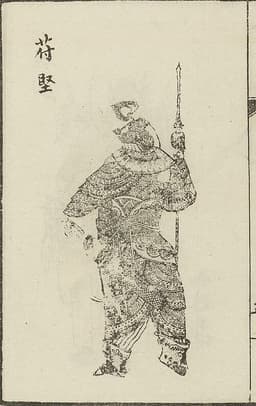
Fu Jian
Emperor · Ancient
64.4Total
Basic Information
Born
1757
338
Died
1828
385
Era
Modern
Ancient
Nationality
Saxe-Weimar
China
Occupation
Emperor
Emperor
Civilization
Western
Eastern
Score Comparison
Military (10%)
20.0
78.0
Political (20%)
70.0
72.0
Influence (20%)
55.0
59.0
Legacy (20%)
52.0
50.0
Leadership (15%)
82.0
85.0
Strategy (15%)
42.3
58.0
TOTAL
55.8
64.4
Charles Augustus of Saxe-Weimar — Complete Timeline
1775 AD
Patronage of Johann Wolfgang von GoetheCultural◆ Major
Charles Augustus invited Goethe to Weimar and appointed him to various governmental positions. This patronage created the Weimar Classicism cultural movement and made Weimar a major intellectual center in Europe.
Weimar ClassicismGoetheCultural Patronage
Impact: globalconstructive
1806 AD
Joined the Rhine ConfederationPolitical Action◆ Major
Charles Augustus allied Saxe-Weimar with Napoleon's Confederation of the Rhine, gaining territorial enlargement and sovereign status. This decision preserved his duchy's autonomy during the Napoleonic Wars but tied it to French hegemony.
Napoleonic WarsConfederation of the RhineAlliance
Impact: regional
1813 AD
Fought at the Battle of LeipzigWar◆ Major
Charles Augustus switched sides and fought with the Allied coalition against Napoleon at the Battle of Leipzig. His troops participated in the decisive defeat of Napoleon, contributing to the liberation of German states from French control.
Battle of LeipzigNapoleonic WarsCoalition
Impact: regional
1816 AD
Granted the Constitution of 1816Political Action◆ Major
Charles Augustus issued a constitution for Saxe-Weimar-Eisenach, making him the first German ruler to grant a constitution. This established a bicameral parliament and guaranteed basic rights, setting a precedent for constitutionalism in the German states.
ConstitutionConstitutionalismGerman States
Impact: nationalprogressive
Fu Jian — Complete Timeline
370 AD
Conquest of Former YanWar◆ Major
Fu Jian's Former Qin forces conquered the Former Yan state, annexing its territory in northern China. This victory significantly expanded Former Qin's power and territory, bringing Fu Jian closer to unifying the north.
ConquestExpansion
Impact: regionalconstructive
376 AD
Conquest of Former LiangWar◆ Major
Fu Jian's forces conquered the Former Liang state in the northwest, incorporating its territory into Former Qin. This further consolidated his control over northern China.
ConquestExpansion
Impact: regionalconstructive
Conquest of DaiWar
Fu Jian's army conquered the Dai state, a Xianbei confederation in the north. This eliminated a rival and extended Former Qin's influence into the steppe region.
ConquestExpansion
Impact: regionalconstructive
379 AD
Capture of XiangyangWar
Fu Jian's forces captured the strategic city of Xiangyang from the Eastern Jin dynasty. This victory gave Former Qin a foothold south of the Huai River, setting the stage for the invasion that led to the Battle of Fei River.
ConquestCampaign
Impact: regionalconstructive
383 AD
Battle of Fei RiverWar
Fu Jian led a massive Former Qin army against the Eastern Jin dynasty at the Fei River. The Jin forces defeated the Qin army, causing a catastrophic rout. This defeat shattered Fu Jian's unification efforts and led to the collapse of Former Qin.
BattleUnificationDefeat
Impact: regionaltragic
Expert Analysis
Charles Augustus of Saxe-Weimar vs Fu Jian
# The Emperor and the Enlightener: Two Visions of Power in an Age of Upheaval
In the autumn of 383, a vast army—perhaps the largest ever assembled in China—stretched along the banks of the Fei River. At its head rode Fu Jian, Emperor of Former Qin, a man who had conquered nearly all of northern China and now set his sights on the final prize: the Eastern Jin dynasty across the Yangtze. He was confident, even arrogant, believing that his million-man force would crush the southern kingdom like a leaf in a storm. Yet within days, his empire would shatter in one of history's most dramatic reversals.
Fourteen hundred years later and half a world away, another ruler stood on a very different stage. Charles Augustus, Duke of Saxe-Weimar, was no conqueror. His domain was a speck on the map of Germany, a duchy so small that a man could ride across it in a day. Yet in 1816, he did something no German ruler had ever done: he granted his people a constitution. Where Fu Jian sought to unify through force, Charles Augustus sought to build through culture and law. What drove these two men—both born into power, both shaped by their eras—to such different destinies?
Origins
Fu Jian was born in 338 into the Di people, a non-Chinese ethnic group that had carved out a foothold in the chaos following the fall of the Western Jin dynasty. His grandfather founded the Former Qin state, and Fu Jian inherited not just a throne but a mission: to reunite a fractured China. The Sixteen Kingdoms period was an age of constant war, where survival meant conquest. Fu Jian grew up surrounded by military camps and tribal loyalties, learning that power was measured in swords and territory.
Charles Augustus entered the world in 1757, in the heart of the German Enlightenment. His father, Duke Ernst August II, was a patron of learning, and the young prince was tutored by some of the finest minds in Europe. Weimar was not a battlefield but a salon—a place where poets, philosophers, and musicians gathered. Charles Augustus learned that power could be measured in ideas, in patronage, in the quiet building of a civilized state.
Rise to Power
Fu Jian ascended the throne in 357 at age nineteen, but he did not rule alone. His prime minister, Wang Meng, was the architect of his early success—a brilliant strategist who counseled patience and consolidation. Together, they launched a series of campaigns that seemed unstoppable. In 370, Fu Jian's forces conquered the Former Yan state, annexing its vast territory. In 376, he swallowed the Former Liang in the northwest and crushed the Xianbei confederation of Dai. By 379, his armies had captured the strategic city of Xiangyang from the Eastern Jin. Each victory made him more confident, more convinced that destiny was on his side.
Charles Augustus came to power at eighteen, in 1775, and his first act was not a military campaign but a cultural one. He invited Johann Wolfgang von Goethe to Weimar, appointing the young poet to his government. This was not mere philanthropy; it was statecraft. Charles Augustus understood that in the fragmented world of German principalities, prestige came from culture as much as from cannon. He built a court that attracted the best minds of the age—Schiller, Herder, Wieland—turning Weimar into the intellectual capital of Germany.
Leadership & Governance
Fu Jian's leadership was a study in contradictions. He was generous to his conquered enemies, often incorporating them into his government—a policy that won loyalty but also sowed the seeds of future rebellion. He was personally brave, leading from the front, but he lacked Wang Meng's strategic patience. When Wang Meng died in 375, Fu Jian lost his anchor. He began to believe his own propaganda, ignoring warnings that his empire was a patchwork of resentful subjects, not a unified nation.
Charles Augustus governed with a lighter touch. He fought alongside the Allies at the Battle of Leipzig in 1813, switching sides from Napoleon to the coalition at a critical moment—a pragmatic decision that preserved his duchy. But his true genius was political. In 1816, he issued the Constitution of 1816, granting civil liberties, freedom of the press, and a representative assembly. It was not a radical document by modern standards, but in the reactionary climate after Napoleon's fall, it was revolutionary. He proved that a small state could lead by example.
Triumph & Tragedy
Fu Jian's triumph was total—until it wasn't. The Battle of Fei River in 383 was his masterpiece and his ruin. He faced the Eastern Jin with overwhelming numbers, but his army was a fragile coalition of conquered peoples who had no loyalty to him. When the Jin forces feigned retreat and the Qin army began to withdraw, panic spread like wildfire. The retreat became a rout; the rout became a massacre. Fu Jian fled, wounded and humiliated. His empire collapsed within years, torn apart by rebellions. He was killed in 385 by a former general.
Charles Augustus's tragedy was quieter. He lived long enough to see his beloved Weimar decline in influence, overshadowed by Prussia and Austria. His constitution was often ignored by later rulers. Yet he never suffered a Fei River moment—no single catastrophic failure. Instead, he died in 1828, surrounded by the culture he had nurtured, mourned by a people who remembered him as a just ruler.
Character & Destiny
Fu Jian was a man of grand visions but poor execution. He wanted to unify China, but he did not understand that unity requires more than conquest—it requires trust, time, and a common identity. His generosity to enemies was a strength, but his inability to consolidate was a fatal weakness. He was a conqueror who could not become a builder.
Charles Augustus was a builder who never wanted to conquer. He understood that in a world of great powers, small states survive by being useful, cultured, and well-governed. His patronage of Goethe was not just cultural vanity; it was a strategy for influence that outlasted any battlefield victory. Where Fu Jian's empire vanished, Weimar's legacy—Goethe's Faust, Schiller's plays, Herder's philosophy—endures.
Legacy
Fu Jian is remembered as a cautionary tale: the emperor who almost unified China but failed because he overreached. His name is synonymous with hubris, with the danger of believing one's own legend. The Fei River became a symbol of how quickly fortune can turn.
Charles Augustus is remembered as a model of enlightened rule. He is the "Fürst" who made Weimar a beacon of German culture. His constitution, though imperfect, was a step toward modern governance. He proved that leadership is not about size but about vision.
Conclusion
Standing at the Fei River, Fu Jian saw an empire waiting to be claimed. Standing in his study in Weimar, Charles Augustus saw a society waiting to be shaped. One reached for the stars and fell; the other built a quiet monument that still casts a shadow. Their stories remind us that power is not just about what you take, but what you leave behind—and that sometimes the smallest kingdoms produce the most lasting light.
Rankings
🥇
Fu JianLeader
Mil: 78.0Pol: 72.0Inf: 59.0
64.4
🥈
Charles Augustus of Saxe-Weimar
Mil: 20.0Pol: 70.0Inf: 55.0
55.8
+8.6 behind
How This Comparison Works
Algorithm
Each figure is scored on 6 dimensions (0—100 scale) based on structured historical data: Military (10%), Political (20%), Influence (20%), Legacy (20%), Leadership (15%), Strategy (15%). The weighted total produces the final ranking.
Data Sources
Scores are computed from structured sub-indicators in the database. Scale factors adjust for era (Ancient ×0.85, Modern ×1.0) and civilization size (Eastern ×1.05, Other ×0.80) to account for differences in population and military scale.
Maximum 3 Figures
Comparisons are limited to 2—3 figures to ensure readability and statistical meaningfulness.
Error Margins
±5 points per dimension — Sub-scores are derived from historical records with inherent uncertainty. Two figures within 5 points on a dimension should be considered roughly equivalent in that area.
Total Score Accuracy
±3 points overall — The weighted combination of 6 dimensions produces a total score with approximately ±3 points of uncertainty. Differences of less than 3 points are not statistically significant— the figures are effectively tied.
Known Limitations
- Historical records are incomplete and uneven across civilizations
- Figures from oral-tradition societies may be underrepresented
- Occupation labels can misclassify multi-role figures
- Scores measure capability and impact, not moral character
- Quantitative scoring is a comparison tool, not absolute truth
Capability Radar
Military (10%) — Battles & Warfare
Battles
5
75
Win Rate
5
70
Expansion
5
80
Political (20%) — Governance & Reform
Reform
75
70
Diplomacy
60
60
Economy
55
65
Influence (20%) — Cultural & Global Reach
Cultural
65
50
Global
40
45
Legacy (20%) — Historical Impact
Historical
60
60
Longevity
50
40
Leadership (15%) — Power & Stability
Tenure
70
65
Stability
65
55
Strategy (15%) — Tactics & Innovation
Strategy
5
70
Tactics
5
65
Reform
10
60
Similar Comparisons
Comments & Discussion
HEAVYHANDBAG6/16/2026
This comparison is a joke. Charles Augustus was a minor German ducal ruler who happened to be liberal for his time and place—big deal. Fu Jian conquered a territory larger than any European kingdom of his era. Comparing them is like comparing Napoleon to the mayor of a small Swiss town. One shaped the destiny of millions; the other pleased some local intellectuals. Scale matters in history.
老骑兵血6/16/2026
拿符坚跟萨克森-魏玛公爵比?符坚是带着百万大军过淝水的主,一手差点统一整个中国北方。另一个呢,管着个小公国,骑一天马就能逛完。你们这种文人最喜欢把小恩小惠当大德政。符坚的失败是史诗级的,查理是"还不错"的水平。别用文艺才子的标准去衡量一统天下的皇帝。
CONSTITUTIONCOUNTER6/16/2026
Charles Augustus actually gave his people a constitution in 1816, which is more than any Chinese emperor in history ever did. Fu Jian conquered lands but governed through a fragile coalition of tribal elites. The Weimar constitution lasted for decades; Fu Jian's empire collapsed within days of the Fei River defeat. So tell me, who built something that really lasted? Not the "vast conqueror."
民国侠客6/16/2026
符坚吹嘘百万大军,结果淝水一败,帝国分崩离析。查理·奥古斯都根本不靠打仗立威,他在魏玛搞宪法、延揽歌德和席勒,把一个小公国搞成了欧洲文化圣地。打仗谁不会?能在废墟里建起精神的高塔,那才是真本事。符坚的大军,风一吹就散了。