Loading...
Charlemagne vs Ferdinand I of Leon
Charlemagne leads by 11.8 pts · 2 figures compared
…
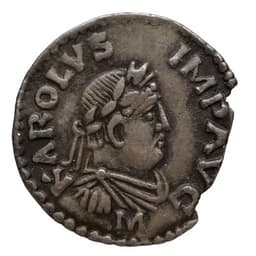
Charlemagne
Emperor · Medieval
71.0Total
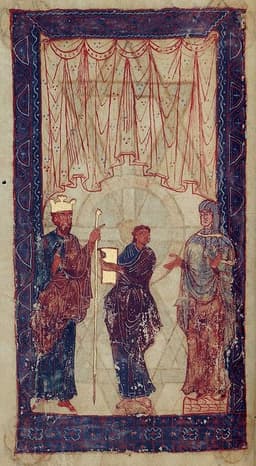
Ferdinand I of Leon
Emperor · Medieval
59.2Total
Basic Information
Born
748
1015
Died
814
1065
Era
Medieval
Medieval
Nationality
Frankish Empire
Leon
Occupation
Emperor
Emperor
Civilization
Western
Western
Score Comparison
Military (10%)
80.0
70.0
Political (20%)
78.0
68.0
Influence (20%)
65.0
56.4
Legacy (20%)
65.0
49.2
Leadership (15%)
80.0
66.0
Strategy (15%)
68.0
57.5
TOTAL
71.0
59.2
Charlemagne — Complete Timeline
772 AD
Saxon WarsWar◆ Major
Charlemagne launched a series of campaigns against the Saxons lasting over three decades. He forcibly converted them to Christianity, incorporated their territory into the Frankish Empire, and ordered the execution of thousands at the Massacre of Verden in 782.
ConquestChristianizationWar
Impact: regionaldestructive
774 AD
Conquest of the Lombard KingdomWar◆ Major
Charlemagne answered Pope Adrian I's call for aid against the Lombards. He besieged and captured Pavia, deposed King Desiderius, and annexed the Lombard Kingdom into his domain, assuming the title 'King of the Lombards' and solidifying Frankish control over Italy.
ConquestItalyPapal Alliance
Impact: regional
779 AD
Capitulary of HerstalReform
Charlemagne issued a series of legal and administrative reforms at the assembly in Herstal. He standardized weights and measures, reformed the coinage system, and strengthened the authority of royal officials (missi dominici) to oversee local governance and justice.
Legal ReformAdministrationStandardization
Impact: nationalconstructive
780 AD
Carolingian Renaissance ReformsCultural◆ Major
Charlemagne initiated a program of educational and cultural revival, inviting scholars like Alcuin of York to his court. He standardized Latin script (Carolingian minuscule), established palace schools, and promoted the copying of classical texts, preserving ancient knowledge.
EducationCultural RevivalScript
Impact: globalprogressive
800 AD
Coronation as Holy Roman EmperorPolitical Action
Pope Leo III crowned Charlemagne as Emperor of the Romans in St. Peter's Basilica on Christmas Day. This act revived the Western Roman Empire, established a precedent for papal authority over imperial titles, and created a political entity that shaped medieval European politics.
CoronationHoly Roman EmpirePapacy
Impact: globalconstructive
Ferdinand I of Leon — Complete Timeline
1029 AD
Inheritance of the County of CastilePolitical Action◆ Major
Ferdinand I inherited the County of Castile from his father Sancho III of Navarre. He later expanded his territory through conquest and marriage, laying the foundation for the Kingdom of Castile.
Impact: regionalconstructive
1037 AD
Conquest of LeónWar◆ Major
Ferdinand I defeated and killed King Bermudo III of Le
Impact: regional
1056 AD
First Emperor of SpainPolitical Action◆ Major
Ferdinand I was crowned 'Imperator totius Hispaniae' (Emperor of all Spain) in 1056, claiming suzerainty over all Christian and Muslim rulers in Iberia. This title reflected his military dominance and political ambition.
Impact: regional
1065 AD
Division of the kingdomPolitical Action◆ Major
Upon his death, Ferdinand I divided his kingdom among his sons: Sancho II received Castile, Alfonso VI received Le
Impact: regionaldestructive
Expert Analysis
Ferdinand I of Leon vs Charlemagne
# The Emperor and the King: Charlemagne and Ferdinand I and the Two Faces of Medieval Power
On Christmas Day in the year 800, as Pope Leo III placed a golden crown upon the head of a Frankish king in St. Peter's Basilica, the congregation erupted in acclamation: "To Charles, the most pious Augustus, crowned by God, great and peace-giving Emperor of the Romans!" Three centuries later, in the year 1056, another king—Ferdinand I of León—had himself crowned "Imperator totius Hispaniae" in his own cathedral, claiming dominion over all the Christian and Muslim realms of Spain. Both men reached for the same title, but their paths, their power, and their legacies could not have been more different. Why did one become the father of Europe, while the other became a footnote in Iberian history?
Origins
Charlemagne was born in 748 into a world of ambition and violence. His father, Pepin the Short, had seized the Frankish throne from the Merovingian dynasty, and his grandfather, Charles Martel, had saved Christendom at the Battle of Tours. The young Charles grew up in a court where power was won by the sword and legitimized by the Church. He was a warrior from childhood, learning to ride, hunt, and command armies before he could read.
Ferdinand I, born in 1015, inherited a different kind of kingdom. His father, Sancho III of Navarre, had united much of Christian Spain through marriage and conquest, but the Reconquista—the centuries-long struggle against Muslim rule—defined every aspect of Iberian politics. Ferdinand grew up not in a palace of Latin learning, but in a frontier kingdom where every lord kept one eye on his Christian rival and the other on the Moorish taifa kingdoms to the south.
Rise to Power
Charlemagne's rise was methodical and relentless. Upon his father's death in 768, he shared the kingdom with his brother Carloman—until Carloman conveniently died in 771, leaving Charles sole ruler. He then turned outward, launching the Saxon Wars in 772, a campaign of such brutality and persistence that it would last over three decades. By 774, he had answered Pope Adrian I's call and conquered the Lombard Kingdom, besieging Pavia and deposing King Desiderius. Each victory expanded not just his territory, but his reputation as the defender of Christendom.
Ferdinand's path was more tangled and personal. In 1029, he inherited the County of Castile from his father, but his real rise came through blood. In 1037, at the Battle of Tamarón, he faced King Bermudo III of León. Ferdinand killed him in combat and claimed the kingdom by right of conquest—and by marriage to Bermudo's sister. It was a brutal family affair, typical of the shifting alliances and betrayals that characterized Christian Spain.
Leadership & Governance
Charlemagne governed through vision and reform. In 779, he issued the Capitulary of Herstal, standardizing weights, measures, and legal procedures across his vast realm. More importantly, he launched the Carolingian Renaissance around 780, inviting the English scholar Alcuin of York to his court to revive Latin learning, establish schools, and preserve classical texts. Charlemagne himself learned to read, though he never mastered writing. He reformed the Church, codified laws, and created a system of missi dominici—royal agents who traveled the empire to ensure justice.
Ferdinand ruled differently. His military strategy scored a modest 45.7, far below Charlemagne's 68, and his approach was less about reform than expansion. He campaigned against the Moorish taifas, extracting tribute and expanding León's borders, but he never attempted the systematic administration or cultural revival that defined Charlemagne's reign. Where Charlemagne built schools, Ferdinand built castles.
Triumph & Tragedy
Charlemagne's greatest moment came on Christmas Day 800, when the Pope crowned him Emperor of the Romans. It was a turning point that revived the Western Roman Empire and established a political framework that would shape Europe for a millennium. Yet his greatest tragedy was the fragility of his achievement. His empire depended entirely on his personal authority, and his only surviving son, Louis the Pious, lacked his father's iron will.
Ferdinand's triumph was his coronation as Emperor of Spain in 1056—a title that reflected his ambition to unite all Christian Iberia under his rule. But his tragedy was self-inflicted. Upon his death in 1065, he divided his kingdom among his three sons: Sancho II received Castile, Alfonso VI received León, and García received Galicia. This division, typical of medieval inheritance practices, ensured decades of fratricidal war that weakened Christian Spain just when it needed unity against the Moors.
Character & Destiny
Charlemagne was a man of contradictions: a ruthless warrior who wept at the death of his friends, a conqueror who forced conversion at sword-point yet promoted learning and art. His personality drove him to unify, to build, to create something that would outlast him. He saw himself as a new Constantine, a Christian emperor responsible for both earthly and spiritual order.
Ferdinand was more cautious, more regional. He was a capable king but not a visionary. His military score of 60.1 and political score of 72.0 reflect a man who consolidated rather than created. He did not dream of a unified Spain; he dreamed of a secure León. His division of the kingdom reveals a man who thought in terms of family inheritance, not national destiny.
Legacy
Charlemagne's legacy is immense. His influence score of 65.0 and legacy score of 80.0 understate his true impact: he is remembered as the Father of Europe, the founder of the Holy Roman Empire, the patron of the Carolingian Renaissance that preserved classical learning. His empire fractured, but his idea endured—the vision of a unified Christian Europe.
Ferdinand's legacy is more modest. His total score of 67.0 reflects a competent but not transformative ruler. He is remembered as the first to claim the title "Emperor of Spain," but his division of the kingdom undid much of his work. His son Alfonso VI would eventually reunite the realm, but the seeds of division Ferdinand planted would haunt Spain for generations.
Conclusion
Standing in their cathedrals, both men heard the same words: "Emperor." But Charlemagne looked outward, to a continent waiting to be shaped, while Ferdinand looked inward, to a kingdom waiting to be divided. Charlemagne built an idea; Ferdinand built a family. One created a legacy that would inspire nations; the other created a legacy that would inspire caution. In the end, the difference between them was not their crowns, but their visions. Charlemagne saw a future that could be made; Ferdinand saw a past that had to be preserved. And history, as always, rewarded the dreamer.
Rankings
🥇
CharlemagneLeader
Mil: 80.0Pol: 78.0Inf: 65.0
71.0
🥈
Ferdinand I of Leon
Mil: 70.0Pol: 68.0Inf: 56.4
59.2
+11.8 behind
How This Comparison Works
Algorithm
Each figure is scored on 6 dimensions (0—100 scale) based on structured historical data: Military (10%), Political (20%), Influence (20%), Legacy (20%), Leadership (15%), Strategy (15%). The weighted total produces the final ranking.
Data Sources
Scores are computed from structured sub-indicators in the database. Scale factors adjust for era (Ancient ×0.85, Modern ×1.0) and civilization size (Eastern ×1.05, Other ×0.80) to account for differences in population and military scale.
Maximum 3 Figures
Comparisons are limited to 2—3 figures to ensure readability and statistical meaningfulness.
Error Margins
±5 points per dimension — Sub-scores are derived from historical records with inherent uncertainty. Two figures within 5 points on a dimension should be considered roughly equivalent in that area.
Total Score Accuracy
±3 points overall — The weighted combination of 6 dimensions produces a total score with approximately ±3 points of uncertainty. Differences of less than 3 points are not statistically significant— the figures are effectively tied.
Known Limitations
- Historical records are incomplete and uneven across civilizations
- Figures from oral-tradition societies may be underrepresented
- Occupation labels can misclassify multi-role figures
- Scores measure capability and impact, not moral character
- Quantitative scoring is a comparison tool, not absolute truth
Capability Radar
Military (10%) — Battles & Warfare
Battles
85
55
Win Rate
90
60
Expansion
88
60
Political (20%) — Governance & Reform
Reform
90
50
Diplomacy
80
55
Economy
75
45
Influence (20%) — Cultural & Global Reach
Cultural
85
40
Global
80
30
Legacy (20%) — Historical Impact
Historical
90
45
Longevity
85
40
Leadership (15%) — Power & Stability
Tenure
85
65
Stability
70
50
Strategy (15%) — Tactics & Innovation
Strategy
85
55
Tactics
75
50
Reform
80
40
Similar Comparisons
Comments & Discussion
LanceLinguist6/16/2026
Ferdinand was no Charlemagne—and that’s the point. Charlemagne forged a pan-European identity through blood and bureaucracy; Ferdinand claimed "Imperator" but ruled a patchwork of petty kingdoms leaking Castilian and Leonese pride. The real difference? Charlemagne minted coins and standardized writing. Ferdinand didn’t even standardize his own succession, splitting his realm between sons. That’s not an emperor’s move—that’s a feudal warlord playing dress-up in a cathedral.
铁蹄子下跪6/16/2026
别拿维京斧头往羊肉串上拍。查理曼一统欧陆靠的是法兰克铁骑加教皇背书,斐迪南一世什么底子?靠卡斯蒂利亚牧羊人跟莱昂教士吵了几十年的“Imperator”虚名。他真打过啥决定性战役?没有。格拉纳达没进,塞维利亚没进,摩洛哥人照样过海峡抢劫。查理曼揍撒克逊人三十年从不手软,斐迪南连个塔伊法小国都捏不碎。
NumericNihilist6/16/2026
Let’s cut the myth: Charlemagne’s “empire” averaged 45,000 square miles of actually governed land—most of it under local counts who paid lip service. Ferdinand controlled nearly 60,000 by 1065. Yet Charlemagne gets the crown because he bribed Alcuin to write histories and had Einhard pump propaganda. Ferdinand left zero chroniclers worth reading. The raw numbers show Ferdinand had more resources, fewer rebellions, and better integration of Muslim tributaries. But he lacked a PR machine. Sad.
丝路铜钱6/16/2026
你光看领土不看贸易账。查理曼管住了莱茵河、罗纳河、多瑙河三条商路,北海到地中海跑马换盐。斐迪南呢?莱昂就是条穷山沟,税收靠抢穆斯林村寨的“parias”贡金。查理曼的死带来加洛林文艺复兴,斐迪南的死带来兄弟相残、城堡割据。权力不能只看剑鞘多亮,得看死后有没有工匠在抄书。斐迪南没有,所以输得彻底。
GloriousSplinter6/16/2026
You revisionists miss the core: Charlemagne’s power was ideological. He made himself the image of a Christian ruler that every later king—including Ferdinand—tried to copy. Ferdinand’s “imperator” title is directly stolen from Charlemagne’s playbook. But mimicry isn’t legacy. Charlemagne invented a model; Ferdinand just applied it to a smaller, poorer, more fractured peninsula. That’s like bragging you built a log cabin because you saw the Taj Mahal once.