Loading...
Catherine the Great vs Charlemagne
Charlemagne leads by 4.2 pts · 2 figures compared
…
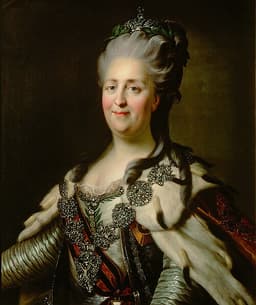
Catherine the Great
Emperor · Modern
66.8Total
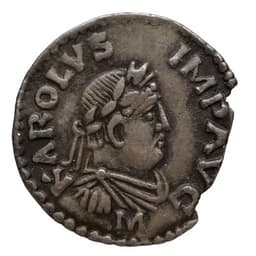
Charlemagne
Emperor · Medieval
71.0Total
Basic Information
Born
1729
748
Died
1796
814
Era
Modern
Medieval
Nationality
Russia
Frankish Empire
Occupation
Emperor
Emperor
Civilization
Western
Western
Score Comparison
Military (10%)
78.5
80.0
Political (20%)
90.0
78.0
Influence (20%)
65.0
65.0
Legacy (20%)
40.0
65.0
Leadership (15%)
80.0
80.0
Strategy (15%)
72.0
68.0
TOTAL
66.8
71.0
Catherine the Great — Complete Timeline
1762 AD
Coup d'État of 1762Political Action
Catherine II led a coup d'
CoupAccessionPower
Impact: national
1764 AD
Hermitage Museum FoundedCultural◆ Major
Catherine the Great founded the Hermitage Museum in St. Petersburg by purchasing a large collection of paintings from Berlin. The museum grew into one of the world's largest art collections, reflecting her patronage of Enlightenment culture.
ArtMuseumEnlightenment
Impact: globalconstructive
1768 AD
Russo-Turkish War (1768-1774)War◆ Major
Catherine the Great initiated a war against the Ottoman Empire, resulting in Russian victory. The Treaty of K
WarOttoman EmpireExpansion
Impact: regional
1783 AD
Annexation of CrimeaPolitical Action◆ Major
Catherine the Great formally annexed the Crimean Peninsula from the Ottoman Empire. This strategic acquisition gave Russia a dominant position in the Black Sea and a warm-water port, fulfilling a long-standing imperial ambition.
AnnexationCrimeaBlack Sea
Impact: regional
1785 AD
Charter to the Gentry GrantedReform◆ Major
Catherine the Great issued the Charter to the Gentry, which codified the rights and privileges of the Russian nobility. It exempted nobles from taxation and military service, solidifying their social status and support for her rule.
NobilityReformSocial Structure
Impact: nationalconstructive
Charlemagne — Complete Timeline
772 AD
Saxon WarsWar◆ Major
Charlemagne launched a series of campaigns against the Saxons lasting over three decades. He forcibly converted them to Christianity, incorporated their territory into the Frankish Empire, and ordered the execution of thousands at the Massacre of Verden in 782.
ConquestChristianizationWar
Impact: regionaldestructive
774 AD
Conquest of the Lombard KingdomWar◆ Major
Charlemagne answered Pope Adrian I's call for aid against the Lombards. He besieged and captured Pavia, deposed King Desiderius, and annexed the Lombard Kingdom into his domain, assuming the title 'King of the Lombards' and solidifying Frankish control over Italy.
ConquestItalyPapal Alliance
Impact: regional
779 AD
Capitulary of HerstalReform
Charlemagne issued a series of legal and administrative reforms at the assembly in Herstal. He standardized weights and measures, reformed the coinage system, and strengthened the authority of royal officials (missi dominici) to oversee local governance and justice.
Legal ReformAdministrationStandardization
Impact: nationalconstructive
780 AD
Carolingian Renaissance ReformsCultural◆ Major
Charlemagne initiated a program of educational and cultural revival, inviting scholars like Alcuin of York to his court. He standardized Latin script (Carolingian minuscule), established palace schools, and promoted the copying of classical texts, preserving ancient knowledge.
EducationCultural RevivalScript
Impact: globalprogressive
800 AD
Coronation as Holy Roman EmperorPolitical Action
Pope Leo III crowned Charlemagne as Emperor of the Romans in St. Peter's Basilica on Christmas Day. This act revived the Western Roman Empire, established a precedent for papal authority over imperial titles, and created a political entity that shaped medieval European politics.
CoronationHoly Roman EmpirePapacy
Impact: globalconstructive
Expert Analysis
Charlemagne vs Catherine the Great
### The Emperor and the Empress: Two Paths to Power in a Divided Europe
On Christmas Day in the year 800, an aging Frankish king knelt before the altar of St. Peter's Basilica in Rome. As Pope Leo III placed a golden crown upon his head, the congregation erupted in acclamation: *"To Charles, the most pious Augustus, crowned by God, great and peace-giving Emperor, life and victory!"* Nearly a thousand years later, in the dead of a St. Petersburg winter night in 1762, a German princess in her early thirties slipped into the uniform of a Russian guardsman. Mounting a horse, she rode through the snow to lead a regiment against her own husband, the Emperor. One man was crowned by a pope; the other woman seized a crown by force. Charlemagne and Catherine the Great both built empires that reshaped Europe, yet they could not have been more different in how they rose, ruled, and left their mark on history.
### Origins: The Sword and the Pen
Charlemagne was born into a world of iron and faith. The year was 748, and the Frankish kingdom was a patchwork of warring tribes and uncertain borders. His father, Pepin the Short, had just usurped the throne from the Merovingian line, and Charlemagne grew up in a court where legitimacy was earned by conquest. He learned to read Latin late in life, but he never mastered writing—a detail that speaks volumes about his world, where the sword was mightier than the quill. His education was practical: hunting, riding, and the art of war.
Catherine the Great entered the world in 1729 as Sophie of Anhalt-Zerbst, a minor German princess with little hope of ruling anything. Her upbringing was a study in survival. She devoured the works of Voltaire, Montesquieu, and Diderot, writing letters to philosophers as a young woman. When she arrived in Russia at age fifteen to marry the Grand Duke Peter, she knew she was entering a foreign court rife with intrigue. She learned Russian obsessively, converted to Orthodoxy, and read every book she could find on statecraft. Where Charlemagne was shaped by the clash of swords, Catherine was forged in the crucible of ideas.
### Rise to Power: The Anointed and the Usurper
Charlemagne's path to power was hereditary but not automatic. When his brother Carloman died suddenly in 771, Charlemagne became sole king of the Franks. His legitimacy rested on blood and the blessing of the Church. His coronation in 800 was the culmination of decades of military campaigns that had united much of Western Europe under one sword. He did not seize power from a rival; he expanded his inherited domain until the Pope had no choice but to recognize him as the defender of Christendom.
Catherine's rise was the opposite—a calculated gamble that could have ended with her head on a pike. In 1762, her husband Peter III, a man of erratic behavior and pro-Prussian sympathies, had alienated the Russian nobility and the Orthodox Church. Catherine, with the help of her lover Grigory Orlov and his brothers in the Imperial Guard, staged a coup d'état. Peter was forced to abdicate and died days later under mysterious circumstances. Catherine became Empress not by birth or divine right, but by ambition, charm, and ruthlessness. She understood that in the game of thrones, the crown belongs to those who dare to take it.
### Leadership & Governance: Reform from Above vs. Conquest from Without
Charlemagne ruled as a warrior-king. His military score of 78 reflects his relentless campaigns: the Saxon Wars, which began in 772 and lasted over three decades, saw him forcibly convert pagan tribes at sword-point. He conquered the Lombard Kingdom in 774, answering Pope Adrian I's call for aid, and extended Frankish power into Italy. Yet his genius lay not just in conquest but in administration. The Capitulary of Herstal in 779 standardized laws, weights, and measures across his realm. He invited the scholar Alcuin of York to his court, sparking the Carolingian Renaissance—a revival of learning that preserved classical texts and reformed education. Charlemagne saw himself as God's steward on Earth, responsible for both the souls and the order of his people.
Catherine governed as a philosopher-empress. Her political score of 82 underscores her mastery of the art of rule. She corresponded with Voltaire and Diderot, founded the Hermitage Museum in 1764 by purchasing a collection of paintings from Berlin, and issued the Charter to the Gentry in 1785, codifying the privileges of the nobility. She expanded Russia's borders dramatically: the Russo-Turkish War of 1768-1774 ended with Russian victory and the Treaty of Küçük Kaynarca, and she annexed Crimea in 1783, giving Russia its first warm-water ports. But her reforms were always tempered by pragmatism. She championed Enlightenment ideals in theory but maintained serfdom in practice, crushing a massive peasant revolt led by Yemelyan Pugachev. Where Charlemagne reformed by decree, Catherine reformed by negotiation—and compromise.
### Triumph & Tragedy: The Crown and the Cracks
Charlemagne's greatest triumph was his coronation in 800. It revived the idea of a unified Christian empire in the West, a vision that would haunt European politics for centuries. His greatest failure was the fragility of his legacy. He divided his empire among his sons, and within three generations of his death in 814, it had fragmented into warring kingdoms. The Carolingian Renaissance he sparked was real, but it was a fragile bloom in a dark age.
Catherine's triumph was the transformation of Russia into a European great power. She expanded its territory by over 200,000 square miles and filled St. Petersburg with art and architecture that rivaled Paris. Her tragedy was the gap between her ideals and her actions. She spoke of liberty while tightening the chains of serfdom; she wrote of justice while her court was riddled with corruption and favoritism. When she died in 1796, the French Revolution was raging, and the Enlightenment she had championed was turning against the very idea of monarchy.
### Character & Destiny: The Warrior and the Actress
Charlemagne was a man of action, not introspection. He ate sparingly, hunted tirelessly, and slept little. His personality was forged in the saddle, and his decisions were driven by a simple conviction: that he was doing God's work. This gave him immense confidence but also a certain blindness. He could not imagine that his empire would not last forever.
Catherine was a woman of masks. She wrote in her memoirs that she learned early to "be pleasant, to be honest, and to be wise"—in that order. She was a consummate actress, able to charm nobles, generals, and philosophers alike. Her decisions were driven by a calculating intelligence that weighed every move. She knew that her legitimacy was always in question, and this made her both cautious and bold at the right moments. Her personality was a tool, not a burden.
### Legacy: The Father of Europe and the Mother of Russia
Charlemagne's legacy is monumental but abstract. He is remembered as the "Father of Europe," the man who first united the continent under a single Christian banner. His Carolingian Renaissance preserved the learning that would later fuel the High Middle Ages. His military campaigns, however brutal, laid the groundwork for modern France, Germany, and Italy. His score of 80 in legacy reflects the enduring power of his myth.
Catherine's legacy is more concrete. She left Russia a modernized state, a formidable military, and a cultural capital that still stands. The Hermitage Museum remains one of the world's greatest treasure houses. But her legacy is also ambiguous: she expanded serfdom and crushed dissent, laying the groundwork for the revolutionary tensions that would erupt a century later. Her score of 72 in legacy is lower than Charlemagne's, perhaps because her achievements were more political than spiritual.
### Conclusion: Two Emperors, One Question
Sitting in St. Peter's Basilica on that Christmas morning, Charlemagne believed he was restoring the Roman Empire. Riding through the snow in St. Petersburg, Catherine believed she was building a new one. Both succeeded, and both failed. Charlemagne's empire crumbled, but his idea endured. Catherine's empire grew, but her ideals withered. In the end, they both faced the same question: can power be both great and good? Their answers were different, but the question remains. And perhaps that is why we still study them—not for the answers they gave, but for the questions they force us to ask.
Rankings
🥇
CharlemagneLeader
Mil: 80.0Pol: 78.0Inf: 65.0
71.0
🥈
Catherine the Great
Mil: 78.5Pol: 90.0Inf: 65.0
66.8
+4.2 behind
How This Comparison Works
Algorithm
Each figure is scored on 6 dimensions (0—100 scale) based on structured historical data: Military (10%), Political (20%), Influence (20%), Legacy (20%), Leadership (15%), Strategy (15%). The weighted total produces the final ranking.
Data Sources
Scores are computed from structured sub-indicators in the database. Scale factors adjust for era (Ancient ×0.85, Modern ×1.0) and civilization size (Eastern ×1.05, Other ×0.80) to account for differences in population and military scale.
Maximum 3 Figures
Comparisons are limited to 2—3 figures to ensure readability and statistical meaningfulness.
Error Margins
±5 points per dimension — Sub-scores are derived from historical records with inherent uncertainty. Two figures within 5 points on a dimension should be considered roughly equivalent in that area.
Total Score Accuracy
±3 points overall — The weighted combination of 6 dimensions produces a total score with approximately ±3 points of uncertainty. Differences of less than 3 points are not statistically significant— the figures are effectively tied.
Known Limitations
- Historical records are incomplete and uneven across civilizations
- Figures from oral-tradition societies may be underrepresented
- Occupation labels can misclassify multi-role figures
- Scores measure capability and impact, not moral character
- Quantitative scoring is a comparison tool, not absolute truth
Capability Radar
Military (10%) — Battles & Warfare
Battles
85
85
Win Rate
80
90
Expansion
90
88
Political (20%) — Governance & Reform
Reform
90
90
Diplomacy
85
80
Economy
85
75
Influence (20%) — Cultural & Global Reach
Cultural
85
85
Global
80
80
Legacy (20%) — Historical Impact
Historical
85
90
Longevity
80
85
Leadership (15%) — Power & Stability
Tenure
95
85
Stability
80
70
Strategy (15%) — Tactics & Innovation
Strategy
85
85
Tactics
75
75
Reform
90
80
Similar Comparisons
Comments & Discussion
SwordAndSceptre6/16/2026
Charlemagne was a brute with PR savvy. He forced 30 years of bloodshed on the Saxons before crowning himself Emperor—mass executions, mass baptisms. His 'learning' was secondhand, and he couldn't even write his own name. Catherine at least read Montesquieu and Diderot, even if she ignored their principles. I'd rather have tea with an autocrat who actually picks up a book than one whose legacy rests on piles of pagan skulls.
CounterCannon6/16/2026
You're romanticizing a royal coup. Catherine's 'enlightened' reign was built on serfdom and a dead husband. She expanded Russia's borders not through virtue but by bribing nobles and crushing the Pugachev Rebellion with ferocity that'd make Charlemagne blush. The man built schools and fought illiteracy campaigns—Catherine just wrote letters to Voltaire for optics. Give me the Frank who actually tried to civilize, not the German who staged coups for vanity.
ParchmentAndPowder6/16/2026
一个靠教皇加冕,一个靠杀掉老公上位。查理曼至少能吹自己是"上帝的工具",叶卡捷琳娜呢?一场宫廷政变加一杯毒酒。她的"启蒙君主"人设全靠骗哄欧洲哲学家当笔友,结果回国就把农奴制坐实了。查理曼还知道建学校、让文人抄经典,她除了抢土地、养情夫,到底给俄罗斯留下了什么?一个更大的牢笼罢了。
古典在握6/16/2026
别拿"没文化"说事。查理曼宫廷里聚集了阿尔昆这样的知识分子,誊抄维吉尔的著作,保留了古罗马智慧的余烬。他虽是文盲,却建立了整个中世纪教育体系。而叶卡捷琳娜呢?她会写信、会斗权术,但她的"启蒙"只存在于给狄德罗的信纸里。俄国农奴连自己名字都写不出来,她可关心过?文化人的虚伪,比野蛮人的无知更可悲。