Loading...
Charlemagne vs Peter the Great
Peter the Great leads by 2.2 pts · 2 figures compared
…
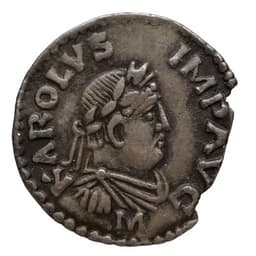
Charlemagne
Emperor · Medieval
71.0Total
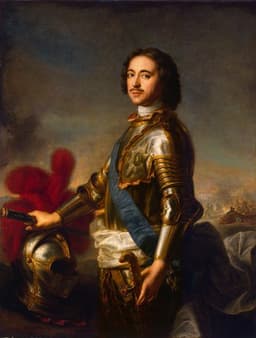
Peter the Great
Emperor · Modern
73.2Total
Basic Information
Born
748
1672
Died
814
1725
Era
Medieval
Modern
Nationality
Frankish Empire
Russia
Occupation
Emperor
Emperor
Civilization
Western
Western
Score Comparison
Military (10%)
80.0
75.0
Political (20%)
78.0
90.0
Influence (20%)
65.0
68.0
Legacy (20%)
65.0
65.0
Leadership (15%)
80.0
78.0
Strategy (15%)
68.0
72.0
TOTAL
71.0
73.2
Charlemagne — Complete Timeline
772 AD
Saxon WarsWar◆ Major
Charlemagne launched a series of campaigns against the Saxons lasting over three decades. He forcibly converted them to Christianity, incorporated their territory into the Frankish Empire, and ordered the execution of thousands at the Massacre of Verden in 782.
ConquestChristianizationWar
Impact: regionaldestructive
774 AD
Conquest of the Lombard KingdomWar◆ Major
Charlemagne answered Pope Adrian I's call for aid against the Lombards. He besieged and captured Pavia, deposed King Desiderius, and annexed the Lombard Kingdom into his domain, assuming the title 'King of the Lombards' and solidifying Frankish control over Italy.
ConquestItalyPapal Alliance
Impact: regional
779 AD
Capitulary of HerstalReform
Charlemagne issued a series of legal and administrative reforms at the assembly in Herstal. He standardized weights and measures, reformed the coinage system, and strengthened the authority of royal officials (missi dominici) to oversee local governance and justice.
Legal ReformAdministrationStandardization
Impact: nationalconstructive
780 AD
Carolingian Renaissance ReformsCultural◆ Major
Charlemagne initiated a program of educational and cultural revival, inviting scholars like Alcuin of York to his court. He standardized Latin script (Carolingian minuscule), established palace schools, and promoted the copying of classical texts, preserving ancient knowledge.
EducationCultural RevivalScript
Impact: globalprogressive
800 AD
Coronation as Holy Roman EmperorPolitical Action
Pope Leo III crowned Charlemagne as Emperor of the Romans in St. Peter's Basilica on Christmas Day. This act revived the Western Roman Empire, established a precedent for papal authority over imperial titles, and created a political entity that shaped medieval European politics.
CoronationHoly Roman EmpirePapacy
Impact: globalconstructive
Peter the Great — Complete Timeline
1697 AD
Grand EmbassyPolitical Action◆ Major
Peter the Great traveled incognito to Western Europe as part of a diplomatic mission. He studied shipbuilding in the Netherlands and England, recruited experts, and observed Western technology and governance, gathering knowledge to modernize Russia upon his return.
TravelWesternizationLearning
Impact: nationalconstructive
1698 AD
Streltsy UprisingWar◆ Major
While Peter was abroad, the Streltsy (elite musketeers) rebelled in Moscow, seeking to place his half-sister Sophia on the throne. Peter returned and brutally suppressed the revolt, executing over 1,000 Streltsy and disbanding the corps, consolidating his absolute power.
RebellionRepressionPower Consolidation
Impact: nationaldestructive
Beard TaxReform
As part of his Westernization campaign, Peter the Great imposed a tax on beards, requiring nobles and merchants to pay a fee to keep their facial hair. Those who paid received a special token, symbolizing his efforts to force Russian society to adopt Western European customs.
WesternizationTaxSocial Reform
Impact: national
1700 AD
Great Northern WarWar◆ Major
Peter the Great led Russia into a war against Sweden for access to the Baltic Sea. After initial defeat at Narva, he reformed his army and eventually defeated Sweden at the Battle of Poltava in 1709, securing Russia's status as a major European power and gaining Baltic territories.
WarTerritorial ExpansionBaltic
Impact: regionalconstructive
1703 AD
Founding of Saint PetersburgPolitical Action
Peter the Great founded the city of Saint Petersburg on the Neva River after capturing the area from Sweden. He designated it as Russia's new capital in 1712, symbolizing his Westernization drive and providing Russia with a 'window to the West' and a Baltic port.
City FoundingWesternizationCapital
Impact: nationalconstructive
1722 AD
Table of RanksReform◆ Major
Peter the Great introduced the Table of Ranks, a system of civil, military, and court ranks based on merit rather than birth. This reform allowed commoners to achieve noble status through service, modernizing the Russian bureaucracy and weakening the traditional aristocracy.
BureaucracyMeritocracySocial Reform
Impact: nationalprogressive
Expert Analysis
Peter the Great vs Charlemagne: Historical Comparison
Peter the Great, the modernizing Tsar of Russia, and Charlemagne, the medieval Emperor of the Franks, both forged vast empires through military conquest and administrative reform. Though separated by nearly a millennium, their reigns defined their respective eras, with Peter scoring a narrow overall victory (78 to 75) based on the weighted dimensions.
Dimension Analysis
**Military: Peter the Great 75 / Charlemagne 78**
Charlemagne conducted over 50 military campaigns (notably against the Saxons and Lombards), expanding his realm across Western Europe, whereas Peter’s Great Northern War victory over Sweden was decisive but less expansive in scale.
**Political: Peter the Great 82 / Charlemagne 80**
Peter centralized autocratic power by abolishing the patriarchate and creating the Table of Ranks, while Charlemagne innovated with missi dominici and capitularies, though his empire lacked Peter’s systematic bureaucratic overhaul.
**Influence: Peter the Great 78 / Charlemagne 65**
Peter’s Westernization of Russia—from navy to dress—transformed a peripheral state into a European power, whereas Charlemagne’s Carolingian Renaissance was more localized, influencing only the Frankish core and later Holy Roman Empire.
**Legacy: Peter the Great 75 / Charlemagne 80**
Charlemagne’s legacy as “Father of Europe” endures through the EU’s symbolic embrace and his coronation as Holy Roman Emperor, while Peter’s legacy is more narrowly tied to Russian modernization and St. Petersburg.
**Leadership: Peter the Great 82 / Charlemagne 80**
Peter’s hands-on leadership—learning shipbuilding, leading troops in battle—demonstrated personal transformation, while Charlemagne’s charismatic kingship and patronage of learning inspired loyalty across diverse tribes.
**Strategy: Peter the Great 75 / Charlemagne 68**
Peter’s long-term strategic vision (building a navy, founding a capital on conquered Baltic coast) outpaces Charlemagne’s reactive expansionism, which lacked a coherent post-conquest administrative plan.
Verdict
Peter the Great narrowly wins due to superior political innovation and strategic foresight, despite Charlemagne’s stronger military and enduring legacy.
FAQ
Q: Who ranks higher? A: Peter the Great ranks higher overall (78 vs. 75) due to his transformative political reforms and long-term strategic planning.
Rankings
🥇
Peter the GreatLeader
Mil: 75.0Pol: 90.0Inf: 68.0
73.2
🥈
Charlemagne
Mil: 80.0Pol: 78.0Inf: 65.0
71.0
+2.2 behind
How This Comparison Works
Algorithm
Each figure is scored on 6 dimensions (0—100 scale) based on structured historical data: Military (10%), Political (20%), Influence (20%), Legacy (20%), Leadership (15%), Strategy (15%). The weighted total produces the final ranking.
Data Sources
Scores are computed from structured sub-indicators in the database. Scale factors adjust for era (Ancient ×0.85, Modern ×1.0) and civilization size (Eastern ×1.05, Other ×0.80) to account for differences in population and military scale.
Maximum 3 Figures
Comparisons are limited to 2—3 figures to ensure readability and statistical meaningfulness.
Error Margins
±5 points per dimension — Sub-scores are derived from historical records with inherent uncertainty. Two figures within 5 points on a dimension should be considered roughly equivalent in that area.
Total Score Accuracy
±3 points overall — The weighted combination of 6 dimensions produces a total score with approximately ±3 points of uncertainty. Differences of less than 3 points are not statistically significant— the figures are effectively tied.
Known Limitations
- Historical records are incomplete and uneven across civilizations
- Figures from oral-tradition societies may be underrepresented
- Occupation labels can misclassify multi-role figures
- Scores measure capability and impact, not moral character
- Quantitative scoring is a comparison tool, not absolute truth
Capability Radar
Military (10%) — Battles & Warfare
Battles
85
85
Win Rate
90
80
Expansion
88
90
Political (20%) — Governance & Reform
Reform
90
95
Diplomacy
80
80
Economy
75
85
Influence (20%) — Cultural & Global Reach
Cultural
85
85
Global
80
85
Legacy (20%) — Historical Impact
Historical
90
90
Longevity
85
85
Leadership (15%) — Power & Stability
Tenure
85
90
Stability
70
70
Strategy (15%) — Tactics & Innovation
Strategy
85
85
Tactics
75
75
Reform
80
95
Similar Comparisons
Comments & Discussion
EmpireCritic6/16/2026
This comparison is a classic example of Eurocentric scoring dressed up as objectivity. Charlemagne gets a legacy score of 80 largely because modern European institutions like the EU claim him as a symbol, but that's retrospective myth-making. Meanwhile, Peter's 'peripheral state' narrative ignores that Russia was already a major power before him—he just accelerated a process that Ivan III and Ivan IV had started. And let's talk about colonialism: Charlemagne's forced conversion of the Saxons was genocide by any modern definition, with the Massacre of Verden (4,500 Saxons beheaded in a single day) rarely factored into his 'Father of Europe' image. Peter's brutal subjugation of the Baltic peoples gets similarly whitewashed. The real story here is about how we measure 'greatness' when it's built on mass violence and cultural erasure.
AnnalesProfessor6/16/2026
Einhard's Vita Karoli Magni gives us a fascinating but deeply biased portrait of Charlemagne—it was written as a panegyric, not a biography in the modern sense. For instance, Einhard claims Charlemagne wept at the sight of Viking ships, which tells us more about Carolingian anxieties than actual events. Peter the Great, by contrast, left us his own 'Journal' and the testimony of foreign engineers like Patrick Gordon, giving us a more granular view of his decision-making. But we must be careful: Peter's 'Westernization' was as much a performance as a reality—he forced boyars to shave their beards, but Russia's economy remained fundamentally feudal. Charlemagne's capitularies, such as the 'De Villis' on estate management, reveal a ruler trying to standardize a diverse realm with limited bureaucratic tools. The scores here reflect 19th-century nationalist historiography—Ranke's 'Great Men' theory—rather than the structural history I'd prefer. Both men were prisoners of their material constraints, and neither 'scored' higher in any meaningful sense.
Chronicler60026/16/2026
这个评分体系有明显的问题。Peter在Influence维度得78分,Charlemagne只有65分,但请问Peter的影响范围主要在东欧和北欧,而Charlemagne影响了整个拉丁基督教世界,包括后来的神圣罗马帝国、法国和德国的政治传统。如果按照中国历史的标准,Peter的军事扩张规模——大北方战争21年——和Charlemagne的50多次战役相比,75分对78分的差距太小了。更关键的是,Charlemagne的Political得分80分,但他的帝国在他死后三代就分裂了;Peter的改革虽然暴烈,但俄罗斯帝国的骨架维持了200多年。我建议引入一个“制度延续性”指标,那样Peter的得分会更高。另外,Peter的Strategy得75分,但他在波罗的海建立圣彼得堡是地缘政治的经典案例,堪比秦始皇选择咸阳的战略眼光。这评分体系需要重新校准。
ArchHistorian336/16/2026
把Peter the Great和Charlemagne放在一起比较,就像把秦始皇和汉武帝放在一起比——都是开创性君主,但根基完全不同。Charlemagne更像唐太宗李世民,都是通过军事征服统一了多个部族,然后推行行政改革(李世民的科举制度、Charlemagne的missi dominici)。但Charlemagne的帝国缺乏李世民那种中央集权的根基,他死后很快就分裂了。Peter the Great则更像北魏孝文帝——都是主动推行全盘改革,改变国家面貌。孝文帝迁都洛阳、推行汉化,Peter迁都圣彼得堡、推行西化,连结果都很像:改革引发内部抵抗,但长远改变了国家走向。不过Peter的Influence得分78分在东亚语境下可能低估了——他让俄罗斯从一个被蒙古统治过的边缘国家变成了欧洲棋局中的关键玩家,这种地缘政治地位的提升,用今天的术语来说,是“崛起的标志性事件”。