Loading...
Charlemagne vs Charles de Gaulle
Charlemagne leads by 2.8 pts · 2 figures compared
…
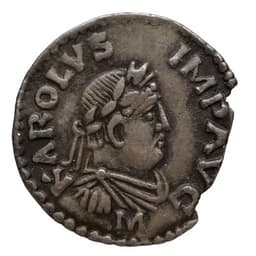
Charlemagne
Emperor · Medieval
71.0Total
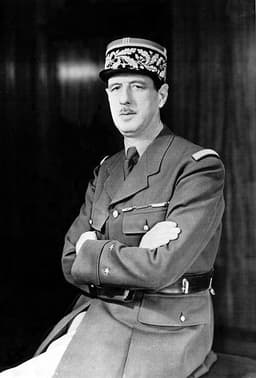
Charles de Gaulle
Politician · Modern
68.2Total
Basic Information
Born
748
1890
Died
814
1970
Era
Medieval
Modern
Nationality
Frankish Empire
France
Occupation
Emperor
Politician
Civilization
Western
Western
Score Comparison
Military (10%)
80.0
55.0
Political (20%)
78.0
75.0
Influence (20%)
65.0
65.0
Legacy (20%)
65.0
68.0
Leadership (15%)
80.0
78.0
Strategy (15%)
68.0
65.0
TOTAL
71.0
68.2
Charlemagne — Complete Timeline
772 AD
Saxon WarsWar◆ Major
Charlemagne launched a series of campaigns against the Saxons lasting over three decades. He forcibly converted them to Christianity, incorporated their territory into the Frankish Empire, and ordered the execution of thousands at the Massacre of Verden in 782.
ConquestChristianizationWar
Impact: regionaldestructive
774 AD
Conquest of the Lombard KingdomWar◆ Major
Charlemagne answered Pope Adrian I's call for aid against the Lombards. He besieged and captured Pavia, deposed King Desiderius, and annexed the Lombard Kingdom into his domain, assuming the title 'King of the Lombards' and solidifying Frankish control over Italy.
ConquestItalyPapal Alliance
Impact: regional
779 AD
Capitulary of HerstalReform
Charlemagne issued a series of legal and administrative reforms at the assembly in Herstal. He standardized weights and measures, reformed the coinage system, and strengthened the authority of royal officials (missi dominici) to oversee local governance and justice.
Legal ReformAdministrationStandardization
Impact: nationalconstructive
780 AD
Carolingian Renaissance ReformsCultural◆ Major
Charlemagne initiated a program of educational and cultural revival, inviting scholars like Alcuin of York to his court. He standardized Latin script (Carolingian minuscule), established palace schools, and promoted the copying of classical texts, preserving ancient knowledge.
EducationCultural RevivalScript
Impact: globalprogressive
800 AD
Coronation as Holy Roman EmperorPolitical Action
Pope Leo III crowned Charlemagne as Emperor of the Romans in St. Peter's Basilica on Christmas Day. This act revived the Western Roman Empire, established a precedent for papal authority over imperial titles, and created a political entity that shaped medieval European politics.
CoronationHoly Roman EmpirePapacy
Impact: globalconstructive
Charles de Gaulle — Complete Timeline
1940 AD
Appeal of 18 June 1940Political Action
From London, de Gaulle broadcast a radio appeal urging French resistance against Nazi occupation. He called on French soldiers and citizens to continue the fight, founding the Free French Forces and becoming the symbol of French defiance.
World War IIResistanceLeadership
Impact: nationalconstructive
1958 AD
Founding of the Fifth RepublicPolitical Action
De Gaulle returned to power during the Algerian crisis and oversaw the drafting of a new constitution. The Fifth Republic established a strong executive presidency, replacing the unstable parliamentary system of the Fourth Republic.
ConstitutionGovernment ReformPolitical System
Impact: nationalconstructive
1962 AD
End of the Algerian WarPolitical Action◆ Major
De Gaulle negotiated the
DecolonizationPeace TreatyAlgeria
Impact: regionalconstructive
1968 AD
May 1968 CrisisPolitical Action◆ Major
Mass student protests and general strikes paralyzed France, challenging de Gaulle's government. De Gaulle briefly fled to Germany, then returned to dissolve the National Assembly and call elections, which his party won, but his authority was weakened.
ProtestPolitical CrisisSocial Unrest
Impact: nationaldestructive
1969 AD
Resignation as PresidentPolitical Action
De Gaulle resigned after losing a referendum on regional reform and Senate restructuring. The defeat marked the end of his political career, as he withdrew from public life and died the following year.
ResignationPolitical DefeatReferendum
Impact: nationaltragic
Expert Analysis
Charles de Gaulle vs Charlemagne
# The Two Charless: How a Medieval Emperor and a Modern President Reshaped Europe
On Christmas Day in the year 800, a tall, broad-shouldered Frankish king knelt before Pope Leo III in St. Peter's Basilica and rose as Emperor of the Romans. More than eleven centuries later, on June 18, 1940, a lanky French general stood before a BBC microphone in London and declared that France had lost a battle, but not the war. Both men bore the name Charles. Both men, in their separate ages, reached for the soul of Europe. Yet one built an empire that would inspire a continent for a millennium, while the other rescued a nation from collapse only to be driven from power by his own people. Why did their paths diverge so sharply? The answer lies not merely in their characters, but in the radically different worlds they sought to command.
Origins
Charlemagne was born in 748 into a world of chaos. The Merovingian kings of the Franks had become figureheads, and real power belonged to his father, Pepin the Short, a mayor of the palace who had seized the throne with the pope's blessing. Charlemagne grew up in a warrior society where loyalty was measured in blood and land. He learned to ride before he could read, to command armies before he understood law. His world was one of tribes, oaths, and the constant threat of violence. Education was scarce, literacy rarer still. He would learn to read later in life but never truly mastered writing.
Charles de Gaulle was born in 1890 in Lille, into a devoutly Catholic, patriotic family. His father taught philosophy and history. Young Charles grew up reading the great French classics, dreaming of military glory, and absorbing the bitter memory of France's defeat in the Franco-Prussian War of 1870. His world was one of nations, borders, and ideologies. He attended the elite military academy of Saint-Cyr, studied strategy, and wrote books. He was a man of the printed page, of carefully crafted speeches, of constitutional theory. If Charlemagne's mind was shaped by the sword, de Gaulle's was shaped by the pen.
Rise to Power
Charlemagne inherited his kingdom in 768 upon Pepin's death, sharing power briefly with his brother Carloman. When Carloman died suddenly in 771, Charlemagne became sole king. His rise was neither cunning nor controversial—it was simply the accident of birth and death. But he understood that kingship required constant action. He began immediately to expand his realm, answering Pope Adrian I's call for aid against the Lombards in 774. He besieged and captured Pavia, deposed King Desiderius, and added the Iron Crown of Lombardy to his own. This was not ambition disguised as duty; it was ambition openly pursued through war.
De Gaulle's rise was far more precarious. In 1940, he was a little-known brigadier general when France fell to Nazi Germany. His Appeal of 18 June was a desperate gamble, a voice crying in the wilderness. He had no army, no territory, no legitimacy. The Vichy government condemned him to death. He was, in those dark years, a man who existed only through the force of his own will and the support of a skeptical Winston Churchill. Where Charlemagne inherited power, de Gaulle had to invent it—from scratch, in exile, against overwhelming odds.
Leadership & Governance
Charlemagne ruled through personal presence and constant movement. He held assemblies, issued capitularies like the one at Herstal in 779 standardizing weights and measures, and personally led campaigns. His Saxon Wars, launched in 772, lasted over three decades and were brutal beyond modern imagination. He forced conversion at swordpoint, executed thousands who resisted, and deported entire populations. Yet this same man initiated the Carolingian Renaissance, inviting the scholar Alcuin of York to his court, reforming education, and preserving classical texts that might otherwise have been lost. He was a paradox: a warrior who valued learning, a conqueror who built schools.
De Gaulle governed through institutions and ideas. When he returned to power in 1958 during the Algerian crisis, he did not seize power—he was recalled by a nation in desperate need of direction. He founded the Fifth Republic, drafting a constitution that strengthened the presidency and provided stability. He ended the Algerian War through the Évian Accords of 1962, facing fierce opposition from military hardliners who had helped bring him to power. His leadership was strategic, patient, and often solitary. He understood that modern governance required not just strength but legitimacy, not just commands but consent.
Triumph & Tragedy
Charlemagne's greatest moment came on Christmas Day 800, when Pope Leo III crowned him Emperor of the Romans. It was a masterstroke of political theater, reviving the Western Roman Empire and establishing a relationship between church and state that would define medieval Europe. But it also planted seeds of conflict. The Byzantine Empire refused to recognize his title, and the papacy would later claim the right to crown—and unmake—emperors. His triumph was also a trap.
De Gaulle's greatest achievement was arguably the Fifth Republic itself, a political framework that has endured for over six decades. But his tragedy came in May 1968, when student protests and general strikes paralyzed France. The man who had embodied French resistance in 1940 now seemed out of touch with a younger generation. He briefly fled to Baden-Baden, consulting with French generals, before returning to call elections. He won, but the mystique was broken. A year later, he lost a referendum on regional reform and resigned in 1969. The man who had saved France twice—from Nazi occupation and from civil war—was brought down by a vote on administrative restructuring.
Character & Destiny
Charlemagne was physically imposing, reportedly over six feet tall in an age when men were shorter. He was energetic, pragmatic, and ruthless when necessary. He married multiple times, fathered many children, and divided his empire among them—a decision that would lead to its fragmentation. He never fully grasped that ideas, not just armies, hold empires together. His personality was that of a great chieftain, not a great philosopher.
De Gaulle was aloof, intellectual, and famously haughty. He wrote that "a statesman is not a man who seeks to please, but one who seeks to lead." His sense of France's destiny was almost mystical. He believed that France could not be France without greatness. This made him indispensable in crisis but insufferable in peacetime. He could inspire a nation to resist but could not charm it to follow.
Legacy
Charlemagne's legacy is the idea of Europe itself. His empire, though short-lived, provided the template for the Holy Roman Empire that would last until 1806. The Carolingian Renaissance preserved learning through the Dark Ages. His coronation established the precedent that European rulers derived authority from both God and the people. He is remembered as the "Father of Europe."
De Gaulle's legacy is modern France. The Fifth Republic remains stable. His vision of an independent foreign policy, a nuclear deterrent, and a Europe "from the Atlantic to the Urals" still shapes French strategy. He is remembered as the man who restored French honor.
Conclusion
Two men, one name, two Europes. Charlemagne built with sword and script, creating an empire that would haunt the European imagination for centuries. De Gaulle built with words and institutions, creating a republic that endures. The medieval emperor could command armies to convert pagans; the modern president could only persuade citizens to vote. And yet both understood something essential: that power, to last, must be more than force. It must be an idea. Charlemagne gave Europe the idea of unity. De Gaulle gave France the idea of itself. In the end, perhaps that is all any leader can do—and it is enough.
Rankings
🥇
CharlemagneLeader
Mil: 80.0Pol: 78.0Inf: 65.0
71.0
🥈
Charles de Gaulle
Mil: 55.0Pol: 75.0Inf: 65.0
68.2
+2.8 behind
How This Comparison Works
Algorithm
Each figure is scored on 6 dimensions (0—100 scale) based on structured historical data: Military (10%), Political (20%), Influence (20%), Legacy (20%), Leadership (15%), Strategy (15%). The weighted total produces the final ranking.
Data Sources
Scores are computed from structured sub-indicators in the database. Scale factors adjust for era (Ancient ×0.85, Modern ×1.0) and civilization size (Eastern ×1.05, Other ×0.80) to account for differences in population and military scale.
Maximum 3 Figures
Comparisons are limited to 2—3 figures to ensure readability and statistical meaningfulness.
Error Margins
±5 points per dimension — Sub-scores are derived from historical records with inherent uncertainty. Two figures within 5 points on a dimension should be considered roughly equivalent in that area.
Total Score Accuracy
±3 points overall — The weighted combination of 6 dimensions produces a total score with approximately ±3 points of uncertainty. Differences of less than 3 points are not statistically significant— the figures are effectively tied.
Known Limitations
- Historical records are incomplete and uneven across civilizations
- Figures from oral-tradition societies may be underrepresented
- Occupation labels can misclassify multi-role figures
- Scores measure capability and impact, not moral character
- Quantitative scoring is a comparison tool, not absolute truth
Capability Radar
Military (10%) — Battles & Warfare
Battles
85
60
Win Rate
90
55
Expansion
88
20
Political (20%) — Governance & Reform
Reform
90
95
Diplomacy
80
90
Economy
75
70
Influence (20%) — Cultural & Global Reach
Cultural
85
70
Global
80
80
Legacy (20%) — Historical Impact
Historical
90
85
Longevity
85
75
Leadership (15%) — Power & Stability
Tenure
85
85
Stability
70
75
Strategy (15%) — Tactics & Innovation
Strategy
85
85
Tactics
75
70
Reform
80
80
Similar Comparisons
Comments & Discussion
The Rune Reviver6/16/2026
Charlemagne didn't just fight Saxons for 30 years—he had thousands beheaded in a single day at Verden. De Gaulle never held a massacre like that, but he also didn't have to. The Carolingian Empire held together through sheer terror and Catholic blessing, while de Gaulle's Free France won through radio waves and defiance. One used swords, the other speeches. Neither was gentle. But Charlemagne's bloodshed built a myth; de Gaulle's pride just rebuilt a wounded country. Apples and war-axes.
克娄巴特拉之眼6/16/2026
你们都在吹查理曼"欧洲之父",可他把萨克森人当韭菜割,把伦巴第人当垫脚石。戴高乐至少知道二战后的法国要靠团结 plutôt qu'征服。查理曼的帝国在他孙子手里就裂成三块了,而戴高乐留下的第五共和国到现在还站着。一个用跪教皇换皇冠,一个用BBC麦克风撑起自由法国。事实是,查理曼的遗产是碎掉的王国,戴高乐的遗产是活着的宪法。别吹了。
The Data Skeptic6/16/2026
Let's do numbers. Charlemagne's empire was ~1.2 million km² at its peak, but under 20% literacy among nobles. De Gaulle's Fifth Republic: 551,000 km², but universal adult literacy and a GDP per capita about 300 times higher. "Reshaped Europe"? Charlemagne unified western Europe for the first time since Rome, but he didn't have to deal with steel factories or nuclear bombs. The scale of influence isn't comparable. Medieval barbarian vs. modern statesman. Apples and supercomputers.
古罗马迷踪6/16/2026
戴高乐在1966年退出北约军事指挥时,很多人说他疯了。但想想查理曼在公元800年跟教皇搞的那套——他把神圣罗马帝国的权力基础建立在教会合法性上。戴高乐要的是法国独立,查理曼要的是教会背书。两个人都在玩权力游戏,但对手完全不一样。戴高乐面对的是美苏冷战版图,查理曼面对的是部落领主和主教。一个是地缘政治大师,一个是宗教军阀。差别就是时代本身。
The Revisionist Edge6/16/2026
Everyone calls Charlemagne "the Father of Europe." But his actual Europe was a barely-connected network of feudal looting zones. De Gaulle didn't need to conquer—he sold France as a moral force after Vichy's shame. That's harder. Charlemagne used blood to create a crown; de Gaulle used stubborn pride to restore one. Charlemagne's empire turned into Germany and France killing each other for centuries. De Gaulle's vision kept them in the EU. Who really reshaped Europe? The guy who stopped the wars