Loading...
Charlemagne vs Mao Zedong
Mao Zedong leads by 8.4 pts · 2 figures compared
…
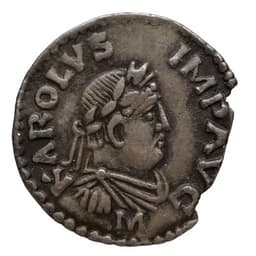
Charlemagne
Emperor · Medieval
71.0Total
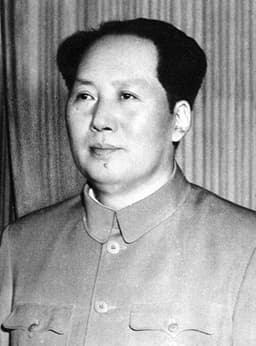
Mao Zedong
Politician · Modern
79.4Total
Basic Information
Born
748
1893
Died
814
1976
Era
Medieval
Modern
Nationality
Frankish Empire
China
Occupation
Emperor
Politician
Civilization
Western
Eastern
Score Comparison
Military (10%)
80.0
75.0
Political (20%)
78.0
88.0
Influence (20%)
65.0
85.0
Legacy (20%)
65.0
70.0
Leadership (15%)
80.0
85.0
Strategy (15%)
68.0
72.0
TOTAL
71.0
79.4
Charlemagne — Complete Timeline
772 AD
Saxon WarsWar◆ Major
Charlemagne launched a series of campaigns against the Saxons lasting over three decades. He forcibly converted them to Christianity, incorporated their territory into the Frankish Empire, and ordered the execution of thousands at the Massacre of Verden in 782.
ConquestChristianizationWar
Impact: regionaldestructive
774 AD
Conquest of the Lombard KingdomWar◆ Major
Charlemagne answered Pope Adrian I's call for aid against the Lombards. He besieged and captured Pavia, deposed King Desiderius, and annexed the Lombard Kingdom into his domain, assuming the title 'King of the Lombards' and solidifying Frankish control over Italy.
ConquestItalyPapal Alliance
Impact: regional
779 AD
Capitulary of HerstalReform
Charlemagne issued a series of legal and administrative reforms at the assembly in Herstal. He standardized weights and measures, reformed the coinage system, and strengthened the authority of royal officials (missi dominici) to oversee local governance and justice.
Legal ReformAdministrationStandardization
Impact: nationalconstructive
780 AD
Carolingian Renaissance ReformsCultural◆ Major
Charlemagne initiated a program of educational and cultural revival, inviting scholars like Alcuin of York to his court. He standardized Latin script (Carolingian minuscule), established palace schools, and promoted the copying of classical texts, preserving ancient knowledge.
EducationCultural RevivalScript
Impact: globalprogressive
800 AD
Coronation as Holy Roman EmperorPolitical Action
Pope Leo III crowned Charlemagne as Emperor of the Romans in St. Peter's Basilica on Christmas Day. This act revived the Western Roman Empire, established a precedent for papal authority over imperial titles, and created a political entity that shaped medieval European politics.
CoronationHoly Roman EmpirePapacy
Impact: globalconstructive
Mao Zedong — Complete Timeline
1934 AD
Long MarchWar
Mao Zedong led the Chinese Red Army on a strategic retreat from Nationalist forces, covering approximately 6,000 miles over 370 days. The march solidified Mao's leadership within the Chinese Communist Party and became a foundational myth of the Communist revolution.
Chinese Civil WarCommunist RevolutionRetreat
Impact: national
1949 AD
Proclamation of the People's Republic of ChinaPolitical Action
Mao Zedong declared the founding of the People's Republic of China from Tiananmen Gate in Beijing. This ended the Chinese Civil War and established Communist rule over mainland China, with Mao as Chairman of the Central People's Government.
Founding of PRCCommunist VictoryRevolution
Impact: global
1958 AD
Great Leap ForwardReform◆ Major
Mao launched a campaign to rapidly industrialize China and collectivize agriculture. The policy led to widespread mismanagement, resulting in a famine that caused an estimated 15-45 million deaths between 1959 and 1961.
FamineIndustrializationCollectivization
Impact: nationaldestructive
1960 AD
Sino-Soviet SplitPolitical Action◆ Major
Mao's ideological differences with Soviet leader Nikita Khrushchev led to a breakdown in relations between China and the Soviet Union. The split ended the Sino-Soviet alliance and reshaped global Cold War dynamics, with China pursuing an independent path.
Cold WarIdeological ConflictAlliance Breakdown
Impact: global
1966 AD
Cultural RevolutionPolitical Action
Mao initiated a sociopolitical movement to purge capitalist and traditional elements from Chinese society. The Red Guard youth groups attacked intellectuals and officials, leading to widespread violence, destruction of cultural artifacts, and an estimated 1-2 million deaths.
Political PurgeSocial UpheavalRed Guard
Impact: nationaldestructive
1971 AD
Ping-Pong DiplomacyCultural◆ Major
Mao approved an invitation for the U.S. table tennis team to visit China, initiating a thaw in Sino-American relations. This cultural exchange paved the way for President Nixon's visit to China in 1972 and the eventual normalization of diplomatic ties.
DiplomacyU.S.-China RelationsCultural Exchange
Impact: globalconstructive
Expert Analysis
Mao Zedong vs Charlemagne
# The Emperor and the Chairman
On Christmas Day in the year 800, an aging Frankish king knelt before Pope Leo III in St. Peter's Basilica and rose as Emperor of the Romans, reviving an imperial title that had lain dormant in the West for over three centuries. Nearly twelve hundred years later, on a clear October afternoon in 1949, a man in a Sun Yat-sen suit stood atop Tiananmen Gate in Beijing and declared to a million gathered souls that the Chinese people had stood up. Charlemagne and Mao Zedong—one crowned by a pope, the other by revolution. One sought to unite Christendom, the other to remake humanity itself. What drove two men, separated by a millennium and half a world, to pursue such radically different visions of power?
Origins
Charlemagne was born into a world of warring tribes and crumbling Roman ruins. His father, Pepin the Short, had deposed the last Merovingian king with the pope's blessing, establishing a new dynasty that fused Frankish swords with Christian legitimacy. Young Charles grew up in the saddle, learning to hunt, fight, and pray with equal intensity. The Frankish court was rough and illiterate, yet his mother Bertrada taught him to value learning—a seed that would later bloom into the Carolingian Renaissance.
Mao Zedong emerged from an entirely different world—a China in collapse. Born to a prosperous peasant family in Hunan province, he watched his father's ruthless accumulation of land while the Qing Dynasty crumbled under foreign humiliation. Mao devoured Chinese classics and revolutionary pamphlets with equal hunger. Where Charlemagne inherited a throne, Mao inherited a civilization in crisis. The Confucian order that had held China together for two millennia was disintegrating, and the young librarian from Peking University believed he had found the blueprint for its rebirth in Marxism.
Rise to Power
Charlemagne's ascent was almost preordained. When his brother Carloman died suddenly in 771, Charles seized sole control of the Frankish kingdom. He spent his first decade as sole king subduing rebellions in Aquitaine and Italy, but his defining moment came in 774 when Pope Adrian I called for help against the Lombards. Charlemagne marched his army over the Alps, besieged Pavia, and deposed King Desiderius. He did not merely defeat an enemy; he crowned himself King of the Lombards, annexing northern Italy into his growing empire. The pope had called for a protector; he got a master.
Mao's rise was far more precarious. The Long March of 1934–35 was not a triumphant campaign but a desperate retreat, with the Communist Red Army fleeing Chiang Kai-shek's Nationalists across 6,000 miles of China's harshest terrain. Mao emerged from this ordeal not as a conquering king but as a revolutionary survivor, his authority forged in hunger, frostbite, and betrayal. At the Zunyi Conference during the march, he seized control of the Communist Party—not through inheritance or coronation, but through sheer will and strategic cunning. His proclamation of the People's Republic in 1949 was the culmination of a civil war that had killed millions, not a coronation blessed by heaven.
Leadership & Governance
Charlemagne governed through personal presence and constant movement. He had no fixed capital; his court traveled across his empire, issuing decrees called capitularies that standardized weights, measures, and church practices. The Capitulary of Herstal in 779 reformed legal procedures, while his educational reforms brought the scholar Alcuin of York to his court, sparking a revival of Latin learning, manuscript copying, and monastic education. Charlemagne's rule was personal and patriarchal—he knew his counts by name, punished corruption severely, and insisted on learning basic Latin and arithmetic himself.
Mao governed through ideology and permanent revolution. His Great Leap Forward of 1958 attempted to industrialize China overnight, mobilizing hundreds of millions of peasants into communes and backyard steel furnaces. The result was catastrophic famine that killed an estimated 30 million people. Yet Mao refused to admit failure, instead launching the Cultural Revolution in 1966 to purge the party of "capitalist roaders" and revive revolutionary fervor. Where Charlemagne built schools and monasteries, Mao burned books and destroyed temples. Where the Frankish emperor sought to unify Christendom, the Chinese chairman sought to destroy the old world entirely.
Triumph & Tragedy
Charlemagne's greatest triumph was his coronation as Holy Roman Emperor—a title that would shape European politics for a millennium. Yet his Saxon Wars, lasting over three decades from 772 onward, reveal a darker side: forced conversions, mass executions at Verden in 782, and the destruction of Saxon sacred sites. He unified Europe at the point of a sword, and the blood never fully dried.
Mao's triumph was undeniably the creation of a unified, independent China—the first strong central state since the fall of the Qing. His Ping-Pong Diplomacy of 1971 reopened relations with the United States, ending decades of isolation. Yet his tragedies were on a scale Charlemagne could never have imagined: the Great Leap Forward's famine, the Cultural Revolution's terror, the destruction of China's cultural heritage. Mao remade a nation, but at a cost that still haunts its memory.
Character & Destiny
Charlemagne was pragmatic, pious, and personal. He slept little, ate sparingly, and loved hunting. He married multiple times, fathered many children, and wept at the deaths of his sons. His faith was genuine but instrumental—he used the Church to unify his realm while keeping its popes firmly under his thumb. He died in 814, having built an empire that would not survive his grandsons but a legacy that would outlast them.
Mao was philosophical, ruthless, and remote. He wrote poetry about struggle, admired Napoleon and Qin Shi Huang, and believed that "power grows out of the barrel of a gun." His personal life was tumultuous, his relationships with colleagues paranoid, his final years isolated and suspicious. He died in 1976, leaving a China transformed but traumatized, a party that revered him but feared his return.
Legacy
Charlemagne is remembered as the "Father of Europe," the man who first gave the continent a semblance of unity. His Carolingian Renaissance preserved classical learning, his empire provided the template for medieval kingship, and his coronation established the relationship between church and state that would define Western civilization. His scores—Military 78, Political 80, Influence 65, Legacy 80—reflect a ruler who built something that lasted, even if it fractured.
Mao's legacy is far more contested. His Political 82 and Leadership 80 acknowledge his revolutionary success, but his Influence 79 and Legacy 69 hint at the deep ambivalence. He is the founder of modern China, yet his policies caused the deadliest famine in human history. He is revered by the Communist Party that still rules China, yet his Cultural Revolution nearly destroyed the party he built. China today is a capitalist powerhouse that would horrify the Mao of 1949, yet it exists only because of the unified state he created.
Conclusion
Charlemagne and Mao Zedong never met, never corresponded, never could have understood each other. One believed in a God who crowned emperors; the other believed in history that crushed classes. One built schools to teach Latin grammar; the other mobilized youth to destroy old learning. Yet both were men who took shattered worlds and forced them into new shapes. Charlemagne's Europe was born from the ruins of Rome; Mao's China emerged from the rubble of empire. Both used violence, both left blood, both created something that outlasted them. The difference is not in their methods but in their visions: Charlemagne sought to restore an old order, Mao to create a new one. One looked backward to a golden age; the other forward to a utopia. History, as always, judges both by what they actually built—and by what they destroyed along the way.
Rankings
🥇
Mao ZedongLeader
Mil: 75.0Pol: 88.0Inf: 85.0
79.4
🥈
Charlemagne
Mil: 80.0Pol: 78.0Inf: 65.0
71.0
+8.4 behind
How This Comparison Works
Algorithm
Each figure is scored on 6 dimensions (0—100 scale) based on structured historical data: Military (10%), Political (20%), Influence (20%), Legacy (20%), Leadership (15%), Strategy (15%). The weighted total produces the final ranking.
Data Sources
Scores are computed from structured sub-indicators in the database. Scale factors adjust for era (Ancient ×0.85, Modern ×1.0) and civilization size (Eastern ×1.05, Other ×0.80) to account for differences in population and military scale.
Maximum 3 Figures
Comparisons are limited to 2—3 figures to ensure readability and statistical meaningfulness.
Error Margins
±5 points per dimension — Sub-scores are derived from historical records with inherent uncertainty. Two figures within 5 points on a dimension should be considered roughly equivalent in that area.
Total Score Accuracy
±3 points overall — The weighted combination of 6 dimensions produces a total score with approximately ±3 points of uncertainty. Differences of less than 3 points are not statistically significant— the figures are effectively tied.
Known Limitations
- Historical records are incomplete and uneven across civilizations
- Figures from oral-tradition societies may be underrepresented
- Occupation labels can misclassify multi-role figures
- Scores measure capability and impact, not moral character
- Quantitative scoring is a comparison tool, not absolute truth
Capability Radar
Military (10%) — Battles & Warfare
Battles
85
85
Win Rate
90
80
Expansion
88
85
Political (20%) — Governance & Reform
Reform
90
95
Diplomacy
80
80
Economy
75
70
Influence (20%) — Cultural & Global Reach
Cultural
85
90
Global
80
90
Legacy (20%) — Historical Impact
Historical
90
95
Longevity
85
85
Leadership (15%) — Power & Stability
Tenure
85
95
Stability
70
60
Strategy (15%) — Tactics & Innovation
Strategy
85
85
Tactics
75
75
Reform
80
90
Similar Comparisons
Comments & Discussion
数据怀疑论者6/16/2026
光看领土大小?查理曼800年才控制100万平方公里,人口不过1500万,还是个松散集合体。毛泽东接手的是5亿多人口、世界最大的统一大陆文明。面积数字差不多,但一个是拼图,一个是长城。别拿护胸甲去比防弹衣,历史比较不能只靠地图填色,得看组织和制度密度。
历史爱好者6/16/2026
我最震撼的是他们面对民众的方式完全不同。查理曼一辈子没听过一声“人民万岁”,他甚至不大识字;毛泽东天安门喊出“中国人民站起来了”,声音穿透整个世纪。一个是神权+武力捏合的帝国,一个是以人民名义自下而上爆发的革命。这不是同一类人,但都改变了世界一半人口的历史走向。
Historian6356/16/2026
The irony is exquisite. Charlemagne spent decades trying to revive a dead empire's ghost through Latin literacy and Christian orthodoxy. Mao spent decades trying to kill China's own imperial ghost through literacy campaigns and revolutionary orthodoxy. One built cathedrals to copy Rome; the other burned temples to copy Marx. Both failed to fully erase what came before—the Frankish nobility survived, and so did Chinese family structures.
Chronicler37706/16/2026
Let's not sanitize either. Charlemagne ordered the massacre of 4,500 Saxons at Verden in 782 for refusing conversion—holy water mixed with blood. Mao's campaigns caused famines that killed tens of millions. Both were brilliant strategists, ruthless consolidators, and deeply flawed creators of foundational myths. The difference? One built a legend that lasted a thousand years; the other's legacy is still being measured—and it's not looking great.
Chronicler55826/16/2026
Calling this a fair comparison is like comparing a broadsword to a nuclear reactor. Charlemagne unified fragmented tribes through cavalry charges and feudal oaths; Mao modernized a semi-colonial giant through guerrilla warfare and total mobilization. One fought in the mud with iron, the other in the mountains with ideology. Apples and warheads. But both understood that legitimacy comes from victory—not votes.