Loading...
Carlos Manuel de Cespedes vs Enriquillo
Carlos Manuel de Cespedes leads by 1.1 pts · 2 figures compared
…
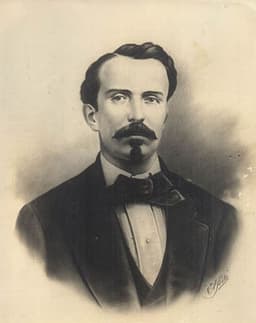
Carlos Manuel de Cespedes
Revolutionary · Modern
44.4Total
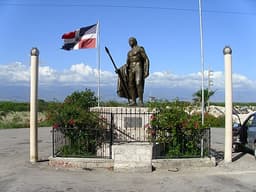
Enriquillo
Revolutionary · Medieval
43.3Total
Basic Information
Born
1819
1498
Died
1874
1535
Era
Modern
Medieval
Nationality
Cuba
Taino
Occupation
Revolutionary
Revolutionary
Civilization
Western
Other
Score Comparison
Military (10%)
50.0
50.0
Political (20%)
27.9
29.3
Influence (20%)
58.0
47.9
Legacy (20%)
50.0
41.7
Leadership (15%)
30.0
47.3
Strategy (15%)
36.8
43.7
TOTAL
44.4
43.3
Carlos Manuel de Cespedes — Complete Timeline
1868 AD
Grito de Yara (1868)Political Action
Carlos Manuel de C
IndependenceRevolutionTen Years' War
Impact: nationalprogressive
1869 AD
President of the Republic in Arms (1869)Political Action◆ Major
Céspedes was elected President of the Republic of Cuba in Arms by the Assembly of Guáimaro. He led the rebel government during the early years of the Ten Years' War, advocating for independence and the abolition of slavery. His leadership was marked by internal divisions.
PresidencyRebel GovernmentWar
Impact: national
1873 AD
Deposed and Killed (1873-1874)Political Action◆ Major
Céspedes was deposed as president by the rebel assembly in 1873 due to disagreements over military strategy and political direction. He was killed in a skirmish with Spanish troops in 1874. His death made him a martyr for Cuban independence.
DepositionDeathMartyr
Impact: nationaltragic
Enriquillo — Complete Timeline
1519 AD
Led Taino Rebellion on HispaniolaWar◆ Major
Enriquillo organized and led a rebellion of Taino people against Spanish colonial rule in the Bahoruco Mountains of Hispaniola. The rebellion lasted 14 years, with Enriquillo using guerrilla tactics to resist Spanish attempts to suppress the uprising.
Taino RebellionGuerrilla WarfareResistance
Impact: regional
1533 AD
Negotiated Peace Treaty with SpanishPolitical Action
After 14 years of rebellion, Enriquillo negotiated a peace treaty with Spanish authorities. The treaty granted the Taino rebels land and freedom from forced labor, though it required them to settle in a designated area. This was a rare negotiated settlement in the Spanish colonies.
TreatyDiplomacyTaino Rights
Impact: regionalconstructive
Received Royal Pardon from Spanish CrownPolitical Action◆ Major
As part of the peace agreement, Enriquillo received a royal pardon from the Spanish crown. He was granted the title of 'Don' and allowed to govern his community, though under Spanish oversight. This marked the end of his armed resistance.
PardonSpanish CrownTaino Leadership
Impact: regional
Expert Analysis
Carlos Manuel de Cespedes vs Enriquillo
# The Rebel and the Cacique
On October 10, 1868, a wealthy sugar planter named Carlos Manuel de Céspedes stood before his slaves on the La Demajagua plantation in eastern Cuba, freed them, and declared war on Spain. He had just lit the fuse of the Ten Years' War—a conflict that would claim hundreds of thousands of lives and set Cuba on a path toward independence. Three and a half centuries earlier, on the same island of Hispaniola, a Taino chief named Enriquillo had done something eerily similar: he led his people into the mountains to fight Spanish rule, holding out for fourteen years before negotiating a peace that granted his people a measure of autonomy. Two men, two rebellions, two vastly different outcomes. What drove one to martyrdom and the other to a negotiated settlement? The answer lies not just in their characters, but in the worlds they inhabited.
Origins
Céspedes was born into the Cuban planter aristocracy in 1819, a man of European education and Enlightenment ideals. He had studied law in Spain, traveled through Europe, and returned to Cuba imbued with the liberal nationalism sweeping the continent. His world was one of sugar mills, slave labor, and Spanish colonial bureaucracy—a system he both profited from and resented. When he freed his slaves and issued the Grito de Yara, he was not a desperate man but a privileged one making a calculated gamble.
Enriquillo, by contrast, was born around 1498 into a world already collapsing. His people, the Taino, had been decimated by disease, forced labor, and violence since Columbus arrived in 1492. He was raised by Spanish missionaries, baptized as Enrique, and educated in the ways of the colonizers. He knew Spanish, understood their legal system, and had even served as an interpreter. But when Spanish officials seized his land and assaulted his wife, he realized that literacy and loyalty meant nothing. His rebellion was not a gamble—it was a last resort.
Rise to Power
Céspedes entered history through a single dramatic act: the Grito de Yara. On that October morning in 1868, he rang the plantation bell, gathered his slaves and workers, and proclaimed Cuba's independence. It was a moment of pure theater, designed to ignite a revolution. Within weeks, thousands of rebels flocked to his banner, and he was elected President of the Republic in Arms by the Assembly of Guáimaro in 1869. His rise was swift, fueled by charisma and the sheer force of his declaration.
Enriquillo's path was slower and more desperate. In 1519, after years of personal humiliation and witnessing the destruction of his people, he led a small band of Taino into the Bahoruco Mountains of Hispaniola. There, they built a fortified settlement and waged a guerrilla war against Spanish forces. Enriquillo was not elected president; he was a cacique, a hereditary chief, but his authority came from survival. He held out year after year, using the terrain to his advantage, ambushing Spanish patrols, and never allowing his force to be destroyed in a single battle.
Leadership & Governance
Céspedes governed as a revolutionary president, but his leadership was marked by internal conflict. He believed in a centralized military command and a strong executive, but the rebel assembly—made up of planters, lawyers, and intellectuals—favored a more democratic structure. They bickered over strategy, resources, and the role of slavery in the new Cuba. Céspedes, a man of strong opinions, found himself constantly at odds with his own government. His military strategy was aggressive but poorly coordinated; he lacked the resources to take major cities, and his forces were often scattered.
Enriquillo, in contrast, governed through consensus and patience. As a cacique, he understood that his authority depended on the loyalty of his followers, not a constitution. He made no grand declarations; he simply led, fed, and protected his people. His military strategy was defensive and pragmatic: avoid pitched battles, strike when advantageous, and never overreach. When Spanish forces offered negotiations, he listened. In 1533, after fourteen years of resistance, he negotiated a peace treaty that granted the Taino a land reservation and recognized their autonomy. The Spanish crown even issued him a royal pardon and the title of "Don."
Triumph & Tragedy
Céspedes's greatest moment was also his greatest tragedy. The Grito de Yara inspired a generation of Cuban revolutionaries, but his own war ended in failure. In 1873, the rebel assembly deposed him as president, citing disagreements over military strategy and political direction. He was exiled from his own revolution. A year later, Spanish forces caught up with him; he was killed in a skirmish, his body left unburied. He died not as a triumphant liberator but as a discarded leader, his dream of independence deferred for another thirty years.
Enriquillo's triumph was the peace treaty itself. He secured what few indigenous leaders in the Americas ever achieved: a negotiated settlement that guaranteed his people's survival. But his tragedy was the slow erosion of that victory. The reservation granted to the Taino was small, and Spanish encroachment continued. By the time of Enriquillo's death in 1535, the Taino population had already collapsed from disease and assimilation. His rebellion bought time, but it could not reverse the demographic catastrophe.
Character & Destiny
Céspedes was a man of conviction and pride. He believed in the power of a single, bold gesture to change history. That belief made him a revolutionary icon but a poor politician. He could not compromise, could not delegate, and could not accept that his vision might need adjustment. His deposition was not just a political defeat—it was a reflection of his inability to build lasting institutions. He was a martyr by temperament.
Enriquillo was a survivor. He understood that rebellion was not about glory but about endurance. He knew when to fight and when to talk. His character was shaped by the reality that his people were already dying; the goal was not victory but preservation. He accepted the limits of his power and made peace with the Spanish because he saw no other path. He was a pragmatist by necessity.
Legacy
Céspedes is remembered as the "Father of the Cuban Nation." His Grito de Yara is celebrated as the starting point of Cuba's independence struggle, and his image appears on currency and monuments. His failure is often softened by the knowledge that he lit a fire that others would carry forward. José Martí, the poet and revolutionary who finally achieved Cuban independence in 1898, walked in Céspedes's shadow.
Enriquillo's legacy is more ambiguous. He is a symbol of indigenous resistance in the Caribbean, a rare example of a native leader who forced the Spanish to negotiate. But his name is not as widely known as Céspedes's, and his victory was temporary. In the Dominican Republic and Haiti, he is remembered as a folk hero, but his people are largely gone. His legacy is not a nation but a memory—a reminder of what was lost.
Conclusion
Two men, separated by centuries, both rose against the same empire. Céspedes declared war from a sugar plantation; Enriquillo fought from a mountain fortress. One died in exile, the other in peace. One inspired a nation, the other saved a remnant. Their stories remind us that rebellion is never just about courage—it is about context. Céspedes could afford to dream of independence because his world still had a future. Enriquillo fought for survival because his world was already ending. In the end, both were defeated by the forces they opposed, but both left behind something indelible: the idea that even the mightiest empire can be challenged by a man with a bell, a machete, or a mountain.
Rankings
🥇
Carlos Manuel de CespedesLeader
Mil: 50.0Pol: 27.9Inf: 58.0
44.4
🥈
Enriquillo
Mil: 50.0Pol: 29.3Inf: 47.9
43.3
+1.1 behind
How This Comparison Works
Algorithm
Each figure is scored on 6 dimensions (0—100 scale) based on structured historical data: Military (10%), Political (20%), Influence (20%), Legacy (20%), Leadership (15%), Strategy (15%). The weighted total produces the final ranking.
Data Sources
Scores are computed from structured sub-indicators in the database. Scale factors adjust for era (Ancient ×0.85, Modern ×1.0) and civilization size (Eastern ×1.05, Other ×0.80) to account for differences in population and military scale.
Maximum 3 Figures
Comparisons are limited to 2—3 figures to ensure readability and statistical meaningfulness.
Error Margins
±5 points per dimension — Sub-scores are derived from historical records with inherent uncertainty. Two figures within 5 points on a dimension should be considered roughly equivalent in that area.
Total Score Accuracy
±3 points overall — The weighted combination of 6 dimensions produces a total score with approximately ±3 points of uncertainty. Differences of less than 3 points are not statistically significant— the figures are effectively tied.
Known Limitations
- Historical records are incomplete and uneven across civilizations
- Figures from oral-tradition societies may be underrepresented
- Occupation labels can misclassify multi-role figures
- Scores measure capability and impact, not moral character
- Quantitative scoring is a comparison tool, not absolute truth
Capability Radar
Military (10%) — Battles & Warfare
Battles
30
25
Win Rate
25
30
Expansion
10
10
Political (20%) — Governance & Reform
Reform
40
15
Diplomacy
25
30
Economy
15
10
Influence (20%) — Cultural & Global Reach
Cultural
60
35
Global
50
20
Legacy (20%) — Historical Impact
Historical
65
40
Longevity
55
30
Leadership (15%) — Power & Stability
Tenure
30
40
Stability
10
25
Strategy (15%) — Tactics & Innovation
Strategy
25
40
Tactics
20
35
Reform
15
10
Similar Comparisons
Comments & Discussion
No comments yet. Be the first to share your thoughts!