Loading...
Enriquillo vs Sun Yat-sen
Sun Yat-sen leads by 9.2 pts · 2 figures compared
…
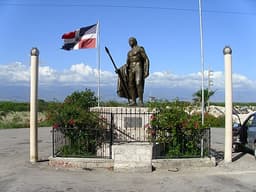
Enriquillo
Revolutionary · Medieval
43.3Total
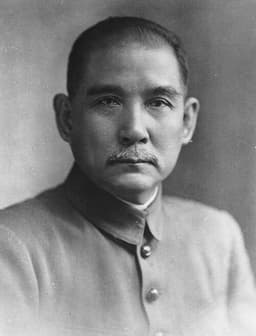
Sun Yat-sen
Revolutionary · Modern
52.5Total
Basic Information
Born
1498
1866
Died
1535
1925
Era
Medieval
Modern
Nationality
Taino
China
Occupation
Revolutionary
Revolutionary
Civilization
Other
Eastern
Score Comparison
Military (10%)
50.0
45.0
Political (20%)
29.3
68.0
Influence (20%)
47.9
61.0
Legacy (20%)
41.7
58.0
Leadership (15%)
47.3
33.5
Strategy (15%)
43.7
30.3
TOTAL
43.3
52.5
Enriquillo — Complete Timeline
1519 AD
Led Taino Rebellion on HispaniolaWar◆ Major
Enriquillo organized and led a rebellion of Taino people against Spanish colonial rule in the Bahoruco Mountains of Hispaniola. The rebellion lasted 14 years, with Enriquillo using guerrilla tactics to resist Spanish attempts to suppress the uprising.
Taino RebellionGuerrilla WarfareResistance
Impact: regional
1533 AD
Negotiated Peace Treaty with SpanishPolitical Action
After 14 years of rebellion, Enriquillo negotiated a peace treaty with Spanish authorities. The treaty granted the Taino rebels land and freedom from forced labor, though it required them to settle in a designated area. This was a rare negotiated settlement in the Spanish colonies.
TreatyDiplomacyTaino Rights
Impact: regionalconstructive
Received Royal Pardon from Spanish CrownPolitical Action◆ Major
As part of the peace agreement, Enriquillo received a royal pardon from the Spanish crown. He was granted the title of 'Don' and allowed to govern his community, though under Spanish oversight. This marked the end of his armed resistance.
PardonSpanish CrownTaino Leadership
Impact: regional
Sun Yat-sen — Complete Timeline
1894 AD
Founded the Revive China SocietyPolitical Action◆ Major
Sun Yat-sen founded the Revive China Society (Xingzhonghui) in Honolulu, the first modern revolutionary organization among overseas Chinese. The society aimed to overthrow the Qing dynasty and establish a republic, marking the beginning of organized revolutionary activity.
RevolutionOverseas ChineseRepublic
Impact: nationalconstructive
1911 AD
Led the Xinhai RevolutionPolitical Action
Sun Yat-sen's revolutionary activities culminated in the Wuchang Uprising of October 1911, which sparked the Xinhai Revolution. The uprising spread across China, leading to the abdication of the Qing emperor in 1912 and the end of 2,000 years of imperial rule.
RevolutionQing DynastyRepublic
Impact: globalconstructive
1912 AD
Proclaimed the Republic of ChinaPolitical Action
On January 1, 1912, Sun Yat-sen was inaugurated as the provisional president of the Republic of China in Nanjing. He proclaimed the establishment of the first republic in Asia, based on his Three Principles of the People: nationalism, democracy, and livelihood.
RepublicPresidencyThree Principles
Impact: globalconstructive
Resigned Presidency in Favor of Yuan ShikaiPolitical Action◆ Major
To secure the abdication of the Qing emperor and avoid civil war, Sun Yat-sen resigned the provisional presidency in February 1912 in favor of Yuan Shikai. This decision, while pragmatic, allowed Yuan to consolidate power and later attempt to restore the monarchy.
Power TransferYuan ShikaiCompromise
Impact: national
1919 AD
Reorganized the KuomintangPolitical Action◆ Major
Sun Yat-sen reorganized the Chinese Revolutionary Party into the Kuomintang (KMT) in 1919, with a more centralized structure. He later accepted Soviet aid and CCP members into the party under the policy of 'alliance with Russia and the Communists,' reshaping the revolutionary movement.
KuomintangSoviet AllianceCCP
Impact: nationalconstructive
Expert Analysis
Sun Yat-sen vs Enriquillo
# The Revolutionary's Fate: Sun Yat-sen and Enriquillo
On a January morning in 1912, Sun Yat-sen stood before the provisional assembly in Nanjing, declaring the birth of the Republic of China. Four centuries earlier and an ocean away, Enriquillo watched from the Bahoruco Mountains as Spanish soldiers patrolled the valleys below, his rebellion entering its fourth year. Both men sought to overthrow oppressive rule—one succeeded in ending an imperial dynasty, the other in securing a treaty for his people. Yet their paths, their tools, and their legacies could not be more different.
Origins
Sun Yat-sen was born in 1866 in a small village in Guangdong province, into a peasant family that had known little but hardship. His older brother, a successful emigrant in Hawaii, sent him to study abroad—an education that would prove revolutionary. In Honolulu and later Hong Kong, Sun absorbed Western ideas of democracy, republicanism, and national self-determination. He became a doctor, but his true diagnosis was that China itself was dying.
Enriquillo entered the world in 1498, the son of a Taino chief on the island of Hispaniola. His people had inhabited the Caribbean for centuries before Columbus arrived in 1492. Enriquillo was raised in a Spanish mission, educated by Franciscan friars, and given a Spanish name—a tool of colonial assimilation. He learned to read Spanish law, to speak the language of his oppressors. This knowledge would become his greatest weapon.
Their eras shaped them profoundly. Sun lived in a world of telegraphs, steamships, and global ideas. Enriquillo inhabited a medieval clash of worlds, where European steel and disease had already devastated his civilization. The Taino population of Hispaniola had collapsed from perhaps 300,000 in 1492 to fewer than 30,000 by 1519.
Rise to Power
Sun Yat-sen's rise was slow, patient, and marked by repeated failure. In 1894, at age 28, he founded the Revive China Society in Honolulu—the first modern revolutionary organization among Chinese overseas. For nearly two decades, he traveled the world, raising funds, organizing cells, and watching his uprisings fail. He was exiled, kidnapped by Qing agents in London, and nearly executed. Yet he never stopped writing, speaking, and planning.
Enriquillo's rise was different. He did not seek power; it was thrust upon him. In 1519, after enduring the murder of his wife by a Spanish colonist—a crime that went unpunished—he fled into the Bahoruco Mountains. There, he gathered other Taino refugees, escaped African slaves, and anyone who would fight. He became a cacique, a chief, not by birthright but by necessity.
Leadership & Governance
Sun Yat-sen was a political architect. His Three Principles of the People—nationalism, democracy, and livelihood—provided a blueprint for a modern China. He understood that revolution required more than guns; it required ideas. When the Wuchang Uprising of October 1911 finally sparked the Xinhai Revolution, Sun was in Denver, Colorado. He returned to China to find himself elected provisional president of the new Republic.
Yet his governance was fragile. In February 1912, facing military pressure from Yuan Shikai, Sun resigned the presidency to secure the Qing emperor's abdication and avoid civil war. It was a strategic sacrifice—but it also revealed his weakness. He had no army, no treasury, only his vision.
Enriquillo led differently. For fourteen years, from 1519 to 1533, he waged a guerrilla war from the mountains, striking Spanish settlements and vanishing into the forest. His military score of 24.0 reflects a limited capacity, but his strategy score of 49.4 hints at cunning. He knew he could not defeat the Spanish in open battle. Instead, he made the colony ungovernable, forcing the Spanish to negotiate.
The contrast is stark: Sun built institutions; Enriquillo built a resistance. Sun wrote constitutions; Enriquillo led raids. Both were revolutionaries, but their revolutions took different forms.
Triumph & Tragedy
Sun Yat-sen's greatest triumph was the Xinhai Revolution itself. On January 1, 1912, he proclaimed the Republic of China, ending over two thousand years of imperial rule. It was a moment of pure historical rupture—a peasant's son declaring a new era.
His tragedy came immediately after. He resigned the presidency in February 1912, and within years, Yuan Shikai declared himself emperor. The republic Sun had founded became a hollow shell, torn apart by warlords. Sun spent his final years in exile and frustration, reorganizing the Kuomintang in 1919, never seeing his vision fulfilled. He died in 1925 at age 58, his dream of a unified China unrealized.
Enriquillo's triumph was survival. In 1533, after fourteen years of war, he negotiated a peace treaty with Spanish authorities. The treaty granted the Taino land, freedom from forced labor, and self-governance. Enriquillo received a royal pardon and the title of "Don." For a moment, his people had won.
His tragedy was that the treaty meant nothing. Spanish colonists ignored its terms. Disease continued its work. Within decades, the Taino as a distinct people had nearly vanished. Enriquillo died in 1535, likely poisoned by Spanish settlers who saw him as a threat. His rebellion bought time, but not survival.
Character & Destiny
Sun Yat-sen was a man of grand ideals and perpetual motion. He was charismatic, tireless, and endlessly optimistic—a revolutionary who believed in the power of ideas to reshape history. His political score of 80.0 reflects his genius for organization and inspiration. But he was also naive about power. He trusted Yuan Shikai, and that trust cost China.
Enriquillo was a patient realist. He knew his limits. He did not dream of liberating all of Hispaniola—he dreamed of a corner of it where his people could live free. His leadership score of 36.2 suggests a commander of modest ability, but his legacy score of 52.4 reveals a man who outlasted expectation. He fought not for glory but for a future he would never see.
Their characters shaped their destinies. Sun reached for the stars and grasped clouds. Enriquillo held the ground and watched it slip through his fingers.
Legacy
Sun Yat-sen's legacy is monumental. His Three Principles of the People are enshrined in the constitutions of both the Republic of China on Taiwan and the People's Republic of China. He is revered as the "Father of the Nation" by both sides of the Taiwan Strait—a rare figure of unity in a divided history. His legacy score of 72.2 reflects this enduring influence.
Enriquillo's legacy is quieter but no less powerful. In the Dominican Republic, he is a national hero, a symbol of indigenous resistance. His name adorns streets, schools, and a national park. He represents the dignity of a people who refused to vanish without a fight. His legacy score of 52.4, lower than Sun's, reflects the tragedy of history: the winners write the textbooks, but the resisters write the poetry.
Conclusion
Sun Yat-sen and Enriquillo were both revolutionaries, but their revolutions were shaped by the worlds they inhabited. Sun lived in an age of nations and ideologies, where one man's ideas could reshape a civilization. Enriquillo lived in an age of empires and extermination, where survival itself was a victory.
Sun's total score of 70.6 dwarfs Enriquillo's 45.0, but numbers miss the point. Sun changed China forever; Enriquillo reminded the world that even the smallest peoples have the right to resist. One built a republic that still stands, in one form or another. The other built a memory that still burns.
In the end, both men teach us the same lesson: that revolution is not about winning—it is about refusing to accept the world as it is. Sun Yat-sen and Enriquillo, separated by centuries and oceans, were brothers in that refusal. And that, perhaps, is the truest measure of a revolutionary.
Rankings
🥇
Sun Yat-senLeader
Mil: 45.0Pol: 68.0Inf: 61.0
52.5
🥈
Enriquillo
Mil: 50.0Pol: 29.3Inf: 47.9
43.3
+9.2 behind
How This Comparison Works
Algorithm
Each figure is scored on 6 dimensions (0—100 scale) based on structured historical data: Military (10%), Political (20%), Influence (20%), Legacy (20%), Leadership (15%), Strategy (15%). The weighted total produces the final ranking.
Data Sources
Scores are computed from structured sub-indicators in the database. Scale factors adjust for era (Ancient ×0.85, Modern ×1.0) and civilization size (Eastern ×1.05, Other ×0.80) to account for differences in population and military scale.
Maximum 3 Figures
Comparisons are limited to 2—3 figures to ensure readability and statistical meaningfulness.
Error Margins
±5 points per dimension — Sub-scores are derived from historical records with inherent uncertainty. Two figures within 5 points on a dimension should be considered roughly equivalent in that area.
Total Score Accuracy
±3 points overall — The weighted combination of 6 dimensions produces a total score with approximately ±3 points of uncertainty. Differences of less than 3 points are not statistically significant— the figures are effectively tied.
Known Limitations
- Historical records are incomplete and uneven across civilizations
- Figures from oral-tradition societies may be underrepresented
- Occupation labels can misclassify multi-role figures
- Scores measure capability and impact, not moral character
- Quantitative scoring is a comparison tool, not absolute truth
Capability Radar
Military (10%) — Battles & Warfare
Battles
25
15
Win Rate
30
10
Expansion
10
5
Political (20%) — Governance & Reform
Reform
15
85
Diplomacy
30
60
Economy
10
20
Influence (20%) — Cultural & Global Reach
Cultural
35
70
Global
20
65
Legacy (20%) — Historical Impact
Historical
40
80
Longevity
30
75
Leadership (15%) — Power & Stability
Tenure
40
30
Stability
25
15
Strategy (15%) — Tactics & Innovation
Strategy
40
20
Tactics
35
10
Reform
10
40
Similar Comparisons
Comments & Discussion
数据拆解家6/16/2026
把孙逸仙和恩里基约放在一起比,纯粹是让两个数据模型跑错赛道。恩里基约叛乱的武装力量峰值不超过300人,控制区域不过多明尼加西南一片贫瘠山地。孙逸仙领导的同盟会1911年成员超十万,海外筹款累计千万美元。别看结局相似——一个推翻帝制,一个签了协议——资源投入量级差两个零。这叫跨类对比,不是传奇对传奇。
TextEagle6/16/2026
You’re comparing a literate doctor-turned-revolutionary with a semi-literate Taino chief who couldn’t even write his own treaty. Sun Yat-sen published thousands of pages, from the Three Principles to letters to Lenin. Enriquillo left zero written records—his entire story was told by Spanish friars like Las Casas. That asymmetry alone decides who gets to be a "founding father" and who fades into postcolonial myth. The archive is the real power here.
历史切片师6/16/2026
最讽刺的是两人的立国时间差:孙文1912年1月1日就任临时大总统,共和国活了不到三个月就被袁世凯吞掉。恩里基约1533年签下《巴尼条约》,给他的塔伊诺人争取到独立保留地,这个安排在他死后还延续了几十年。一个是纸面共和国,一天就倒;一个是实打实的山地王国,凭铁与血撑过半世纪。谁的革命更真?我站山里的。
民族镜鉴6/16/2026
两人都在用敌人的语言打敌人的脸,但打法不同。孙逸仙把西方民主词汇抄进中文,发明了“民族、民权、民生”;恩里基约直接用西班牙法律条文要求西班牙人遵守协议。一个是借词翻新,一个是语法反击——前者成了国父,后者却被殖民史料锁在“叛酋”标签里。如果教科书公平点,恩里基约该和孙文同栏:都是早期反殖民建国的模板,只是肤色和海拔不同。
Historian3326/16/2026
Sun Yat-sen’s revolution was a top-down coup disguised as a mass uprising. He never commanded a single decisive battle, while Enriquillo led a guerrilla war for 14 years in the craggy Bahoruco range, outsmarting Spanish arquebusiers with bows and machetes. Sun wrote pamphlets; Enriquillo wrote victory in mountain blood. Which fighter would you rather follow into a real war? There is no contest.