Loading...
Enriquillo vs Vladimir Lenin
Vladimir Lenin leads by 27.9 pts · 2 figures compared
…
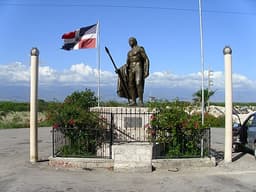
Enriquillo
Revolutionary · Medieval
43.3Total
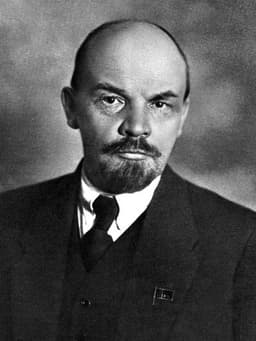
Vladimir Lenin
Revolutionary · Modern
71.2Total
Basic Information
Born
1498
1870
Died
1535
1924
Era
Medieval
Modern
Nationality
Taino
Russia
Occupation
Revolutionary
Revolutionary
Civilization
Other
Western
Score Comparison
Military (10%)
50.0
30.0
Political (20%)
29.3
78.0
Influence (20%)
47.9
82.0
Legacy (20%)
41.7
72.0
Leadership (15%)
47.3
80.0
Strategy (15%)
43.7
60.0
TOTAL
43.3
71.2
Enriquillo — Complete Timeline
1519 AD
Led Taino Rebellion on HispaniolaWar◆ Major
Enriquillo organized and led a rebellion of Taino people against Spanish colonial rule in the Bahoruco Mountains of Hispaniola. The rebellion lasted 14 years, with Enriquillo using guerrilla tactics to resist Spanish attempts to suppress the uprising.
Taino RebellionGuerrilla WarfareResistance
Impact: regional
1533 AD
Negotiated Peace Treaty with SpanishPolitical Action
After 14 years of rebellion, Enriquillo negotiated a peace treaty with Spanish authorities. The treaty granted the Taino rebels land and freedom from forced labor, though it required them to settle in a designated area. This was a rare negotiated settlement in the Spanish colonies.
TreatyDiplomacyTaino Rights
Impact: regionalconstructive
Received Royal Pardon from Spanish CrownPolitical Action◆ Major
As part of the peace agreement, Enriquillo received a royal pardon from the Spanish crown. He was granted the title of 'Don' and allowed to govern his community, though under Spanish oversight. This marked the end of his armed resistance.
PardonSpanish CrownTaino Leadership
Impact: regional
Vladimir Lenin — Complete Timeline
1903 AD
Founding of the Bolshevik PartyPolitical Action
At the Second Congress of the Russian Social Democratic Labour Party in London, Lenin led a split that created the Bolshevik faction. The Bolsheviks advocated for a disciplined vanguard party of professional revolutionaries, a key element of Lenin's political strategy.
Political PartyRevolutionIdeology
Impact: global
1917 AD
April ThesesPolitical Action◆ Major
Lenin returned to Russia from exile and published the April Theses, calling for the overthrow of the Provisional Government, transfer of power to the soviets, and an end to World War I. This document set the Bolshevik agenda for the coming revolution.
RevolutionIdeologyPolitical Strategy
Impact: national
October RevolutionPolitical Action
Lenin led the Bolshevik seizure of power in Petrograd, capturing key government buildings and the Winter Palace. The revolution overthrew the Provisional Government and established the world's first socialist state, the Russian Soviet Federative Socialist Republic.
RevolutionCoupCommunism
Impact: global
1918 AD
Treaty of Brest-LitovskPolitical Action◆ Major
Lenin signed a separate peace treaty with the Central Powers, ceding vast territories including Ukraine, Belarus, and the Baltic states. The treaty ended Russia's involvement in World War I but caused significant territorial losses and internal opposition.
TreatyWorld War ITerritorial Loss
Impact: globaldestructive
1921 AD
New Economic Policy (NEP)Reform◆ Major
Lenin introduced the NEP, allowing limited private enterprise and market mechanisms to revive the war-torn Soviet economy. The policy replaced War Communism, permitting small-scale capitalism while the state retained control of major industries.
Economic ReformPolicyRecovery
Impact: nationalconstructive
1922 AD
Establishment of the Soviet UnionPolitical Action
Lenin oversaw the creation of the Union of Soviet Socialist Republics (USSR), a federation of Soviet republics. The new state consolidated Bolshevik control over much of the former Russian Empire and became a model for communist states worldwide.
State FormationCommunismFederation
Impact: global
Expert Analysis
Vladimir Lenin vs Enriquillo
# The Revolutionary’s Crossroads: Lenin and Enriquillo
On an October night in 1917, Vladimir Lenin slipped through the fog-shrouded streets of Petrograd, his face hidden beneath a wig and cap, making his way to the Smolny Institute where armed workers and soldiers awaited his signal. Half a world away and four centuries earlier, another revolutionary—a Taino cacique named Enriquillo—stood atop a jagged peak in the Bahoruco Mountains of Hispaniola, watching Spanish columns march through the valleys below. Both men had been pushed to the edge of history by oppression, both would ignite rebellions that shook their worlds. Yet one would reshape the global order, while the other would fade into a footnote. Why did their paths diverge so drastically? The answer lies not in the size of their armies, but in the nature of their times, their ideas, and their enemies.
Origins
Lenin was born in 1870 into the Russian intelligentsia, the son of a school inspector whose comfortable life was shattered when his older brother was executed for plotting to assassinate the Tsar. That trauma turned a bookish law student into a revolutionary. Lenin devoured Marx, studied the Paris Commune, and learned that history moved through class struggle, not individual heroism. His Russia was a sprawling empire of peasants and factory workers, where autocracy seemed eternal yet teetered on the brink of collapse. The Industrial Revolution had arrived late and violently, creating a volatile mix of desperation and ambition.
Enriquillo, born in 1498, belonged to a world being erased. He was a Taino cacique, a hereditary chief of the indigenous people who first greeted Columbus. Spanish chroniclers recorded that he was raised in a Franciscan monastery, baptized as “Enrique,” and taught to read Spanish law. He witnessed firsthand the encomienda system that forced his people into gold mines and sugar fields, where disease and brutality reduced a population of perhaps 300,000 to mere thousands within a generation. Where Lenin saw a system ripe for overthrow, Enriquillo saw a flood that could only be slowed, not stopped.
Rise to Power
Lenin’s ascent was a masterpiece of political architecture. In 1903, at the Second Congress of the Russian Social Democratic Labour Party in London, he engineered a split that created the Bolsheviks—a disciplined vanguard of professional revolutionaries. He spent years in Siberian exile and Swiss libraries, writing pamphlets and plotting, waiting for the moment when the Tsar’s empire would crack. That moment came in 1917, when war and famine drove the Tsar from power. Lenin rushed home in a sealed train, and in his April Theses, he demanded not reform but revolution: “All power to the Soviets!”
Enriquillo’s rise was more desperate. By 1519, he had endured years of abuse under a Spanish encomendero named Valenzuela, who, according to the historian Bartolomé de las Casas, seized his wife and beat him publicly. Enriquillo fled to the Bahoruco Mountains, gathering a band of several hundred Taino refugees. He was not building a party; he was leading an exodus. His authority came not from ideology but from his lineage and the shared suffering of his people. He could not call a congress or publish a manifesto—he could only fight.
Leadership & Governance
Lenin governed as a revolutionary architect. After the October Revolution, he dismantled the Provisional Government, nationalized banks and factories, and created the Cheka to crush opposition. His military score of 30 reflects his lack of battlefield experience, but his political score of 80 and strategy of 65 reveal a man who understood power as a system. He signed the Treaty of Brest-Litovsk in 1918, ceding vast territories to Germany to buy time—a brutal calculation that saved his revolution at the cost of millions of square miles. Then, in 1921, he pivoted with the New Economic Policy, reintroducing limited private enterprise to revive a shattered economy. He was a pragmatist who believed the ends justified any means.
Enriquillo led differently. For fourteen years, he waged a guerrilla war from the mountains, striking Spanish settlements and then vanishing into the forest. His military score of 24 and strategy of 49 suggest he was no tactical genius, but he was a master of survival. He did not seek to destroy Spanish rule—he knew that was impossible. Instead, he forced the Spanish to negotiate. In 1533, he secured a peace treaty that granted his people land, freedom from forced labor, and a royal pardon from the Spanish crown. He even received the title of “Don.” It was a triumph of diplomacy over firepower, a recognition that the Taino were not beasts to be enslaved but a people with rights.
Triumph & Tragedy
Lenin’s greatest triumph was the creation of the Soviet Union in 1922, a new kind of state that would become a superpower and an ideological rival to the West. But his tragedy was the same: the revolution he unleashed descended into civil war, famine, and terror. By the time he died in 1924, his body ravaged by strokes, the utopia he envisioned was already stained with blood. He had set in motion forces—the cult of the party, the suppression of dissent—that would outlive him and twist his legacy.
Enriquillo’s triumph was the treaty itself, a rare moment when indigenous people forced a colonial power to concede. But his tragedy was that the peace was fragile. The Spanish soon ignored its terms, and the Taino population continued to decline. Enriquillo died around 1535, likely from disease, and his people were absorbed into the growing mestizo society of Hispaniola. He won a battle but lost a war.
Character & Destiny
Lenin was a man of iron will and icy calculation. He could be charming with allies, ruthless with enemies, and utterly convinced of his own historical correctness. “We shall now proceed to construct the socialist order,” he declared after the revolution, as if it were a matter of engineering. That certainty drove him to seize power against all odds, but it also blinded him to the human cost. His personality was perfectly suited to a moment when the old world was dying and a new one had to be built from rubble.
Enriquillo was a man of resilience and restraint. He fought not to destroy but to survive, not to conquer but to coexist. His character was shaped by a world that gave him no choice but to adapt. He did not seek to overthrow the Spanish—he sought to carve out a space where his people could live. That humility was his strength and his limitation. He could not imagine a world without Spain, because that world did not exist.
Legacy
Lenin’s legacy is vast and contested. His body lies mummified in Red Square, a symbol of a revolution that inspired millions and terrorized millions more. Marxist-Leninist ideology shaped China, Cuba, Vietnam, and much of the 20th century. His influence score of 80 and legacy of 70 reflect a man who changed the course of history, for good and ill.
Enriquillo’s legacy is quieter but no less powerful. In the Dominican Republic and Haiti, he is remembered as a symbol of indigenous resistance, a hero who stood against the genocide of his people. His name adorns streets, schools, and even a national park. But his story is a reminder of what was lost—not just a rebellion, but an entire civilization.
Conclusion
Lenin and Enriquillo both rose from oppression, both led revolutions, both faced overwhelming odds. But Lenin lived in a world of industrial power, global war, and mass ideology, where a small party could seize a state and reshape humanity. Enriquillo lived in a world of swords, horses, and smallpox, where a mountain refuge was the only fortress. One built an empire; the other saved a remnant. Their stories are not a comparison of success and failure, but a meditation on the limits of human agency. In the end, history is not made by will alone—it is made by the tools at hand, the cracks in the system, and the cruel or kind winds of fate.
Rankings
🥇
Vladimir LeninLeader
Mil: 30.0Pol: 78.0Inf: 82.0
71.2
🥈
Enriquillo
Mil: 50.0Pol: 29.3Inf: 47.9
43.3
+27.9 behind
How This Comparison Works
Algorithm
Each figure is scored on 6 dimensions (0—100 scale) based on structured historical data: Military (10%), Political (20%), Influence (20%), Legacy (20%), Leadership (15%), Strategy (15%). The weighted total produces the final ranking.
Data Sources
Scores are computed from structured sub-indicators in the database. Scale factors adjust for era (Ancient ×0.85, Modern ×1.0) and civilization size (Eastern ×1.05, Other ×0.80) to account for differences in population and military scale.
Maximum 3 Figures
Comparisons are limited to 2—3 figures to ensure readability and statistical meaningfulness.
Error Margins
±5 points per dimension — Sub-scores are derived from historical records with inherent uncertainty. Two figures within 5 points on a dimension should be considered roughly equivalent in that area.
Total Score Accuracy
±3 points overall — The weighted combination of 6 dimensions produces a total score with approximately ±3 points of uncertainty. Differences of less than 3 points are not statistically significant— the figures are effectively tied.
Known Limitations
- Historical records are incomplete and uneven across civilizations
- Figures from oral-tradition societies may be underrepresented
- Occupation labels can misclassify multi-role figures
- Scores measure capability and impact, not moral character
- Quantitative scoring is a comparison tool, not absolute truth
Capability Radar
Military (10%) — Battles & Warfare
Battles
25
20
Win Rate
30
35
Expansion
10
70
Political (20%) — Governance & Reform
Reform
15
95
Diplomacy
30
75
Economy
10
60
Influence (20%) — Cultural & Global Reach
Cultural
35
80
Global
20
90
Legacy (20%) — Historical Impact
Historical
40
95
Longevity
30
85
Leadership (15%) — Power & Stability
Tenure
40
55
Stability
25
40
Strategy (15%) — Tactics & Innovation
Strategy
40
55
Tactics
35
30
Reform
10
85
Similar Comparisons
Comments & Discussion
BreadOrBullets6/16/2026
As a military historian, I see Lenin as the genius of timing—he understood that in 1917, it wasn’t about having the biggest army (he had maybe 25,000 Red Guards at the start), but about seizing the *moment*. Enriquillo, by contrast, fought a brilliant guerrilla war from 1519-33, holding out with 6,000 Taino in the Bahoruco Mountains, but he never grasped that the Spanish Empire’s real strength was its Atlantic logistics. A mountain stronghold is a trap if your enemy controls the sea. Lenin would
LeninMythbuster6/16/2026
数据永远不骗人。列宁“靠工人起义”是编的神话:1917年10月,布尔什维克党员不到35万,而俄国农民占80%以上。他实际上靠的是德军资助的火车回彼得格勒,(没错,密封车厢的故事是真的,德国给了几百万马克)而不是什么街头英雄主义。恩里基略更惨,他只有几千人的队伍,弹药从哪来?史上所有“人民战争”的百分比,胜利的不足5%,而列宁连那5%都要靠外国金援。别跟我谈理想,谈钱。
TainoEcho6/16/2026
Classics scholar here—you’re missing the cosmological divide. Enriquillo was a cacique, meaning his authority derived from lineage and spirit world. When he made peace with Spain in 1533, it wasn’t surrender; it was a ritualized restoration of balance to a broken universe. Lenin, steeped in Hegel and Marx, saw history as linear—an arrow toward communism. Enriquillo lived in a cyclical world of seasons and ancestors. One wanted to end oppression *within* the cosmic order, the other wanted to abol
长征迷思6/16/2026
我是一名中国历史爱好者,我想说:别把列宁神化。他搞的“战时共产主义”强迫征收粮食,直接导致1921年坦波夫起义,8万农民被杀,这是内战的另一面。恩里基略至少没把屠刀对准自己人。列宁的“革命先锋队”理论听起来酷,实际上是少数人绑架多数人。恩里基略的起义虽小,但他是被逼出来的,不打也不行。历史判他们不同命运,但论道德,我站山林里的那个。
IdeasVsGuns6/16/2026
Revisionist perspective: We overrate Lenin because he won—Enriquillo we forget because he lost. But look at consequences: Lenin’s Bolsheviks gave us the Gulag (first camp, 1918) and famine. Enriquillo’s 14-year rebellion forced Spain to sign a treaty recognizing Taino autonomy in Bahoruco—the first indigenous self