Loading...
Carlos I of Portugal vs Julius Caesar
Julius Caesar leads by 38.7 pts · 2 figures compared
…
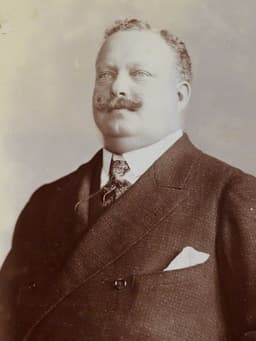
Carlos I of Portugal
Emperor · Modern
44.1Total

Julius Caesar
General · Ancient
82.8Total
Basic Information
Born
1863
-100
Died
1908
-44
Era
Modern
Ancient
Nationality
Portugal
Roman Republic
Occupation
Emperor
General
Civilization
Western
Western
Score Comparison
Military (10%)
10.8
88.0
Political (20%)
43.7
78.0
Influence (20%)
47.9
85.0
Legacy (20%)
36.7
82.0
Leadership (15%)
62.2
80.0
Strategy (15%)
60.0
85.0
TOTAL
44.1
82.8
Carlos I of Portugal — Complete Timeline
1890 AD
1890 British UltimatumPolitical Action
Britain issued an ultimatum demanding Portugal withdraw from territories in Africa (the Pink Map) that Britain claimed. Carlos I, under pressure, capitulated, causing a national humiliation and a wave of republican sentiment in Portugal, severely damaging the monarchy's prestige.
Colonial CrisisNational HumiliationRepublicanism
Impact: nationaldestructive
1906 AD
Dictatorship of João FrancoPolitical Action◆ Major
Carlos I appointed Jo
AuthoritarianismPolitical RepressionMonarchy Crisis
Impact: nationaldestructive
1908 AD
Lisbon RegicidePolitical Action
Carlos I and his heir, Prince Lu
AssassinationRegicideEnd of Monarchy
Impact: nationaltragic
Julius Caesar — Complete Timeline
58 BC
Gallic WarsWar◆ Major
Caesar, as proconsul of Gaul, launched a series of campaigns that conquered all of Gaul (modern France, Belgium, and parts of Switzerland). He fought numerous battles, including against the Helvetii, the Belgae, and the Gallic chieftain Vercingetorix. The wars brought immense wealth and a loyal army to Caesar.
Gallic WarsConquestRoman Expansion
Impact: regional
49 BC
Crossing the RubiconPolitical Action◆ Major
Caesar led Legio XIII across the Rubicon River into Italy, defying the Roman Senate's order to disband his army. This act triggered a civil war against Pompey and the Optimates, ultimately leading to Caesar's dictatorship and the end of the Roman Republic.
Roman Civil WarEnd of RepublicPower Struggle
Impact: global
48 BC
Battle of PharsalusWar◆ Major
Caesar's outnumbered army defeated the larger forces of Pompey the Great at Pharsalus in Greece. Caesar's tactical use of a reserve line to counter Pompey's cavalry charge proved decisive. Pompey fled to Egypt, where he was assassinated, leaving Caesar as the undisputed master of the Roman world.
Roman Civil WarBattleDecisive Victory
Impact: regional
44 BC
Appointment as Dictator for LifePolitical Action◆ Major
The Roman Senate appointed Caesar dictator perpetuo (dictator for life), granting him unprecedented personal power. This move concentrated military, legislative, and judicial authority in one person, effectively ending the Roman Republic's traditional system of checks and balances and alarming many senators.
DictatorshipEnd of RepublicPower Consolidation
Impact: regionaldestructive
Assassination on the Ides of MarchPolitical Action◆ Major
A group of Roman senators, led by Marcus Junius Brutus and Gaius Cassius Longinus, stabbed Caesar to death at a meeting of the Senate in the Theatre of Pompey. The assassination was intended to restore the Republic, but instead triggered another civil war that led to the rise of the Roman Empire.
AssassinationRoman PoliticsEnd of Republic
Impact: globaldestructive
Expert Analysis
carlos-i-of-portugal-vs-julius-caesar
# The Rubicon and the Terreiro do Paço
On a cold January morning in 1908, King Carlos I of Portugal rode through the cobbled streets of Lisbon in an open carriage, his family beside him, waving to the crowd. Minutes later, bullets tore through the air, and the king slumped forward, dead. His heir, Prince Luís Filipe, fell beside him, shot through the chest. The Lisbon Regicide ended not just two lives, but a dynasty. Across the centuries and the sea of history, another man had faced a moment of decision at a river called the Rubicon, crossing it with a single phrase: *Alea iacta est*—the die is cast. Julius Caesar would fall to daggers in the Senate, but his death would birth an empire. Carlos I fell to bullets in the street, and his death would bury one. Why did two Western rulers, both assassinated, leave such opposite legacies? The answer lies not in the manner of their deaths, but in the marrow of their lives.
Origins
Caesar was born into the chaos of the late Roman Republic, a world of civil wars, crumbling traditions, and ambitious aristocrats. His family, the Julii, claimed descent from the goddess Venus, but they were not among the wealthiest. From childhood, he learned that survival meant audacity. The era demanded men who could command legions, forge alliances, and bend the Senate to their will. Caesar’s Rome was a forge of iron wills, and he was hammered there.
Carlos I, by contrast, was born in 1863 into a Portugal that had long since passed its zenith. The Age of Discovery was a fading memory. The monarchy, once the engine of global exploration, now seemed a relic. Carlos inherited a throne haunted by debt, republican agitation, and the humiliating 1890 British Ultimatum, when London forced Portugal to abandon its dream of a trans-African empire—the Pink Map—without a single shot fired. The king’s world was not one of conquest, but of managed decline.
Rise to Power
Caesar’s path was a masterpiece of calculated risk. He climbed the political ladder—quaestor, aedile, praetor—each step lubricated by borrowed money and strategic marriages. But his true springboard was Gaul. From 58 to 50 BCE, he conquered a territory larger than Italy, writing his own propaganda in the *Commentaries* and forging an army loyal to him alone, not to the Republic. The Senate feared him; his rival Pompey maneuvered against him. Caesar responded by crossing the Rubicon in 49 BCE, a river that marked the boundary of his command. By breaking the law, he chose war.
Carlos I’s rise was passive. He became king in 1889 at age 26, inheriting a throne already trembling. His turning point came not from crossing a river, but from a diplomatic humiliation. The British Ultimatum of 1890 crushed Portuguese national pride and fueled republicanism. Carlos tried to steady the ship by appointing João Franco in 1906 as a dictator-like prime minister, suppressing opposition with an iron hand. But this was not a general’s gambit; it was a desperate king’s clampdown.
Leadership & Governance
Caesar governed as a revolutionary reformer. As dictator, he reorganized the calendar, granted citizenship to Gauls, launched public works, and curbed corruption. His military genius was inseparable from his political vision: every victory funded reforms, every reform strengthened his base. He led from the front, sharing his soldiers’ rations and dangers. When he said, “I came, I saw, I conquered,” it was not just boast—it was method.
Carlos I governed as a constitutional monarch trying to keep a crumbling system intact. His military score of 45 reflects a king who never led troops. His political score of 53.9 suggests a man caught between reformers and absolutists. João Franco’s dictatorship alienated moderates while failing to crush revolutionaries. Carlos was a patron of the arts and sciences, a cultured man in an uncultured time, but his leadership was reactive, not transformative.
Triumph & Tragedy
Caesar’s triumph was Gaul—the conquest of a million enemies, the pacification of a continent. His tragedy was the Ides of March, 44 BCE, when sixty senators stabbed him to death. Yet even in dying, he won: his assassination triggered the civil war that ended the Republic and made his adopted heir, Octavian, the first emperor.
Carlos I’s triumph was survival—for a time. He navigated the British Ultimatum without war, preserved the monarchy through the early 1900s, and saw Portugal’s borders remain intact. His tragedy was the Lisbon Regicide itself. On February 1, 1908, as his carriage turned into the Terreiro do Paço, two republican activists, Alfredo Costa and Manuel Buíça, opened fire. Carlos died instantly; his son Luís Filipe minutes later. Unlike Caesar, whose death unleashed a new order, Carlos’s death merely accelerated the old order’s collapse. Within two years, Portugal became a republic.
Character & Destiny
Caesar was audacity incarnate. He pardoned enemies, seduced allies, and broke rules with the confidence of a man who believed he was fate’s favorite. His character was his destiny: he could not stop reaching, and that reaching brought both glory and daggers. His famous last words—*Et tu, Brute?*—capture his shock that even a friend would betray him, yet he had spent his life making enemies.
Carlos I was a man of duty, not destiny. He loved oceanography and photography, not power. His character was cautious, cultured, and ultimately passive. He did not create the forces that killed him; he merely stood in their path. His destiny was to be a symbol, not a shaper.
Legacy
Caesar’s legacy is the Roman Empire, Western law, the calendar we use, and the word “caesar” itself—a title that would echo through tsars and kaisers. He is remembered as a genius and a tyrant, a liberator and a destroyer. His scores—Military 88, Influence 85, Legacy 82—reflect a man who reshaped civilization.
Carlos I’s legacy is a footnote: the last king of Portugal’s constitutional monarchy, a victim of the Lisbon Regicide. His scores—Military 45, Legacy 50, Total 59.2—paint a portrait of mediocrity. He is remembered, if at all, as a warning that a king who cannot lead will be swept away.
Conclusion
The difference between Caesar and Carlos I is not merely one of talent, but of era and will. Caesar was born into a world that rewarded ambition and punished hesitation. He seized his moment and bent history to his spine. Carlos I was born into a world that demanded a lion and gave him a lamb. He tried to hold the line, but the line was already broken. One crossed the Rubicon and changed the world; the other rode through the Terreiro do Paço and was erased by it. In the end, the die is cast not by fate, but by the hand that throws it.
Rankings
🥇
Julius CaesarLeader
Mil: 88.0Pol: 78.0Inf: 85.0
82.8
🥈
Carlos I of Portugal
Mil: 10.8Pol: 43.7Inf: 47.9
44.1
+38.7 behind
How This Comparison Works
Algorithm
Each figure is scored on 6 dimensions (0—100 scale) based on structured historical data: Military (10%), Political (20%), Influence (20%), Legacy (20%), Leadership (15%), Strategy (15%). The weighted total produces the final ranking.
Data Sources
Scores are computed from structured sub-indicators in the database. Scale factors adjust for era (Ancient ×0.85, Modern ×1.0) and civilization size (Eastern ×1.05, Other ×0.80) to account for differences in population and military scale.
Maximum 3 Figures
Comparisons are limited to 2—3 figures to ensure readability and statistical meaningfulness.
Error Margins
±5 points per dimension — Sub-scores are derived from historical records with inherent uncertainty. Two figures within 5 points on a dimension should be considered roughly equivalent in that area.
Total Score Accuracy
±3 points overall — The weighted combination of 6 dimensions produces a total score with approximately ±3 points of uncertainty. Differences of less than 3 points are not statistically significant— the figures are effectively tied.
Known Limitations
- Historical records are incomplete and uneven across civilizations
- Figures from oral-tradition societies may be underrepresented
- Occupation labels can misclassify multi-role figures
- Scores measure capability and impact, not moral character
- Quantitative scoring is a comparison tool, not absolute truth
Capability Radar
Military (10%) — Battles & Warfare
Battles
38
95
Win Rate
39
92
Expansion
43
97
Political (20%) — Governance & Reform
Reform
30
90
Diplomacy
35
85
Economy
25
82
Influence (20%) — Cultural & Global Reach
Cultural
15
88
Global
10
94
Legacy (20%) — Historical Impact
Historical
20
95
Longevity
10
96
Leadership (15%) — Power & Stability
Tenure
40
75
Stability
20
60
Strategy (15%) — Tactics & Innovation
Strategy
46
94
Tactics
49
96
Reform
48
88
Similar Comparisons
Comments & Discussion
AleaJactaEst6/17/2026
Caesar's death ushered in an empire; Carlos's buried one. The critical difference? Caesar spent decades forging a legend: Gaul, Britain, the civil war. By the time he crossed the Rubicon, he had the loyalty of hardened legions who'd march through hell for him. Carlos inherited a throne that was already hollowed out, propped up by corrupt deals and British ultimatums. One ruler earned his empire through blood and steel; the other just signed his name to treaties while his country rotted from with
驴桥不信6/17/2026
拿卡尔莫斯一世跟凯撒比?根本是关公战秦琼。凯撒是亲手带兵打下高卢、跨过卢比孔河的猛人,死前已经是罗马的实际主宰。卡尔莫斯就是个摆烂的国王,任由葡萄牙经济崩溃、君主制威信扫地。凯撒遇刺是因为他权力太大、威胁了元老院;卡尔莫斯被杀是因为他太无能、连街头安保都搞不定。一个死于政治斗争,一个死于无能。别往脸上贴金了。
HistoryBuff_UK6/17/2026
Both fumbled the ball in the end, but Caesar's playbook had tactical genius written all over it. Caesar sieged Alesia, won at Pharsalus against overwhelming odds, and kept his veterans loyal through land reforms. Carlos I? He gave Britain an ultimatum that backfired spectacularly over a map of Africa (the 1890 Ultimatum), then spent years gridlocked in political stalemate. One man built a power base from scratch; the other inherited a once-great empire and let it wither on the vine. Caesar's las
深海潜者6/17/2026
评论区一堆吹凯撒的,我偏要泼冷水。凯撒是个军事天才不假,但他直接造成了罗马共和国的崩溃,几十年的内战血流成河。卡尔莫斯虽说平庸,至少葡萄牙在那几十年里没卷入大战,搞了铁路和公共工程。你们说卡尔莫斯是昏君,凯撒难道不是踩着同胞尸体往上爬的军阀?平民暴尸街头、元老被杀,这叫伟大?别一边倒唱赞歌了。
RomanesEuntDomus6/17/2026
Let's not romanticize the 'mighty Caesar' death here. Caesar never truly governed Rome for more than a few chaotic years before being stabbed 23 times by his own Senators. Compare that to Carlos, who ruled for nearly two decades. Caesar left a blood-soaked power vacuum that took another decade of civil war to fill. Carlos left a power vacuum too, sure, but Portugal's monarchy was already terminally ill. Caesar's death launched a thousand ships of civil war; Carlos's death just confirmed what eve