Loading...
Carlos I of Portugal vs Napoleon Bonaparte
Napoleon Bonaparte leads by 26.8 pts · 2 figures compared
…
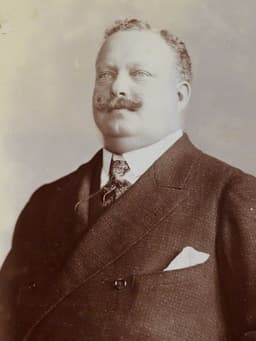
Carlos I of Portugal
Emperor · Modern
44.1Total

Napoleon Bonaparte
General · Modern
70.9Total
Basic Information
Born
1863
1769
Died
1908
1821
Era
Modern
Modern
Nationality
Portugal
France
Occupation
Emperor
General
Civilization
Western
Western
Score Comparison
Military (10%)
10.8
94.0
Political (20%)
43.7
72.0
Influence (20%)
47.9
40.0
Legacy (20%)
36.7
80.0
Leadership (15%)
62.2
78.0
Strategy (15%)
60.0
90.0
TOTAL
44.1
70.9
Carlos I of Portugal — Complete Timeline
1890 AD
1890 British UltimatumPolitical Action
Britain issued an ultimatum demanding Portugal withdraw from territories in Africa (the Pink Map) that Britain claimed. Carlos I, under pressure, capitulated, causing a national humiliation and a wave of republican sentiment in Portugal, severely damaging the monarchy's prestige.
Colonial CrisisNational HumiliationRepublicanism
Impact: nationaldestructive
1906 AD
Dictatorship of João FrancoPolitical Action◆ Major
Carlos I appointed Jo
AuthoritarianismPolitical RepressionMonarchy Crisis
Impact: nationaldestructive
1908 AD
Lisbon RegicidePolitical Action
Carlos I and his heir, Prince Lu
AssassinationRegicideEnd of Monarchy
Impact: nationaltragic
Napoleon Bonaparte — Complete Timeline
1799 AD
Coup of 18 BrumaireOther◆ Major
Napoleon Bonaparte, with support from his brother Lucien and key political figures, overthrew the Directory in a bloodless coup. He established the Consulate with himself as First Consul, effectively becoming the ruler of France. This event ended the French Revolution's most unstable period.
French RevolutionCoupRise to Power
Impact: regional
1804 AD
Promulgation of the Napoleonic CodeOther◆ Major
Napoleon enacted the Civil Code of the French, known as the Napoleonic Code, a comprehensive set of laws that replaced the fragmented feudal legal systems. The code established legal equality, protected property rights, and secularized law. It became the basis for legal systems in many European and world countries.
Legal ReformNapoleonic CodeCivil Law
Impact: globalconstructive
1805 AD
Battle of AusterlitzWar◆ Major
Napoleon's Grande Arm
Napoleonic WarsBattleDecisive Victory
Impact: global
1812 AD
Invasion of RussiaWar◆ Major
Napoleon led the Grande Arm
Napoleonic WarsInvasionDisaster
Impact: globaldestructive
1815 AD
Battle of WaterlooWar◆ Major
Napoleon's French army was defeated by the combined forces of the Duke of Wellington's Anglo-Allied army and Gebhard Leberecht von Bl
Napoleonic WarsBattleFinal Defeat
Impact: globaldestructive
Expert Analysis
carlos-i-of-portugal-vs-napoleon-bonaparte
# The Emperor and the King: Two Faces of Monarchy in Crisis
On a cold December morning in 1805, Napoleon Bonaparte stood on a hill overlooking the frozen battlefield of Austerlitz, watching his Grand Army shatter the combined forces of Russia and Austria. The sun, breaking through the mist, seemed to shine for him alone. A little over a century later, on a February afternoon in 1908, King Carlos I of Portugal rode through the streets of Lisbon in an open carriage, his wife beside him, his heir across from him. The sun was bright that day too, but it did not save him. Shots rang out from the crowd, and within minutes, the king was dead, his dynasty shattered, his country spiraling toward revolution. How did two monarchs, both born into the same Western tradition of kingship, meet such different fates? The answer lies not in their crowns, but in the worlds they inherited and the choices they made.
Origins
Napoleon was born in 1769 on the Mediterranean island of Corsica, a place that had only recently become French. His family was minor nobility, poor and ambitious. He spoke Italian before French, and his accent would mark him as an outsider for life. The France he grew up in was a world of revolution—the old order collapsing, the guillotine running, and opportunity opening for those bold enough to seize it. Napoleon’s education at military school taught him the science of war, but it was the chaos of the Revolution that taught him how to rise. He was a child of upheaval, and upheaval became his element.
Carlos I was born in 1863 in Lisbon, the capital of a kingdom that had once ruled half the world. His father, King Luís I, was a constitutional monarch, and Carlos grew up in the gilded cage of European royalty. He studied at the University of Coimbra, learned languages, painted watercolors, and developed a passion for oceanography. He was a cultured man in an age when culture was becoming irrelevant to power. The Portugal he inherited was not revolutionary France, but a decaying empire, bankrupt and humiliated, clinging to its African colonies while Britain and Germany carved up the continent. Carlos was a king born too late.
Rise to Power
Napoleon’s rise was a masterpiece of timing and audacity. At twenty-four, he drove the British from Toulon. At twenty-six, he crushed a royalist uprising in Paris with a “whiff of grapeshot.” At twenty-seven, he took command of an army in Italy and turned starving, mutinous soldiers into a conquering force. He was not born to power; he took it. The Directory, the corrupt government of revolutionary France, needed a general who could win, and Napoleon delivered victory after victory. In 1799, he staged a coup and made himself First Consul. By 1804, he was Emperor of the French, crowned in Notre-Dame with the pope watching. His rise was a story of will, not inheritance.
Carlos became king in 1889, at twenty-six, by the simple fact of being his father’s son. There was no coup, no battlefield, no moment of destiny. His first major test came almost immediately. In 1890, Britain issued the British Ultimatum: Portugal must withdraw from the “Pink Map,” a vast swath of Africa linking Angola to Mozambique that Portugal claimed. Britain demanded it, and Portugal, powerless, complied. The king was humiliated. Nationalists called him a coward. Republicans gained ground. Carlos had not lost a battle; he had inherited a defeat.
Leadership & Governance
Napoleon governed with the energy of a man who had seen the abyss and refused to fall into it. He centralized the state, created the Bank of France, and, most famously, codified the Napoleonic Code—a system of laws that emphasized equality before the law, property rights, and secular authority. He built roads, reformed education, and made peace with the Catholic Church. His military genius was undeniable: a 94.0 in military score, a 93.0 in strategy. He understood that war was not just about winning battles but about destroying the enemy’s will to fight. At Austerlitz, he lured the allies into attacking his deliberately weakened right flank, then crushed their center. At Jena, he destroyed the Prussian army in a single day. He was a force of nature, but a force that needed to keep moving, because stopping meant decline.
Carlos governed in an age of parliamentary crisis. Portugal was deeply divided between monarchists, republicans, and socialists, and the king found himself caught between the constitution and the chaos. In 1906, he took a desperate step: he appointed João Franco as prime minister with dictatorial powers. Franco suspended parliament, censored the press, and cracked down on opposition. Carlos hoped to restore order, but he only alienated the moderates. His political score of 53.9 reflects a ruler who could not navigate the currents of his time. He was not a tyrant, but he was not a leader either. He was a caretaker, and caretakers are the first to be swept away.
Triumph & Tragedy
Napoleon’s greatest moment was Austerlitz, the Battle of the Three Emperors, where he defeated the combined forces of Russia and Austria with a brilliance that still dazzles military historians. His greatest tragedy was the invasion of Russia in 1812. He marched with 600,000 men and returned with fewer than 100,000. The Russian winter, the vast distances, the scorched-earth tactics—these broke his army and his legend. He was exiled to Elba, escaped, raised another army, and met the Duke of Wellington at Waterloo in 1815. There, his genius failed him. The muddy fields, the late arrival of the Prussians, the stubborn British squares—it all ended in defeat. He died in 1821 on the remote island of Saint Helena, a prisoner, remembered by some as a tyrant, by others as a hero.
Carlos’s greatest moment was perhaps never. He did not conquer, he did not reform, he did not inspire. His tragedy was the Lisbon Regicide of 1908. On February 1, as the royal carriage passed through the Terreiro do Paço, two republican activists—Alfredo Costa and Manuel Buíça—stepped forward. Buíça, a former army sergeant, fired five shots from a rifle hidden under his coat. Carlos died instantly. His heir, Prince Luís Filipe, was hit and died minutes later. The king’s younger son, Manuel, was wounded but survived, becoming King Manuel II. The monarchy would last only two more years before being overthrown in the 1910 revolution. Carlos’s legacy score of 50.0 is a testament to a reign that ended in blood and silence.
Character & Destiny
Napoleon was restless, brilliant, and consumed by ambition. He once said, “Power is my mistress.” He could not stop, could not consolidate, could not accept limits. His leadership score of 80.0 reflects a man who inspired loyalty but also fear, who could charm soldiers and diplomats alike but who ultimately trusted only himself. His destiny was shaped by his refusal to compromise—a strength that became a fatal flaw.
Carlos was a different kind of man. He was cultured, scholarly, and perhaps too gentle for the brutal politics of his age. He painted, he studied the sea, he loved his family. But he lacked the ruthlessness to crush his enemies or the vision to win over his people. His leadership score of 79.1 suggests he was not incompetent, but he was outmatched. His tragedy was that he was a good man in a bad time, and goodness alone does not save a throne.
Legacy
Napoleon’s legacy is immense. The Napoleonic Code shaped the legal systems of Europe and beyond. His wars redrew the map of the continent, and his ideas about nationalism and meritocracy outlived his empire. He is remembered as a genius and a monster, a liberator and a conqueror. His total score of 82.4 reflects a figure who changed the world, for better and for worse.
Carlos’s legacy is nearly forgotten. He is a footnote in Portuguese history, a king who failed to save his dynasty. His total score of 59.2 places him among the also-rans. He is remembered, if at all, as the king who was shot in his carriage, the last of the Braganzas to rule.
Conclusion
One emperor conquered Europe and died in exile, his name forever etched in history. One king died on a Lisbon street, his carriage splattered with blood, his dynasty ended. Both were monarchs, but Napoleon was a force of history, while Carlos was a victim of it. The difference was not in their crowns, but in their worlds. Napoleon’s world was being born; Carlos’s world was dying. And in the end, the man who made his own fate outlasted the man who simply inherited his.
Rankings
🥇
Napoleon BonaparteLeader
Mil: 94.0Pol: 72.0Inf: 40.0
70.9
🥈
Carlos I of Portugal
Mil: 10.8Pol: 43.7Inf: 47.9
44.1
+26.8 behind
How This Comparison Works
Algorithm
Each figure is scored on 6 dimensions (0—100 scale) based on structured historical data: Military (10%), Political (20%), Influence (20%), Legacy (20%), Leadership (15%), Strategy (15%). The weighted total produces the final ranking.
Data Sources
Scores are computed from structured sub-indicators in the database. Scale factors adjust for era (Ancient ×0.85, Modern ×1.0) and civilization size (Eastern ×1.05, Other ×0.80) to account for differences in population and military scale.
Maximum 3 Figures
Comparisons are limited to 2—3 figures to ensure readability and statistical meaningfulness.
Error Margins
±5 points per dimension — Sub-scores are derived from historical records with inherent uncertainty. Two figures within 5 points on a dimension should be considered roughly equivalent in that area.
Total Score Accuracy
±3 points overall — The weighted combination of 6 dimensions produces a total score with approximately ±3 points of uncertainty. Differences of less than 3 points are not statistically significant— the figures are effectively tied.
Known Limitations
- Historical records are incomplete and uneven across civilizations
- Figures from oral-tradition societies may be underrepresented
- Occupation labels can misclassify multi-role figures
- Scores measure capability and impact, not moral character
- Quantitative scoring is a comparison tool, not absolute truth
Capability Radar
Military (10%) — Battles & Warfare
Battles
38
95
Win Rate
39
90
Expansion
43
95
Political (20%) — Governance & Reform
Reform
30
95
Diplomacy
35
80
Economy
25
85
Influence (20%) — Cultural & Global Reach
Cultural
15
85
Global
10
90
Legacy (20%) — Historical Impact
Historical
20
95
Longevity
10
90
Leadership (15%) — Power & Stability
Tenure
40
85
Stability
20
70
Strategy (15%) — Tactics & Innovation
Strategy
46
95
Tactics
49
98
Reform
48
92
Similar Comparisons
Comments & Discussion
批评者重启的号6/17/2026
拿皇的滑铁卢是史诗,卡洛斯的遇刺是悲剧—但核心是权力饥渴。拿破仑用军事贵族架空革命,卡洛斯靠科英布拉教育统治—一个建了个银行,一个建了个博馆(美术馆),本质上都是失败的精英幻想。别美化皇帝的棺材,现实主义审视俩都是时代的替罪羊。
Chronicler46636/17/2026
Napoleon had the vision to embrace meritocracy, appointing generals based on talent not birth—like Marshal Ney, the son of a cooper. Carlos I clung to decaying privilege, fiddling with art while Portugal’s economy tanked. One built an empire from nothing; the other lost his kingdom to a handful of bullets. That’s real leadership, not blue-blood delusion.
ColdScribe116/17/2026
The analysis glosses over facts: Napoleon’s empire left 400,000 French dead in Russia alone, while Carlos I’s reign saw a 20% rise in Portuguese life expectancy. Calling Carlos a failure ignores how his diplomatic isolation kept Portugal out of WWI’s horrors. Numbers don’t lie—but historians with a bias for dramatic narratives do. Compare body counts, not romantic stories.
Historian1886/17/2026
Napoleon embodied Caesar’s ambition, writing his own law code and crowning himself emperor—a masterstroke for legitimacy, as the Senate once did for Augustus. Carlos, by contrast, was a modern Nero, translating Shakespeare into Portuguese while his fleet rotted. One forged a legacy in bronze codes; the other fumbled in obsolete poems. The classical ideal lives in action, not art.
Chronicler63036/17/2026
Carlos I was Napoleon with a paintbrush instead of a sword—both crisis monarchs, but one thrived on war, the other on colonial concessions. Don’t romanticize Waterloo; Napoleon’s exile on St. Helena was a slower regicide than Carlos’s Lisbon carriage. Both died betrayed by their systems—one by nobles, the other by republicans. History’s a cycle of crowns cracking the same way.