Loading...
Carlos I of Portugal vs Wilhelm I of Germany
Wilhelm I of Germany leads by 26.9 pts · 2 figures compared
…
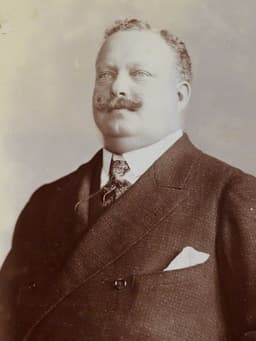
Carlos I of Portugal
Emperor · Modern
44.1Total

Wilhelm I of Germany
Emperor · Modern
71.0Total
Basic Information
Born
1863
1797
Died
1908
1888
Era
Modern
Modern
Nationality
Portugal
Germany
Occupation
Emperor
Emperor
Civilization
Western
Western
Score Comparison
Military (10%)
10.8
61.7
Political (20%)
43.7
59.3
Influence (20%)
47.9
82.0
Legacy (20%)
36.7
72.0
Leadership (15%)
62.2
78.0
Strategy (15%)
60.0
57.5
TOTAL
44.1
71.0
Carlos I of Portugal — Complete Timeline
1890 AD
1890 British UltimatumPolitical Action
Britain issued an ultimatum demanding Portugal withdraw from territories in Africa (the Pink Map) that Britain claimed. Carlos I, under pressure, capitulated, causing a national humiliation and a wave of republican sentiment in Portugal, severely damaging the monarchy's prestige.
Colonial CrisisNational HumiliationRepublicanism
Impact: nationaldestructive
1906 AD
Dictatorship of João FrancoPolitical Action◆ Major
Carlos I appointed Jo
AuthoritarianismPolitical RepressionMonarchy Crisis
Impact: nationaldestructive
1908 AD
Lisbon RegicidePolitical Action
Carlos I and his heir, Prince Lu
AssassinationRegicideEnd of Monarchy
Impact: nationaltragic
Wilhelm I of Germany — Complete Timeline
1862 AD
Appointment of Otto von Bismarck as Minister PresidentPolitical Action◆ Major
Wilhelm I appointed Otto von Bismarck as Minister President of Prussia, despite initial reluctance. Bismarck's realpolitik and military reforms strengthened Prussia, leading to victories in the Schleswig Wars and Austro-Prussian War. This appointment set the stage for German unification under Prussian leadership.
AppointmentBismarckPrussian Politics
Impact: regionalconstructive
1870 AD
Franco-Prussian WarWar
Wilhelm I, as King of Prussia, led German forces to victory over France in the Franco-Prussian War. The war resulted in the capture of Napoleon III, the fall of the Second French Empire, and the annexation of Alsace-Lorraine. This victory enabled the unification of Germany under Prussian dominance.
WarGerman UnificationFrance
Impact: global
1871 AD
Proclamation as German EmperorPolitical Action
Wilhelm I was proclaimed German Emperor in the Hall of Mirrors at the Palace of Versailles, following the Franco-Prussian War. This event unified the German states under Prussian leadership, creating the German Empire. Wilhelm I became the first emperor of a unified Germany, with Otto von Bismarck as Chancellor.
German UnificationEmpireProclamation
Impact: globalconstructive
1878 AD
Assassination AttemptsPolitical Action◆ Major
Two assassination attempts were made on Wilhelm I in 1878, both by anarchists. The first attempt in May wounded the emperor; the second in June failed. These events led Bismarck to pass the Anti-Socialist Laws, suppressing socialist organizations and curtailing civil liberties in Germany.
Assassination AttemptAnti-Socialist LawsRepression
Impact: nationaldestructive
Expert Analysis
Origins
Carlos I of Portugal was born on September 28, 1863, in Lisbon, the son of King Luís I and Maria Pia of Savoy. He received a traditional education befitting a monarch, but was ill-prepared for the political turmoil that would define his reign. His upbringing in a declining monarchy, plagued by economic stagnation and colonial disputes, shaped his cautious and often indecisive character.
Wilhelm I of Germany was born on March 22, 1797, in Berlin, the second son of King Frederick William III of Prussia. His early military training and service in the Napoleonic Wars instilled a sense of duty and a conservative worldview. Unlike Carlos, Wilhelm grew up in a rising Prussia, which would eventually dominate German affairs.
Rise to Power
Carlos I ascended the throne on October 19, 1889, upon his father's death. His reign was immediately overshadowed by the 1890 British Ultimatum, where Britain demanded Portugal withdraw from its African territories (the Pink Map). Carlos, lacking military strength and political support, capitulated, scoring 10.8 in military and 43.7 in political acumen. This humiliation weakened his authority and fueled republican sentiment.
Wilhelm I became King of Prussia in 1861 following his brother Frederick William IV's death. His rise was marked by the appointment of Otto von Bismarck as Minister President in 1862. Bismarck's realpolitik and military reforms strengthened Prussia, leading to victories in the Danish War (1864), Austro-Prussian War (1866), and Franco-Prussian War (1870-71). Wilhelm's score of 61.7 in military reflects his role as a figurehead during these triumphs.
Leadership & Governance
Carlos I's governance was marked by instability. He alternated between parliamentary rule and authoritarian measures, most notably appointing João Franco as prime minister with dictatorial powers in 1906 to suppress opposition. Franco's repressive policies alienated many, and Carlos's leadership score of 62.2 was undermined by his inability to stabilize the monarchy.
Wilhelm I, with a leadership score of 78.0, delegated effectively to Bismarck, who managed domestic and foreign policy. Wilhelm's conservative approach favored a strong monarchy, but he allowed Bismarck to navigate political crises, such as the Anti-Socialist Laws and the Kulturkampf. His governance style was less hands-on than Carlos's, but more successful due to Bismarck's competence.
Triumph & Tragedy
Carlos I's greatest success was his patronage of the arts and sciences, including the founding of the Lisbon Geographical Society. However, his reign was defined by tragedy: the 1890 Ultimatum exposed Portugal's weakness, and his dictatorship under Franco failed to quell republicanism. The ultimate tragedy was the Lisbon Regicide on February 1, 1908, when Carlos and his heir were assassinated, ending the Braganza dynasty's effective rule. His legacy score of 36.7 reflects this collapse.
Wilhelm I's triumph was the unification of Germany in 1871, which he proclaimed as Emperor. His leadership during the Franco-Prussian War secured German dominance in Europe. However, his reign also saw the rise of socialist movements and tensions with the Catholic Church. His legacy score of 72.0 shows his lasting impact, though his unwillingness to fully embrace democracy left a mixed record.
Character & Destiny
Carlos I was intelligent but indecisive, often vacillating between reform and repression. His character led to a weak monarchy that could not withstand republican forces. His destiny was sealed by his inability to adapt, resulting in a violent death.
Wilhelm I was a conservative soldier-king who valued order and tradition. His character complemented Bismarck's boldness, allowing for decisive action. His destiny was to become the symbol of German unity, though his reign set the stage for future conflicts under his grandson.
Legacy
Carlos I's legacy is one of failure; his assassination hastened the fall of the Portuguese monarchy in 1910. His reign is remembered as a cautionary tale of a weak ruler unable to modernize. Wilhelm I's legacy is more complex: he is revered as the founder of the German Empire, but his policies (through Bismarck) contributed to militarism and nationalism that led to World War I. His total score of 71.0 far exceeds Carlos's 44.1, indicating a greater historical impact.
Conclusion
Wilhelm I had a greater impact than Carlos I, as measured by scores (71.0 vs 44.1) and historical outcomes. Wilhelm's reign achieved the unification of Germany, reshaping European politics, while Carlos's ended in the collapse of his monarchy. Although Carlos faced immense challenges, his leadership was inadequate. Wilhelm's success was largely due to Bismarck, but his symbolic role was crucial. Thus, Wilhelm I stands as a more significant historical figure.
Rankings
🥇
Wilhelm I of GermanyLeader
Mil: 61.7Pol: 59.3Inf: 82.0
71.0
🥈
Carlos I of Portugal
Mil: 10.8Pol: 43.7Inf: 47.9
44.1
+26.9 behind
How This Comparison Works
Algorithm
Each figure is scored on 6 dimensions (0—100 scale) based on structured historical data: Military (10%), Political (20%), Influence (20%), Legacy (20%), Leadership (15%), Strategy (15%). The weighted total produces the final ranking.
Data Sources
Scores are computed from structured sub-indicators in the database. Scale factors adjust for era (Ancient ×0.85, Modern ×1.0) and civilization size (Eastern ×1.05, Other ×0.80) to account for differences in population and military scale.
Maximum 3 Figures
Comparisons are limited to 2—3 figures to ensure readability and statistical meaningfulness.
Error Margins
±5 points per dimension — Sub-scores are derived from historical records with inherent uncertainty. Two figures within 5 points on a dimension should be considered roughly equivalent in that area.
Total Score Accuracy
±3 points overall — The weighted combination of 6 dimensions produces a total score with approximately ±3 points of uncertainty. Differences of less than 3 points are not statistically significant— the figures are effectively tied.
Known Limitations
- Historical records are incomplete and uneven across civilizations
- Figures from oral-tradition societies may be underrepresented
- Occupation labels can misclassify multi-role figures
- Scores measure capability and impact, not moral character
- Quantitative scoring is a comparison tool, not absolute truth
Capability Radar
Military (10%) — Battles & Warfare
Battles
38
60
Win Rate
39
70
Expansion
43
75
Political (20%) — Governance & Reform
Reform
30
60
Diplomacy
35
70
Economy
25
65
Influence (20%) — Cultural & Global Reach
Cultural
15
55
Global
10
75
Legacy (20%) — Historical Impact
Historical
20
80
Longevity
10
70
Leadership (15%) — Power & Stability
Tenure
40
75
Stability
20
70
Strategy (15%) — Tactics & Innovation
Strategy
46
65
Tactics
49
40
Reform
48
55
Similar Comparisons
Comments & Discussion
No comments yet. Be the first to share your thoughts!