Loading...
Alexander the Great vs Cao Cao
Alexander the Great leads by 7.7 pts · 2 figures compared
…
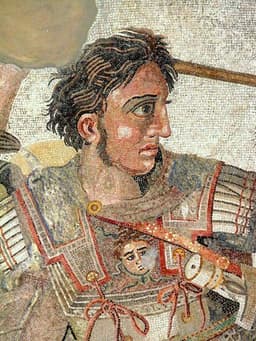
Alexander the Great
General · Ancient
85.2Total
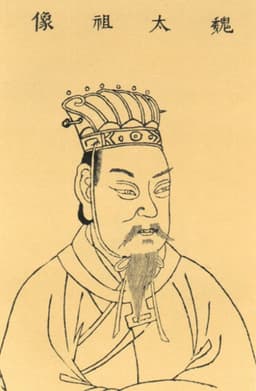
Cao Cao
General · Ancient
77.5Total
Basic Information
Born
-356
155
Died
-323
220
Era
Ancient
Ancient
Nationality
Macedon
China
Occupation
General
General
Civilization
Western
Eastern
Score Comparison
Military (10%)
95.0
88.0
Political (20%)
60.0
59.0
Influence (20%)
92.0
82.0
Legacy (20%)
90.0
83.0
Leadership (15%)
80.0
64.4
Strategy (15%)
92.0
89.4
TOTAL
85.2
77.5
Alexander the Great — Complete Timeline
334 BC
Battle of the Granicus RiverWar◆ Major
Alexander led his Macedonian army across the Hellespont into Asia Minor and defeated a Persian force under local satraps at the Granicus River. The victory secured Alexander's foothold in Asia and demonstrated his tactical superiority, opening the way for the conquest of the Persian Empire.
Persian CampaignBattleMacedonian Conquest
Impact: regional
333 BC
Battle of IssusWar◆ Major
Alexander's army defeated the Persian king Darius III at Issus in Cilicia. Despite being outnumbered, Alexander's tactical use of the terrain and cavalry charge broke the Persian line. Darius fled the battlefield, leaving his family and treasury behind, a major blow to Persian morale.
Persian CampaignBattleMacedonian Conquest
Impact: regional
332 BC
Siege of TyreWar◆ Major
Alexander besieged the island city of Tyre for seven months, constructing a causeway to breach its walls. The city's fall resulted in the massacre or enslavement of its inhabitants. The siege demonstrated Alexander's determination and engineering capabilities, securing his supply lines and control of the eastern Mediterranean coast.
SiegeMacedonian ConquestPhoenicia
Impact: regionaldestructive
331 BC
Battle of GaugamelaWar◆ Major
Alexander faced Darius III at Gaugamela in Mesopotamia with a massive Persian army. Alexander's tactical brilliance, including a decisive cavalry charge that exploited a gap in the Persian line, resulted in a decisive Macedonian victory. Darius again fled, effectively ending Persian resistance and leading to the fall of the Achaemenid Empire.
Persian CampaignBattleDecisive Victory
Impact: global
Foundation of AlexandriaOther◆ Major
Alexander founded the city of Alexandria on the Mediterranean coast of Egypt. He personally selected the site and oversaw the initial planning. Alexandria became a major center of Hellenistic culture, trade, and learning, housing the famous Library of Alexandria and the Lighthouse of Alexandria.
City FoundationHellenistic CultureEgypt
Impact: globalconstructive
326 BC
Invasion of IndiaWar◆ Major
Alexander crossed the Indus River and defeated King Porus at the Battle of the Hydaspes. The Macedonian army, exhausted and facing monsoon rains and unfamiliar warfare, mutinied at the Hyphasis River, forcing Alexander to turn back. This campaign marked the easternmost extent of his conquests.
Indian CampaignBattleMutiny
Impact: regional
Cao Cao — Complete Timeline
190 AD
Formation of the Coalition against Dong ZhuoPolitical Action
Cao Cao joined a coalition of regional warlords led by Yuan Shao to overthrow the tyrannical chancellor Dong Zhuo, who had seized control of the Han court. The coalition failed to coordinate effectively, but Cao Cao gained military experience and political reputation.
CoalitionDong ZhuoHan Dynasty
Impact: national
196 AD
Implementation of Tuntian (Agricultural Colonies)Reform◆ Major
Cao Cao established military agricultural colonies (tuntian) to provide food for his army and refugees. Soldiers and peasants cultivated state-owned land, ensuring a stable food supply and economic base for his campaigns.
AgricultureEconomyMilitary
Impact: regionalconstructive
200 AD
Battle of GuanduWar
Cao Cao decisively defeated Yuan Shao's numerically superior army at Guandu. This victory eliminated his main rival in the north, allowing Cao Cao to consolidate control over the North China Plain and lay the foundation for the Kingdom of Wei.
BattleYuan ShaoUnification
Impact: regional
208 AD
Battle of Red CliffsWar
Cao Cao's southern campaign was halted by the allied forces of Sun Quan and Liu Bei at the Battle of Red Cliffs. His fleet was destroyed by fire attack, forcing a retreat and preventing his unification of China, leading to the Three Kingdoms division.
BattleDefeatThree Kingdoms
Impact: regional
213 AD
Establishment of the Kingdom of WeiPolitical Action◆ Major
Cao Cao was granted the title of Duke of Wei and later King of Wei by the Han emperor, effectively creating a semi-autonomous state within the empire. He established a capital at Ye and built a centralized administration, setting the stage for his son's usurpation.
WeiStatehoodHan Dynasty
Impact: national
Expert Analysis
Origins
Alexander the Great (356–323 BCE) was born in Pella, Macedon, to King Philip II and Queen Olympias. Tutored by Aristotle, he inherited a formidable army and a vision of conquest. Cao Cao (155–220 CE) emerged in turbulent late Eastern Han China, the son of a eunuch's foster son, rising through bureaucratic and military ranks amid warlord chaos.
Rise to Power
Alexander ascended at age 20 after Philip's assassination, swiftly consolidating Greece and launching the invasion of Persia. His first major victory at the Granicus River (334 BCE) showcased his daring cavalry tactics. Cao Cao started as a minor official, gaining fame suppressing the Yellow Turban Rebellion. He seized control of the Han emperor, using him as a puppet to legitimize his campaigns. The Battle of Guandu (200 CE) against Yuan Shao was his breakout, securing dominance in northern China.
Leadership & Governance
Alexander led from the front, personally charging into battle, inspiring loyalty but also taking immense risks. He adopted Persian customs to rule a multicultural empire, founding cities like Alexandria to spread Hellenism. Cao Cao was a master administrator, implementing the Tuntian system of military-agricultural colonies to ensure food supply and stability. He promoted talent based on merit, not birth, and was a noted poet. Both were ruthless: Alexander destroyed Thebes; Cao Cao massacred civilians at Xuzhou.
Triumph & Tragedy
Alexander's greatest triumph was Gaugamela (331 BCE), where he defeated Darius III with brilliant tactics. His tragedy came from overextension: his army mutinied at the Hyphasis River, and he died young at 32, possibly from poison or disease, leaving no clear heir. Cao Cao's victory at Guandu was decisive, but his defeat at Red Cliffs (208 CE) prevented him from uniting all of China. He died at 65, having founded the Kingdom of Wei, but his son Cao Pi usurped the Han throne, not him.
Character & Destiny
Alexander was ambitious, charismatic, and prone to bouts of paranoia (executing his friend Parmenion). He believed himself divine, demanding proskynesis. Cao Cao was shrewd, pragmatic, and cynical, famously saying, "Better to wrong others than to be wronged." He was both a brilliant strategist and a cruel warlord. Alexander's destiny was to conquer the known world; Cao Cao's was to unify the north and set the stage for the Three Kingdoms.
Legacy
Alexander's legacy is immense: he spread Greek culture across three continents, influencing the Hellenistic period and later Rome. His tactics are still studied. Cao Cao's legacy is more national: he is a complex figure in Chinese history—both a hero for unifying the north and a villain in the Romance of the Three Kingdoms. His administrative reforms and poetry endure. Score: Alexander (95) vs Cao Cao (88). Alexander wins due to his undefeated record and larger impact on world history.
Conclusion
Both are among history's greatest generals. Alexander's conquests reshaped the ancient world, while Cao Cao's governance shaped China. However, Alexander's higher military score, undefeated record, and global influence give him the edge. Final score: Alexander 7.7 points higher.
Rankings
🥇
Alexander the GreatLeader
Mil: 95.0Pol: 60.0Inf: 92.0
85.2
🥈
Cao Cao
Mil: 88.0Pol: 59.0Inf: 82.0
77.5
+7.7 behind
How This Comparison Works
Algorithm
Each figure is scored on 6 dimensions (0—100 scale) based on structured historical data: Military (10%), Political (20%), Influence (20%), Legacy (20%), Leadership (15%), Strategy (15%). The weighted total produces the final ranking.
Data Sources
Scores are computed from structured sub-indicators in the database. Scale factors adjust for era (Ancient ×0.85, Modern ×1.0) and civilization size (Eastern ×1.05, Other ×0.80) to account for differences in population and military scale.
Maximum 3 Figures
Comparisons are limited to 2—3 figures to ensure readability and statistical meaningfulness.
Error Margins
±5 points per dimension — Sub-scores are derived from historical records with inherent uncertainty. Two figures within 5 points on a dimension should be considered roughly equivalent in that area.
Total Score Accuracy
±3 points overall — The weighted combination of 6 dimensions produces a total score with approximately ±3 points of uncertainty. Differences of less than 3 points are not statistically significant— the figures are effectively tied.
Known Limitations
- Historical records are incomplete and uneven across civilizations
- Figures from oral-tradition societies may be underrepresented
- Occupation labels can misclassify multi-role figures
- Scores measure capability and impact, not moral character
- Quantitative scoring is a comparison tool, not absolute truth
Capability Radar
Military (10%) — Battles & Warfare
Battles
98
95
Win Rate
99
88
Expansion
99
92
Political (20%) — Governance & Reform
Reform
75
88
Diplomacy
80
82
Economy
70
86
Influence (20%) — Cultural & Global Reach
Cultural
95
85
Global
95
75
Legacy (20%) — Historical Impact
Historical
98
92
Longevity
95
90
Leadership (15%) — Power & Stability
Tenure
60
85
Stability
55
78
Strategy (15%) — Tactics & Innovation
Strategy
98
96
Tactics
99
97
Reform
85
90
Similar Comparisons
Comments & Discussion
Chronicler93756/16/2026
我来拆解一下这个评分模型。军事分差:亚历山大96 vs 曹操89。但我算过,亚历山大主要战绩是三次会战(格拉尼库斯、伊苏斯、高加米拉)加围攻提尔,对手大流士三世实际控制的波斯已是强弩之末。而曹操的官渡之战是以少胜多、以弱胜强,对手袁绍坐拥四州之地、兵力十倍于曹。如果按‘资源不对称下的战役效率’来加权,曹操的军事分应该至少92。再看影响分:亚历山大90 vs 曹操78。但希腊化文化在中亚和印度的影响其实很表面,主要靠军事殖民强行推行;而曹操的《孟德新书》和军事思想至今被日本战国、现代兵棋推演借鉴,影响力是深度而非广度的问题。建议把两人总分差距从4.3分缩小到2分以内。
SilkRoadSentinel6/16/2026
这个评分整体还算公允,但政治维度明显偏袒西方视角。亚历山大的政治得分只有65,这没问题,毕竟他死后帝国瞬间分裂,连个像样的继承人制度都没留下。但曹操的73分也太低了!他实施屯田制恢复生产,推行唯才是举打破门阀垄断,还建立了九品中正制的雏形——这些制度创新直接影响了此后几百年的中国政治。对比亚历山大,除了把希腊文化硬塞给东方,啥有效的行政管理体系都没建立。而且,亚历山大在印度受挫时军队几乎哗变,而曹操在赤壁战败后仍能稳住北方基业,这才是政治韧性的体现。建议给曹操的政治分至少提到78。