Loading...
This comparison has not been analyzed yet.
One-time AI generation (~1 minute). Scores and timeline are already available below.
C. Rajagopalachari vs Le Duan
C. Rajagopalachari leads by 4.9 pts · 2 figures compared
…

C. Rajagopalachari
Politician · Modern
59.7Total
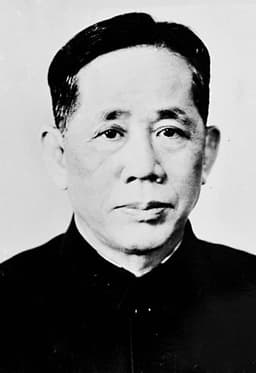
Le Duan
Politician · Modern
54.8Total
Basic Information
Born
1878
1907
Died
1972
1986
Era
Modern
Modern
Nationality
India
Vietnam
Occupation
Politician
Politician
Civilization
Indian
Eastern
Score Comparison
Military (10%)
38.8
25.9
Political (20%)
70.0
65.0
Influence (20%)
58.3
58.3
Legacy (20%)
52.0
52.0
Leadership (15%)
78.0
72.0
Strategy (15%)
60.0
41.0
TOTAL
59.7
54.8
C. Rajagopalachari — Complete Timeline
1937 AD
Served as Chief Minister of Madras PresidencyPolitical Action◆ Major
Rajagopalachari became the first Premier (Chief Minister) of the Madras Presidency under the Government of India Act 1935. He implemented prohibition and introduced Hindi education, which sparked protests from anti-Hindi groups.
Chief MinisterProhibitionLanguage Policy
Impact: regional
1947 AD
Served as Governor of West BengalPolitical Action
Rajagopalachari was appointed Governor of West Bengal during the partition riots. He worked to restore order and manage the refugee crisis, though his tenure was marked by communal tensions.
GovernorPartitionRefugees
Impact: regional
1948 AD
Appointed Governor-General of IndiaPolitical Action◆ Major
C. Rajagopalachari became the first and only Indian Governor-General of India, succeeding Lord Mountbatten. He served as the constitutional head of state until India became a republic in 1950, overseeing the transition to a republic.
Governor-GeneralConstitutionalTransition
Impact: nationalconstructive
1954 AD
Awarded Bharat RatnaCultural◆ Major
Rajagopalachari was awarded the Bharat Ratna, India's highest civilian award, for his contributions to public service and politics. He was one of the first recipients of the award.
AwardHonorCivilian
Impact: nationalconstructive
1959 AD
Co-founded the Swatantra PartyPolitical Action◆ Major
Rajagopalachari founded the Swatantra Party along with Minoo Masani and others. The party advocated for free-market economics, individual liberty, and limited government, opposing the socialist policies of the Congress Party.
Free MarketPolitical PartyLiberalism
Impact: nationalconstructive
Le Duan — Complete Timeline
1960 AD
Elected to PolitburoPolitical Action◆ Major
Le Duan was elected to the Politburo of the Communist Party of Vietnam, becoming a top leader. He was a key figure in directing the Vietnam War against the United States and South Vietnam.
PolitburoCommunist PartyVietnam War
Impact: national
General Secretary of the Communist PartyPolitical Action◆ Major
Le Duan became General Secretary of the Communist Party of Vietnam, succeeding Ho Chi Minh as the top leader. He oversaw the unification of Vietnam after the war and implemented socialist policies.
General SecretaryLeadershipUnification
Impact: nationalconstructive
1968 AD
Tet Offensive planningWar◆ Major
Le Duan was a key architect of the Tet Offensive, a massive military campaign against South Vietnam and US forces. Although a tactical defeat, the offensive shifted US public opinion against the war.
Tet OffensiveVietnam WarMilitary strategy
Impact: global
1976 AD
Reunification of VietnamPolitical Action◆ Major
Le Duan oversaw the formal reunification of North and South Vietnam into the Socialist Republic of Vietnam. He implemented a Soviet-style command economy and collectivization in the south.
ReunificationSocialist RepublicCollectivization
Impact: nationalconstructive
1978 AD
Invasion of CambodiaWar◆ Major
Le Duan ordered the Vietnamese invasion of Cambodia, overthrowing the Khmer Rouge regime. The invasion led to a decade-long occupation and international isolation for Vietnam.
CambodiaInvasionKhmer Rouge
Impact: regionaldestructive
This comparison has not been analyzed yet.
One-time AI generation (~1 minute). Scores and timeline are already available below.
Rankings
🥇
C. RajagopalachariLeader
Mil: 38.8Pol: 70.0Inf: 58.3
59.7
🥈
Le Duan
Mil: 25.9Pol: 65.0Inf: 58.3
54.8
+4.9 behind
How This Comparison Works
Algorithm
Each figure is scored on 6 dimensions (0—100 scale) based on structured historical data: Military (10%), Political (20%), Influence (20%), Legacy (20%), Leadership (15%), Strategy (15%). The weighted total produces the final ranking.
Data Sources
Scores are computed from structured sub-indicators in the database. Scale factors adjust for era (Ancient ×0.85, Modern ×1.0) and civilization size (Eastern ×1.05, Other ×0.80) to account for differences in population and military scale.
Maximum 3 Figures
Comparisons are limited to 2—3 figures to ensure readability and statistical meaningfulness.
Error Margins
±5 points per dimension — Sub-scores are derived from historical records with inherent uncertainty. Two figures within 5 points on a dimension should be considered roughly equivalent in that area.
Total Score Accuracy
±3 points overall — The weighted combination of 6 dimensions produces a total score with approximately ±3 points of uncertainty. Differences of less than 3 points are not statistically significant— the figures are effectively tied.
Known Limitations
- Historical records are incomplete and uneven across civilizations
- Figures from oral-tradition societies may be underrepresented
- Occupation labels can misclassify multi-role figures
- Scores measure capability and impact, not moral character
- Quantitative scoring is a comparison tool, not absolute truth
Capability Radar
Military (10%) — Battles & Warfare
Battles
42
20
Win Rate
48
20
Expansion
50
30
Political (20%) — Governance & Reform
Reform
75
70
Diplomacy
80
75
Economy
65
60
Influence (20%) — Cultural & Global Reach
Cultural
55
50
Global
55
60
Legacy (20%) — Historical Impact
Historical
60
70
Longevity
50
60
Leadership (15%) — Power & Stability
Tenure
70
85
Stability
70
65
Strategy (15%) — Tactics & Innovation
Strategy
52
30
Tactics
55
20
Reform
59
30
Similar Comparisons
Comments & Discussion
No comments yet. Be the first to share your thoughts!