Loading...
C. Rajagopalachari vs Stanley Baldwin
C. Rajagopalachari leads by 7.4 pts · 2 figures compared
…

C. Rajagopalachari
Politician · Modern
59.7Total
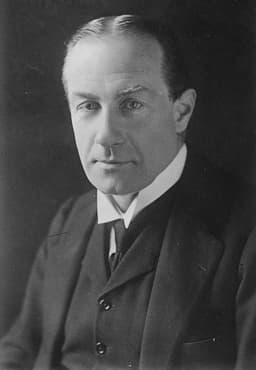
Stanley Baldwin
Politician · Modern
52.3Total
Basic Information
Born
1878
1867
Died
1972
1947
Era
Modern
Modern
Nationality
India
United Kingdom
Occupation
Politician
Politician
Civilization
Indian
Western
Score Comparison
Military (10%)
38.8
19.0
Political (20%)
70.0
60.0
Influence (20%)
58.3
58.0
Legacy (20%)
52.0
49.2
Leadership (15%)
78.0
79.8
Strategy (15%)
60.0
26.5
TOTAL
59.7
52.3
C. Rajagopalachari — Complete Timeline
1937 AD
Served as Chief Minister of Madras PresidencyPolitical Action◆ Major
Rajagopalachari became the first Premier (Chief Minister) of the Madras Presidency under the Government of India Act 1935. He implemented prohibition and introduced Hindi education, which sparked protests from anti-Hindi groups.
Chief MinisterProhibitionLanguage Policy
Impact: regional
1947 AD
Served as Governor of West BengalPolitical Action
Rajagopalachari was appointed Governor of West Bengal during the partition riots. He worked to restore order and manage the refugee crisis, though his tenure was marked by communal tensions.
GovernorPartitionRefugees
Impact: regional
1948 AD
Appointed Governor-General of IndiaPolitical Action◆ Major
C. Rajagopalachari became the first and only Indian Governor-General of India, succeeding Lord Mountbatten. He served as the constitutional head of state until India became a republic in 1950, overseeing the transition to a republic.
Governor-GeneralConstitutionalTransition
Impact: nationalconstructive
1954 AD
Awarded Bharat RatnaCultural◆ Major
Rajagopalachari was awarded the Bharat Ratna, India's highest civilian award, for his contributions to public service and politics. He was one of the first recipients of the award.
AwardHonorCivilian
Impact: nationalconstructive
1959 AD
Co-founded the Swatantra PartyPolitical Action◆ Major
Rajagopalachari founded the Swatantra Party along with Minoo Masani and others. The party advocated for free-market economics, individual liberty, and limited government, opposing the socialist policies of the Congress Party.
Free MarketPolitical PartyLiberalism
Impact: nationalconstructive
Stanley Baldwin — Complete Timeline
1926 AD
General Strike of 1926Political Action◆ Major
As Prime Minister, Baldwin faced the General Strike called by the Trades Union Congress in support of coal miners. Baldwin's government used emergency powers and propaganda to maintain essential services, and the strike collapsed after nine days, weakening the trade union movement.
General StrikeLabour RelationsConservative Government
Impact: national
1927 AD
Trade Disputes and Trade Unions Act 1927Political Action◆ Major
Baldwin's government passed the Trade Disputes and Trade Unions Act, which made general strikes illegal and restricted trade union political funds. The Act required union members to opt in to paying the political levy, reducing Labour Party funding.
Trade UnionsLegislationConservative Policy
Impact: nationaldestructive
1931 AD
Statute of Westminster 1931Political Action◆ Major
Baldwin's government enacted the Statute of Westminster, which granted legislative independence to the Dominions of the British Empire (Canada, Australia, New Zealand, South Africa, Irish Free State, Newfoundland). This established the legal basis for the modern Commonwealth.
CommonwealthDecolonizationConstitutional Law
Impact: globalconstructive
1935 AD
Re-armament ProgrammePolitical Action◆ Major
Baldwin's government initiated a major re-armament programme in response to German re-militarization, including expansion of the Royal Air Force and Royal Navy. This marked a shift from earlier disarmament policies, though critics argued it was too slow.
RearmamentDefence PolicyNazi Germany
Impact: national
1936 AD
Abdication Crisis of Edward VIIIPolitical Action
As Prime Minister, Baldwin managed the constitutional crisis caused by King Edward VIII's desire to marry Wallis Simpson, a divorced American. Baldwin insisted the King abdicate if he married Simpson, leading to Edward's abdication in December 1936 and the accession of George VI.
MonarchyConstitutional CrisisAbdication
Impact: national
Expert Analysis
Origins
C. Rajagopalachari, born in 1878 in Thorapalli, India, was a lawyer and early associate of Mahatma Gandhi. His family background was modest, and he studied at Presidency College, Madras. Stanley Baldwin, born in 1867 in Bewdley, England, came from a wealthy industrial family. He attended Harrow and Trinity College, Cambridge. Both were shaped by their eras: Rajagopalachari by colonial subjugation and the Indian independence movement, Baldwin by the decline of the British Empire and the rise of socialism.
Rise to Power
Rajagopalachari rose through the Indian National Congress, becoming a key figure in the salt satyagraha (1930) and negotiations with the British. He became Chief Minister of Madras Presidency in 1937. Baldwin entered Parliament in 1908, served as President of the Board of Trade, and became Prime Minister in 1923 after Bonar Law's resignation. His handling of the General Strike of 1926 solidified his position. Rajagopalachari's rise was tied to mass nationalism; Baldwin's to conservative party politics.
Leadership & Governance
Rajagopalachari's leadership scored 78.0, reflecting his principled governance. As Chief Minister, he introduced prohibition and promoted Hindi, which proved controversial. He was a constitutionalist, serving as Governor of West Bengal (1947) and Governor-General of India (1948-1950). Baldwin's leadership scored 79.8, indicating effective crisis management. He navigated the 1926 General Strike and the abdication crisis of Edward VIII in 1936. However, his strategic score was low at 26.5, criticized for insufficient rearmament against Nazi Germany. Baldwin favored conciliation over confrontation, while Rajagopalachari was a vocal advocate for free markets and individual liberty.
Triumph & Tragedy
Rajagopalachari's triumphs include becoming the first Indian Governor-General and founding the Swatantra Party (1959), which championed economic liberalism. He was awarded the Bharat Ratna in 1954. His failures include the unpopular imposition of Hindi in Madras and his inability to prevent the partition of India. Baldwin's triumphs include managing the abdication crisis and passing the Statute of Westminster (1931), granting Dominions autonomy. His tragedy lies in his failure to rearm Britain adequately, contributing to the appeasement policy that allowed Hitler's aggression. His Trade Disputes Act (1927) alienated labor.
Character & Destiny
Rajagopalachari was known for his intellectual rigor and stubbornness. He often clashed with Nehru, leading to his departure from Congress. His character shaped his destiny: he became an outsider in Congress but a respected elder statesman. Baldwin was pragmatic and conciliatory, seeking national unity. His cautious nature led to criticism for indecisiveness. Historians note Baldwin's political shrewdness but also his complacency. Both men were products of their systems: Rajagopalachari a moralist, Baldwin a manager.
Legacy
Rajagopalachari's legacy is mixed. He is remembered as a founding figure of Indian conservatism and a champion of free markets. His ideas influenced later economic reforms in India. Baldwin's legacy is controversial: some credit him for maintaining stability during crises, while others blame him for Britain's unpreparedness for war. His Statute of Westminster reshaped the Commonwealth. Rajagopalachari's total score of 59.7 edges Baldwin's 52.3, but Baldwin's impact on global events was more immediate.
Conclusion
While both were constitutional leaders, Rajagopalachari's broader impact on India's political and economic thought, combined with his higher total score (59.7 vs 52.3), makes him the more influential figure. Baldwin's failures in rearmament and his reactive leadership diminish his lasting legacy. Rajagopalachari's principled stand for liberty and his role in shaping India's post-colonial identity give him a greater historical weight.
Rankings
🥇
C. RajagopalachariLeader
Mil: 38.8Pol: 70.0Inf: 58.3
59.7
🥈
Stanley Baldwin
Mil: 19.0Pol: 60.0Inf: 58.0
52.3
+7.4 behind
How This Comparison Works
Algorithm
Each figure is scored on 6 dimensions (0—100 scale) based on structured historical data: Military (10%), Political (20%), Influence (20%), Legacy (20%), Leadership (15%), Strategy (15%). The weighted total produces the final ranking.
Data Sources
Scores are computed from structured sub-indicators in the database. Scale factors adjust for era (Ancient ×0.85, Modern ×1.0) and civilization size (Eastern ×1.05, Other ×0.80) to account for differences in population and military scale.
Maximum 3 Figures
Comparisons are limited to 2—3 figures to ensure readability and statistical meaningfulness.
Error Margins
±5 points per dimension — Sub-scores are derived from historical records with inherent uncertainty. Two figures within 5 points on a dimension should be considered roughly equivalent in that area.
Total Score Accuracy
±3 points overall — The weighted combination of 6 dimensions produces a total score with approximately ±3 points of uncertainty. Differences of less than 3 points are not statistically significant— the figures are effectively tied.
Known Limitations
- Historical records are incomplete and uneven across civilizations
- Figures from oral-tradition societies may be underrepresented
- Occupation labels can misclassify multi-role figures
- Scores measure capability and impact, not moral character
- Quantitative scoring is a comparison tool, not absolute truth
Capability Radar
Military (10%) — Battles & Warfare
Battles
42
8
Win Rate
48
12
Expansion
50
15
Political (20%) — Governance & Reform
Reform
75
60
Diplomacy
80
65
Economy
65
55
Influence (20%) — Cultural & Global Reach
Cultural
55
30
Global
55
50
Legacy (20%) — Historical Impact
Historical
60
55
Longevity
50
40
Leadership (15%) — Power & Stability
Tenure
70
70
Stability
70
60
Strategy (15%) — Tactics & Innovation
Strategy
52
17
Tactics
55
22
Reform
59
27
Similar Comparisons
Comments & Discussion
No comments yet. Be the first to share your thoughts!