Loading...
Charles de Gaulle vs Cyrus the Great
Cyrus the Great leads by 15.7 pts · 2 figures compared
…
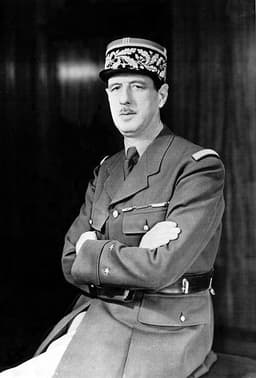
Charles de Gaulle
Politician · Modern
68.2Total
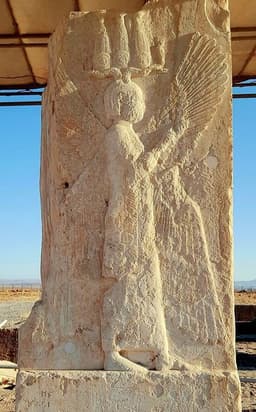
Cyrus the Great
Emperor · Ancient
83.9Total
Basic Information
Born
1890
-600
Died
1970
-530
Era
Modern
Ancient
Nationality
France
Persia
Occupation
Politician
Emperor
Civilization
Western
Middle Eastern
Score Comparison
Military (10%)
55.0
82.0
Political (20%)
75.0
85.0
Influence (20%)
65.0
85.0
Legacy (20%)
68.0
90.0
Leadership (15%)
78.0
78.0
Strategy (15%)
65.0
75.0
TOTAL
68.2
83.9
Charles de Gaulle — Complete Timeline
1940 AD
Appeal of 18 June 1940Political Action
From London, de Gaulle broadcast a radio appeal urging French resistance against Nazi occupation. He called on French soldiers and citizens to continue the fight, founding the Free French Forces and becoming the symbol of French defiance.
World War IIResistanceLeadership
Impact: nationalconstructive
1958 AD
Founding of the Fifth RepublicPolitical Action
De Gaulle returned to power during the Algerian crisis and oversaw the drafting of a new constitution. The Fifth Republic established a strong executive presidency, replacing the unstable parliamentary system of the Fourth Republic.
ConstitutionGovernment ReformPolitical System
Impact: nationalconstructive
1962 AD
End of the Algerian WarPolitical Action◆ Major
De Gaulle negotiated the
DecolonizationPeace TreatyAlgeria
Impact: regionalconstructive
1968 AD
May 1968 CrisisPolitical Action◆ Major
Mass student protests and general strikes paralyzed France, challenging de Gaulle's government. De Gaulle briefly fled to Germany, then returned to dissolve the National Assembly and call elections, which his party won, but his authority was weakened.
ProtestPolitical CrisisSocial Unrest
Impact: nationaldestructive
1969 AD
Resignation as PresidentPolitical Action
De Gaulle resigned after losing a referendum on regional reform and Senate restructuring. The defeat marked the end of his political career, as he withdrew from public life and died the following year.
ResignationPolitical DefeatReferendum
Impact: nationaltragic
Cyrus the Great — Complete Timeline
550 BC
Founding of the Achaemenid EmpirePolitical Action
Cyrus led a rebellion against the Median Empire, defeating King Astyages and capturing Ecbatana. He then united the Persian and Median tribes, establishing the Achaemenid Empire, which became the largest empire the world had yet seen.
Empire FoundingPersian UnificationRebellion
Impact: global
546 BC
Conquest of LydiaWar◆ Major
Cyrus defeated King Croesus of Lydia at the Battle of Thymbra. The Lydian capital Sardis was captured, and Croesus was taken prisoner. This conquest brought Anatolia under Persian control and secured access to the Aegean coast.
Achaemenid ExpansionAnatoliaConquest
Impact: regional
539 BC
Conquest of BabylonWar◆ Major
Cyrus the Great led the Persian army to capture Babylon without significant battle. The city's gates were opened, and Cyrus entered peacefully. This conquest added Mesopotamia to the Achaemenid Empire and marked the end of the Neo-Babylonian Empire.
Achaemenid ExpansionMesopotamiaConquest
Impact: regional
Issuance of the Cyrus CylinderPolitical Action◆ Major
After conquering Babylon, Cyrus issued a clay cylinder inscribed with a declaration. It described his policy of restoring temples, repatriating displaced peoples, and allowing religious freedom. The cylinder is often cited as an early charter of human rights.
Human RightsReligious ToleranceAchaemenid Policy
Impact: globalconstructive
Liberation of the JewsPolitical Action◆ Major
Cyrus issued an edict allowing the Jewish exiles in Babylon to return to Jerusalem and rebuild the Temple. This event is recorded in the biblical Book of Ezra and is a key moment in Jewish history, ending the Babylonian captivity.
Jewish HistoryReligious FreedomReturn from Exile
Impact: regionalconstructive
Expert Analysis
Charles de Gaulle vs Cyrus the Great
### The Conqueror and the Standard-Bearer
In the autumn of 539 BCE, the Persian king Cyrus the Great entered Babylon not through a breach in its walls, but through the open gates of a city that had surrendered without a fight. The river Euphrates had been diverted, the defenses bypassed, and the ancient capital of Mesopotamia fell to a ruler who would, within days, issue a decree of unprecedented tolerance. Twenty-five centuries later, in the summer of 1940, a tall, aloof French general stood before a microphone in London and, with a voice that seemed to carry the weight of an entire nation, refused to accept defeat. One man built an empire by letting conquered peoples keep their gods; the other rebuilt a republic by insisting his people remember their honor. What drives such different paths to power, and why do their outcomes diverge so starkly?
### Origins
Cyrus was born around 600 BCE into a world of warring kingdoms. According to legend, his grandfather, the Median king Astyages, dreamed that Cyrus would one day overthrow him and ordered the infant killed. A servant saved the child, and Cyrus grew up among Persian tribesmen, learning the arts of horsemanship and survival on the harsh Iranian plateau. His world was one of clans, oaths, and the constant threat of Assyrian or Babylonian domination. He inherited not a kingdom but a cause: the unification of the Persian people.
Charles de Gaulle was born in 1890 in Lille, into a devoutly Catholic and patriotic family. His father taught philosophy and history, and young Charles grew up on tales of French glory and defeat. He entered the military academy of Saint-Cyr, fought in World War I, was captured at Verdun, and spent nearly three years as a prisoner of war. His era was one of industrial slaughter, national humiliation, and the collapse of old certainties. Where Cyrus learned to lead men on horseback across open plains, de Gaulle learned to think in terms of armored divisions and national morale.
### Rise to Power
Cyrus’s rise began with a rebellion. In 550 BCE, he led the Persian tribes against the Medes, defeating King Astyages and capturing the Median capital, Ecbatana. This was no simple conquest—Cyrus merged the two peoples, retaining Median nobles in his court and adopting their administrative practices. He did not destroy his enemy; he absorbed him. Then came Lydia, whose wealthy King Croesus had underestimated the Persians. At the Battle of Thymbra in 546 BCE, Cyrus deployed camels to frighten the Lydian horses, a tactical stroke that turned the tide. The Lydian capital Sardis fell, and Croesus was captured. Cyrus spared his life.
De Gaulle’s rise was far less direct. In 1940, he was a relatively obscure brigadier general when the German blitzkrieg shattered the French army. While the government of Marshal Pétain prepared to surrender, de Gaulle fled to London. On June 18, he broadcast his famous appeal: “France has lost a battle, but France has not lost the war.” At the time, almost no one listened. He had no army, no territory, no legitimacy—only a conviction that he embodied the true France. For four years, he fought not just the Germans but the Allies, who saw him as a difficult, ungrateful exile. His turning point came in 1958, when the Algerian War crisis brought down the Fourth Republic and the French people, desperate for stability, called him back from retirement.
### Leadership & Governance
Cyrus governed through inclusion. After conquering Babylon in 539 BCE, he issued the Cyrus Cylinder, a clay declaration that restored local temples, returned displaced peoples to their homelands, and forbade forced labor. Most famously, he allowed the Jewish exiles to return to Jerusalem and rebuild their Temple—an act recorded in the biblical Book of Ezra. His empire stretched from the Indus to the Mediterranean, yet he respected local customs, appointed satraps from conquered elites, and rarely imposed Persian religion or language. He understood that an empire held by fear would not last.
De Gaulle governed through will. As president of the Fifth Republic, he crafted a constitution that gave the executive enormous power—a direct response to the parliamentary paralysis that had doomed the Fourth Republic. He ended the Algerian War in 1962 through the Évian Accords, despite facing assassination attempts from both the far right and the far left. He withdrew France from NATO’s integrated command, developed an independent nuclear deterrent, and vetoed British entry into the European Economic Community. Where Cyrus built by embracing diversity, de Gaulle built by asserting sovereignty. Both were realists, but de Gaulle’s realism was that of a man who had seen his country occupied and knew that power, in the end, is the only thing that guarantees freedom.
### Triumph & Tragedy
Cyrus’s greatest triumph was the conquest of Babylon itself—a city so vast and fortified that its fall seemed impossible. Yet he achieved it with minimal bloodshed, and his subsequent policies turned a potential rebellion into a willing province. His tragedy came in 530 BCE, when he died in battle against a nomadic tribe on the northeastern frontier. The exact circumstances are murky; Herodotus claims he was killed by Queen Tomyris of the Massagetae, who then mutilated his body. The empire he had built would survive for two centuries, but his death marked the end of its most generous era.
De Gaulle’s triumph was the restoration of French prestige. In 1958, France was a broken nation, torn by war and humiliated by defeat. By 1969, it was a nuclear power, a permanent member of the UN Security Council, and a leading force in European integration. His tragedy came in May 1968, when student protests and a general strike paralyzed France. De Gaulle, the man who had stood firm against Hitler, briefly fled to Germany to consult with the French army commander. He returned and called new elections, winning a majority, but the mystique was broken. He resigned in 1969 after losing a minor referendum on regional reform—a petty end for a man of such stature.
### Character & Destiny
Cyrus was a pragmatist with a vision. He understood that power requires consent, and that the most durable bonds are those of gratitude, not fear. His personality was that of a unifier—generous, strategic, and patient. He could wait for a city to open its gates rather than storm them. De Gaulle was an idealist with a temper. He believed that France was not just a country but an idea, and that his own life was inseparable from that idea. His personality was that of a prophet—aloof, stubborn, and convinced of his own destiny. He could not bend, and in the end, he broke.
### Legacy
Cyrus is remembered as a model of enlightened rule. The Cyrus Cylinder is often cited as an early human rights charter, and his policies influenced the governance of later empires, from Rome to the British. He is revered in Judaism, Zoroastrianism, and Iranian nationalism. De Gaulle is remembered as the savior of French honor. The Fifth Republic endures, and his vision of an independent, sovereign France continues to shape its foreign policy. But his legacy is also contested: critics note his authoritarian tendencies, his manipulation of referendums, and his failure to address social inequality.
### Conclusion
One built an empire that embraced diversity; the other rebuilt a nation that insisted on its uniqueness. Cyrus the Great and Charles de Gaulle faced radically different worlds—one of ancient city-states, the other of modern nation-states—but both understood that leadership is not about power alone. It is about the story you tell, the people you include, and the future you imagine. Cyrus opened the gates of Babylon. De Gaulle stood before the microphone in London. Both changed the world, but only one believed that to conquer was to liberate. The other believed that to stand alone was to be free.
Rankings
🥇
Cyrus the GreatLeader
Mil: 82.0Pol: 85.0Inf: 85.0
83.9
🥈
Charles de Gaulle
Mil: 55.0Pol: 75.0Inf: 65.0
68.2
+15.7 behind
How This Comparison Works
Algorithm
Each figure is scored on 6 dimensions (0—100 scale) based on structured historical data: Military (10%), Political (20%), Influence (20%), Legacy (20%), Leadership (15%), Strategy (15%). The weighted total produces the final ranking.
Data Sources
Scores are computed from structured sub-indicators in the database. Scale factors adjust for era (Ancient ×0.85, Modern ×1.0) and civilization size (Eastern ×1.05, Other ×0.80) to account for differences in population and military scale.
Maximum 3 Figures
Comparisons are limited to 2—3 figures to ensure readability and statistical meaningfulness.
Error Margins
±5 points per dimension — Sub-scores are derived from historical records with inherent uncertainty. Two figures within 5 points on a dimension should be considered roughly equivalent in that area.
Total Score Accuracy
±3 points overall — The weighted combination of 6 dimensions produces a total score with approximately ±3 points of uncertainty. Differences of less than 3 points are not statistically significant— the figures are effectively tied.
Known Limitations
- Historical records are incomplete and uneven across civilizations
- Figures from oral-tradition societies may be underrepresented
- Occupation labels can misclassify multi-role figures
- Scores measure capability and impact, not moral character
- Quantitative scoring is a comparison tool, not absolute truth
Capability Radar
Military (10%) — Battles & Warfare
Battles
60
85
Win Rate
55
90
Expansion
20
92
Political (20%) — Governance & Reform
Reform
95
90
Diplomacy
90
95
Economy
70
80
Influence (20%) — Cultural & Global Reach
Cultural
70
90
Global
80
90
Legacy (20%) — Historical Impact
Historical
85
95
Longevity
75
95
Leadership (15%) — Power & Stability
Tenure
85
70
Stability
75
85
Strategy (15%) — Tactics & Innovation
Strategy
85
88
Tactics
70
80
Reform
80
75
Similar Comparisons
Comments & Discussion
The Iranian Pharaoh6/16/2026
De Gaulle couldn't unify a continent; Cyrus unified the known world—and not with speeches. The Cyrus Cylinder is the first human rights charter, predating de Gaulle's Free French by 2,500 years. De Gaulle won WWII by hiding in London; Cyrus won Babylon by rerouting a river. One's legacy is a memory of resistance; the other's is the blueprint for empire. No contest.
数据刀客6/16/2026
拿古罗马的数据对比?这根本是关公战秦琼。Cyrus的帝国人口全靠估算,活下来不到一百份铭文;戴高乐的自由法国有精确的军队名册、弹药消耗量、电台收听率。拿两千年前的传说去对比二十世纪的标准化档案?历史学家最爱数字漏洞,但我只认硬数据。
The Iron Cauldron6/16/2026
De Gaulle is the ultimate "honor without empire" figure—Cyrus actually built one. De Gaulle's Free French never fielded more than 50,000 troops; Cyrus's army swallowed Babylon whole. De Gaulle saved France's soul; Cyrus saved its body too. You can love de Gaulle's stubborn idealism, but Cyrus's pragmatism is why we still read about Persia.
庙堂独行者6/16/2026
戴高乐是法兰西的孤臣,Cyrus是波斯的君王,但两人本质不同。Cyrus的宽容是扩张的工具——他允许犹太人回耶路撒冷,换取帝国边疆的稳定。戴高乐的民族主义是纯粹的信仰,他宁可在1940年流亡,也不向德国低头。一个用信仰治国,一个用信仰建城,高下立判。
Historian9166/16/2026
Cyrus built an empire on pragmatism: let every god live, let every king swear fealty, collect taxes. De Gaulle built a myth on resistance: "France has lost a battle, not the war." One never needed a speech to conquer Babylon; the other became a speech. One created a multi-ethnic superstate; the other saved a single nation's pride. Different tools, same hunger for history's eye.