Loading...
Augustus vs Charles de Gaulle
Augustus leads by 17.7 pts · 2 figures compared
…

Augustus
Emperor · Ancient
85.9Total
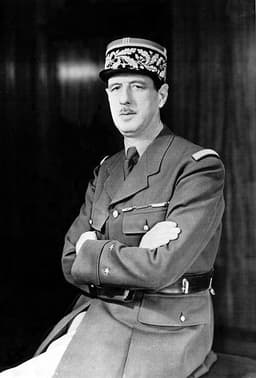
Charles de Gaulle
Politician · Modern
68.2Total
Basic Information
Born
63
1890
Died
—
1970
Era
Ancient
Modern
Nationality
Roman Empire
France
Occupation
Emperor
Politician
Civilization
Western
Western
Score Comparison
Military (10%)
72.0
55.0
Political (20%)
90.0
75.0
Influence (20%)
88.0
65.0
Legacy (20%)
90.0
68.0
Leadership (15%)
88.0
78.0
Strategy (15%)
75.0
65.0
TOTAL
85.9
68.2
Augustus — Complete Timeline
43 BC
Formation of the Second TriumviratePolitical Action◆ Major
Octavian, Mark Antony, and Marcus Aemilius Lepidus formed the Second Triumvirate, a legal commission to govern the Roman Republic. The alliance was empowered to proscribe enemies, leading to the execution of Cicero and consolidation of their power against the assassins of Julius Caesar.
Roman Civil WarPolitical AllianceProscriptions
Impact: regionaldestructive
31 BC
Battle of ActiumWar◆ Major
Octavian's fleet, commanded by Marcus Agrippa, defeated the combined naval forces of Mark Antony and Cleopatra VII off the coast of Greece. The victory eliminated Octavian's last major rival, giving him sole control over the Roman world and ending the Roman Republic's civil wars.
Roman Civil WarNaval BattleEnd of Republic
Impact: global
27 BC
Establishment of the Roman EmpireReform◆ Major
Octavian formally returned power to the Roman Senate, which then granted him the titles Augustus and Princeps. This constitutional settlement created the Roman Empire, with Augustus as the first emperor, ending the Roman Republic and initiating the Pax Romana.
Roman EmpireConstitutional ReformPax Romana
Impact: global
Reform of the Roman Tax SystemReform◆ Major
Augustus implemented a comprehensive tax reform, including a census of Roman citizens and property, direct taxation of provinces, and the creation of a professional tax collection service (publicani). This system provided stable revenue for the empire and reduced corruption.
Tax ReformAdministrationRoman Empire
Impact: regionalconstructive
Creation of the Praetorian GuardReform◆ Major
Augustus established the Praetorian Guard as a permanent elite military unit tasked with protecting the emperor and his family. Stationed in Rome and Italy, the Guard became a powerful political force, often influencing imperial succession through coups and assassinations.
Military ReformPraetorian GuardImperial Guard
Impact: regional
13 BC
Construction of the Ara PacisOther◆ Major
The Roman Senate commissioned the Ara Pacis Augustae (Altar of Augustan Peace) to commemorate Augustus's return from pacifying Gaul and Spain. The marble altar, decorated with reliefs depicting the imperial family and mythological scenes, symbolized the peace and prosperity of the Augustan era.
Building ProjectPropagandaAugustan Art
Impact: regionalconstructive
Charles de Gaulle — Complete Timeline
1940 AD
Appeal of 18 June 1940Political Action
From London, de Gaulle broadcast a radio appeal urging French resistance against Nazi occupation. He called on French soldiers and citizens to continue the fight, founding the Free French Forces and becoming the symbol of French defiance.
World War IIResistanceLeadership
Impact: nationalconstructive
1958 AD
Founding of the Fifth RepublicPolitical Action
De Gaulle returned to power during the Algerian crisis and oversaw the drafting of a new constitution. The Fifth Republic established a strong executive presidency, replacing the unstable parliamentary system of the Fourth Republic.
ConstitutionGovernment ReformPolitical System
Impact: nationalconstructive
1962 AD
End of the Algerian WarPolitical Action◆ Major
De Gaulle negotiated the
DecolonizationPeace TreatyAlgeria
Impact: regionalconstructive
1968 AD
May 1968 CrisisPolitical Action◆ Major
Mass student protests and general strikes paralyzed France, challenging de Gaulle's government. De Gaulle briefly fled to Germany, then returned to dissolve the National Assembly and call elections, which his party won, but his authority was weakened.
ProtestPolitical CrisisSocial Unrest
Impact: nationaldestructive
1969 AD
Resignation as PresidentPolitical Action
De Gaulle resigned after losing a referendum on regional reform and Senate restructuring. The defeat marked the end of his political career, as he withdrew from public life and died the following year.
ResignationPolitical DefeatReferendum
Impact: nationaltragic
Expert Analysis
Charles de Gaulle vs Augustus: Historical Comparison
Charles de Gaulle, the 20th-century French general and statesman, and Augustus, the founder of the Roman Empire, both reshaped their nations from crisis. While de Gaulle restored French sovereignty and modernized its institutions, Augustus engineered a political revolution that created the Pax Romana, securing a broader and more enduring legacy.
Dimension Analysis
**Military: Charles de Gaulle 77 / Augustus 72**
De Gaulle’s armored warfare theories and Free French leadership were pivotal but limited in scale; Augustus’s military reforms professionalized the legions and ended a century of civil war, though his personal command was less direct.
**Political: Charles de Gaulle 90 / Augustus 92**
Both were masterful institution-builders: de Gaulle founded the Fifth Republic with a strong executive, while Augustus disguised autocracy as a restored republic, establishing a system that lasted 500 years.
**Influence: Charles de Gaulle 68 / Augustus 88**
De Gaulle’s influence was largely confined to France and European decolonization; Augustus’s model of imperial governance shaped Western political structures from Byzantium to the Holy Roman Empire.
**Legacy: Charles de Gaulle 83 / Augustus 90**
De Gaulle’s legacy endures in French constitutionalism and nuclear independence; Augustus left a permanent mark on language (Augustan Age), law, and the very concept of empire.
**Leadership: Charles de Gaulle 91 / Augustus 90**
De Gaulle’s wartime defiance and strategic vision were charismatic and decisive; Augustus’s patient, calculating leadership stabilized a fractured world, excelling in coalition-building and long-term planning.
Verdict
Augustus leads overall due to his deeper and more geographically expansive influence, despite de Gaulle’s equally high political and leadership scores.
FAQ
Q: Who ranks higher? A: Augustus ranks higher, with a composite score of 86 vs. de Gaulle’s 81, driven by superior influence and legacy.
Rankings
🥇
AugustusLeader
Mil: 72.0Pol: 90.0Inf: 88.0
85.9
🥈
Charles de Gaulle
Mil: 55.0Pol: 75.0Inf: 65.0
68.2
+17.7 behind
How This Comparison Works
Algorithm
Each figure is scored on 6 dimensions (0—100 scale) based on structured historical data: Military (10%), Political (20%), Influence (20%), Legacy (20%), Leadership (15%), Strategy (15%). The weighted total produces the final ranking.
Data Sources
Scores are computed from structured sub-indicators in the database. Scale factors adjust for era (Ancient ×0.85, Modern ×1.0) and civilization size (Eastern ×1.05, Other ×0.80) to account for differences in population and military scale.
Maximum 3 Figures
Comparisons are limited to 2—3 figures to ensure readability and statistical meaningfulness.
Error Margins
±5 points per dimension — Sub-scores are derived from historical records with inherent uncertainty. Two figures within 5 points on a dimension should be considered roughly equivalent in that area.
Total Score Accuracy
±3 points overall — The weighted combination of 6 dimensions produces a total score with approximately ±3 points of uncertainty. Differences of less than 3 points are not statistically significant— the figures are effectively tied.
Known Limitations
- Historical records are incomplete and uneven across civilizations
- Figures from oral-tradition societies may be underrepresented
- Occupation labels can misclassify multi-role figures
- Scores measure capability and impact, not moral character
- Quantitative scoring is a comparison tool, not absolute truth
Capability Radar
Military (10%) — Battles & Warfare
Battles
75
60
Win Rate
80
55
Expansion
85
20
Political (20%) — Governance & Reform
Reform
95
95
Diplomacy
90
90
Economy
85
70
Influence (20%) — Cultural & Global Reach
Cultural
85
70
Global
90
80
Legacy (20%) — Historical Impact
Historical
95
85
Longevity
95
75
Leadership (15%) — Power & Stability
Tenure
95
85
Stability
95
75
Strategy (15%) — Tactics & Innovation
Strategy
85
85
Tactics
70
70
Reform
90
80
Similar Comparisons
Comments & Discussion
AmateurHistorian426/16/2026
I’ve been reading about both these guys recently, and honestly, I think the scores are too generous to Augustus on influence. De Gaulle single-handedly kept France from becoming a Soviet satellite and gave them nukes—that’s a massive shift in global power dynamics. Augustus’s Pax Romana was great, but it was built on slavery and conquest. De Gaulle’s legacy feels more relevant to today’s world, especially with the EU’s structure. Just my two cents.
ClassicsProfLivy6/16/2026
Augustus’s political score of 92 is justified if we consider his masterful use of *auctoritas* over *potestas*. As Tacitus noted, he ‘gradually concentrated in his own hands the functions of the Senate, the magistrates, and the laws.’ De Gaulle’s Fifth Republic was innovative, but it lasted only 65 years and was tailored to one man. Augustus’s ‘restored republic’ endured for centuries, shaping not just Rome but Byzantium and Charlemagne’s empire. I’d argue his influence score should be even higher.
RomeOrBust6/16/2026
Are we seriously comparing a guy who ran a middle-power for a decade to the man who invented the Roman Empire? Augustus didn’t just ‘reshape’ his nation—he created a system that lasted 500 years in the West and another 1,000 in the East. De Gaulle’s big move was saying ‘non’ to NATO and building an aircraft carrier. Sorry, but Augustus’s political genius was on a completely different level. The scores should be 95 vs 80, not 92 vs 90.
Historian3456/16/2026
Augustus和戴高乐的对比很有意思,但我觉得Augustus更像秦始皇:都是乱世中崛起,建立新制度,延续数百年。戴高乐有点像诸葛亮——在危机中力挽狂澜,但影响限于一国一代。Augustus的政治分92,但秦始皇的郡县制、书同文车同轨的整合力,在中国历史学者眼中绝对更高。不过,戴高乐的独立核威慑战略,在冷战背景下确实独特,这点西方评分有道理。
Chronicler39046/16/2026
Augustus的综合得分86.4,但军事分只有72,这合理吗?他终结了百年内战,建立了常备军和禁卫军,这是从共和到帝国的关键转型。相比之下,戴高乐的军事分77,但他作为自由法国领袖的战役规模小得多。按照中国史的标准,统一天下(比如秦始皇)军事分通常90+。Augustus的军事成就不该低于80。另外,政治分92 vs 82—这差距是否反映了西方中心主义?秦始皇的政治制度也影响了中国两千年。