Loading...
Charles de Gaulle vs Fu Jian
Charles de Gaulle leads by 3.8 pts · 2 figures compared
…
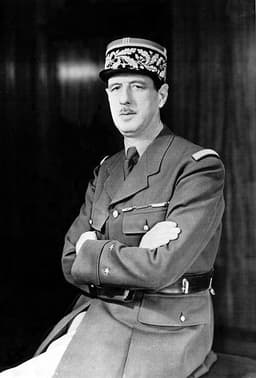
Charles de Gaulle
Politician · Modern
68.2Total
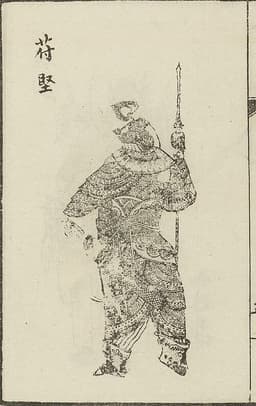
Fu Jian
Emperor · Ancient
64.4Total
Basic Information
Born
1890
338
Died
1970
385
Era
Modern
Ancient
Nationality
France
China
Occupation
Politician
Emperor
Civilization
Western
Eastern
Score Comparison
Military (10%)
55.0
78.0
Political (20%)
75.0
72.0
Influence (20%)
65.0
59.0
Legacy (20%)
68.0
50.0
Leadership (15%)
78.0
85.0
Strategy (15%)
65.0
58.0
TOTAL
68.2
64.4
Charles de Gaulle — Complete Timeline
1940 AD
Appeal of 18 June 1940Political Action
From London, de Gaulle broadcast a radio appeal urging French resistance against Nazi occupation. He called on French soldiers and citizens to continue the fight, founding the Free French Forces and becoming the symbol of French defiance.
World War IIResistanceLeadership
Impact: nationalconstructive
1958 AD
Founding of the Fifth RepublicPolitical Action
De Gaulle returned to power during the Algerian crisis and oversaw the drafting of a new constitution. The Fifth Republic established a strong executive presidency, replacing the unstable parliamentary system of the Fourth Republic.
ConstitutionGovernment ReformPolitical System
Impact: nationalconstructive
1962 AD
End of the Algerian WarPolitical Action◆ Major
De Gaulle negotiated the
DecolonizationPeace TreatyAlgeria
Impact: regionalconstructive
1968 AD
May 1968 CrisisPolitical Action◆ Major
Mass student protests and general strikes paralyzed France, challenging de Gaulle's government. De Gaulle briefly fled to Germany, then returned to dissolve the National Assembly and call elections, which his party won, but his authority was weakened.
ProtestPolitical CrisisSocial Unrest
Impact: nationaldestructive
1969 AD
Resignation as PresidentPolitical Action
De Gaulle resigned after losing a referendum on regional reform and Senate restructuring. The defeat marked the end of his political career, as he withdrew from public life and died the following year.
ResignationPolitical DefeatReferendum
Impact: nationaltragic
Fu Jian — Complete Timeline
370 AD
Conquest of Former YanWar◆ Major
Fu Jian's Former Qin forces conquered the Former Yan state, annexing its territory in northern China. This victory significantly expanded Former Qin's power and territory, bringing Fu Jian closer to unifying the north.
ConquestExpansion
Impact: regionalconstructive
376 AD
Conquest of Former LiangWar◆ Major
Fu Jian's forces conquered the Former Liang state in the northwest, incorporating its territory into Former Qin. This further consolidated his control over northern China.
ConquestExpansion
Impact: regionalconstructive
Conquest of DaiWar
Fu Jian's army conquered the Dai state, a Xianbei confederation in the north. This eliminated a rival and extended Former Qin's influence into the steppe region.
ConquestExpansion
Impact: regionalconstructive
379 AD
Capture of XiangyangWar
Fu Jian's forces captured the strategic city of Xiangyang from the Eastern Jin dynasty. This victory gave Former Qin a foothold south of the Huai River, setting the stage for the invasion that led to the Battle of Fei River.
ConquestCampaign
Impact: regionalconstructive
383 AD
Battle of Fei RiverWar
Fu Jian led a massive Former Qin army against the Eastern Jin dynasty at the Fei River. The Jin forces defeated the Qin army, causing a catastrophic rout. This defeat shattered Fu Jian's unification efforts and led to the collapse of Former Qin.
BattleUnificationDefeat
Impact: regionaltragic
Expert Analysis
Charles de Gaulle vs Fu Jian
# The Lonely Heights of Power
In the summer of 383 AD, a vast army—perhaps the largest ever assembled in ancient China—marched south under the banner of the Former Qin emperor Fu Jian. His scouts reported the Eastern Jin forces across the Fei River, outnumbered but defiant. Fu Jian, confident in his numbers, ordered his troops to withdraw slightly, to allow the enemy to cross and fight on open ground. It was a fatal miscalculation. As his men began their retreat, panic spread through the ranks, and the mighty army dissolved into chaos. Half a world away and seventeen centuries later, another leader would face his own moment of collapse: in May 1968, French President Charles de Gaulle saw student protests and general strikes paralyze Paris, and he briefly fled the country, his authority hanging by a thread. Both men had risen from obscurity to reshape their nations. Both would fall from grace. But the paths they walked—and the reasons they stumbled—could not have been more different.
Origins
Charles de Gaulle was born in 1890 into a devoutly Catholic, patriotic family in Lille, France. His father taught philosophy and history, instilling in young Charles a sense of national destiny and a belief that France was destined for greatness—or nothing. The humiliation of France’s defeat in the Franco-Prussian War (1870-71) haunted his childhood. He grew up reading the military classics, dreaming of restoring French honor. His era was one of industrial upheaval, colonial competition, and the gathering storm of world war.
Fu Jian, by contrast, was born in 338 AD into a world of fractured kingdoms and constant warfare—the Sixteen Kingdoms period of Chinese history. He was a Di tribesman, a member of an ethnic minority that ruled the Former Qin state in northern China. His grandfather had founded the dynasty through conquest, and Fu Jian inherited a realm of shifting alliances, tribal loyalties, and existential threats. Unlike de Gaulle, who came from a stable, educated middle class, Fu Jian grew up in a warrior society where power was won by the sword and lost by the same blade. His era was one of chaos, where unification seemed a distant dream.
Rise to Power
De Gaulle entered history’s stage through the crucible of war. A decorated officer in World War I, he was wounded and captured, spending years as a prisoner of war. His unconventional ideas about armored warfare made him a controversial figure in the French military establishment. But it was 1940 that defined him. As Nazi Germany overran France, de Gaulle, then a junior general, fled to London. On June 18, 1940, he broadcast a radio appeal that became his founding myth: “France has lost a battle, but France has not lost the war.” He spoke for a nation that had no voice, and in that moment, he became the embodiment of French resistance. It was a political act of breathtaking audacity—a man with no army, no territory, and no official mandate claiming to represent France itself.
Fu Jian’s rise was more conventional for his time—and more brutal. He became emperor of Former Qin in 357 AD at age 19, after a coup that killed his cousin. He was not a usurper by nature; he was a reformer who sought to unify China through a combination of military conquest and cultural tolerance. In 370, he conquered the powerful Former Yan state, absorbing its territory and population. In 376, he crushed the Former Liang and the Dai confederation. By 379, he had captured the strategic city of Xiangyang from the Eastern Jin dynasty, the last major Chinese kingdom standing in his way. Each victory was a stepping stone toward his dream of reuniting the fractured Chinese heartland.
Leadership & Governance
De Gaulle’s leadership was defined by a single, towering conviction: France must be great. He believed that strong institutions, not personalities, guaranteed national stability. When he returned to power in 1958 during the Algerian crisis, he oversaw the drafting of a new constitution for the Fifth Republic, creating a powerful executive presidency that could act decisively. His military strategy was cautious—he understood that France could no longer fight colonial wars. In 1962, he negotiated the Évian Accords, ending the Algerian War despite fierce opposition from French settlers and the military. Politically, he was a master of symbolism: he used referendums to bypass parliament and appeal directly to the people. But his governance was also aloof and autocratic. He once said, “I am the man of the nation, not the man of the parties.”
Fu Jian’s rule was strikingly different. He was a conqueror who tried to govern through inclusion. He appointed talented officials regardless of their ethnic background, even promoting Han Chinese scholars to high office. He was unusually merciful for his time: after conquering states, he often spared their royal families and incorporated their armies into his own. This policy of tolerance was both his greatest strength and his fatal weakness. He built a multi-ethnic empire, but he failed to forge a single loyalty. His soldiers were a patchwork of tribes and former enemies, bound only by his personal authority.
Triumph & Tragedy
De Gaulle’s greatest moment was his return to power in 1958, when he saved France from civil war over Algeria. His most devastating failure came ten years later. In May 1968, student protests erupted over university reforms, then exploded into a nationwide general strike that paralyzed France. De Gaulle, the man who had stood firm against Hitler, briefly fled to West Germany to consult with French military commanders. He returned, dissolved parliament, and won a snap election—but the crisis had broken his aura of invincibility. In 1969, he resigned after losing a referendum on minor regional reforms. The man who had embodied France for a decade left office over a bureaucratic squabble.
Fu Jian’s tragedy was more spectacular. In 383 AD, he assembled a massive army—some chronicles claim 870,000 men—to crush the Eastern Jin once and for all. At the Fei River, the Jin commander offered a tactical ruse: let us cross the river and fight on open ground. Fu Jian agreed. But as his army began to withdraw, a defector in the Jin ranks shouted that the Qin had been defeated. Panic spread. The retreat became a rout. Thousands died in the river. The battle shattered Fu Jian’s empire; within two years, his former subjects rebelled, and he was captured and executed by a former general. His dream of unification died with him.
Character & Destiny
De Gaulle’s character was a fortress. He was proud, distant, and deeply convinced of his own historical role. He once wrote, “Great deeds are born of great solitude.” This aloofness allowed him to make unpopular decisions—like granting Algerian independence—but it also isolated him from the people he governed. His downfall came not from military defeat but from a loss of political connection. The 1968 crisis revealed that his authority, however immense, was not absolute.
Fu Jian was a different kind of leader: generous, idealistic, but dangerously naive. He believed that his enemies would become loyal subjects if treated well. He was a visionary who could not see the practical limits of his power. His defeat at Fei River was not a failure of military strategy alone—it was a failure of imagination. He could conquer, but he could not consolidate. He could inspire loyalty, but he could not command it when it mattered most.
Legacy
De Gaulle’s legacy is the Fifth Republic itself, a political system that has endured for over six decades. He restored French pride after World War II and decolonization, and his vision of a strong, independent France still shapes French foreign policy. He is remembered as a father of the nation, a symbol of resilience.
Fu Jian is remembered as a cautionary tale—a brilliant conqueror who overreached. His defeat at Fei River became a Chinese proverb: “the sound of the Fei River” means a victory won by cunning against overwhelming odds. He is not a national hero, but a tragic figure whose ambition exceeded his grasp.
Conclusion
Both men climbed to dizzying heights and fell from grace. De Gaulle fell from power, but not from history; his institutions outlasted him. Fu Jian fell from power and from life, his empire crumbling to dust. The difference lies in what they built. De Gaulle built a system; Fu Jian built a conquest. One understood that leadership is not just about commanding armies, but about creating structures that survive the leader. The other learned, too late, that an empire built on personal loyalty is a house of cards. In the end, the lonely heights of power offer the same view to all who reach them—but only those who build foundations can hope to stay.
Rankings
🥇
Charles de GaulleLeader
Mil: 55.0Pol: 75.0Inf: 65.0
68.2
🥈
Fu Jian
Mil: 78.0Pol: 72.0Inf: 59.0
64.4
+3.8 behind
How This Comparison Works
Algorithm
Each figure is scored on 6 dimensions (0—100 scale) based on structured historical data: Military (10%), Political (20%), Influence (20%), Legacy (20%), Leadership (15%), Strategy (15%). The weighted total produces the final ranking.
Data Sources
Scores are computed from structured sub-indicators in the database. Scale factors adjust for era (Ancient ×0.85, Modern ×1.0) and civilization size (Eastern ×1.05, Other ×0.80) to account for differences in population and military scale.
Maximum 3 Figures
Comparisons are limited to 2—3 figures to ensure readability and statistical meaningfulness.
Error Margins
±5 points per dimension — Sub-scores are derived from historical records with inherent uncertainty. Two figures within 5 points on a dimension should be considered roughly equivalent in that area.
Total Score Accuracy
±3 points overall — The weighted combination of 6 dimensions produces a total score with approximately ±3 points of uncertainty. Differences of less than 3 points are not statistically significant— the figures are effectively tied.
Known Limitations
- Historical records are incomplete and uneven across civilizations
- Figures from oral-tradition societies may be underrepresented
- Occupation labels can misclassify multi-role figures
- Scores measure capability and impact, not moral character
- Quantitative scoring is a comparison tool, not absolute truth
Capability Radar
Military (10%) — Battles & Warfare
Battles
60
75
Win Rate
55
70
Expansion
20
80
Political (20%) — Governance & Reform
Reform
95
70
Diplomacy
90
60
Economy
70
65
Influence (20%) — Cultural & Global Reach
Cultural
70
50
Global
80
45
Legacy (20%) — Historical Impact
Historical
85
60
Longevity
75
40
Leadership (15%) — Power & Stability
Tenure
85
65
Stability
75
55
Strategy (15%) — Tactics & Innovation
Strategy
85
70
Tactics
70
65
Reform
80
60
Similar Comparisons
Comments & Discussion
GAULLE'S GHOST6/16/2026
"Comparing a 20th-century statesman who shaped modern Europe to a 4th-century warlord is like comparing a chess grandmaster to a mahjong player. Fu Jian had 870,000 men but lost because his coalition was a house of cards; de Gaulle had just a radio broadcast and the loyalty of one general to retake France. One ruled through fear of the sword, the other through the force of history. Apples and oranges, but the 'apples' won WWII."
FALLEN EMPEROR6/16/2026
"Fu Jian不是败给了东晋,而是败给了自己的幻觉。他以为招降鲜卑、羌族部落就能建立多元帝国,却忘了淝水之战前,连他派去侦察敌情的慕容垂都暗怀异心。一个连心腹都靠不住的君王,再多的军队也只是送人头。德·高勒至少知道什么时候该跑——1968年他飞往西德,可不是为了度假,而是为了挟军方势力反制巴黎的街垒。这才是真政治家的生存智慧。"
THE IRON CAGE6/16/2026
"Military historians love to obsess over the Fei River panic, but they ignore de Gaulle’s tactical move in 1968. Fu Jian’s army disintegrated because he had no chain of command—his allies were tribal chieftains with their own agendas. De Gaulle, however, flew to Baden-Baden in a single helicopter, met with General Massu, and came back with tanks. One man lost an empire because his army was a blob; the other saved a republic because he knew where the real power lay—in the hands of men who say 'ye
UNSTATED REVISIONIST6/16/2026
"别再泛酸地歌颂‘伟人’了。两个都是权力动物,只是时代不同。Fu Jian的淝水之败等于古代版的‘狂妄综合征’——他以为收编了关中胡人就能当天下共主,结果那些战士连汉语都没学全。德·高勒的‘五月风暴’逃跑更是教科书级别的政客操作:先装怂,再借军队清洗学生。历史书上只写胜利者的预言,但败者也有资格被审视——Fu Jian的‘仁义’不过是被裹挟后的无奈罢了。"
THE BRIDGE OF FATE6/16/2026
"The real comparison isn't about numbers or charisma, it's about how each leader interpreted the 'will of heaven.' Fu Jian thought size equaled destiny, so he ordered the retreat—a fatal attempt at magnanimity. De Gaulle, by contrast, understood that symbolic retreat (fleeing to Germany) could be strategic bait to rally France's conservative core. One believed his army was a tidal wave; the other knew his base was a silent majority. In 383, the tide