Loading...
Brian Boru vs Huayna Capac
Huayna Capac leads by 2.5 pts · 2 figures compared
…
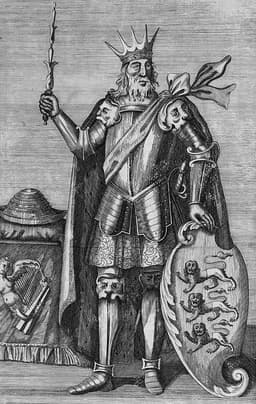
Brian Boru
Emperor · Medieval
55.8Total
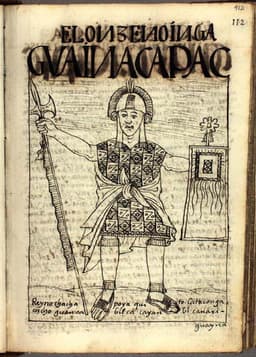
Huayna Capac
Emperor · Medieval
58.3Total
Basic Information
Born
941
1468
Died
1014
1527
Era
Medieval
Medieval
Nationality
Ireland
Inca Empire
Occupation
Emperor
Emperor
Civilization
Western
Other
Score Comparison
Military (10%)
60.0
76.0
Political (20%)
54.7
45.0
Influence (20%)
58.0
55.0
Legacy (20%)
50.0
54.0
Leadership (15%)
64.0
68.0
Strategy (15%)
50.0
65.4
TOTAL
55.8
58.3
Brian Boru — Complete Timeline
978 AD
Reign as King of MunsterPolitical Action
Brian Boru became King of Munster after the death of his brother Mathgamain. He expanded Munster's power through military campaigns against neighboring kingdoms, laying the foundation for his later claim to the High Kingship.
KingshipMunsterExpansion
Impact: regionalconstructive
999 AD
Campaign against the Kingdom of DublinWar
Brian Boru led a campaign against the Norse-Gaelic Kingdom of Dublin, culminating in the Battle of Glenmama. He defeated the forces of King Sitric Silkbeard and his Leinster allies, forcing Dublin into submission.
Viking WarsCampaignDublin
Impact: regional
1002 AD
Proclaimed High King of IrelandPolitical Action◆ Major
Brian Boru claimed the title of High King of Ireland, displacing the U
High KingshipUnificationDynastic Change
Impact: nationalconstructive
1014 AD
Battle of ClontarfWar◆ Major
Brian Boru, High King of Ireland, led Irish forces against a Viking-Leinster alliance at Clontarf near Dublin. Brian was killed at the end of the battle, but his forces won. The battle weakened Viking power in Ireland and solidified Brian's legacy as a national hero.
Viking WarsBattleHigh Kingship
Impact: regional
Huayna Capac — Complete Timeline
1493 AD
Conquest of the Kingdom of QuitoWar◆ Major
Huayna Capac led Inca armies northward, conquering the Kingdom of Quito (in modern Ecuador). This campaign extended the Inca Empire to its northernmost extent, incorporating new territories and peoples into the imperial administration.
Inca ExpansionConquestNorthern Campaign
Impact: regional
1500 AD
Construction of SacsayhuamanCultural◆ Major
Huayna Capac oversaw the expansion and fortification of Sacsayhuaman, a massive stone fortress overlooking Cusco. The complex, built with enormous fitted stones, served as both a military stronghold and a ceremonial center, demonstrating Inca engineering capabilities.
ArchitectureFortificationInca Engineering
Impact: regionalconstructive
1525 AD
Division of the Inca EmpirePolitical Action
Huayna Capac divided the Inca Empire between his sons Hu
Succession CrisisCivil WarInca Decline
Impact: regionaldestructive
1527 AD
Death from SmallpoxOther
Huayna Capac died from smallpox, a disease introduced by Europeans that spread through the Inca Empire ahead of Spanish conquistadors. His death triggered the Inca civil war and left the empire vulnerable to Francisco Pizarro's invasion.
EpidemicDiseaseInca Collapse
Impact: regionaltragic
Expert Analysis
Origins
Brian Boru was born around 941 AD in Killaloe, County Clare, Ireland, into the Dál gCais dynasty. His father was Cennétig mac Lorcáin, King of Thomond, and his brother Mathgamain succeeded as king. Brian grew up in a period of Viking incursions and inter-tribal warfare. He received training in warfare and politics, but his early life is sparsely documented.
Huayna Capac was born around 1468 in Cusco, Inca Empire, as the son of Emperor Túpac Inca Yupanqui and his wife Mama Ocllo. As a prince of the royal blood, he was educated in Inca administration, religion, and military strategy. He accompanied his father on campaigns, learning the art of conquest.
Rise to Power
Brian Boru became King of Munster in 978 after his brother Mathgamain was killed in battle. He consolidated power by defeating neighboring kingdoms, such as the Eóganachta, and expanding Munster's influence. His major turning point came in 1002 when he challenged the Uí Néill high king Máel Sechnaill II, forcing him to submit without battle. Brian was proclaimed High King of Ireland, a title he held until his death.
Huayna Capac ascended to the throne around 1493 after the death of his father. He continued Inca expansion, leading campaigns northward into modern Ecuador. His conquest of the Kingdom of Quito around 1500 was a major achievement, extending the empire to its northernmost extent. He also suppressed rebellions in the south, such as the Chachapoya uprising.
Leadership & Governance
Brian Boru ruled as High King with a focus on centralizing authority. He built alliances through marriage and force, and his governance included patronage of the Church and promotion of Irish culture. His leadership was pragmatic, often using diplomacy before warfare. For example, he secured the submission of Leinster through marriage ties rather than conquest.
Huayna Capac governed a vast empire through a centralized bureaucracy, with provincial governors and a system of roads. He implemented the mit'a labor tax and expanded the use of quipus for record-keeping. He was known for his administrative reforms, including the redistribution of lands to loyal nobles. His leadership style was autocratic but effective, maintaining stability through a mix of rewards and harsh punishments.
Triumph & Tragedy
Brian Boru's greatest triumph was the Battle of Clontarf on April 23, 1014, where he defeated a coalition of Vikings and Leinster forces. However, his greatest tragedy occurred at the end of the battle, when he was killed in his tent by a fleeing Viking, Brodir. This death overshadowed his victory and led to a period of instability.
Huayna Capac's triumphs include the conquest of Quito and the expansion of the Inca Empire to its maximum size, with a population of about 12 million. He also oversaw the construction of Sacsayhuaman, a massive fortress near Cusco. His tragedy was dividing the empire between his sons Huáscar and Atahualpa before his death from smallpox around 1527. This division sparked a civil war that weakened the empire before the Spanish arrival.
Character & Destiny
Brian Boru is often portrayed as a unifying figure who challenged Viking dominance. His decision to fight at Clontarf, despite his age (around 73), demonstrated his determination. However, his death in victory highlights the chaos of medieval warfare. Historians note his political acumen, as he built a coalition of Irish kings, but his reign was cut short.
Huayna Capac was a capable administrator and military leader. His decision to divide the empire was a fatal error, as it led to civil war. His death from smallpox, a disease he had no immunity to, underscores the vulnerability of the New World to European pathogens. His character was marked by ambition, but his legacy was tarnished by the succession crisis.
Legacy
Brian Boru's legacy is as a national hero in Ireland, credited with breaking Viking power. The Battle of Clontarf is remembered as a turning point in Irish history, though its significance is debated. His dynasty continued to influence Irish politics for centuries. In terms of scores, Brian Boru scored 50.0 in legacy, lower than Huayna Capac's 54.0.
Huayna Capac's legacy is the zenith of the Inca Empire. His administrative and architectural projects, like Sacsayhuaman, remain symbols of Inca achievement. However, his division of the empire led to its downfall. His total score of 58.3 surpasses Brian Boru's 55.8, reflecting his greater military and strategic scores (76.0 and 65.4 vs. 60.0 and 50.0).
Conclusion
Huayna Capac had a greater impact on world history due to the scale of his empire and the consequences of his actions. While Brian Boru's victory at Clontarf was significant for Ireland, Huayna Capac ruled an empire of millions and his death triggered a civil war that facilitated the Spanish conquest. With a total score of 58.3 against Brian Boru's 55.8, Huayna Capac's influence extended across continents and centuries.
Rankings
🥇
Huayna CapacLeader
Mil: 76.0Pol: 45.0Inf: 55.0
58.3
🥈
Brian Boru
Mil: 60.0Pol: 54.7Inf: 58.0
55.8
+2.5 behind
How This Comparison Works
Algorithm
Each figure is scored on 6 dimensions (0—100 scale) based on structured historical data: Military (10%), Political (20%), Influence (20%), Legacy (20%), Leadership (15%), Strategy (15%). The weighted total produces the final ranking.
Data Sources
Scores are computed from structured sub-indicators in the database. Scale factors adjust for era (Ancient ×0.85, Modern ×1.0) and civilization size (Eastern ×1.05, Other ×0.80) to account for differences in population and military scale.
Maximum 3 Figures
Comparisons are limited to 2—3 figures to ensure readability and statistical meaningfulness.
Error Margins
±5 points per dimension — Sub-scores are derived from historical records with inherent uncertainty. Two figures within 5 points on a dimension should be considered roughly equivalent in that area.
Total Score Accuracy
±3 points overall — The weighted combination of 6 dimensions produces a total score with approximately ±3 points of uncertainty. Differences of less than 3 points are not statistically significant— the figures are effectively tied.
Known Limitations
- Historical records are incomplete and uneven across civilizations
- Figures from oral-tradition societies may be underrepresented
- Occupation labels can misclassify multi-role figures
- Scores measure capability and impact, not moral character
- Quantitative scoring is a comparison tool, not absolute truth
Capability Radar
Military (10%) — Battles & Warfare
Battles
55
75
Win Rate
60
80
Expansion
55
85
Political (20%) — Governance & Reform
Reform
45
60
Diplomacy
55
65
Economy
40
70
Influence (20%) — Cultural & Global Reach
Cultural
50
60
Global
40
55
Legacy (20%) — Historical Impact
Historical
55
65
Longevity
45
50
Leadership (15%) — Power & Stability
Tenure
50
70
Stability
45
55
Strategy (15%) — Tactics & Innovation
Strategy
60
75
Tactics
65
70
Reform
40
65
Similar Comparisons
Comments & Discussion
No comments yet. Be the first to share your thoughts!