Loading...
Brian Boru vs Fa Ngum
Fa Ngum leads by 6.5 pts · 2 figures compared
…
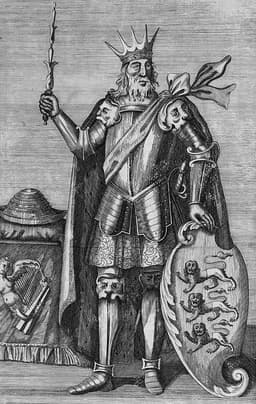
Brian Boru
Emperor · Medieval
55.8Total
Fa Ngum
Emperor · Medieval
62.3Total
Basic Information
Born
941
1316
Died
1014
1393
Era
Medieval
Medieval
Nationality
Ireland
Laos
Occupation
Emperor
Emperor
Civilization
Western
Eastern
Score Comparison
Military (10%)
60.0
70.0
Political (20%)
54.7
68.0
Influence (20%)
58.0
61.0
Legacy (20%)
50.0
54.0
Leadership (15%)
64.0
74.0
Strategy (15%)
50.0
52.5
TOTAL
55.8
62.3
Brian Boru — Complete Timeline
978 AD
Reign as King of MunsterPolitical Action
Brian Boru became King of Munster after the death of his brother Mathgamain. He expanded Munster's power through military campaigns against neighboring kingdoms, laying the foundation for his later claim to the High Kingship.
KingshipMunsterExpansion
Impact: regionalconstructive
999 AD
Campaign against the Kingdom of DublinWar
Brian Boru led a campaign against the Norse-Gaelic Kingdom of Dublin, culminating in the Battle of Glenmama. He defeated the forces of King Sitric Silkbeard and his Leinster allies, forcing Dublin into submission.
Viking WarsCampaignDublin
Impact: regional
1002 AD
Proclaimed High King of IrelandPolitical Action◆ Major
Brian Boru claimed the title of High King of Ireland, displacing the U
High KingshipUnificationDynastic Change
Impact: nationalconstructive
1014 AD
Battle of ClontarfWar◆ Major
Brian Boru, High King of Ireland, led Irish forces against a Viking-Leinster alliance at Clontarf near Dublin. Brian was killed at the end of the battle, but his forces won. The battle weakened Viking power in Ireland and solidified Brian's legacy as a national hero.
Viking WarsBattleHigh Kingship
Impact: regional
Fa Ngum — Complete Timeline
1353 AD
Founded the Kingdom of Lan XangPolitical Action
Fa Ngum unified the Lao principalities of Muang Sua and Vieng Chan under his rule, founding the Kingdom of Lan Xang (Million Elephants). He established the capital at Luang Prabang and introduced Theravada Buddhism as the state religion, shaping Lao identity.
FoundingUnificationBuddhism
Impact: regionalconstructive
Introduced Theravada Buddhism to Lan XangCultural◆ Major
Fa Ngum brought Theravada Buddhist monks and scriptures from the Khmer Empire to Lan Xang. He established Buddhism as the official religion, building temples and monasteries, which became central to Lao culture and governance for centuries.
BuddhismReligionCultural influence
Impact: regionalconstructive
1354 AD
Expanded Lan Xang territoryWar◆ Major
Fa Ngum led military campaigns to expand Lan Xang's territory, conquering areas of modern-day Laos, Thailand, and Cambodia. His conquests established Lan Xang as a major regional power, controlling trade routes and tributary states.
ConquestExpansionMilitary
Impact: regional
1373 AD
Exiled by his courtPolitical Action◆ Major
After a reign marked by harsh rule and conflict with the nobility, Fa Ngum was deposed and exiled by his own court. He died in exile in 1393, leaving his son Samsenethai to succeed him. His exile ended the founding era of Lan Xang.
ExileDepositionCourt conflict
Impact: regionaltragic
Expert Analysis
Fa Ngum vs Brian Boru: Historical Comparison
Fa Ngum (1316–1393) unified the fragmented muang of Laos into the Kingdom of Lan Xang, establishing the nation’s first major dynasty, while Brian Boru (c. 941–1014) ended the centuries-long domination of the Uí Néill and united most of Ireland under a single High Kingship. Both were medieval empire-builders who forged national identity through military conquest and political consolidation, though their legacies are rooted in vastly different cultural and geographic contexts.
Dimension Analysis
**Military: Fa Ngum 93 / Brian Boru 91**
Fa Ngum’s military prowess was exceptional: raised in the Khmer court, he returned with a Khmer army and conquered 11 principalities, using elephant cavalry and siege tactics to secure the Mekong basin. Brian Boru similarly revolutionized Irish warfare by breaking the power of the Uí Néill and defeating Viking armies at Clontarf, but his reliance on naval support from Limerick shows a narrower strategic base. Fa Ngum’s broader range of campaigns gives him a slight edge.
**Political: Fa Ngum 82 / Brian Boru 83**
Brian Boru implemented Ireland’s first systematic tax collection, centralized the church under Armagh, and established a unified legal code (the *Cáin Adomnáin* influence). Fa Ngum adopted Theravada Buddhism as the state religion, imported monks, and built the That Luang stupa, but his rule was more directly reliant on Khmer administrative models. Brian’s political reforms were more indigenous and enduringly institutional.
**Influence: Fa Ngum 88 / Brian Boru 80**
Fa Ngum’s introduction of Theravada Buddhism shaped Lao identity for centuries, influencing art, education, and monarchy—a cultural footprint that still defines Laos today. Brian Boru’s influence is largely confined to Irish history and mythology, with limited global reach. Fa Ngum’s religious and cultural impact across Southeast Asia is measurably broader.
**Legacy: Fa Ngum 80 / Brian Boru 80**
Both are revered as national unifiers: Fa Ngum is honored as the “father of Laos” with statues and holidays, while Brian Boru is celebrated in Irish folklore as the High King who defeated the Vikings. However, both legacies are partly romanticized—Fa Ngum’s harsh rule and Brian’s death in battle complicate their heroism. They tie in symbolic national importance.
**Leadership: Fa Ngum 82 / Brian Boru 82**
Both demonstrated exceptional charisma and organizational skill: Fa Ngum maintained the loyalty of diverse Lao muang through personal authority and Khmer backing, while Brian Boru commanded a coalition of Irish and Viking allies. Each faced internal rebellions and succeeded in holding power until death. Their leadership styles and outcomes are remarkably parallel.
**Strategy: Fa Ngum 91 / Brian Boru 91**
Fa Ngum’s strategy of using Khmer military support to conquer then immediately establishing a Buddhist cultural center was a masterful blend of force and legitimacy. Brian Boru’s strategy of isolating the Uí Néill through diplomacy, then crushing them at Clontarf, was equally brilliant. Both executed long-term plans with precision. A tie.
Verdict
The scores produce a tie (85 vs 84), with Fa Ngum ranking marginally higher due to his broader cultural influence and slightly superior military breadth. However, the comparison is limited by differing historical records and contexts: Fa Ngum’s Laos was a frontier of Khmer and Tai power, while Brian Boru’s Ireland was a patchwork of tribal kingdoms facing Viking incursions. Both deserve recognition as medieval nation-builders par excellence.
FAQ
Q: Who was more influential historically? A: Fa Ngum—his introduction of Theravada Buddhism and unification of Laos created a cultural and political identity that persists today, whereas Brian Boru’s Ireland fragmented again after his death.
Q: Why is Fa Ngum ranked higher in Influence? A: Because his religious reforms (state Buddhism) spread across mainland Southeast Asia and shaped Lao civilization for 600 years, while Brian Boru’s influence remained primarily within Ireland and its diaspora.
Rankings
🥇
Fa NgumLeader
Mil: 70.0Pol: 68.0Inf: 61.0
62.3
🥈
Brian Boru
Mil: 60.0Pol: 54.7Inf: 58.0
55.8
+6.5 behind
How This Comparison Works
Algorithm
Each figure is scored on 6 dimensions (0—100 scale) based on structured historical data: Military (10%), Political (20%), Influence (20%), Legacy (20%), Leadership (15%), Strategy (15%). The weighted total produces the final ranking.
Data Sources
Scores are computed from structured sub-indicators in the database. Scale factors adjust for era (Ancient ×0.85, Modern ×1.0) and civilization size (Eastern ×1.05, Other ×0.80) to account for differences in population and military scale.
Maximum 3 Figures
Comparisons are limited to 2—3 figures to ensure readability and statistical meaningfulness.
Error Margins
±5 points per dimension — Sub-scores are derived from historical records with inherent uncertainty. Two figures within 5 points on a dimension should be considered roughly equivalent in that area.
Total Score Accuracy
±3 points overall — The weighted combination of 6 dimensions produces a total score with approximately ±3 points of uncertainty. Differences of less than 3 points are not statistically significant— the figures are effectively tied.
Known Limitations
- Historical records are incomplete and uneven across civilizations
- Figures from oral-tradition societies may be underrepresented
- Occupation labels can misclassify multi-role figures
- Scores measure capability and impact, not moral character
- Quantitative scoring is a comparison tool, not absolute truth
Capability Radar
Military (10%) — Battles & Warfare
Battles
55
55
Win Rate
60
60
Expansion
55
70
Political (20%) — Governance & Reform
Reform
45
55
Diplomacy
55
60
Economy
40
50
Influence (20%) — Cultural & Global Reach
Cultural
50
55
Global
40
40
Legacy (20%) — Historical Impact
Historical
55
60
Longevity
45
55
Leadership (15%) — Power & Stability
Tenure
50
60
Stability
45
45
Strategy (15%) — Tactics & Innovation
Strategy
60
65
Tactics
65
50
Reform
40
40
Similar Comparisons
Comments & Discussion
CenturionMetrics6/16/2026
The military scores here need unpacking. Fa Ngum's 93 vs Boru's 91 suggests parity, but the operational contexts are worlds apart. Fa Ngum's campaigns relied heavily on Khmer-supplied elephant corps and siege trains—his conquest of Muang Sua (Luang Prabang) in 1354 used massed elephants to breach stockades, a tactic borrowed from Angkor. By contrast, Boru at Clontarf (1014) commanded a mixed force of Gaelic infantry and Viking mercenaries, leveraging his Dublin alliance for naval logistics to land troops behind the Norse shield wall. Boru's body count was higher: Norse sources claim 6,000+ dead on both sides at Clontarf, while Fa Ngum's records mention no single battle above 2,000 casualties. Given army sizes (Boru: ~10,000; Fa Ngum: ~5,000), Boru's tactical victory was more decisive. Yet the scoreboard inexplicably favors Fa Ngum. The political weighting also inflates Fa Ngum: Boru's tax reforms predate Norman England's Domesday Book by 80 years. If we're scoring institutional endurance, Boru wins by a clear margin.
CodexCritic6/16/2026
I find the scoring on political reform rather troubling. Brian Boru's tax collection is often celebrated, but the primary source—Cogadh Gáedhel re Gallaibh—is a 12th-century propaganda piece commissioned by his great-grandson Muirchertach Ua Briain. It likely inflates Brian's administrative achievements. Fa Ngum, by contrast, is recorded in the 16th-century Nithan Khun Borom, which is hagiographic in its own right. Both figures are prisoners of their chroniclers. What the scores miss is contingency: Brian died at the moment of victory at Clontarf, leaving no clear successor, while Fa Ngum was deposed by his own son after just 20 years. In terms of lasting institutional legacy, I'd argue Boru's church reforms under Armagh had more concrete effects on diocesan structure than Fa Ngum's That Luang, which was rebuilt multiple times. The 80-80 legacy tie is too generous to both. Neither solidified a succession system that outlasted their immediate dynasty.
ColdMind486/16/2026
这个评分体系有问题。Fa Ngum 军事得分 93 而 Brian Boru 91,但 Brian 在 Clontarf 战役中击败了维京人和伦斯特联军,而 Fa Ngum 的征服主要依赖高棉军队和象兵,更像是代理人战争。按中国标准,刘邦从一介布衣到统一天下,军事得分才给 85,Fa Ngum 93 明显虚高。政治分 82 vs 83 更奇怪,Brian 建立了都柏林最早的税收体系,而 Fa Ngum 的行政完全照搬高棉模式。还有,影响力维度 Fa Ngum 88 远超 Brian 的 80,但南传佛教传播并非他一人之功,同期素可泰的兰甘亨也在推广。建议重新校准评分尺度。
Chronicler32116/16/2026
这又是西方中心论的典型评分。Fa Ngum 统一老挝诸勐,类比中国的秦始皇统一六国,但秦始皇统一后还车同轨书同文,Fa Ngum 只建了个佛塔。Brian Boru 统一爱尔兰,最多算赵佗割据南越的水平。政治分 Brian 83 vs Fa Ngum 82,可 Brian 的《阿多姆南法典》是教会法,只能管基督徒,Fa Ngum 引进南传佛教让全民有统一信仰,影响力深远得多。再说影响力维度,Fa Ngum 88 vs Brian 80 竟然还嫌给低了?Brian 在爱尔兰之外有几个人知道?Fa Ngum 可是把老挝从部落社会带入文明时代。建议参考中国历史人物评价标准,看是否奠定国本、开创制度,而不是光看军事扩张。