Loading...
Brian Boru vs Julius Caesar
Julius Caesar leads by 27.0 pts · 2 figures compared
…
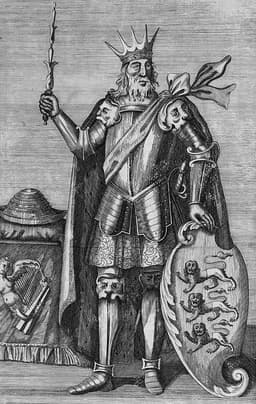
Brian Boru
Emperor · Medieval
55.8Total

Julius Caesar
General · Ancient
82.8Total
Basic Information
Born
941
-100
Died
1014
-44
Era
Medieval
Ancient
Nationality
Ireland
Roman Republic
Occupation
Emperor
General
Civilization
Western
Western
Score Comparison
Military (10%)
60.0
88.0
Political (20%)
54.7
78.0
Influence (20%)
58.0
85.0
Legacy (20%)
50.0
82.0
Leadership (15%)
64.0
80.0
Strategy (15%)
50.0
85.0
TOTAL
55.8
82.8
Brian Boru — Complete Timeline
978 AD
Reign as King of MunsterPolitical Action
Brian Boru became King of Munster after the death of his brother Mathgamain. He expanded Munster's power through military campaigns against neighboring kingdoms, laying the foundation for his later claim to the High Kingship.
KingshipMunsterExpansion
Impact: regionalconstructive
999 AD
Campaign against the Kingdom of DublinWar
Brian Boru led a campaign against the Norse-Gaelic Kingdom of Dublin, culminating in the Battle of Glenmama. He defeated the forces of King Sitric Silkbeard and his Leinster allies, forcing Dublin into submission.
Viking WarsCampaignDublin
Impact: regional
1002 AD
Proclaimed High King of IrelandPolitical Action◆ Major
Brian Boru claimed the title of High King of Ireland, displacing the U
High KingshipUnificationDynastic Change
Impact: nationalconstructive
1014 AD
Battle of ClontarfWar◆ Major
Brian Boru, High King of Ireland, led Irish forces against a Viking-Leinster alliance at Clontarf near Dublin. Brian was killed at the end of the battle, but his forces won. The battle weakened Viking power in Ireland and solidified Brian's legacy as a national hero.
Viking WarsBattleHigh Kingship
Impact: regional
Julius Caesar — Complete Timeline
58 BC
Gallic WarsWar◆ Major
Caesar, as proconsul of Gaul, launched a series of campaigns that conquered all of Gaul (modern France, Belgium, and parts of Switzerland). He fought numerous battles, including against the Helvetii, the Belgae, and the Gallic chieftain Vercingetorix. The wars brought immense wealth and a loyal army to Caesar.
Gallic WarsConquestRoman Expansion
Impact: regional
49 BC
Crossing the RubiconPolitical Action◆ Major
Caesar led Legio XIII across the Rubicon River into Italy, defying the Roman Senate's order to disband his army. This act triggered a civil war against Pompey and the Optimates, ultimately leading to Caesar's dictatorship and the end of the Roman Republic.
Roman Civil WarEnd of RepublicPower Struggle
Impact: global
48 BC
Battle of PharsalusWar◆ Major
Caesar's outnumbered army defeated the larger forces of Pompey the Great at Pharsalus in Greece. Caesar's tactical use of a reserve line to counter Pompey's cavalry charge proved decisive. Pompey fled to Egypt, where he was assassinated, leaving Caesar as the undisputed master of the Roman world.
Roman Civil WarBattleDecisive Victory
Impact: regional
44 BC
Appointment as Dictator for LifePolitical Action◆ Major
The Roman Senate appointed Caesar dictator perpetuo (dictator for life), granting him unprecedented personal power. This move concentrated military, legislative, and judicial authority in one person, effectively ending the Roman Republic's traditional system of checks and balances and alarming many senators.
DictatorshipEnd of RepublicPower Consolidation
Impact: regionaldestructive
Assassination on the Ides of MarchPolitical Action◆ Major
A group of Roman senators, led by Marcus Junius Brutus and Gaius Cassius Longinus, stabbed Caesar to death at a meeting of the Senate in the Theatre of Pompey. The assassination was intended to restore the Republic, but instead triggered another civil war that led to the rise of the Roman Empire.
AssassinationRoman PoliticsEnd of Republic
Impact: globaldestructive
Expert Analysis
brian-boru-vs-julius-caesar
### The Rubicon and the Shannon: Two Paths to Power
On a spring day in 1014, an aging king knelt in his tent to pray, his army locked in battle on the fields of Clontarf. Less than a century earlier, on a winter night in 49 BCE, a Roman general paused at a small river in northern Italy, weighing a decision that would shatter a republic. Both men stood at the precipice of history. Yet one would forge an empire that shaped the Western world for millennia, while the other would unite a fractured island only to die at the moment of his greatest triumph. Why did Julius Caesar become a name whispered in every language, while Brian Boru remains a figure known mostly to the Irish? The answer lies not merely in their deeds, but in the worlds they sought to conquer.
### Origins: The Forge of Ambition
Julius Caesar was born into the patrician class of the Roman Republic, a world of senatorial intrigue, civil wars, and relentless expansion. His family claimed descent from the goddess Venus, but their political influence had waned. From his youth, Caesar was driven by a burning need to restore his family’s glory in a society that worshipped military achievement and political cunning. The Roman Republic was a machine built for conquest, and Caesar learned early how to operate its levers.
Brian Boru emerged from a very different world. Born in 941 in the petty kingdom of Thomond, Ireland was a patchwork of warring tribal chieftains, with no central authority and a landscape scarred by Viking raids. His brother Mathgamain had fought to unite the province of Munster, but when he was murdered in 976, Brian inherited a blood feud and a fractured kingdom. Unlike Caesar, who inherited a name and a network, Brian inherited a sword and a grudge. Ireland had no senate, no legions, no concept of a standing army—only shifting alliances and the constant threat of Norse invaders from their coastal strongholds.
### Rise to Power: The General and the Guerrilla
Caesar’s path to power was a masterclass in Roman ambition. He climbed the *cursus honorum*—the ladder of political offices—through a combination of bribery, marriage alliances, and military command. His appointment as governor of Gaul in 58 BCE gave him the weapon he needed: an army. Over the next eight years, he conquered modern-day France and Belgium, slaughtering or enslaving millions, and writing his own propaganda in *The Gallic Wars*. His crossing of the Rubicon in 49 BCE was not a desperate gamble but a calculated act of treason, designed to force a civil war he knew he could win.
Brian’s rise was harder, bloodier, and more local. After becoming King of Munster in 978, he spent decades fighting not just the Vikings, but rival Irish kings. His campaign against the Norse-Gaelic Kingdom of Dublin in 999 culminated in the Battle of Glenmama, where he shattered the Viking hold on the east coast. In 1002, he achieved what no other Irish king had done: he displaced the ancient Uí Néill dynasty and claimed the title of High King of Ireland. But this was no imperial coronation—it was a fragile overlordship, secured by force and maintained by fear. Unlike Caesar, Brian had no bureaucracy, no coinage, no permanent capital. His “kingdom” was a network of hostages and oaths.
### Leadership & Governance: The Dictator and the Peacemaker
Caesar ruled as a revolutionary. As dictator of Rome, he reformed the calendar, granted citizenship to provincials, launched massive public works, and centralized power in his own hands. He was a military genius who understood that logistics win wars, and a politician who knew that clemency wins hearts. His reforms were designed to last, and they did—the Roman Empire, which he inadvertently founded, survived for centuries. Yet his rule was also brutal: he executed his enemies, plundered Gaul, and destroyed the old republican order.
Brian Boru ruled as a conciliator. His strategy was not to destroy his rivals but to absorb them. He built roads, repaired churches, and patronized the arts. He is remembered in Irish annals as a king who “strengthened the law” and “banished the foreigners.” But his governance was limited by the very nature of Irish society—there was no standing army, no tax system, no imperial infrastructure. His power was personal, not institutional. When he marched, his army was a coalition of chieftains who might betray him tomorrow.
### Triumph & Tragedy: The Ides and the Tent
Caesar’s greatest moment was also his final one. On the Ides of March, 44 BCE, he was stabbed to death by senators who feared his ambition. His murder plunged Rome into another civil war, but it also cemented his legend. He died a martyr to his own ambition, and his adopted heir, Octavian, would use his memory to justify the birth of the Roman Empire.
Brian Boru’s end was more tragic. At the Battle of Clontarf in 1014, he defeated a massive Viking-Leinster alliance, breaking Norse power in Ireland forever. But as he knelt in prayer after the victory, a fleeing Viking warrior—some accounts say Brodir of the Isle of Man—found him and cut him down. He died not in the glory of battle, but in the quiet of a tent, his kingdom still unconsolidated. His triumph was immediate; his legacy, ambiguous.
### Character & Destiny: The Gambler and the Steadfast
Caesar was a gambler. He crossed the Rubicon, defied the senate, and risked everything on a single throw of the dice. He was charming, ruthless, and supremely confident. His personality drove his decisions: he believed in his own star, and history obliged him.
Brian Boru was a builder. He spent decades consolidating power, not risking it. He was patient, pragmatic, and deeply religious. His personality was shaped by the constraints of his world—Ireland offered no shortcuts to empire. Where Caesar burned bridges, Brian built them.
### Legacy: The Eternal City and the Forgotten King
Caesar’s legacy is immeasurable. His name became a title—*Kaiser*, *Tsar*—and his reforms shaped Western civilization. He is studied in every military academy, quoted in every political debate.
Brian Boru’s legacy is more contained. He is remembered as the king who broke the Vikings, but his united Ireland died with him. The Irish annals record his deeds, but his kingdom fragmented within a generation. He is a symbol of national pride, not a founder of an enduring state.
### Conclusion
The difference between Caesar and Brian Boru is not a difference of talent or courage. It is a difference of context. Caesar inherited a republic on the verge of empire, a machine of conquest that he merely steered. Brian Boru inherited a shattered island, a world of tribes and raiders, where even the greatest king could only build with sand. One man changed the world; the other saved his people. Both, in their own way, did what history asked of them. But history asked very different things.
Rankings
🥇
Julius CaesarLeader
Mil: 88.0Pol: 78.0Inf: 85.0
82.8
🥈
Brian Boru
Mil: 60.0Pol: 54.7Inf: 58.0
55.8
+27.0 behind
How This Comparison Works
Algorithm
Each figure is scored on 6 dimensions (0—100 scale) based on structured historical data: Military (10%), Political (20%), Influence (20%), Legacy (20%), Leadership (15%), Strategy (15%). The weighted total produces the final ranking.
Data Sources
Scores are computed from structured sub-indicators in the database. Scale factors adjust for era (Ancient ×0.85, Modern ×1.0) and civilization size (Eastern ×1.05, Other ×0.80) to account for differences in population and military scale.
Maximum 3 Figures
Comparisons are limited to 2—3 figures to ensure readability and statistical meaningfulness.
Error Margins
±5 points per dimension — Sub-scores are derived from historical records with inherent uncertainty. Two figures within 5 points on a dimension should be considered roughly equivalent in that area.
Total Score Accuracy
±3 points overall — The weighted combination of 6 dimensions produces a total score with approximately ±3 points of uncertainty. Differences of less than 3 points are not statistically significant— the figures are effectively tied.
Known Limitations
- Historical records are incomplete and uneven across civilizations
- Figures from oral-tradition societies may be underrepresented
- Occupation labels can misclassify multi-role figures
- Scores measure capability and impact, not moral character
- Quantitative scoring is a comparison tool, not absolute truth
Capability Radar
Military (10%) — Battles & Warfare
Battles
55
95
Win Rate
60
92
Expansion
55
97
Political (20%) — Governance & Reform
Reform
45
90
Diplomacy
55
85
Economy
40
82
Influence (20%) — Cultural & Global Reach
Cultural
50
88
Global
40
94
Legacy (20%) — Historical Impact
Historical
55
95
Longevity
45
96
Leadership (15%) — Power & Stability
Tenure
50
75
Stability
45
60
Strategy (15%) — Tactics & Innovation
Strategy
60
94
Tactics
65
96
Reform
40
88
Similar Comparisons
Comments & Discussion
No comments yet. Be the first to share your thoughts!