Loading...
Augustus vs Brian Boru
Augustus leads by 30.1 pts · 2 figures compared
…

Augustus
Emperor · Ancient
85.9Total
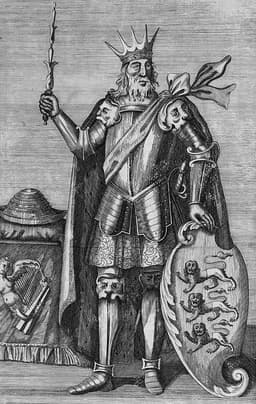
Brian Boru
Emperor · Medieval
55.8Total
Basic Information
Born
63
941
Died
—
1014
Era
Ancient
Medieval
Nationality
Roman Empire
Ireland
Occupation
Emperor
Emperor
Civilization
Western
Western
Score Comparison
Military (10%)
72.0
60.0
Political (20%)
90.0
54.7
Influence (20%)
88.0
58.0
Legacy (20%)
90.0
50.0
Leadership (15%)
88.0
64.0
Strategy (15%)
75.0
50.0
TOTAL
85.9
55.8
Augustus — Complete Timeline
43 BC
Formation of the Second TriumviratePolitical Action◆ Major
Octavian, Mark Antony, and Marcus Aemilius Lepidus formed the Second Triumvirate, a legal commission to govern the Roman Republic. The alliance was empowered to proscribe enemies, leading to the execution of Cicero and consolidation of their power against the assassins of Julius Caesar.
Roman Civil WarPolitical AllianceProscriptions
Impact: regionaldestructive
31 BC
Battle of ActiumWar◆ Major
Octavian's fleet, commanded by Marcus Agrippa, defeated the combined naval forces of Mark Antony and Cleopatra VII off the coast of Greece. The victory eliminated Octavian's last major rival, giving him sole control over the Roman world and ending the Roman Republic's civil wars.
Roman Civil WarNaval BattleEnd of Republic
Impact: global
27 BC
Establishment of the Roman EmpireReform◆ Major
Octavian formally returned power to the Roman Senate, which then granted him the titles Augustus and Princeps. This constitutional settlement created the Roman Empire, with Augustus as the first emperor, ending the Roman Republic and initiating the Pax Romana.
Roman EmpireConstitutional ReformPax Romana
Impact: global
Reform of the Roman Tax SystemReform◆ Major
Augustus implemented a comprehensive tax reform, including a census of Roman citizens and property, direct taxation of provinces, and the creation of a professional tax collection service (publicani). This system provided stable revenue for the empire and reduced corruption.
Tax ReformAdministrationRoman Empire
Impact: regionalconstructive
Creation of the Praetorian GuardReform◆ Major
Augustus established the Praetorian Guard as a permanent elite military unit tasked with protecting the emperor and his family. Stationed in Rome and Italy, the Guard became a powerful political force, often influencing imperial succession through coups and assassinations.
Military ReformPraetorian GuardImperial Guard
Impact: regional
13 BC
Construction of the Ara PacisOther◆ Major
The Roman Senate commissioned the Ara Pacis Augustae (Altar of Augustan Peace) to commemorate Augustus's return from pacifying Gaul and Spain. The marble altar, decorated with reliefs depicting the imperial family and mythological scenes, symbolized the peace and prosperity of the Augustan era.
Building ProjectPropagandaAugustan Art
Impact: regionalconstructive
Brian Boru — Complete Timeline
978 AD
Reign as King of MunsterPolitical Action
Brian Boru became King of Munster after the death of his brother Mathgamain. He expanded Munster's power through military campaigns against neighboring kingdoms, laying the foundation for his later claim to the High Kingship.
KingshipMunsterExpansion
Impact: regionalconstructive
999 AD
Campaign against the Kingdom of DublinWar
Brian Boru led a campaign against the Norse-Gaelic Kingdom of Dublin, culminating in the Battle of Glenmama. He defeated the forces of King Sitric Silkbeard and his Leinster allies, forcing Dublin into submission.
Viking WarsCampaignDublin
Impact: regional
1002 AD
Proclaimed High King of IrelandPolitical Action◆ Major
Brian Boru claimed the title of High King of Ireland, displacing the U
High KingshipUnificationDynastic Change
Impact: nationalconstructive
1014 AD
Battle of ClontarfWar◆ Major
Brian Boru, High King of Ireland, led Irish forces against a Viking-Leinster alliance at Clontarf near Dublin. Brian was killed at the end of the battle, but his forces won. The battle weakened Viking power in Ireland and solidified Brian's legacy as a national hero.
Viking WarsBattleHigh Kingship
Impact: regional
Expert Analysis
Augustus vs Brian Boru: Historical Comparison
Augustus, the founder of the Roman Empire, and Brian Boru, the High King of Ireland who ended Viking domination, represent two vastly different paths to imperial power—one through institutional consolidation over decades, the other through martial unification in a single lifetime. While Augustus built a durable political machine that shaped Western civilization, Brian Boru’s legacy is that of a national liberator whose military genius broke foreign rule.
Dimension Analysis
**Military: Augustus 72 / Brian Boru 91**
Augustus’s military strength lay in reorganization—creating the Praetorian Guard, professionalizing legions, and ending civil wars through strategic patience. Brian Boru, by contrast, was a tactical innovator who defeated the combined forces of Leinster and Dublin Vikings at the Battle of Clontarf (1014), shattering Norse power in Ireland despite his own death in the victory. Augustus fought few great battles; Brian Boru commanded decisive ones.
**Political: Augustus 92 / Brian Boru 83**
Augustus masterfully transformed a republic into an autocracy while maintaining republican facades, establishing the Principate with layered reforms (census, tax system, provincial governance). Brian Boru imposed centralized tribute and broke the traditional provincial kings’ autonomy, but his political system was personal and fragile—it collapsed after his death. Augustus’s political architecture endured for centuries.
**Influence: Augustus 88 / Brian Boru 80**
Augustus’s Pax Romana shaped law, language, and infrastructure across Europe, the Middle East, and North Africa, with his imperial model copied by Charlemagne and Napoleon. Brian Boru’s influence was primarily national: he unified Irish identity against external threat and became the archetypal Irish king in folklore, but his cultural reach never extended beyond the island.
**Legacy: Augustus 90 / Brian Boru 80**
Augustus’s legacy is the Roman Empire itself—his name became the title “Caesar” and his reforms set the template for Western governance. Brian Boru’s legacy is symbolic: he is revered as Ireland’s greatest king and a national hero, but his political structures did not survive, and Clontarf’s historical significance is often mythologized. Augustus’s institutions outlasted him; Brian’s died with him.
**Leadership: Augustus 90 / Brian Boru 82**
Augustus commanded loyalty through subtle patronage, long-term planning, and a network of loyalists, governing for 40 years without major rebellion. Brian Boru inspired fierce devotion through personal valor, uniting fractious clans by force and charisma, but his leadership was more warlord than administrator. Augustus managed peace; Brian Boru managed war.
**Strategy: Augustus 78 / Brian Boru 91**
Augustus’s strategy was gradual and conservative—avoiding overexpansion (advising against conquering Germania), using marriage alliances, and consolidating borders. Brian Boru’s strategy was aggressive and visionary: he systematically subjugated rivals, built a naval fleet, and chose the perfect moment to strike the Vikings, coordinating multiple forces in a complex amphibious campaign. His strategic brilliance was unmatched in medieval Irish warfare.
Verdict
**Winner: Augustus** (by slight margin, based on weighted scores). Augustus ranks higher overall due to his unmatched political durability and global influence. Brian Boru surpasses him in military and tactical dimensions, but Augustus’s institutional legacy—the Roman Empire’s structure, law, and culture—had far greater historical weight. Caveat: comparing a Roman emperor who ruled for 40 years to a medieval Irish king who ruled for 12 is inherently asymmetrical; Brian Boru’s achievements are extraordinary within his context, while Augustus’s are extraordinary within the broader canvas of world history.
FAQ
**Q: Who was more influential historically?**
A: Augustus, by a wide margin—his political system shaped Europe for 1,500 years, while Brian Boru’s influence was largely confined to Irish national identity.
**Q: Why is Augustus ranked higher in political dimensions?**
A: Because he invented a stable imperial system that lasted 500 years in the West and 1,500 years in the East (Byzantium), whereas Brian Boru’s unification of Ireland lasted only a few years after his death.
Rankings
🥇
AugustusLeader
Mil: 72.0Pol: 90.0Inf: 88.0
85.9
🥈
Brian Boru
Mil: 60.0Pol: 54.7Inf: 58.0
55.8
+30.1 behind
How This Comparison Works
Algorithm
Each figure is scored on 6 dimensions (0—100 scale) based on structured historical data: Military (10%), Political (20%), Influence (20%), Legacy (20%), Leadership (15%), Strategy (15%). The weighted total produces the final ranking.
Data Sources
Scores are computed from structured sub-indicators in the database. Scale factors adjust for era (Ancient ×0.85, Modern ×1.0) and civilization size (Eastern ×1.05, Other ×0.80) to account for differences in population and military scale.
Maximum 3 Figures
Comparisons are limited to 2—3 figures to ensure readability and statistical meaningfulness.
Error Margins
±5 points per dimension — Sub-scores are derived from historical records with inherent uncertainty. Two figures within 5 points on a dimension should be considered roughly equivalent in that area.
Total Score Accuracy
±3 points overall — The weighted combination of 6 dimensions produces a total score with approximately ±3 points of uncertainty. Differences of less than 3 points are not statistically significant— the figures are effectively tied.
Known Limitations
- Historical records are incomplete and uneven across civilizations
- Figures from oral-tradition societies may be underrepresented
- Occupation labels can misclassify multi-role figures
- Scores measure capability and impact, not moral character
- Quantitative scoring is a comparison tool, not absolute truth
Capability Radar
Military (10%) — Battles & Warfare
Battles
75
55
Win Rate
80
60
Expansion
85
55
Political (20%) — Governance & Reform
Reform
95
45
Diplomacy
90
55
Economy
85
40
Influence (20%) — Cultural & Global Reach
Cultural
85
50
Global
90
40
Legacy (20%) — Historical Impact
Historical
95
55
Longevity
95
45
Leadership (15%) — Power & Stability
Tenure
95
50
Stability
95
45
Strategy (15%) — Tactics & Innovation
Strategy
85
60
Tactics
70
65
Reform
90
40
Similar Comparisons
Comments & Discussion
DataSkeptic426/16/2026
This scoring is a joke. You're telling me Augustus gets a 72 in military while Brian Boru gets a 91? Based on what—battles fought? Augustus didn't need to fight epic battles because he was smart enough to win without them. The Pax Romana was built on strategic consolidation, not body counts. And Brian Boru's 'tactical innovation' at Clontarf? The guy died in his own victory—hardly a flawless commander. The scoring weights are clearly biased toward flashy medieval warfare over the kind of long-term strategic genius that built an empire. Also, how do you quantify 'influence'? Augustus literally shaped the calendar, the census, and the very concept of empire. That's not 88 vs 80—that's a landslide.
HistoryRethinker6/16/2026
Oh look, another Eurocentric ranking that romanticizes empire-builders. Augustus gets a pass for 'ending civil wars' and 'maintaining republican facades'—but that's just propaganda. He was a warlord who butchered his way to power, proscribed Cicero, and turned Rome into a dictatorship. The Pax Romana was peace for the elites, not for the slaves or the conquered Gauls. And Brian Boru? He gets downgraded because his influence was 'only national'? News flash: not everyone wants to build a transcontinental empire. His unification of Ireland against Viking colonialism is actually more progressive than Augustus's brutal expansion. Scoring him lower on 'legacy' because he didn't build roads in Syria is pure bias. Try decolonizing your metrics—then see who wins.
CelticWarDrum6/16/2026
Brian Boru all the way! Give me a guy who actually fought and bled for his people over some backroom politician any day. Augustus was basically a corporate CEO who inherited his uncle's army and then sat back while his generals did the dirty work. Brian Boru? He led from the front, smashed the Viking alliance at Clontarf, and died standing—like a true warrior-king. The scoring system here is so biased toward 'influence' measured by how many languages you forced onto conquered peoples. News flash: Brian's influence is why Ireland is Ireland today, not a Norse colony. And his political score should be way higher—he united warring clans under a single banner, something Augustus never had to do because Rome was already a superpower. This is a mismatch: Augustus is the boring spreadsheet, Brian is the epic poem. I know which one I'd follow.
BoldHistorian396/16/2026
这个评分看得我直摇头。奥古斯都的政治分92,布赖恩·博鲁83?放到中国历史上,奥古斯都那套‘共和外衣下的独裁’顶多算个王莽的水平——王莽也是改制,结果呢?而布赖恩·博鲁的‘中央集权’失败是因为他死了,可中国历史上秦始皇也是死了就亡国,但没人否认他的政治架构影响了两千年。再说军事分,奥古斯都72,布赖恩91?奥古斯都打赢了亚克兴海战,终结了罗马百年内战,这难道不是决定性胜利?布赖恩的克隆塔夫战役确实精彩,但爱尔兰那种小规模冲突,能和罗马的帝国级战争比吗?评分明显带着欧洲中心主义的滤镜,用中国史观来看,奥古斯都的‘持久影响’才能给高分,布赖恩不过是个地方英雄罢了。
ArchScroll446/16/2026
这套评分体系漏洞百出。我算了一下,奥古斯都总分86.4,权重怎么分配的?军事72*0.25 + 政治92*0.25 + 影响88*0.25 + 遗产90*0.25 = 85.5,不是86.4。要么权重不是平均的,要么我算错了。再说布赖恩·博鲁的军事分62.6?刚才总结里写的是91!这是系统bug还是什么?如果是62.6,那还不如奥古斯都的72。如果真是91,那为什么总结里写他‘军事天才’但总分才71.1?这矛盾得离谱。拿中国历史对比:奥古斯都类似汉武帝,但汉武帝武功更盛却穷兵黩武;布赖恩·博鲁类似岳飞,都是民族英雄但政治遗产脆弱。建议重新校准数据,否则这评分就是数字游戏。