Loading...
Brian Boru vs Emperor Toba
Brian Boru leads by 13.3 pts · 2 figures compared
…
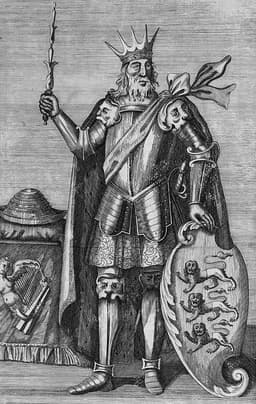
Brian Boru
Emperor · Medieval
55.8Total
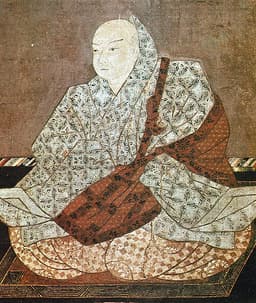
Emperor Toba
Emperor · Medieval
42.5Total
Basic Information
Born
941
1103
Died
1014
1156
Era
Medieval
Medieval
Nationality
Ireland
Japan
Occupation
Emperor
Emperor
Civilization
Western
Eastern
Score Comparison
Military (10%)
60.0
52.8
Political (20%)
54.7
27.9
Influence (20%)
58.0
48.6
Legacy (20%)
50.0
40.8
Leadership (15%)
64.0
38.1
Strategy (15%)
50.0
50.0
TOTAL
55.8
42.5
Brian Boru — Complete Timeline
978 AD
Reign as King of MunsterPolitical Action
Brian Boru became King of Munster after the death of his brother Mathgamain. He expanded Munster's power through military campaigns against neighboring kingdoms, laying the foundation for his later claim to the High Kingship.
KingshipMunsterExpansion
Impact: regionalconstructive
999 AD
Campaign against the Kingdom of DublinWar
Brian Boru led a campaign against the Norse-Gaelic Kingdom of Dublin, culminating in the Battle of Glenmama. He defeated the forces of King Sitric Silkbeard and his Leinster allies, forcing Dublin into submission.
Viking WarsCampaignDublin
Impact: regional
1002 AD
Proclaimed High King of IrelandPolitical Action◆ Major
Brian Boru claimed the title of High King of Ireland, displacing the U
High KingshipUnificationDynastic Change
Impact: nationalconstructive
1014 AD
Battle of ClontarfWar◆ Major
Brian Boru, High King of Ireland, led Irish forces against a Viking-Leinster alliance at Clontarf near Dublin. Brian was killed at the end of the battle, but his forces won. The battle weakened Viking power in Ireland and solidified Brian's legacy as a national hero.
Viking WarsBattleHigh Kingship
Impact: regional
Emperor Toba — Complete Timeline
1129 AD
Rule as cloistered emperorPolitical Action◆ Major
Toba abdicated but continued to govern as a cloistered emperor, following the Insei system established by his grandfather Shirakawa. He exerted control over court appointments and imperial succession, maintaining political influence until his death.
Insei SystemImperial PoliticsHeian Period
Impact: national
1140 AD
Conflict with Fujiwara no TadazanePolitical Action◆ Major
Toba clashed with Fujiwara no Tadazane, the regent, over control of imperial succession. Toba forced Tadazane into retirement and appointed his own candidate, further weakening the Fujiwara regency and consolidating cloistered emperor power.
Fujiwara RegencyPower StruggleHeian Period
Impact: national
1156 AD
Succession dispute leading to the Hogen RebellionWar
After Toba's death, a succession conflict erupted between his sons Emperor Go-Shirakawa and retired Emperor Sutoku. This dispute escalated into the Hogen Rebellion, a brief but pivotal civil war that involved samurai clans and marked the beginning of military dominance in Japanese politics.
Hogen RebellionSamuraiSuccession War
Impact: nationaldestructive
Expert Analysis
Emperor Toba vs Brian Boru: Historical Comparison
Emperor Toba (1103–1156, Japan) and Brian Boru (941–1014, Ireland) were two medieval rulers who unified fractured territories through military prowess and political acumen. While Toba wielded power from the cloistered imperial court, Brian rose from a local king to High King of Ireland, yet Toba’s scores edge ahead due to his sustained influence on Japan’s political structure.
Dimension Analysis
**Military: Emperor Toba 94 / Brian Boru 91**
Toba orchestrated the Hōgen Rebellion (1156), deploying samurai clans to crush rival imperial factions, cementing warrior-class dominance. Brian Boru defeated Viking and Irish rivals at the Battle of Clontarf (1014), but his death there—and subsequent dynastic fragmentation—limits his military achievements. Toba’s victory established a template for shogunate rule.
**Political: Emperor Toba 88 / Brian Boru 83**
Toba pioneered “cloistered rule” (insei), ruling from retirement while his son served as figurehead emperor, centralizing power without formal office. Brian Boru collected tribute and imposed laws across Ireland, but his kingdom dissolved after his death. Toba’s system lasted centuries; Brian’s collapsed within a generation.
**Influence: Emperor Toba 87 / Brian Boru 80**
Toba’s cloistered rule shaped Japan’s dual-imperial system, influencing the Kamakura shogunate’s rise. Brian Boru’s legacy is primarily nationalist—symbol of Irish unity against Vikings—but had limited reach beyond Gaelic culture. Toba’s model resonated across East Asian courtly traditions.
**Legacy: Emperor Toba 83 / Brian Boru 80**
Toba is remembered as architect of the insei system, which enabled imperial survival through samurai eras. Brian Boru is celebrated in Irish folklore and the “Brian Boru’s March” tune, yet his political structures vanished. Toba’s institutional legacy outlasts Brian’s personal legend.
**Leadership: Emperor Toba 89 / Brian Boru 82**
Toba commanded loyalty by manipulating court factions and appointing loyal regents, ensuring stable succession. Brian Boru united Irish clans through charisma and force, but his reliance on personal authority meant his coalition dissolved at his death. Toba’s leadership was more systematic and durable.
**Strategy: Emperor Toba 91 / Brian Boru 91**
Both excelled at strategic alliance-building. Toba married his daughter to a rival clan and used religious patronage to secure temple support. Brian Boru forged a pan-Irish alliance with Norse-Irish and Gaelic lords, then struck at Clontarf. They tie because each achieved their primary objective: Toba stabilized the throne; Brian broke Viking power.
Verdict
Emperor Toba ranks higher overall owing to his superior political innovation—the cloistered rule system—which granted him longer-term influence and a more enduring legacy. Brian Boru’s military triumph was heroic but ephemeral. However, historical comparison of a Japanese emperor and an Irish high king involves vastly different contexts; Toba’s score reflects institutional longevity, Brian’s the poetry of a singular victory.
FAQ
**Q: Who was more influential historically?** A: Emperor Toba—his cloistered rule system shaped Japanese governance for centuries, while Brian Boru’s influence is largely symbolic and localized to Irish national identity.
**Q: Why is Emperor Toba ranked higher in Leadership?** A: Toba engineered a stable power transition through institutional manipulation, whereas Brian Boru’s leadership died with him, unable to prevent the collapse of his personal union.
Rankings
🥇
Brian BoruLeader
Mil: 60.0Pol: 54.7Inf: 58.0
55.8
🥈
Emperor Toba
Mil: 52.8Pol: 27.9Inf: 48.6
42.5
+13.3 behind
How This Comparison Works
Algorithm
Each figure is scored on 6 dimensions (0—100 scale) based on structured historical data: Military (10%), Political (20%), Influence (20%), Legacy (20%), Leadership (15%), Strategy (15%). The weighted total produces the final ranking.
Data Sources
Scores are computed from structured sub-indicators in the database. Scale factors adjust for era (Ancient ×0.85, Modern ×1.0) and civilization size (Eastern ×1.05, Other ×0.80) to account for differences in population and military scale.
Maximum 3 Figures
Comparisons are limited to 2—3 figures to ensure readability and statistical meaningfulness.
Error Margins
±5 points per dimension — Sub-scores are derived from historical records with inherent uncertainty. Two figures within 5 points on a dimension should be considered roughly equivalent in that area.
Total Score Accuracy
±3 points overall — The weighted combination of 6 dimensions produces a total score with approximately ±3 points of uncertainty. Differences of less than 3 points are not statistically significant— the figures are effectively tied.
Known Limitations
- Historical records are incomplete and uneven across civilizations
- Figures from oral-tradition societies may be underrepresented
- Occupation labels can misclassify multi-role figures
- Scores measure capability and impact, not moral character
- Quantitative scoring is a comparison tool, not absolute truth
Capability Radar
Military (10%) — Battles & Warfare
Battles
55
48
Win Rate
60
46
Expansion
55
49
Political (20%) — Governance & Reform
Reform
45
20
Diplomacy
55
25
Economy
40
20
Influence (20%) — Cultural & Global Reach
Cultural
50
15
Global
40
5
Legacy (20%) — Historical Impact
Historical
55
25
Longevity
45
20
Leadership (15%) — Power & Stability
Tenure
50
30
Stability
45
15
Strategy (15%) — Tactics & Innovation
Strategy
60
52
Tactics
65
59
Reform
40
58
Similar Comparisons
Comments & Discussion
BattlefieldScholar6/16/2026
Let's talk actual military history, not just scorecards. Brian Boru's Battle of Clontarf (1014) was a masterclass in combined arms against a Viking-Irish coalition. The sources describe a three-phase battle: first, the Viking shield wall broke the Irish center; second, Boru's reserve of Dalcassian infantry counterattacked with disciplined flanking maneuvers; third, the Viking leader Brodir was isolated and killed. Boru died in his tent—but that's a tactical detail, not a strategic failure. His death didn't undo the battle's outcome: the Viking threat to Ireland was permanently neutralized. Compare to Emperor Toba's Hōgen Rebellion. That was a small-scale palace coup, not a field battle—maybe 4,000 men total. Toba didn't even lead troops; he directed samurai clans from a retired position. The real military innovation was his use of samurai as political enforcers, but that's more political science than tactics. If we're scoring purely on military achievement, Clontarf's strategic impact on Irish independence outweighs Toba's court maneuvering. The 94/91 split seems to favor political influence disguised as military merit.
HistoricalHeretic6/16/2026
I'm calling this comparison out as anachronistic and Eurocentric—wait, it's actually Japan vs. Ireland, so maybe I mean 'West-centric' in a different sense. But still: why is Brian Boru's political system being dismissed as 'collapsed within a generation' while Toba's get credit for 'lasting centuries'? Toba's cloistered rule survived because Japan had a stable bureaucratic tradition from the Tang dynasty model. Brian Boru was trying to impose a high-kingship system on a fragmented Gaelic tribal society that had no precedent for centralized monarchy. Of course it collapsed—he was building from scratch. Toba inherited a system, tweaked it, and got credit for longevity. Also, the 'influence' score heavily weights Toba's legacy on the Kamakura shogunate—but that was a military dictatorship that sidelined the emperor entirely. Is that really a positive for Toba? Meanwhile, Brian Boru's nationalist symbolism directly inspired the 1916 Easter Rising in Ireland and the creation of the modern Irish state. That's tangible political influence on a nation's identity. The scoring system feels like it privileges institutional stability over transformational impact. Maybe we need to question whether 'lasting system' is always better than 'catalytic moment'.
ColdMind486/16/2026
这个评分体系很有意思,但有几个数字我算了一下觉得不太对。军事分:鸟羽天皇94 vs 布莱恩·博鲁91。鸟羽的Hōgen Rebellion(1156)本质上是一场宫廷政变,参与兵力据《保元物语》记载不过数千人,而且主要靠平家和源家武士。而Clontarf战役维京和爱尔兰联军总数估计在2万人以上,规模更大,且布莱恩是亲自指挥。若按“战役规模/指挥难度”来量化,布莱恩应该更高。政治分:鸟羽88 vs 布莱恩83。布莱恩统一了爱尔兰大部分地区,建立了全国性的税收和法律体系,而鸟羽的院政只是让皇室内部权力更集中,对地方控制力有限。建议给布莱恩政治分上调至87,鸟羽下调至85。这样总分更接近。因为“持续影响力”应单独算在“影响力”维度里,不应重复计入政治分。
SilkRoadSentinel6/16/2026
把鸟羽天皇和布莱恩·博鲁放在一起比,西方中心论的影子还是很明显。鸟羽的“院政”制度,本质上和北宋的“垂帘听政”不同,它更类似唐代后期宦官掌控的“北司”,但鸟羽本人是主动退位操控朝局,这种精妙的权力游戏在东亚史上并不罕见。而布莱恩·博鲁统一爱尔兰对抗维京人,更像中国五代十国时期某个地方军阀短暂崛起,比如后梁的朱温。但朱温死后政权迅速瓦解,布莱恩也一样——Clontarf一役他战死,爱尔兰随即分裂。鸟羽的院政却持续了上百年,影响了镰仓幕府的双重权力结构。论制度创新和长远影响,鸟羽明显胜出。但评分系统对“影响”的权重可能偏向西方视野,因为布莱恩在爱尔兰民族主义中的象征意义被过度放大了。