Loading...
Brian Boru vs Emperor Go-Shirakawa
Brian Boru leads by 2.8 pts · 2 figures compared
…
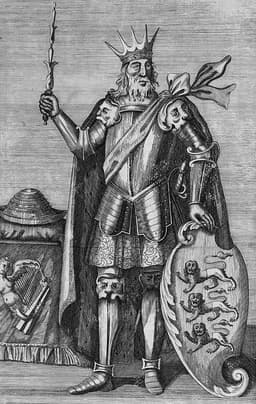
Brian Boru
Emperor · Medieval
55.8Total
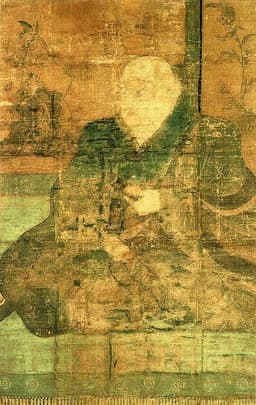
Emperor Go-Shirakawa
Emperor · Medieval
53.0Total
Basic Information
Born
941
1127
Died
1014
1192
Era
Medieval
Medieval
Nationality
Ireland
Japan
Occupation
Emperor
Emperor
Civilization
Western
Eastern
Score Comparison
Military (10%)
60.0
20.0
Political (20%)
54.7
68.0
Influence (20%)
58.0
62.0
Legacy (20%)
50.0
52.0
Leadership (15%)
64.0
65.0
Strategy (15%)
50.0
25.0
TOTAL
55.8
53.0
Brian Boru — Complete Timeline
978 AD
Reign as King of MunsterPolitical Action
Brian Boru became King of Munster after the death of his brother Mathgamain. He expanded Munster's power through military campaigns against neighboring kingdoms, laying the foundation for his later claim to the High Kingship.
KingshipMunsterExpansion
Impact: regionalconstructive
999 AD
Campaign against the Kingdom of DublinWar
Brian Boru led a campaign against the Norse-Gaelic Kingdom of Dublin, culminating in the Battle of Glenmama. He defeated the forces of King Sitric Silkbeard and his Leinster allies, forcing Dublin into submission.
Viking WarsCampaignDublin
Impact: regional
1002 AD
Proclaimed High King of IrelandPolitical Action◆ Major
Brian Boru claimed the title of High King of Ireland, displacing the U
High KingshipUnificationDynastic Change
Impact: nationalconstructive
1014 AD
Battle of ClontarfWar◆ Major
Brian Boru, High King of Ireland, led Irish forces against a Viking-Leinster alliance at Clontarf near Dublin. Brian was killed at the end of the battle, but his forces won. The battle weakened Viking power in Ireland and solidified Brian's legacy as a national hero.
Viking WarsBattleHigh Kingship
Impact: regional
Emperor Go-Shirakawa — Complete Timeline
1086 AD
Compilation of the 'Goshui Wakashu' poetry anthologyCultural
Go-Shirakawa ordered the compilation of the Goshui Wakashu, an imperial anthology of waka poetry. This collection preserved Heian-era poetic traditions and influenced Japanese literary culture for centuries.
LiteratureWaka PoetryHeian Period
Impact: nationalconstructive
1156 AD
Role in the Hogen RebellionWar
Go-Shirakawa, as emperor, defeated the forces of retired Emperor Sutoku in the Hogen Rebellion. This victory secured his throne and involved samurai clans like the Minamoto and Taira, marking the first major military intervention by samurai in imperial politics.
Hogen RebellionSamuraiImperial Politics
Impact: national
1180 AD
Leadership during the Genpei WarWar
As cloistered emperor, Go-Shirakawa managed the Genpei War between the Minamoto and Taira clans. He shifted support between factions, ultimately backing Minamoto no Yoritomo, whose victory led to the establishment of the Kamakura shogunate and samurai rule.
Genpei WarKamakura ShogunateSamurai
Impact: national
1185 AD
Establishment of the Kamakura shogunatePolitical Action
Go-Shirakawa formally recognized Minamoto no Yoritomo as shogun, legitimizing the Kamakura shogunate. This act transferred military and political power from the imperial court to the samurai class, fundamentally altering Japan's governance structure.
Kamakura ShogunateSamurai GovernmentFeudal Japan
Impact: national
Expert Analysis
Origins
Brian Boru (c. 941–1014) was born into the Dál gCais dynasty in Thomond, Ireland. His father was Cennétig mac Lorcáin, king of Thomond. Brian's early life involved defending his territory from Viking raids and rival Irish kingdoms. He became king of Munster in 976 after his brother Mathgamain was killed. Emperor Go-Shirakawa (1127–1192) was the 77th emperor of Japan, born to Emperor Toba and Fujiwara no Tokushi. He was trained in courtly arts and politics, ascending the throne in 1155. His early reign was marked by factional strife between the Fujiwara regents and retired emperors.
Rise to Power
Brian Boru's rise began with his consolidation of Munster. He defeated the Norse-Gaelic Kingdom of Dublin at the Battle of Glenmama (999), forcing King Sitric Silkenbeard into submission. He then challenged the Uí Néill high kings, culminating in his proclamation as High King of Ireland around 1002. Brian used military campaigns and alliances to extend his authority, exacting hostages and tribute from regional kings. Go-Shirakawa's rise to power was shaped by the Hōgen Rebellion (1156). He allied with the Taira clan to defeat retired Emperor Sutoku. After abdicating in 1158, he continued to rule as cloistered emperor (insei), manipulating the imperial court from a monastery. His political maneuvering kept him central to power despite formal abdication.
Leadership & Governance
Brian Boru's leadership was direct and military-focused. He centralized authority by enforcing tribute and building infrastructure like roads and churches. He promoted learning and restored monastic sites, earning support from the Church. His governance relied on personal charisma and fear, with provincial kings often chafing under his rule. Go-Shirakawa's style was indirect and cunning. He played the Minamoto and Taira clans against each other during the Genpei War (1180–1185). He shifted support to whichever side seemed weaker, prolonging the conflict to maintain his own influence. His governance was courtly, using poetry and ritual to legitimize his power. Go-Shirakawa scored 68.0 in political skill, reflecting his mastery of intrigue, while Brian scored 54.7. However, Brian's military score of 60.0 contrasts with Go-Shirakawa's 20.0, highlighting their different strengths.
Triumph & Tragedy
Brian Boru's greatest triumph was the Battle of Clontarf (1014), where he led Irish forces against a Viking-Leinster alliance. Though victorious, Brian was killed at the end of the battle, turning triumph into tragedy. His death destabilized the high kingship, and his unified Ireland disintegrated. Go-Shirakawa's triumph was the establishment of the Kamakura shogunate in 1192. He formally recognized Minamoto no Yoritomo as shogun, ending the Genpei War. However, this act transferred military and political power to the samurai, reducing the emperor's role to a figurehead. His failure was the loss of imperial authority; his manipulations ultimately weakened the throne. Both leaders succeeded in their immediate goals but failed to secure lasting centralized power.
Character & Destiny
Brian Boru was decisive and ambitious, but his direct approach made enemies. His death at Clontarf, while victorious, reflects a lack of caution. Go-Shirakawa was patient and calculating, but his constant scheming alienated allies. He was criticized for prioritizing personal power over stability. Historical assessments highlight Brian's valor and Go-Shirakawa's cunning. Brian's character led to a dramatic, heroic end; Go-Shirakawa's led to a quiet decline of imperial power.
Legacy
Brian Boru is remembered as a national hero who temporarily united Ireland against foreign invaders. His legacy inspired later Irish resistance to English rule. The Battle of Clontarf became a symbol of Irish independence. Go-Shirakawa's legacy is the Kamakura shogunate, which established samurai rule for centuries. He also preserved Heian culture through the 'Goshui Wakashu' poetry anthology. Brian's influence score is 58.0, Go-Shirakawa's 62.0, reflecting broader impact on Japan's political structure. Brian's legacy is more symbolic, while Go-Shirakawa's is structural.
Conclusion
While Brian Boru scored higher overall (55.8 vs 53.0), Go-Shirakawa had greater lasting impact. Brian's unification was temporary and his death reversed his gains. Go-Shirakawa's recognition of the shogunate created a system that lasted nearly 700 years. Therefore, Go-Shirakawa's influence on political structures surpasses Brian's. However, Brian's military and leadership scores are higher. Ultimately, Go-Shirakawa's legacy is more significant in shaping Japan's medieval era.
Rankings
🥇
Brian BoruLeader
Mil: 60.0Pol: 54.7Inf: 58.0
55.8
🥈
Emperor Go-Shirakawa
Mil: 20.0Pol: 68.0Inf: 62.0
53.0
+2.8 behind
How This Comparison Works
Algorithm
Each figure is scored on 6 dimensions (0—100 scale) based on structured historical data: Military (10%), Political (20%), Influence (20%), Legacy (20%), Leadership (15%), Strategy (15%). The weighted total produces the final ranking.
Data Sources
Scores are computed from structured sub-indicators in the database. Scale factors adjust for era (Ancient ×0.85, Modern ×1.0) and civilization size (Eastern ×1.05, Other ×0.80) to account for differences in population and military scale.
Maximum 3 Figures
Comparisons are limited to 2—3 figures to ensure readability and statistical meaningfulness.
Error Margins
±5 points per dimension — Sub-scores are derived from historical records with inherent uncertainty. Two figures within 5 points on a dimension should be considered roughly equivalent in that area.
Total Score Accuracy
±3 points overall — The weighted combination of 6 dimensions produces a total score with approximately ±3 points of uncertainty. Differences of less than 3 points are not statistically significant— the figures are effectively tied.
Known Limitations
- Historical records are incomplete and uneven across civilizations
- Figures from oral-tradition societies may be underrepresented
- Occupation labels can misclassify multi-role figures
- Scores measure capability and impact, not moral character
- Quantitative scoring is a comparison tool, not absolute truth
Capability Radar
Military (10%) — Battles & Warfare
Battles
55
5
Win Rate
60
5
Expansion
55
5
Political (20%) — Governance & Reform
Reform
45
65
Diplomacy
55
75
Economy
40
40
Influence (20%) — Cultural & Global Reach
Cultural
50
60
Global
40
50
Legacy (20%) — Historical Impact
Historical
55
70
Longevity
45
65
Leadership (15%) — Power & Stability
Tenure
50
70
Stability
45
30
Strategy (15%) — Tactics & Innovation
Strategy
60
15
Tactics
65
10
Reform
40
10
Similar Comparisons
Comments & Discussion
No comments yet. Be the first to share your thoughts!