Loading...
Boris I of Bulgaria vs Emperor Ichijo
Boris I of Bulgaria leads by 14.3 pts · 2 figures compared
…
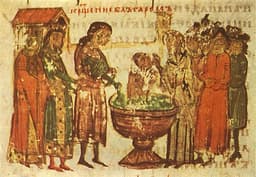
Boris I of Bulgaria
Emperor · Medieval
67.7Total
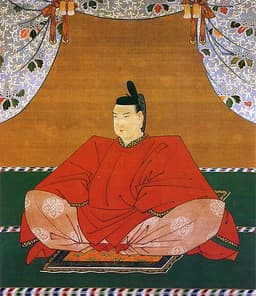
Emperor Ichijo
Emperor · Medieval
53.4Total
Basic Information
Born
828
980
Died
907
1011
Era
Medieval
Medieval
Nationality
Bulgaria
Japan
Occupation
Emperor
Emperor
Civilization
Western
Eastern
Score Comparison
Military (10%)
40.0
54.9
Political (20%)
70.3
30.8
Influence (20%)
65.0
60.0
Legacy (20%)
80.0
52.0
Leadership (15%)
78.0
56.0
Strategy (15%)
52.5
69.3
TOTAL
67.7
53.4
Boris I of Bulgaria — Complete Timeline
864 AD
Adoption of Christianity as state religionReform
Boris I accepted Christianity from the Byzantine Empire, baptizing himself and his court. This act aligned Bulgaria with Christian Europe, reduced Byzantine cultural pressure, and laid the foundation for the Bulgarian Orthodox Church.
ChristianizationState ReligionByzantine Influence
Impact: regionalconstructive
889 AD
Abdication and entry into monasteryPolitical Action◆ Major
Boris I abdicated the throne to become a monk. He later returned from the monastery in 893 to depose his son Vladimir-Rasate, who had reverted to paganism, and installed his younger son Simeon I as ruler.
AbdicationMonasticismDynastic Crisis
Impact: national
893 AD
Council of PreslavPolitical Action◆ Major
Boris I convened a council that replaced Greek with Old Church Slavonic as the official liturgical and literary language. This decision promoted Slavic culture and literacy, strengthening Bulgarian national identity.
Language ReformSlavic LiteracyCultural Policy
Impact: regionalconstructive
Emperor Ichijo — Complete Timeline
986 AD
Reign during the height of Fujiwara regencyPolitical Action◆ Major
Ichijo ascended the throne at age six under the regency of Fujiwara no Michinaga. His reign marked the peak of Fujiwara power, with Michinaga effectively ruling Japan through the emperor as a figurehead, limiting Ichijo's direct political influence.
Fujiwara RegencyHeian PeriodPolitical Structure
Impact: national
1000 AD
Patronage of Lady Murasaki ShikibuCultural◆ Major
Emperor Ichijo served as patron to Lady Murasaki Shikibu, a lady-in-waiting at his court. Under his reign, she wrote The Tale of Genji, widely considered the world's first novel, which profoundly influenced Japanese literature and court culture.
LiteratureHeian PeriodCourt Culture
Impact: globalconstructive
Promotion of Heian court cultureCultural
Ichijo's court became a center for literary and artistic flourishing, including poetry contests, calligraphy, and the composition of The Pillow Book by Sei Shonagon. This cultural efflorescence defined the Heian period's aesthetic legacy.
Heian CultureLiteratureArts
Impact: nationalconstructive
Expert Analysis
Origins
Boris I of Bulgaria, born around 828, was the son of Khan Presian. He inherited a Bulgarian state that was a loose confederation of Slavic tribes and Bulgar elites, with a pagan Tengrist religion. His early life was shaped by the need to consolidate power against the Byzantine Empire and internal rivals. In contrast, Emperor Ichijo, born in 980, was the son of Emperor Enyu and a Fujiwara mother. He ascended the throne at age six, deeply embedded in the Heian court's aristocratic culture. His formative years were dominated by the Fujiwara regency, particularly Fujiwara no Michinaga, who effectively ruled Japan. While Boris faced external threats and internal division, Ichijo's world was one of refined court rituals and political maneuvering among nobles.
Rise to Power
Boris I became Khan of Bulgaria in 852, inheriting a realm under pressure from Byzantium and the Franks. His key turning point came in 864 when he accepted Christianity from the Byzantine Empire, adopting the name Michael. This move was strategic: it aligned Bulgaria with Christian Europe, reduced Byzantine cultural dominance, and unified his subjects under a single religion. He faced opposition from pagan nobles, leading to a revolt in 866, which he crushed. Ichijo's rise was more passive: he became emperor at age six in 986, with Fujiwara no Michinaga as regent. His reign was defined by his role as a ceremonial figurehead; real power lay with the Fujiwara. His key turning point was his patronage of Lady Murasaki Shikibu and Sei Shonagon, which blossomed during his reign (986-1011). He promoted literary pursuits, making his court a center of cultural achievement.
Leadership & Governance
Boris I's leadership was transformative. He imposed Christianity as the state religion, convening the Council of Preslav in 893 to replace Greek with Old Church Slavonic as the liturgical language. This fostered a distinct Slavic identity and reduced Byzantine influence. He also introduced Byzantine-style legal codes and administrative reforms. His governance was top-down, using religion to unify his people. Ichijo's leadership was passive; he reigned but did not rule. Under the Fujiwara regency, political decisions were made by Michinaga. Ichijo focused on cultural patronage, hosting poetry contests and supporting writers. While Boris actively shaped Bulgaria's destiny, Ichijo allowed his court to flourish culturally, but with minimal political impact. Boris scored 78.0 in leadership, reflecting his decisive action; Ichijo scored 56.0, indicating his limited authority.
Triumph & Tragedy
Boris I's greatest triumph was the Christianization of Bulgaria, which integrated his kingdom into European civilization and preserved Bulgarian identity through the Slavic liturgy. His greatest failure was the rebellion of his son Vladimir-Rasate, who reverted to paganism after Boris abdicated in 889. Boris had to leave his monastery in 893 to depose Vladimir and install his younger son Simeon as ruler. This showed the fragility of his reforms. Ichijo's triumph was his patronage of literature: under his reign, Murasaki Shikibu wrote "The Tale of Genji" and Sei Shonagon wrote "The Pillow Book," works that defined Japanese culture. His tragedy was his lack of political power; he was a puppet of the Fujiwara, and his reign saw the decline of imperial authority. His personal life was also marked by early death at age 31, possibly due to illness.
Character & Destiny
Boris I was a pragmatic and decisive ruler. He saw Christianity as a tool for state-building and was willing to use force to impose his will. His abdication to a monastery shows a spiritual side, but his return to power demonstrates his commitment to his legacy. Ichijo was a cultured and gentle figure, more interested in art than politics. His character suited his role as a figurehead; he was not ambitious in the political sense. Historical assessments note his refinement but also his powerlessness. Boris's character shaped his destiny as a nation-builder; Ichijo's character made him a patron but not a leader.
Legacy
Boris I's legacy is immense: he is considered the founder of the Bulgarian Orthodox Church and the Slavonic literary tradition. The use of Old Church Slavonic in liturgy spread to other Slavic nations, influencing Russia, Serbia, and others. He scored 80.0 in legacy, reflecting this enduring impact. Ichijo's legacy is primarily cultural: his court's literary output remains world-renowned. "The Tale of Genji" is often called the first novel. However, his political legacy is negligible; the Fujiwara regency continued after his death. He scored 52.0 in legacy, showing his limited influence beyond culture.
Conclusion
Boris I of Bulgaria had a greater impact than Emperor Ichijo. Boris transformed a pagan confederation into a Christian state, creating a lasting cultural and religious identity that survives today. His political and religious reforms scored 70.3 and 78.0 respectively, while Ichijo's political score was only 30.8. Although Ichijo's cultural patronage was significant, it did not reshape society as Boris's did. Boris's legacy of state-building and religious transformation outweighs Ichijo's literary contributions. Thus, Boris I is the more consequential figure.
Rankings
🥇
Boris I of BulgariaLeader
Mil: 40.0Pol: 70.3Inf: 65.0
67.7
🥈
Emperor Ichijo
Mil: 54.9Pol: 30.8Inf: 60.0
53.4
+14.3 behind
How This Comparison Works
Algorithm
Each figure is scored on 6 dimensions (0—100 scale) based on structured historical data: Military (10%), Political (20%), Influence (20%), Legacy (20%), Leadership (15%), Strategy (15%). The weighted total produces the final ranking.
Data Sources
Scores are computed from structured sub-indicators in the database. Scale factors adjust for era (Ancient ×0.85, Modern ×1.0) and civilization size (Eastern ×1.05, Other ×0.80) to account for differences in population and military scale.
Maximum 3 Figures
Comparisons are limited to 2—3 figures to ensure readability and statistical meaningfulness.
Error Margins
±5 points per dimension — Sub-scores are derived from historical records with inherent uncertainty. Two figures within 5 points on a dimension should be considered roughly equivalent in that area.
Total Score Accuracy
±3 points overall — The weighted combination of 6 dimensions produces a total score with approximately ±3 points of uncertainty. Differences of less than 3 points are not statistically significant— the figures are effectively tied.
Known Limitations
- Historical records are incomplete and uneven across civilizations
- Figures from oral-tradition societies may be underrepresented
- Occupation labels can misclassify multi-role figures
- Scores measure capability and impact, not moral character
- Quantitative scoring is a comparison tool, not absolute truth
Capability Radar
Military (10%) — Battles & Warfare
Battles
45
48
Win Rate
50
45
Expansion
40
52
Political (20%) — Governance & Reform
Reform
95
20
Diplomacy
90
30
Economy
70
25
Influence (20%) — Cultural & Global Reach
Cultural
85
60
Global
70
40
Legacy (20%) — Historical Impact
Historical
90
55
Longevity
85
55
Leadership (15%) — Power & Stability
Tenure
85
31
Stability
80
40
Strategy (15%) — Tactics & Innovation
Strategy
55
56
Tactics
40
59
Reform
60
58
Similar Comparisons
Comments & Discussion
No comments yet. Be the first to share your thoughts!