Loading...
Emperor Ichijo vs Li Chen
Li Chen leads by 6.0 pts · 2 figures compared
…
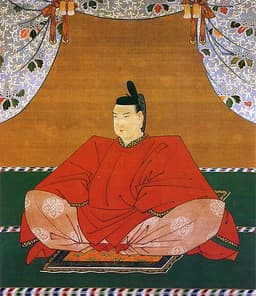
Emperor Ichijo
Emperor · Medieval
53.4Total

Li Chen
Emperor · Medieval
59.4Total
Basic Information
Born
980
810
Died
1011
859
Era
Medieval
Medieval
Nationality
Japan
China
Occupation
Emperor
Emperor
Civilization
Eastern
Eastern
Score Comparison
Military (10%)
54.9
70.0
Political (20%)
30.8
59.3
Influence (20%)
60.0
55.0
Legacy (20%)
52.0
55.0
Leadership (15%)
56.0
66.0
Strategy (15%)
69.3
60.7
TOTAL
53.4
59.4
Emperor Ichijo — Complete Timeline
986 AD
Reign during the height of Fujiwara regencyPolitical Action◆ Major
Ichijo ascended the throne at age six under the regency of Fujiwara no Michinaga. His reign marked the peak of Fujiwara power, with Michinaga effectively ruling Japan through the emperor as a figurehead, limiting Ichijo's direct political influence.
Fujiwara RegencyHeian PeriodPolitical Structure
Impact: national
1000 AD
Patronage of Lady Murasaki ShikibuCultural◆ Major
Emperor Ichijo served as patron to Lady Murasaki Shikibu, a lady-in-waiting at his court. Under his reign, she wrote The Tale of Genji, widely considered the world's first novel, which profoundly influenced Japanese literature and court culture.
LiteratureHeian PeriodCourt Culture
Impact: globalconstructive
Promotion of Heian court cultureCultural
Ichijo's court became a center for literary and artistic flourishing, including poetry contests, calligraphy, and the composition of The Pillow Book by Sei Shonagon. This cultural efflorescence defined the Heian period's aesthetic legacy.
Heian CultureLiteratureArts
Impact: nationalconstructive
Li Chen — Complete Timeline
846 AD
Restoration of Central AuthorityPolitical Action◆ Major
Li Chen ascended the throne after the death of his nephew, Li Yan. He immediately reversed the anti-Buddhist policies and began a series of reforms to restore central authority. He appointed capable chancellors and reduced the power of eunuchs.
ReformCentralizationEunuch Power Reduction
Impact: nationalconstructive
847 AD
Reform of the Salt MonopolyReform◆ Major
Li Chen reformed the state salt monopoly to increase revenue and reduce corruption. He lowered salt prices to curb smuggling and improved the efficiency of the monopoly system, which became a major source of Tang fiscal stability.
Salt MonopolyFiscal ReformEconomic Policy
Impact: nationalconstructive
849 AD
Reconquest of the Hexi CorridorWar◆ Major
Li Chen's forces launched a campaign to recapture the Hexi Corridor from the Tibetan Empire. Tang armies achieved several victories, regaining control of key cities and restoring Chinese authority over the Silk Road route.
Hexi CorridorTibetTerritorial Recovery
Impact: regionalconstructive
859 AD
Death of Li ChenOther
Li Chen died in 859 after a reign that briefly revived Tang fortunes. He was posthumously called the 'Little Taizong' for his capable rule. His death marked the end of the last period of Tang stability before the dynasty's final decline.
DeathEnd of RevivalTang Decline
Impact: nationaltragic
Expert Analysis
Origins
Emperor Ichijo was born in 980 AD as the eldest son of Emperor En'yū and Fujiwara no Senshi. Ascending the throne at age six, he was raised in the Fujiwara-dominated court of Heian-kyō. His family background placed him at the center of the Fujiwara regency, with his grandfather Fujiwara no Kaneie and later uncle Fujiwara no Michinaga wielding real power. Ichijo's education emphasized poetry, calligraphy, and Chinese classics, typical for Heian nobility.
Li Chen, born in 810 AD, was the 13th son of Emperor Xianzong of the Tang dynasty. His mother was a low-ranking consort, and he spent much of his early life in obscurity, even feigning mental disability to avoid political danger. He was known as the "idiot prince" until his nephew Emperor Wuzong died in 846. His early life was marked by Buddhist influence and careful navigation of court intrigue.
Rise to Power
Ichijo became emperor in 986 at age six after his father's abdication. His reign was immediately controlled by Fujiwara no Michinaga, who became regent in 995. Ichijo's role was largely ceremonial; he presided over court ceremonies and literary gatherings but held no real political authority. His rise was not a personal achievement but a product of birth and Fujiwara manipulation.
Li Chen's rise was dramatic. After Wuzong's death, the eunuch faction placed Li Chen on the throne expecting a weak figurehead. However, Li Chen immediately revealed his competence, purging corrupt officials and reversing his predecessor's anti-Buddhist policies. He took the reign name Dazhong (Great Middle) and began centralizing authority. His ascension was a political masterstroke, as he outmaneuvered those who underestimated him.
Leadership & Governance
Ichijo's leadership was passive. He reigned during the apex of Fujiwara no Michinaga's regency, where the emperor was a figurehead. Ichijo's governance was limited to cultural patronage: he supported Lady Murasaki Shikibu (who wrote *The Tale of Genji*) and Sei Shōnagon (author of *The Pillow Book*). His court became a hub for Heian literary culture, but he had no role in administration, military, or fiscal policy. His political score of 30.8 reflects this lack of agency.
Li Chen, by contrast, actively governed. He reformed the salt monopoly to increase revenue, cutting prices to curb smuggling and improve efficiency. He launched military campaigns to recapture the Hexi Corridor from Tibet, restoring Tang control over strategic trade routes. He also curbed eunuch power and reduced the influence of military governors. His leadership score of 66.0 and military score of 70.0 reflect his hands-on approach. However, his reign was short (846-859), limiting long-term impact.
Triumph & Tragedy
Ichijo's triumph was his patronage of Murasaki Shikibu, whose *The Tale of Genji* is considered the world's first novel. This cultural achievement influenced Japanese literature for centuries. His tragedy was his powerlessness; he was a puppet emperor unable to assert imperial authority. He died young at age 31 in 1011, likely from illness, with no significant political legacy.
Li Chen's triumph was the brief revival of Tang power. He restored central authority, reconquered territory, and stabilized finances. His tragedy was that his reforms did not outlive him. After his death in 859, the Tang decline resumed, leading to the Huang Chao Rebellion and eventual collapse. He is remembered as the "Little Taizong" for his capable rule, but his achievements were ephemeral.
Character & Destiny
Ichijo was cultured, gentle, and passive. His character suited the Heian court's aesthetic ideals but made him ineffective as a ruler. His destiny was to be a figurehead, a role he accepted without resistance. Historical assessments view him as a patron of culture but a weak emperor.
Li Chen was cunning, decisive, and energetic. He concealed his abilities for decades, then seized power and enacted reforms. His character drove his restoration efforts, but his short reign and the systemic decay of Tang prevented lasting change. He scored 59.4 overall to Ichijo's 53.4, reflecting greater effectiveness.
Legacy
Ichijo's legacy is cultural. He is remembered as the emperor who presided over the golden age of Heian literature. *The Tale of Genji* remains a global literary treasure. His name is associated with aesthetic refinement.
Li Chen's legacy is political. He is seen as the last capable Tang emperor. His reforms delayed the dynasty's fall, but his death marked the end of Tang revival. He scored 55.0 in legacy to Ichijo's 52.0.
Conclusion
Li Chen had greater impact because he actively shaped events, restoring Tang power temporarily and demonstrating effective governance. Ichijo, while culturally significant, was a passive figure whose achievements were due to his courtiers. Li Chen's military (70.0 vs 54.9), political (59.3 vs 30.8), and leadership (66.0 vs 56.0) scores confirm his superiority. The 6.0-point total gap reflects his real influence.
Rankings
🥇
Li ChenLeader
Mil: 70.0Pol: 59.3Inf: 55.0
59.4
🥈
Emperor Ichijo
Mil: 54.9Pol: 30.8Inf: 60.0
53.4
+6.0 behind
How This Comparison Works
Algorithm
Each figure is scored on 6 dimensions (0—100 scale) based on structured historical data: Military (10%), Political (20%), Influence (20%), Legacy (20%), Leadership (15%), Strategy (15%). The weighted total produces the final ranking.
Data Sources
Scores are computed from structured sub-indicators in the database. Scale factors adjust for era (Ancient ×0.85, Modern ×1.0) and civilization size (Eastern ×1.05, Other ×0.80) to account for differences in population and military scale.
Maximum 3 Figures
Comparisons are limited to 2—3 figures to ensure readability and statistical meaningfulness.
Error Margins
±5 points per dimension — Sub-scores are derived from historical records with inherent uncertainty. Two figures within 5 points on a dimension should be considered roughly equivalent in that area.
Total Score Accuracy
±3 points overall — The weighted combination of 6 dimensions produces a total score with approximately ±3 points of uncertainty. Differences of less than 3 points are not statistically significant— the figures are effectively tied.
Known Limitations
- Historical records are incomplete and uneven across civilizations
- Figures from oral-tradition societies may be underrepresented
- Occupation labels can misclassify multi-role figures
- Scores measure capability and impact, not moral character
- Quantitative scoring is a comparison tool, not absolute truth
Capability Radar
Military (10%) — Battles & Warfare
Battles
48
65
Win Rate
45
70
Expansion
52
50
Political (20%) — Governance & Reform
Reform
20
80
Diplomacy
30
70
Economy
25
75
Influence (20%) — Cultural & Global Reach
Cultural
60
70
Global
40
60
Legacy (20%) — Historical Impact
Historical
55
75
Longevity
55
65
Leadership (15%) — Power & Stability
Tenure
31
75
Stability
40
60
Strategy (15%) — Tactics & Innovation
Strategy
56
65
Tactics
59
60
Reform
58
55
Similar Comparisons
Comments & Discussion
No comments yet. Be the first to share your thoughts!