Loading...
Baldwin I of Jerusalem vs Emperor Ichijo
Baldwin I of Jerusalem leads by 2.7 pts · 2 figures compared
…
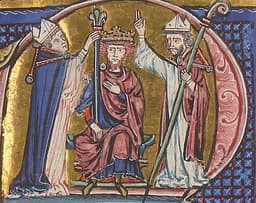
Baldwin I of Jerusalem
Emperor · Medieval
56.1Total
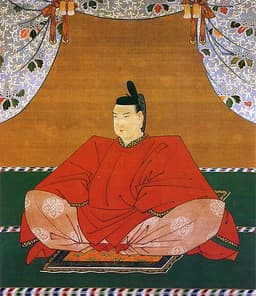
Emperor Ichijo
Emperor · Medieval
53.4Total
Basic Information
Born
1058
980
Died
1118
1011
Era
Medieval
Medieval
Nationality
Jerusalem
Japan
Occupation
Emperor
Emperor
Civilization
Western
Eastern
Score Comparison
Military (10%)
72.5
54.9
Political (20%)
46.6
30.8
Influence (20%)
57.2
60.0
Legacy (20%)
50.0
52.0
Leadership (15%)
62.2
56.0
Strategy (15%)
57.5
69.3
TOTAL
56.1
53.4
Baldwin I of Jerusalem — Complete Timeline
1100 AD
Coronation as First King of JerusalemPolitical Action
Baldwin I was crowned as the first king of Jerusalem on Christmas Day 1100, after the death of his brother Godfrey. He transformed the Crusader state from a lordship into a monarchy, centralizing power and expanding its territory.
CoronationCrusader KingdomJerusalem
Impact: regionalconstructive
1101 AD
Capture of Arsuf and CaesareaWar◆ Major
Baldwin I captured the coastal cities of Arsuf and Caesarea with the help of Genoese and Pisan fleets. These victories secured Crusader control over the Palestinian coast and provided access to Mediterranean trade routes.
ConquestCrusader KingdomCoastal Cities
Impact: regional
1104 AD
Siege of AcreWar◆ Major
Baldwin I besieged and captured the port city of Acre after a four-year blockade, with support from a Genoese fleet. Acre became the most important Crusader port and a major commercial center in the Levant.
SiegeCrusader KingdomAcre
Impact: regional
1105 AD
Defense of the Kingdom against Seljuk AttacksWar◆ Major
Baldwin I defeated a Seljuk Turkish army at the Battle of Ramla in 1105, securing the kingdom's eastern frontier. This victory prevented the Seljuks from recapturing Jerusalem and stabilized Crusader rule.
BattleSeljuksCrusader Kingdom
Impact: regional
1118 AD
Invasion of EgyptWar
Baldwin I led a campaign into Fatimid Egypt, reaching the Nile Delta. He died during the campaign near Al-Arish, possibly from illness. The invasion failed to conquer territory but demonstrated Crusader ambitions beyond the Levant.
InvasionEgyptCrusader Kingdom
Impact: regional
Emperor Ichijo — Complete Timeline
986 AD
Reign during the height of Fujiwara regencyPolitical Action◆ Major
Ichijo ascended the throne at age six under the regency of Fujiwara no Michinaga. His reign marked the peak of Fujiwara power, with Michinaga effectively ruling Japan through the emperor as a figurehead, limiting Ichijo's direct political influence.
Fujiwara RegencyHeian PeriodPolitical Structure
Impact: national
1000 AD
Patronage of Lady Murasaki ShikibuCultural◆ Major
Emperor Ichijo served as patron to Lady Murasaki Shikibu, a lady-in-waiting at his court. Under his reign, she wrote The Tale of Genji, widely considered the world's first novel, which profoundly influenced Japanese literature and court culture.
LiteratureHeian PeriodCourt Culture
Impact: globalconstructive
Promotion of Heian court cultureCultural
Ichijo's court became a center for literary and artistic flourishing, including poetry contests, calligraphy, and the composition of The Pillow Book by Sei Shonagon. This cultural efflorescence defined the Heian period's aesthetic legacy.
Heian CultureLiteratureArts
Impact: nationalconstructive
Expert Analysis
Origins
Baldwin I of Jerusalem was born around 1058 as the third son of Eustace II, Count of Boulogne, and Ida of Lorraine. He initially pursued a clerical career, becoming a canon at Reims, but later turned to knighthood. He joined the First Crusade in 1096 alongside his brother Godfrey of Bouillon, leading a contingent of knights. His early experiences in the crusade, including the capture of Edessa in 1098, gave him crucial military and administrative experience.
Emperor Ichijo was born in 980 as the eldest son of Emperor Enyu and Fujiwara no Senshi. He ascended the throne at age six in 986, under the regency of Fujiwara no Kaneie. His reign was dominated by the Fujiwara clan, particularly Fujiwara no Michinaga, who became regent in 995. Ichijo was raised in the refined Heian court, receiving education in poetry, calligraphy, and Chinese classics, which shaped his patronage of arts.
Rise to Power
Baldwin I rose to prominence through military conquest and political maneuvering. After his brother Godfrey became ruler of Jerusalem in 1099, Baldwin inherited the County of Edessa. Upon Godfrey's death in 1100, Baldwin secured the throne of Jerusalem by outmaneuvering rivals, including the Patriarch Dagobert. He was crowned on Christmas Day 1100, transforming the Crusader state from a religious protectorate into a secular kingdom.
Emperor Ichijo became emperor at age six, but real power rested with the Fujiwara regents. His reign peaked during the regency of Michinaga, who skillfully sidelined rivals. Ichijo's role was largely ceremonial, but he used his position to patronize writers and poets. His marriage to Empress Shoshi, Michinaga's daughter, solidified Fujiwara control but also provided a stable court environment for cultural flourishing.
Leadership & Governance
Baldwin I was a military leader who personally led campaigns to expand the kingdom. He captured coastal cities like Arsuf and Caesarea in 1101 with Genoese and Pisan naval support, and Acre in 1104 after a four-year siege. He defeated a Seljuk army at Ramla in 1105, securing the eastern frontier. His governance focused on consolidating Crusader control, integrating local Christian and Muslim populations under feudal rule. He also minted coins and established trade routes.
Emperor Ichijo had limited political power, but he effectively fulfilled his ceremonial role. He presided over a court that became a hub of literary and artistic activity. He patronized Lady Murasaki Shikibu, who wrote *The Tale of Genji*, and Sei Shonagon, who wrote *The Pillow Book*. His reign saw the peak of Heian court culture, with poetry contests, calligraphy, and music. However, governance was handled by Michinaga, who monopolized power.
Triumph & Tragedy
Baldwin I's triumphs include expanding the Kingdom of Jerusalem to its greatest territorial extent, securing key ports, and defeating multiple Muslim armies. His capture of Acre gave the Crusaders a vital trade hub. However, his invasion of Egypt in 1118 ended in failure; he died near Al-Arish, possibly from illness, without achieving his goal. His aggressive expansion also strained resources and created long-term vulnerabilities.
Emperor Ichijo's triumph was fostering a golden age of Japanese literature. *The Tale of Genji* remains a world classic, and his court set cultural standards. However, his reign symbolized the powerlessness of the emperor under Fujiwara domination. After his death in 1011, the Fujiwara regency continued, and the imperial institution's decline became permanent.
Character & Destiny
Baldwin I was pragmatic and ruthless, willing to use force and alliances to achieve his goals. He was a capable commander, scoring 72.5 in military, but his political score of 46.6 reflects his reliance on brute force over diplomacy. His character drove him to expand relentlessly, but this also led to overreach and death on campaign.
Emperor Ichijo was cultured and passive, content to let the Fujiwara rule. His influence score of 60.0 reflects his cultural impact, but his political score of 30.8 shows his lack of agency. His destiny was to be a figurehead, but his patronage ensured his name lives on through literature.
Legacy
Baldwin I's legacy is the Crusader kingdom he built, which lasted until 1291. He established Jerusalem as a feudal monarchy, set precedents for succession, and expanded its territory. His military campaigns, scored 72.5, shaped the geopolitics of the Levant. However, his legacy is mixed; the kingdom's fragility stemmed from his expansionist policies.
Emperor Ichijo's legacy is primarily cultural. *The Tale of Genji* and *The Pillow Book* are masterpieces that defined Japanese literature. His reign is remembered as the peak of Heian aesthetics. However, his political legacy is negligible; the Fujiwara continued to dominate, and the emperor's power never recovered.
Conclusion
Baldwin I had a greater historical impact than Emperor Ichijo. His military score of 72.5 versus Ichijo's 54.9, and total score of 56.1 versus 53.4, reflect his direct influence on events. Baldwin's actions shaped the Crusader states for centuries, while Ichijo's cultural contributions, though significant, did not alter political structures. Baldwin's legacy is more tangible: he built a kingdom that endured for nearly 200 years. Ichijo's legacy is literary but did not change the course of Japanese history. Thus, Baldwin I of Jerusalem is the more impactful figure.
Rankings
🥇
Baldwin I of JerusalemLeader
Mil: 72.5Pol: 46.6Inf: 57.2
56.1
🥈
Emperor Ichijo
Mil: 54.9Pol: 30.8Inf: 60.0
53.4
+2.7 behind
How This Comparison Works
Algorithm
Each figure is scored on 6 dimensions (0—100 scale) based on structured historical data: Military (10%), Political (20%), Influence (20%), Legacy (20%), Leadership (15%), Strategy (15%). The weighted total produces the final ranking.
Data Sources
Scores are computed from structured sub-indicators in the database. Scale factors adjust for era (Ancient ×0.85, Modern ×1.0) and civilization size (Eastern ×1.05, Other ×0.80) to account for differences in population and military scale.
Maximum 3 Figures
Comparisons are limited to 2—3 figures to ensure readability and statistical meaningfulness.
Error Margins
±5 points per dimension — Sub-scores are derived from historical records with inherent uncertainty. Two figures within 5 points on a dimension should be considered roughly equivalent in that area.
Total Score Accuracy
±3 points overall — The weighted combination of 6 dimensions produces a total score with approximately ±3 points of uncertainty. Differences of less than 3 points are not statistically significant— the figures are effectively tied.
Known Limitations
- Historical records are incomplete and uneven across civilizations
- Figures from oral-tradition societies may be underrepresented
- Occupation labels can misclassify multi-role figures
- Scores measure capability and impact, not moral character
- Quantitative scoring is a comparison tool, not absolute truth
Capability Radar
Military (10%) — Battles & Warfare
Battles
55
48
Win Rate
60
45
Expansion
65
52
Political (20%) — Governance & Reform
Reform
40
20
Diplomacy
55
30
Economy
35
25
Influence (20%) — Cultural & Global Reach
Cultural
45
60
Global
40
40
Legacy (20%) — Historical Impact
Historical
55
55
Longevity
45
55
Leadership (15%) — Power & Stability
Tenure
50
31
Stability
30
40
Strategy (15%) — Tactics & Innovation
Strategy
60
56
Tactics
55
59
Reform
30
58
Similar Comparisons
Comments & Discussion
No comments yet. Be the first to share your thoughts!