Loading...
Bidhan Chandra Roy vs Mark Rutte
Bidhan Chandra Roy leads by 4.1 pts · 2 figures compared
…

Bidhan Chandra Roy
Politician · Modern
61.7Total
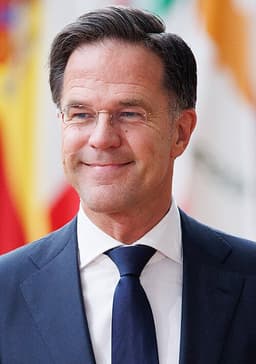
Mark Rutte
Politician · Modern
57.6Total
Basic Information
Born
1882
1967
Died
1962
—
Era
Modern
Modern
Nationality
India
Netherlands
Occupation
Politician
Politician
Civilization
Indian
Western
Score Comparison
Military (10%)
47.2
41.8
Political (20%)
68.8
65.0
Influence (20%)
60.0
57.2
Legacy (20%)
52.0
48.3
Leadership (15%)
84.5
75.0
Strategy (15%)
60.0
60.0
TOTAL
61.7
57.6
Bidhan Chandra Roy — Complete Timeline
1948 AD
Became Chief Minister of West BengalPolitical Action◆ Major
Bidhan Chandra Roy was sworn in as the Chief Minister of West Bengal, serving until his death in 1962. He led the Congress government and focused on rebuilding the state after the partition of Bengal.
Chief MinisterWest BengalCongress
Impact: regionalconstructive
1950 AD
Developed the Kolkata Metropolitan AreaReform◆ Major
Roy oversaw the development of the Kolkata Metropolitan Area, including the construction of the Kolkata Municipal Corporation building, the expansion of the city's infrastructure, and the establishment of the Kolkata Port Trust.
Urban DevelopmentKolkataInfrastructure
Impact: regionalconstructive
1951 AD
Established the Indian Institute of Technology KharagpurReform
Roy played a key role in establishing the Indian Institute of Technology (IIT) Kharagpur, the first IIT in India. The institution became a premier engineering college and a model for technical education in the country.
EducationIITTechnical Education
Impact: nationalprogressive
1952 AD
Established the West Bengal Health SchemeReform◆ Major
Roy introduced the West Bengal Health Scheme, a pioneering health insurance program for government employees. The scheme provided medical coverage and became a model for other states.
HealthInsuranceWest Bengal
Impact: regionalprogressive
1962 AD
Death and legacy as a physician and statesmanOther◆ Major
Roy died in office in 1962, leaving a legacy as a physician and builder of modern West Bengal. His birthday, July 1, is celebrated as National Doctors' Day in India in his honor.
DeathLegacyDoctors' Day
Impact: nationalconstructive
Mark Rutte — Complete Timeline
2006 AD
Elected Leader of the People's Party for Freedom and DemocracyPolitical Action◆ Major
Mark Rutte became the political leader of the VVD, the Dutch liberal-conservative party. He led the party through several election campaigns, eventually becoming prime minister in 2010.
Dutch PoliticsVVDParty Leadership
Impact: nationalconstructive
2010 AD
Became Prime Minister of the NetherlandsPolitical Action
Rutte became Prime Minister of the Netherlands, leading a minority coalition government with support from the Party for Freedom (PVV). His first term focused on austerity measures and immigration reforms.
Dutch PoliticsPrime MinisterCoalition
Impact: nationalconstructive
2020 AD
Led Netherlands Through COVID-19 PandemicPolitical Action◆ Major
Rutte oversaw the Dutch response to COVID-19, including lockdowns, vaccination campaigns, and economic support measures. His government faced criticism over the slow start of vaccinations and handling of the second wave.
COVID-19Dutch PoliticsPublic Health
Impact: national
2021 AD
Survived No-Confidence Vote Over Childcare Benefits ScandalPolitical Action◆ Major
Rutte's government faced a no-confidence vote after a parliamentary inquiry revealed that tax authorities falsely accused thousands of parents of fraud in childcare benefits. The scandal led to the resignation of his cabinet, though Rutte remained as caretaker prime minister.
Dutch PoliticsScandalChildcare Benefits
Impact: nationaldestructive
2023 AD
Announced Retirement from PoliticsPolitical Action◆ Major
Rutte announced he would leave politics after the 2023 general election, ending his 13-year tenure as prime minister. He cited the need for new leadership and the end of his political career.
Dutch PoliticsRetirementEnd of Era
Impact: national
Expert Analysis
Origins
**Bidhan Chandra Roy** (1882-1962) was born in Bankipore, Bihar, into a Bengali Brahmin family. His father was a revenue official, and his mother died when he was young. He studied at Patna College, then earned his medical degree from Calcutta Medical College and later a MRCP in London. Roy was deeply influenced by the Indian independence movement and became a close associate of Mahatma Gandhi.
**Mark Rutte** (born 1967) was born in The Hague, Netherlands, into a middle-class family. His father was a businessman. Rutte studied history at Utrecht University, where he was active in the youth wing of the People's Party for Freedom and Democracy (VVD). After university, he worked in human resources at Unilever, eventually becoming a senior HR manager. His political career began in the 1990s as a local councilor.
Rise to Power
Roy entered politics after being elected to the Bengal Legislative Council in 1925 as a member of the Indian National Congress. He served as Mayor of Calcutta from 1931 to 1933, where he improved public health and infrastructure. After India's independence, he was elected as the second Chief Minister of West Bengal in 1948, succeeding Prafulla Chandra Ghosh. He remained in office until his death in 1962, winning three consecutive elections.
Rutte rose through the VVD ranks, becoming State Secretary for Social Affairs in 2002 and State Secretary for Education in 2004. He was elected party leader in 2006. After the 2010 general election, he became Prime Minister, leading a minority coalition with support from the Party for Freedom (PVV). His first term focused on austerity measures. He survived the 2012 election and formed a coalition with the Labour Party, serving until 2017. He then led three more coalition governments, becoming the Netherlands' longest-serving PM.
Leadership & Governance
Roy's leadership was hands-on and reform-oriented. He focused on industrialization, education, and healthcare. He established the Indian Institute of Technology Kharagpur (1951), the West Bengal Health Scheme (1952), and oversaw the development of the Kolkata Metropolitan Area, including the construction of the Kolkata Municipal Corporation building. He also expanded the Damodar Valley Corporation for flood control and irrigation. His governance score is 84.5, reflecting his effective administration.
Rutte's leadership style is pragmatic and consensus-building. He managed complex coalition governments, often leading minority cabinets. His key policies include austerity after the 2008 financial crisis, welfare state reforms, and a strong stance on European integration. He led the COVID-19 response, implementing lockdowns and economic support. However, his government faced a major scandal over childcare benefits, leading to a no-confidence vote in 2021, which he survived. His leadership score is 75.0.
Triumph & Tragedy
Roy's greatest success was transforming West Bengal into an industrial and educational hub. He established the first IIT, which became a model for technical education in India. His health scheme was pioneering. However, his failure to address rising unemployment and communal tensions in the 1950s led to political instability. The Congress party lost ground to left-wing parties after his death.
Rutte's triumph was his longevity: 13 years as PM, navigating crises like the Eurozone debt crisis, COVID-19, and the childcare benefits scandal. He also maintained strong economic growth. His tragedy was the childcare benefits scandal, where thousands of families were wrongly accused of fraud, leading to social harm and a political crisis. His legacy is tarnished by this.
Character & Destiny
Roy was a disciplined, methodical leader with a medical background, which influenced his focus on public health. He was known for his integrity and commitment to public service. His character shaped his destiny: he built institutions that outlasted him, but his failure to groom a successor led to the decline of Congress in West Bengal.
Rutte is known as a shrewd negotiator, often described as "Teflon" for surviving scandals. He is affable and pragmatic, but criticized for lacking ideological depth. His character allowed him to remain in power for over a decade, but the childcare scandal revealed a lack of accountability, leading to his eventual retirement.
Legacy
Roy's legacy is visible in West Bengal's infrastructure, IIT Kharagpur, and the health scheme. He is celebrated annually on National Doctors' Day in India (July 1). His influence score is 60.0 and legacy score is 52.0, reflecting lasting but regionally confined impact.
Rutte's legacy is more ambiguous. He stabilized the Dutch economy and managed crises, but the childcare scandal damaged trust in government. He is remembered as a consensus-builder who kept the VVD in power. His influence score is 57.2 and legacy score is 48.3.
Conclusion
Bidhan Chandra Roy had a greater impact, particularly in his region. His founding of IIT Kharagpur alone has influenced generations of engineers globally. While Rutte's long tenure is notable, his achievements are less transformative. Roy's leadership score (84.5 vs 75.0) and total score (61.7 vs 57.6) reflect his higher effectiveness in governance and institution-building. Roy's work in health, education, and infrastructure created lasting change, whereas Rutte's legacy is more about political management than foundational reforms.
Rankings
🥇
Bidhan Chandra RoyLeader
Mil: 47.2Pol: 68.8Inf: 60.0
61.7
🥈
Mark Rutte
Mil: 41.8Pol: 65.0Inf: 57.2
57.6
+4.1 behind
How This Comparison Works
Algorithm
Each figure is scored on 6 dimensions (0—100 scale) based on structured historical data: Military (10%), Political (20%), Influence (20%), Legacy (20%), Leadership (15%), Strategy (15%). The weighted total produces the final ranking.
Data Sources
Scores are computed from structured sub-indicators in the database. Scale factors adjust for era (Ancient ×0.85, Modern ×1.0) and civilization size (Eastern ×1.05, Other ×0.80) to account for differences in population and military scale.
Maximum 3 Figures
Comparisons are limited to 2—3 figures to ensure readability and statistical meaningfulness.
Error Margins
±5 points per dimension — Sub-scores are derived from historical records with inherent uncertainty. Two figures within 5 points on a dimension should be considered roughly equivalent in that area.
Total Score Accuracy
±3 points overall — The weighted combination of 6 dimensions produces a total score with approximately ±3 points of uncertainty. Differences of less than 3 points are not statistically significant— the figures are effectively tied.
Known Limitations
- Historical records are incomplete and uneven across civilizations
- Figures from oral-tradition societies may be underrepresented
- Occupation labels can misclassify multi-role figures
- Scores measure capability and impact, not moral character
- Quantitative scoring is a comparison tool, not absolute truth
Capability Radar
Military (10%) — Battles & Warfare
Battles
47
46
Win Rate
44
50
Expansion
48
53
Political (20%) — Governance & Reform
Reform
75
60
Diplomacy
70
75
Economy
72
70
Influence (20%) — Cultural & Global Reach
Cultural
55
30
Global
45
55
Legacy (20%) — Historical Impact
Historical
60
50
Longevity
50
40
Leadership (15%) — Power & Stability
Tenure
65
85
Stability
68
80
Strategy (15%) — Tactics & Innovation
Strategy
50
59
Tactics
58
59
Reform
58
61
Similar Comparisons
Comments & Discussion
No comments yet. Be the first to share your thoughts!