Loading...
Bhoja vs Julius Caesar
Julius Caesar leads by 26.9 pts · 2 figures compared
…
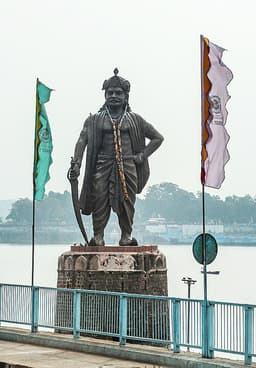
Bhoja
Emperor · Medieval
55.9Total

Julius Caesar
General · Ancient
82.8Total
Basic Information
Born
1010
-100
Died
1055
-44
Era
Medieval
Ancient
Nationality
India
Roman Republic
Occupation
Emperor
General
Civilization
Indian
Western
Score Comparison
Military (10%)
50.0
88.0
Political (20%)
53.8
78.0
Influence (20%)
58.3
85.0
Legacy (20%)
58.0
82.0
Leadership (15%)
53.2
80.0
Strategy (15%)
57.5
85.0
TOTAL
55.9
82.8
Bhoja — Complete Timeline
1030 AD
Patronage of the University of DharaCultural
Bhoja patronized the university at Dhara, his capital, attracting scholars from across India. He established a library and supported studies in grammar, philosophy, and astronomy. This made Dhara a major center of learning.
EducationPatronageScholarship
Impact: regionalconstructive
1040 AD
Composition of the Samarangana SutradharaCultural◆ Major
Bhoja wrote the Samarangana Sutradhara, a comprehensive treatise on architecture and engineering. The text covers temple construction, town planning, and mechanical devices. It became a foundational work in Indian architectural theory.
ArchitectureEngineeringScholarship
Impact: regionalconstructive
1042 AD
Defeat by the Chaulukya King Bhima IWar◆ Major
Bhoja's army was defeated by the Chaulukya king Bhima I of Gujarat in a battle near the Narmada River. This loss halted Paramara expansion westward and forced Bhoja to pay tribute. It marked a significant setback for his reign.
Chaulukya WarMilitary DefeatGujarat
Impact: regionaltragic
1050 AD
Construction of the Bhojeshwar TempleCultural◆ Major
Bhoja began construction of the Bhojeshwar Temple at Bhojpur, dedicated to Shiva. The temple features a massive lingam and a large dome, but was left incomplete at his death. It remains a significant example of Paramara architecture.
Temple BuildingShivaArchitecture
constructive
Julius Caesar — Complete Timeline
58 BC
Gallic WarsWar◆ Major
Caesar, as proconsul of Gaul, launched a series of campaigns that conquered all of Gaul (modern France, Belgium, and parts of Switzerland). He fought numerous battles, including against the Helvetii, the Belgae, and the Gallic chieftain Vercingetorix. The wars brought immense wealth and a loyal army to Caesar.
Gallic WarsConquestRoman Expansion
Impact: regional
49 BC
Crossing the RubiconPolitical Action◆ Major
Caesar led Legio XIII across the Rubicon River into Italy, defying the Roman Senate's order to disband his army. This act triggered a civil war against Pompey and the Optimates, ultimately leading to Caesar's dictatorship and the end of the Roman Republic.
Roman Civil WarEnd of RepublicPower Struggle
Impact: global
48 BC
Battle of PharsalusWar◆ Major
Caesar's outnumbered army defeated the larger forces of Pompey the Great at Pharsalus in Greece. Caesar's tactical use of a reserve line to counter Pompey's cavalry charge proved decisive. Pompey fled to Egypt, where he was assassinated, leaving Caesar as the undisputed master of the Roman world.
Roman Civil WarBattleDecisive Victory
Impact: regional
44 BC
Appointment as Dictator for LifePolitical Action◆ Major
The Roman Senate appointed Caesar dictator perpetuo (dictator for life), granting him unprecedented personal power. This move concentrated military, legislative, and judicial authority in one person, effectively ending the Roman Republic's traditional system of checks and balances and alarming many senators.
DictatorshipEnd of RepublicPower Consolidation
Impact: regionaldestructive
Assassination on the Ides of MarchPolitical Action◆ Major
A group of Roman senators, led by Marcus Junius Brutus and Gaius Cassius Longinus, stabbed Caesar to death at a meeting of the Senate in the Theatre of Pompey. The assassination was intended to restore the Republic, but instead triggered another civil war that led to the rise of the Roman Empire.
AssassinationRoman PoliticsEnd of Republic
Impact: globaldestructive
Expert Analysis
bhoja-vs-julius-caesar
# The Conqueror and the Scholar-King
In the winter of 49 BCE, a Roman general named Julius Caesar stood at the banks of a small river called the Rubicon, contemplating an act that would shatter centuries of republican tradition. Half a world away and a thousand years later, in the fertile plains of central India, King Bhoja sat in his palace at Dhara, composing verses on temple architecture while his armies prepared for battle. Two rulers, two civilizations, two utterly different conceptions of power. One would die by the knife of his closest allies, his name forever synonymous with imperial ambition. The other would be remembered as a philosopher-king, his legacy etched not in conquest but in stone and scholarship. What made them so different—and what does their contrast reveal about the nature of leadership itself?
Origins
Julius Caesar was born into the chaos of a dying republic. The year was 100 BCE, and Rome was convulsed by civil wars, class conflict, and the collapse of old certainties. His family, the Julii, claimed descent from the goddess Venus, but they were politically marginal—patricians in name, yet poor and struggling for relevance. Young Caesar grew up in a world where ambition was measured in legions and gold, where a man could rise by eloquence in the Forum or ruthlessness on the battlefield. His education was Greek, his models were Alexander and Sulla, and his hunger was insatiable.
Bhoja was born in 1010 CE, into a very different world. The Paramara dynasty ruled the Malwa region of central India, a land of rich agricultural plains and thriving trade routes. Hinduism was in its golden age, and kingship was understood not as raw power but as dharma—a sacred duty to protect, patronize, and enlighten. Bhoja’s father, King Sindhuraja, had been a warrior, but his uncle Munja had been a poet. From childhood, Bhoja absorbed both traditions: the sword and the stylus. Where Caesar learned rhetoric to sway Roman crowds, Bhoja studied Sanskrit grammar and the *Arthashastra* to understand the art of righteous rule.
Rise to Power
Caesar’s ascent was a masterpiece of calculated risk. He climbed the Roman political ladder—quaestor, aedile, praetor—borrowing enormous sums to buy popularity. His appointment as governor of Gaul in 58 BCE gave him what he truly needed: an army. Over eight years, he conquered a territory larger than Italy itself, amassing wealth, veterans, and a reputation that made the Senate tremble. When ordered to disband his forces, he chose war. Crossing the Rubicon in 49 BCE was treason, but Caesar knew that in a failing republic, the man who dared most would win most.
Bhoja’s rise was more orderly, though no less ambitious. He inherited the Paramara throne around 1010 CE, likely after a period of regency. His early years were spent consolidating control over Malwa and expanding his kingdom through diplomacy and careful warfare. Unlike Caesar, Bhoja did not need to overthrow a system—he was born into one where kingship was accepted, even sacred. His challenge was to prove himself worthy of it, not by destroying rivals but by building institutions that would outlast him.
Leadership & Governance
Caesar governed as he fought: with speed, decisiveness, and a total disregard for tradition. As dictator, he reformed the calendar, granted citizenship to Gauls, launched public works, and centralized power in his own hands. His military genius lay in improvisation—at Alesia, he built walls to besiege the besiegers; at Pharsalus, he out-thought Pompey’s larger army. But his political wisdom was flawed. He pardoned enemies who would later kill him, and he accepted honors that made him a king in all but name, inflaming republican passions he could not extinguish.
Bhoja ruled as a scholar-king, his governance inseparable from his learning. He wrote treatises on architecture (*Samarangana Sutradhara*, composed around 1040 CE), on poetry, on medicine, and on statecraft. His patronage of the University of Dhara in 1030 CE turned his capital into a beacon for scholars from across India. His military record was mixed: in 1042 CE, his army was defeated by the Chaulukya king Bhima I near the Narmada River, a humiliating setback that halted his expansion. Yet Bhoja responded not with vengeance but with construction—he began the Bhojeshwar Temple in 1050 CE, a colossal shrine to Shiva with a lingam so massive it could never be moved. His power was not in conquest but in creation.
Triumph & Tragedy
Caesar’s greatest triumph was the conquest of Gaul, a feat that doubled Rome’s territory and made him the most famous man in the Mediterranean. His greatest tragedy was that he could not stop. He crossed the Rubicon, won the civil war, and became dictator for life—only to be stabbed to death on the Ides of March, 44 BCE, by men he had trusted. His last words, according to legend, were “*Et tu, Brute?*”—a recognition that the republic he had strangled would not forgive him.
Bhoja’s triumph was cultural, not military. He built a kingdom that was remembered not for its borders but for its books. His tragedy was that his temple remained unfinished at his death in 1055 CE, and his dynasty soon collapsed under pressure from rivals. The Bhojeshwar Temple stands today as a monument to ambition halted midway—a giant lingam under an open sky, never fully roofed, as if the king’s vision exceeded his time.
Character & Destiny
Caesar was restless, brilliant, and utterly convinced of his own destiny. He wrote his own commentaries, controlled his own narrative, and believed that history belonged to those who seized it. His personality—charming, ruthless, and incautious—drove him to the top and then to the grave. He could forgive his enemies but could not imagine that they would not forgive him.
Bhoja was reflective, systematic, and deeply tied to tradition. He saw kingship as a form of worship, and his legacy was measured in what he left for others, not what he took for himself. His personality—learned, pious, and cautious—made him beloved but vulnerable. He built for eternity but could not defend against the Chaulukyas.
Legacy
Caesar’s legacy is the Roman Empire. His name became a title—Kaiser, Tsar—and his assassination triggered the rise of Augustus. He transformed the ancient world, for better and worse, and his story has been told for two thousand years as a warning about ambition and power.
Bhoja’s legacy is more subtle but no less enduring. He is remembered as a king who wrote books, built temples, and patronized learning. In Indian memory, he is *Bhoja Raja*, the ideal ruler—wise, generous, and learned. His treatises on architecture and statecraft are still studied, and his unfinished temple remains a pilgrimage site. He did not change the world, but he enriched it.
Conclusion
Standing at the Rubicon, Caesar saw a river he had to cross. Sitting in his palace at Dhara, Bhoja saw a text he had to write. One conquered men, the other conquered ideas. One died betrayed, the other died mourned. Their contrast is not a judgment—both were products of their worlds, and both succeeded in the terms their civilizations set. But their stories remind us that power has many faces. It can be the sword that cuts a path through history, or the pen that inscribes a line that lasts forever. Which one endures longer is a question every leader must answer—and every age must decide.
Rankings
🥇
Julius CaesarLeader
Mil: 88.0Pol: 78.0Inf: 85.0
82.8
🥈
Bhoja
Mil: 50.0Pol: 53.8Inf: 58.3
55.9
+26.9 behind
How This Comparison Works
Algorithm
Each figure is scored on 6 dimensions (0—100 scale) based on structured historical data: Military (10%), Political (20%), Influence (20%), Legacy (20%), Leadership (15%), Strategy (15%). The weighted total produces the final ranking.
Data Sources
Scores are computed from structured sub-indicators in the database. Scale factors adjust for era (Ancient ×0.85, Modern ×1.0) and civilization size (Eastern ×1.05, Other ×0.80) to account for differences in population and military scale.
Maximum 3 Figures
Comparisons are limited to 2—3 figures to ensure readability and statistical meaningfulness.
Error Margins
±5 points per dimension — Sub-scores are derived from historical records with inherent uncertainty. Two figures within 5 points on a dimension should be considered roughly equivalent in that area.
Total Score Accuracy
±3 points overall — The weighted combination of 6 dimensions produces a total score with approximately ±3 points of uncertainty. Differences of less than 3 points are not statistically significant— the figures are effectively tied.
Known Limitations
- Historical records are incomplete and uneven across civilizations
- Figures from oral-tradition societies may be underrepresented
- Occupation labels can misclassify multi-role figures
- Scores measure capability and impact, not moral character
- Quantitative scoring is a comparison tool, not absolute truth
Capability Radar
Military (10%) — Battles & Warfare
Battles
45
95
Win Rate
50
92
Expansion
45
97
Political (20%) — Governance & Reform
Reform
65
90
Diplomacy
55
85
Economy
70
82
Influence (20%) — Cultural & Global Reach
Cultural
70
88
Global
40
94
Legacy (20%) — Historical Impact
Historical
65
95
Longevity
60
96
Leadership (15%) — Power & Stability
Tenure
60
75
Stability
60
60
Strategy (15%) — Tactics & Innovation
Strategy
50
94
Tactics
55
96
Reform
40
88
Similar Comparisons
Comments & Discussion
No comments yet. Be the first to share your thoughts!