Loading...
Baybars vs Yuwen Yong
Yuwen Yong leads by 3.4 pts · 2 figures compared
…
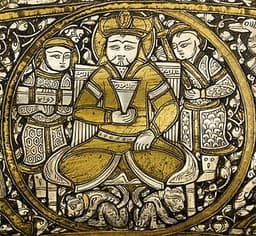
Baybars
Emperor · Medieval
63.8Total
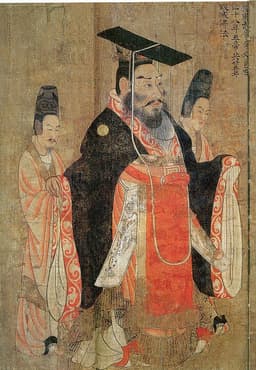
Yuwen Yong
Emperor · Medieval
67.2Total
Basic Information
Born
1223
543
Died
1277
578
Era
Medieval
Medieval
Nationality
Egypt
China
Occupation
Emperor
Emperor
Civilization
Middle Eastern
Eastern
Score Comparison
Military (10%)
85.0
78.0
Political (20%)
70.0
78.0
Influence (20%)
55.0
58.0
Legacy (20%)
52.0
54.0
Leadership (15%)
72.0
85.0
Strategy (15%)
72.0
69.1
TOTAL
63.8
67.2
Baybars — Complete Timeline
1260 AD
Battle of Ain Jalut (1260)War◆ Major
Baybars served as a key commander under Qutuz at the Battle of Ain Jalut. He led the vanguard and played a crucial role in the Mamluk victory over the Mongols. This battle established his reputation as a military leader.
Mongol InvasionBattleMamluk Victory
Impact: globalconstructive
Accession as Sultan (1260)Political Action◆ Major
After assassinating Qutuz, Baybars proclaimed himself Sultan of Egypt. He was accepted by the Mamluk commanders and the Abbasid Caliph. His reign began a period of Mamluk dominance in the Middle East, lasting for decades.
SuccessionMamluk SultanateAssassination
Impact: regional
1265 AD
Campaigns against the Crusader States (1260s-1270s)War◆ Major
Baybars launched a series of campaigns against the remaining Crusader states in the Levant. He captured key fortresses including Arsuf (1265), Safed (1266), Jaffa (1268), and Antioch (1268). These victories reduced Crusader territory to a few coastal enclaves.
Crusader WarsConquestMamluk Expansion
Impact: regionaldestructive
1277 AD
Defeat of the Mongols at Elbistan (1277)War◆ Major
Baybars defeated a Mongol army at the Battle of Elbistan in Anatolia. He invaded the Seljuk Sultanate of Rum, which was under Mongol suzerainty. Although a tactical victory, Baybars could not hold Anatolia and returned to Syria.
Mongol WarsBattleAnatolia
Impact: regionalconstructive
Death of Baybars (1277)Other◆ Major
Baybars died in Damascus, possibly from poisoning or illness. His death was kept secret for a time to prevent unrest. He was succeeded by his son Al-Said Barakah. Baybars' reign is considered the peak of the early Mamluk Sultanate.
DeathSuccessionMamluk Sultanate
Impact: regionaltragic
Yuwen Yong — Complete Timeline
574 AD
Suppression of Buddhism in Northern ZhouReform◆ Major
Emperor Wu of Northern Zhou (Yuwen Yong) ordered the suppression of Buddhism, confiscating monastic lands, forcing monks and nuns to return to lay life, and destroying temples. He aimed to increase state revenue and military manpower, strengthening the state.
Northern ZhouBuddhist PersecutionReform
Impact: nationaldestructive
577 AD
Conquest of Northern QiWar
Emperor Wu led a successful campaign against the rival Northern Qi dynasty, conquering its territory and unifying northern China under Northern Zhou. This victory ended the division of the north and set the stage for the Sui dynasty's unification of all China.
Northern ZhouUnificationNorthern Qi
Impact: regionalconstructive
578 AD
Death during campaign against the TurksWar◆ Major
Emperor Wu died of illness while leading a campaign against the G
Northern ZhouMilitary CampaignDeath
Impact: regionaltragic
Expert Analysis
Yuwen Yong vs Baybars
### The Emperor and the Slave: Two Paths to Unify the East
In the summer of 578, a man lay dying in a tent on the northern steppes of China. Yuwen Yong, Emperor Wu of the Northern Zhou, had spent his reign forging a single, powerful state from the chaos of divided dynasties. He had crushed rivals, suppressed a faith that rivaled his own authority, and stood on the verge of conquering the entire Chinese heartland. Now, illness stole him at fifty-five, leaving his empire to a son who would squander it all. A world away, in 1277, another conqueror, Sultan Baybars of Egypt, also died—perhaps by poison, perhaps by illness—in Damascus. He too had unified a realm, shattered the myth of Mongol invincibility, and driven the Crusaders into the sea. Yet his heirs built a dynasty that lasted for centuries. Why did one man’s life’s work crumble within years, while the other’s endured for generations? The answer lies not in their triumphs, but in the soil from which they grew.
**Origins**
Yuwen Yong was born in 543 into the aristocratic Yuwen clan, a Xianbei military family that had seized control of the western half of a divided China. He was a prince of the blood, raised in the shadow of court intrigue and the constant threat of coup. His older brother, a brutal and paranoid emperor, had him beaten and humiliated, teaching Yuwen Yong early that power was a cage as much as a throne. He learned to hide his intelligence, to play the fool, and to wait.
Baybars, born in 1223, began life as a slave. Captured as a boy from the Kipchak steppes, he was sold in the markets of Syria, his only currency his strength and his will to survive. He was purchased by the Ayyubid sultan and trained as a Mamluk—a military slave-soldier. In Cairo, he learned to fight, to command, and to see the world not as a legacy to inherit, but as a prize to be seized. Where Yuwen Yong was shaped by the rigid hierarchies of a Chinese court, Baybars was forged in the brutal meritocracy of the barracks.
**Rise to Power**
Yuwen Yong’s ascent was a study in patience. In 560, after his brother’s assassination, he was placed on the throne as a puppet. For twelve years, he endured the overbearing regency of his cousin Yuwen Hu, who had murdered two emperors and ruled the court with an iron fist. Yuwen Yong smiled, deferred, and waited. In 572, he struck without warning, ambushing Yuwen Hu in the palace and personally beating him to death with a jade tablet. It was a coup of cold, calculated precision—the act of a man who had learned that power was won not through glory, but through timing.
Baybars rose through blood. At the Battle of Ain Jalut in 1260, he commanded the vanguard that broke the Mongol army, a victory that saved Egypt and the Islamic world from annihilation. But his greatest political act came immediately after: he assassinated his own sultan, Qutuz, in the desert, claiming the throne for himself. Where Yuwen Yong killed a tyrant to free his kingdom, Baybars killed his ally to seize it. Both were ruthless, but Baybars’ ruthlessness was naked and swift; Yuwen Yong’s was cloaked in years of deference.
**Leadership & Governance**
As emperor, Yuwen Yong was a relentless reformer. In 574, he ordered the suppression of Buddhism, confiscating monastic lands and forcing hundreds of thousands of monks back into secular life. This was not religious persecution for its own sake—it was a state-building measure. The Buddhist monasteries had become wealthy, tax-exempt powers that rivaled the throne. Yuwen Yong broke them to consolidate his authority and fund his armies. He also reformed the military, blending Chinese and Xianbei traditions into a disciplined force that could march across the north.
Baybars governed differently. He was a builder, not a breaker. He fortified Cairo, constructed a navy, and established a postal system that stretched from Egypt to Syria. He forged alliances with the Golden Horde, the Mongols of the north, to outflank his Mongol enemies in Persia. He also played the role of the pious Muslim sultan, restoring the Abbasid caliphate in Cairo as a figurehead to legitimize his rule. Where Yuwen Yong destroyed an institution to strengthen the state, Baybars created new ones—a caliphate, a postal network, a standing army—to weave his power into the fabric of society.
**Triumph & Tragedy**
Yuwen Yong’s greatest triumph came in 577, when he conquered the rival Northern Qi dynasty, unifying northern China for the first time in decades. He was a brilliant strategist, leading campaigns with a personal courage that inspired his troops. But his tragedy was that he died too soon. In 578, while marching against the Göktürks, he fell ill and died. His son, Emperor Xuan, was a debauched and incompetent ruler who reversed his father’s policies, restored Buddhism, and lost the loyalty of the army. Within three years, the Northern Zhou was usurped by a general, and the empire Yuwen Yong had built was swallowed by the Sui.
Baybars’ triumph was a series of relentless hammer-blows. Between 1265 and 1271, he systematically dismantled the Crusader states, capturing the impregnable fortress of Krak des Chevaliers and reducing the Kingdom of Jerusalem to a coastal strip. He also crushed the Mongols at Elbistan in 1277, invading Anatolia and proving that the horsemen of the steppe could be beaten. Yet his tragedy was also a death that came too soon—at fifty-four, cut down by illness or poison. But unlike Yuwen Yong, his work did not die with him. His son, al-Said Barakah, though young and weak, was propped up by the Mamluk system Baybars had built. The sultanate endured, and his successors—Qalawun, al-Ashraf Khalil—finished his work, finally expelling the Crusaders in 1291.
**Character & Destiny**
Yuwen Yong was a man of iron discipline and hidden fires. He was frugal, wearing simple clothes and sleeping on a straw mat, demanding the same austerity from his court. He was a micromanager who personally oversaw military campaigns and administrative reforms. But he failed to build institutions that could survive him. His empire was a reflection of his own will, and when that will vanished, so did the empire.
Baybars was a man of relentless energy and cunning. He was a master of intelligence, using spies and assassins to destabilize his enemies. He was also a pragmatist who understood that power must be distributed to be sustained. He created a system where the Mamluk elite—former slaves like himself—had a stake in the regime. This was not democracy; it was a military oligarchy. But it was durable. When a sultan died, the Mamluks could choose another, and the state continued.
**Legacy**
Yuwen Yong is remembered in Chinese history as a capable but transitional figure—the emperor who paved the way for the Sui and Tang dynasties but whose own house fell. His suppression of Buddhism is often criticized, and his dynasty is overshadowed by the glories that followed. His score of 74.0 reflects a solid but not transcendent legacy.
Baybars is a hero of the Islamic world, the sultan who broke the Mongol spell and drove the Crusaders from the Holy Land. His name is carved into the walls of Cairo and the memory of the Levant. His Mamluk Sultanate lasted until the Ottoman conquest in 1517, a testament to his political architecture. His score of 73.0 is similar, but his influence—measured in centuries—was far greater.
**Conclusion**
The difference between Yuwen Yong and Baybars is not one of talent or ambition. Both were brilliant, ruthless, and visionary. The difference is one of systems. Yuwen Yong built an empire on the foundation of his own personality, and when he died, the foundation crumbled. Baybars built an empire on the foundation of an institution—the Mamluk military elite—that could survive the death of any single man. In the end, the slave-king outlasted the emperor-prince, not because he was greater, but because he understood that a legacy is not a monument to oneself, but a machine that runs without you.
Rankings
🥇
Yuwen YongLeader
Mil: 78.0Pol: 78.0Inf: 58.0
67.2
🥈
Baybars
Mil: 85.0Pol: 70.0Inf: 55.0
63.8
+3.4 behind
How This Comparison Works
Algorithm
Each figure is scored on 6 dimensions (0—100 scale) based on structured historical data: Military (10%), Political (20%), Influence (20%), Legacy (20%), Leadership (15%), Strategy (15%). The weighted total produces the final ranking.
Data Sources
Scores are computed from structured sub-indicators in the database. Scale factors adjust for era (Ancient ×0.85, Modern ×1.0) and civilization size (Eastern ×1.05, Other ×0.80) to account for differences in population and military scale.
Maximum 3 Figures
Comparisons are limited to 2—3 figures to ensure readability and statistical meaningfulness.
Error Margins
±5 points per dimension — Sub-scores are derived from historical records with inherent uncertainty. Two figures within 5 points on a dimension should be considered roughly equivalent in that area.
Total Score Accuracy
±3 points overall — The weighted combination of 6 dimensions produces a total score with approximately ±3 points of uncertainty. Differences of less than 3 points are not statistically significant— the figures are effectively tied.
Known Limitations
- Historical records are incomplete and uneven across civilizations
- Figures from oral-tradition societies may be underrepresented
- Occupation labels can misclassify multi-role figures
- Scores measure capability and impact, not moral character
- Quantitative scoring is a comparison tool, not absolute truth
Capability Radar
Military (10%) — Battles & Warfare
Battles
85
75
Win Rate
90
80
Expansion
80
80
Political (20%) — Governance & Reform
Reform
80
85
Diplomacy
78
70
Economy
72
75
Influence (20%) — Cultural & Global Reach
Cultural
65
40
Global
65
40
Legacy (20%) — Historical Impact
Historical
75
65
Longevity
60
50
Leadership (15%) — Power & Stability
Tenure
75
60
Stability
70
70
Strategy (15%) — Tactics & Innovation
Strategy
85
75
Tactics
88
70
Reform
82
85
Similar Comparisons
Comments & Discussion
SteppeSweeper6/16/2026
Yuwen Yong’s collapse post-578 isn’t just about a bad heir—it’s a classic Xianbei failure to integrate Han elites. He crushed Buddhist monasteries for cash but never built a civil bureaucracy loyal to the throne, relying on tribal cavalry vs. Confucian scholar-officials. Baybars, a Kipchak slave, co-opted Mamluk military meritocracy and Islamic legitimacy, creating a system that outlived him. Yong’s Northern Zhou was a dynastic flash in the pan; Baybars’ Bahri sultanate lasted 130 years. Structu
废墟勇士6/16/2026
别给宇文邕贴金了,他真不如拜巴尔斯。说他是“统一之星”?他死后两年北周就被杨坚篡了,儿子宇文赟荒淫无道,这就是个暴发户王朝。拜巴尔斯从奴隶爬到苏丹,1277年死时马穆鲁克政权稳如泰山,还打垮了十字军和蒙古人两波强敌。宇文邕灭佛敛财搞集权,结果根基太虚;拜巴尔斯搞军队奴隶制却活了几个世纪。谁更牛?事实说话。
DataPharaoh6/16/2026
Numbers don’t lie: Yuwen Yong reigned 13 years and his state collapsed in 2. Baybars ruled 17 and his Mamluk state held for 260. That’s not luck—it’s institutional depth. Yong’s Northern Zhou annexed Northern Qi in 577, but he died in ’78 before consolidating; his tax base was shallow, dependent on Buddhist temple seizures. Baybars rebuilt Cairo’s economy, fortified the Levant, and established a postal system. One guy built a sandcastle, the other a stone fortress.
北境游吟6/16/2026
说宇文邕是个“准统一者”有点扯。他不过是北周运气好,在576年趁北齐内乱灭了它,自己没活过578年,连长江都没跨过。拜巴尔斯呢?他1260年在阿音贾鲁特击败蒙古人,救了整个伊斯兰世界,这不是吹的。他还拿下了安条克公国,十字军从此萎了。宇文邕死于小病,拜巴尔斯死于政治阴谋,后者死得狠更像个真霸主。谁愿意站在草包身边?