Loading...
Baybars vs Parakramabahu I
Parakramabahu I leads by 2.3 pts · 2 figures compared
…
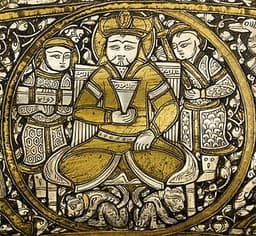
Baybars
Emperor · Medieval
63.8Total
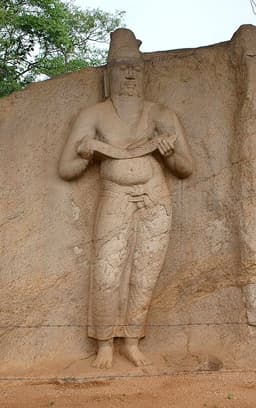
Parakramabahu I
Emperor · Medieval
66.1Total
Basic Information
Born
1223
1123
Died
1277
1186
Era
Medieval
Medieval
Nationality
Egypt
Sri Lanka
Occupation
Emperor
Emperor
Civilization
Middle Eastern
Indian
Score Comparison
Military (10%)
85.0
82.0
Political (20%)
70.0
72.0
Influence (20%)
55.0
61.0
Legacy (20%)
52.0
52.0
Leadership (15%)
72.0
82.0
Strategy (15%)
72.0
65.4
TOTAL
63.8
66.1
Baybars — Complete Timeline
1260 AD
Battle of Ain Jalut (1260)War◆ Major
Baybars served as a key commander under Qutuz at the Battle of Ain Jalut. He led the vanguard and played a crucial role in the Mamluk victory over the Mongols. This battle established his reputation as a military leader.
Mongol InvasionBattleMamluk Victory
Impact: globalconstructive
Accession as Sultan (1260)Political Action◆ Major
After assassinating Qutuz, Baybars proclaimed himself Sultan of Egypt. He was accepted by the Mamluk commanders and the Abbasid Caliph. His reign began a period of Mamluk dominance in the Middle East, lasting for decades.
SuccessionMamluk SultanateAssassination
Impact: regional
1265 AD
Campaigns against the Crusader States (1260s-1270s)War◆ Major
Baybars launched a series of campaigns against the remaining Crusader states in the Levant. He captured key fortresses including Arsuf (1265), Safed (1266), Jaffa (1268), and Antioch (1268). These victories reduced Crusader territory to a few coastal enclaves.
Crusader WarsConquestMamluk Expansion
Impact: regionaldestructive
1277 AD
Defeat of the Mongols at Elbistan (1277)War◆ Major
Baybars defeated a Mongol army at the Battle of Elbistan in Anatolia. He invaded the Seljuk Sultanate of Rum, which was under Mongol suzerainty. Although a tactical victory, Baybars could not hold Anatolia and returned to Syria.
Mongol WarsBattleAnatolia
Impact: regionalconstructive
Death of Baybars (1277)Other◆ Major
Baybars died in Damascus, possibly from poisoning or illness. His death was kept secret for a time to prevent unrest. He was succeeded by his son Al-Said Barakah. Baybars' reign is considered the peak of the early Mamluk Sultanate.
DeathSuccessionMamluk Sultanate
Impact: regionaltragic
Parakramabahu I — Complete Timeline
1153 AD
Unification of Sri LankaWar
Parakramabahu I unified the entire island of Sri Lanka under his rule after a series of military campaigns. He defeated the rulers of Ruhuna and other regional kingdoms, ending a period of fragmentation.
Impact: national
1160 AD
Construction of Parakrama SamudraOther◆ Major
Parakramabahu I constructed the Parakrama Samudra, a massive man-made sea of interconnected tanks and canals near Polonnaruwa. This irrigation system, covering over 5,000 acres, was a major engineering achievement.
Impact: regionalconstructive
1165 AD
Invasion of BurmaWar◆ Major
Parakramabahu I launched a naval invasion of Burma (Pagan Kingdom) in retaliation for a trade dispute. The Sinhalese fleet captured the port of Kusumiya and sacked the city, demonstrating Sri Lanka's naval power.
Impact: regional
Reform of the Buddhist SanghaReform◆ Major
Parakramabahu I convened a council to purify the Buddhist Sangha. He expelled corrupt monks and re-established discipline, strengthening Theravada Buddhism in Sri Lanka.
Impact: nationalconstructive
1170 AD
Construction of Polonnaruwa VatadageCultural◆ Major
Parakramabahu I built the Polonnaruwa Vatadage, a circular relic house for the Tooth Relic of the Buddha. This structure is considered a masterpiece of Sinhalese architecture.
Impact: nationalconstructive
Expert Analysis
Baybars vs Parakramabahu I
# The Lion and the Sultan: Parakramabahu I and Baybars Compared
On a sweltering afternoon in 1165, the fleet of Parakramabahu I sailed from Sri Lanka’s shores, bound for the distant coast of Burma. Half a world away, in 1260, a slave-soldier named Baybars led the vanguard of a Mamluk army into the Valley of Ain Jalut, where the fate of the Islamic world hung in the balance. One king sought to avenge a trade dispute; the other, to halt the Mongol horde. Both succeeded. Yet the trajectories of their reigns—and their legacies—could not be more different.
Origins
Parakramabahu I was born in 1123 into the royal bloodline of the Sinhalese kingdom. His world was one of irrigation canals, Buddhist monasteries, and a fractured island where rival princes vied for power. He grew up surrounded by the ruins of Anuradhapura’s ancient glory and the living memory of a once-unified Lanka. His ambition was not merely to rule but to restore.
Baybars, born around 1223, came from a different world entirely—the Kipchak steppes north of the Black Sea. Captured as a boy by Mongol raiders, he was sold into slavery, passed from hand to hand, and eventually purchased by the Ayyubid sultan of Egypt. He never saw his homeland again. His rise was not a matter of birthright but of survival, cunning, and the brutal meritocracy of the Mamluk military.
Their origins shaped their ends. Parakramabahu inherited a vision of unity rooted in Buddhist kingship and a golden past. Baybars inherited nothing but his own strength.
Rise to Power
Parakramabahu’s path to power was a long civil war. From 1153 onward, he fought to subdue the regional rulers of the island. He was relentless: he besieged fortresses, burned rival strongholds, and forged alliances with local chieftains. By 1153, he had unified Sri Lanka under his rule. It was a triumph of patience and persistence, not speed.
Baybars rose through blood and betrayal. At the Battle of Ain Jalut in 1260, he commanded the vanguard that shattered the Mongol advance—a victory that saved Egypt and the Islamic heartland. But the sultan Qutuz, who had led the campaign, proved a poor master. Later that year, Baybars assassinated Qutuz in a hunting tent and declared himself sultan. The Mamluk commanders accepted him, not out of love, but because he had proven indispensable. His rise was swift, ruthless, and final.
Leadership & Governance
Once in power, Parakramabahu set about building. His greatest achievement was the Parakrama Samudra, a vast artificial sea of interconnected tanks and canals near Polonnaruwa, completed in 1160. This irrigation system turned dry plains into rice fields and sustained a population for centuries. He also reformed the Buddhist Sangha, expelling corrupt monks and re-establishing discipline through a council in 1165. His rule was comprehensive: he commanded armies, dug reservoirs, and purified temples.
Baybars governed through iron discipline and strategic brilliance. He reformed the Mamluk military, creating a professional slave-soldier corps loyal to the sultan alone. He built fortresses, improved the postal system, and secured Egypt’s borders. But his genius lay in war. Between 1265 and 1271, he systematically dismantled the Crusader states, capturing key fortresses like Caesarea, Arsuf, and the mighty Krak des Chevaliers. In 1277, he invaded Anatolia and defeated a Mongol army at Elbistan, proving that the Mongols could be beaten on their own ground.
Both were reformers, but Parakramabahu’s reforms were inward-looking—agricultural and spiritual. Baybars’ reforms were outward-facing—military and strategic. One built for his people; the other built for his survival.
Triumph & Tragedy
Parakramabahu’s greatest moment was the completion of the Parakrama Samudra, a monument not to war but to water. Yet his invasion of Burma in 1165, though successful, was a costly overreach. The fleet returned, but the island’s resources were stretched. His tragedy was that his unification did not outlast him. After his death in 1186, the kingdom fragmented again.
Baybars’ triumph was Ain Jalut—a victory that halted the Mongol tide. His tragedy was his death in 1277, possibly by poisoning, at the height of his power. His body was kept secret for weeks to prevent rebellion. The sultan who had never lost a battle died in a bed, not on a field.
Character & Destiny
Parakramabahu was a builder and a unifier. His personality was methodical, patient, and devout. He believed in order—in the Sangha, in the irrigation canals, in the hierarchy of kingship. His destiny was to restore a golden age that had already passed.
Baybars was a survivor and a destroyer. His personality was cunning, violent, and pragmatic. He trusted no one, not even his own commanders. His destiny was to create a new order from the ashes of old empires—Crusader, Mongol, and Ayyubid alike.
Legacy
Parakramabahu is remembered as the greatest king of medieval Sri Lanka. The Parakrama Samudra still irrigates fields today. His name is carved into the stone of Polonnaruwa. But his political legacy was fragile.
Baybars is remembered as the sultan who saved Islam from the Mongols and drove the Crusaders into the sea. His military reforms shaped the Mamluk state for centuries. His name is a byword for resistance.
One built a sea; the other stopped a storm. Both changed their worlds, but only Baybars changed the course of history.
Conclusion
Standing at the edge of the Parakrama Samudra, watching the water stretch to the horizon, one feels the weight of a king’s ambition turned to stone and water. Standing in the shadow of Krak des Chevaliers, one feels the weight of a sultan’s ambition turned to rubble and dust. Parakramabahu and Baybars were men of their times—one shaped by the dream of unity, the other by the nightmare of invasion. Their differences are not merely personal; they are the differences between a civilization that built for eternity and one that fought for survival. In the end, both succeeded. But only one left a legacy that still flows.
Rankings
🥇
Parakramabahu ILeader
Mil: 82.0Pol: 72.0Inf: 61.0
66.1
🥈
Baybars
Mil: 85.0Pol: 70.0Inf: 55.0
63.8
+2.3 behind
How This Comparison Works
Algorithm
Each figure is scored on 6 dimensions (0—100 scale) based on structured historical data: Military (10%), Political (20%), Influence (20%), Legacy (20%), Leadership (15%), Strategy (15%). The weighted total produces the final ranking.
Data Sources
Scores are computed from structured sub-indicators in the database. Scale factors adjust for era (Ancient ×0.85, Modern ×1.0) and civilization size (Eastern ×1.05, Other ×0.80) to account for differences in population and military scale.
Maximum 3 Figures
Comparisons are limited to 2—3 figures to ensure readability and statistical meaningfulness.
Error Margins
±5 points per dimension — Sub-scores are derived from historical records with inherent uncertainty. Two figures within 5 points on a dimension should be considered roughly equivalent in that area.
Total Score Accuracy
±3 points overall — The weighted combination of 6 dimensions produces a total score with approximately ±3 points of uncertainty. Differences of less than 3 points are not statistically significant— the figures are effectively tied.
Known Limitations
- Historical records are incomplete and uneven across civilizations
- Figures from oral-tradition societies may be underrepresented
- Occupation labels can misclassify multi-role figures
- Scores measure capability and impact, not moral character
- Quantitative scoring is a comparison tool, not absolute truth
Capability Radar
Military (10%) — Battles & Warfare
Battles
85
75
Win Rate
90
80
Expansion
80
70
Political (20%) — Governance & Reform
Reform
80
80
Diplomacy
78
70
Economy
72
75
Influence (20%) — Cultural & Global Reach
Cultural
65
65
Global
65
40
Legacy (20%) — Historical Impact
Historical
75
70
Longevity
60
60
Leadership (15%) — Power & Stability
Tenure
75
85
Stability
70
80
Strategy (15%) — Tactics & Innovation
Strategy
85
75
Tactics
88
70
Reform
82
65
Similar Comparisons
Comments & Discussion
SultanSlayer6/16/2026
Baybars was the real deal—a slave who crushed the Mongols at Ain Jalut in 1260, saving Cairo and the entire Islamic world. Parakramabahu's Burmese campaign was a glorified trade war over elephants and cinnamon. One stopped a continental apocalypse; the other threw a regional tantrum. Ain Jalut changed history; Polonnaruwa's conquests barely registered outside Sri Lanka. Baybars is iconic, Parakramabahu is parochial.
数据屠夫6/16/2026
别吹Parakramabahu的统一神话了,他打着复兴Anuradhapura的旗号,实则在1165年耗资耗尽国库去缅甸抢几头大象。而Baybars用一万骑兵在Ain Jalut创造军事奇迹,更建立了一个持续百年的马穆鲁克王朝。数据不会说谎:Parakramabahu的远征记载模糊,战果有限;Baybars的战役有阿拉伯和蒙古双重史料印证。一个是地区闹剧,一个是世界历史转折点。
ClassicsQuibbler6/16/2026
Comparing them is comparing apples and oranges—but apples win. Baybars' Mamluk system was a military meritocracy that promoted talent over birth, a radical idea in 1260. Parakramabahu's Buddhist kingship model was old hat, recycling tropes from Ashoka. Baybars built a state that endured; Parakramabahu's Lanka collapsed within decades after his death. Innovation beats nostalgia every time. In the long run, Baybars' influence looms larger across Eurasia.
历史较真6/16/2026
你们这些粉丝全搞混了重点!Baybars再牛也就是个军事强人,而Parakramabahu完成了真正的国家基建革命。他在Polonnaruwa修建了Parakrama Samudra灌溉系统,至今仍在使用,养活了几百万人。Baybars留下的是战功和政权,Parakramabahu留下的是石头和水的永恒遗产。一个城市供水系统的寿命远超任何王朝。比霸业?比谁更持久!
SandAndSea6/16/2026
Both were products of their environments—Parakramabahu the island king of canals, Baybars the steppe-born sultan of sand. But Baybars faced existential threats: Mongols and Crusaders. Parakramabahu fought petty dynastic squabbles and a Burmese king over tariffs. Scale matters. Baybars reshaped the Middle East for centuries; Parakramabahu barely dented Southeast Asia. If we're judging impact, the slave-sultan dwarfs the Sinhalese restorer. Sorry, Lanka.