Loading...
Baybars vs Dantidurga
Baybars leads by 5.1 pts · 2 figures compared
…
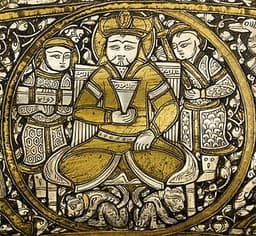
Baybars
Emperor · Medieval
63.8Total
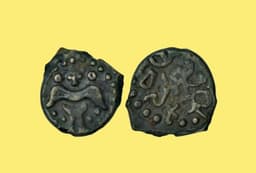
Dantidurga
Emperor · Medieval
58.7Total
Basic Information
Born
1223
735
Died
1277
756
Era
Medieval
Medieval
Nationality
Egypt
India
Occupation
Emperor
Emperor
Civilization
Middle Eastern
Indian
Score Comparison
Military (10%)
85.0
67.5
Political (20%)
70.0
68.0
Influence (20%)
55.0
56.4
Legacy (20%)
52.0
50.0
Leadership (15%)
72.0
65.7
Strategy (15%)
72.0
52.5
TOTAL
63.8
58.7
Baybars — Complete Timeline
1260 AD
Battle of Ain Jalut (1260)War◆ Major
Baybars served as a key commander under Qutuz at the Battle of Ain Jalut. He led the vanguard and played a crucial role in the Mamluk victory over the Mongols. This battle established his reputation as a military leader.
Mongol InvasionBattleMamluk Victory
Impact: globalconstructive
Accession as Sultan (1260)Political Action◆ Major
After assassinating Qutuz, Baybars proclaimed himself Sultan of Egypt. He was accepted by the Mamluk commanders and the Abbasid Caliph. His reign began a period of Mamluk dominance in the Middle East, lasting for decades.
SuccessionMamluk SultanateAssassination
Impact: regional
1265 AD
Campaigns against the Crusader States (1260s-1270s)War◆ Major
Baybars launched a series of campaigns against the remaining Crusader states in the Levant. He captured key fortresses including Arsuf (1265), Safed (1266), Jaffa (1268), and Antioch (1268). These victories reduced Crusader territory to a few coastal enclaves.
Crusader WarsConquestMamluk Expansion
Impact: regionaldestructive
1277 AD
Defeat of the Mongols at Elbistan (1277)War◆ Major
Baybars defeated a Mongol army at the Battle of Elbistan in Anatolia. He invaded the Seljuk Sultanate of Rum, which was under Mongol suzerainty. Although a tactical victory, Baybars could not hold Anatolia and returned to Syria.
Mongol WarsBattleAnatolia
Impact: regionalconstructive
Death of Baybars (1277)Other◆ Major
Baybars died in Damascus, possibly from poisoning or illness. His death was kept secret for a time to prevent unrest. He was succeeded by his son Al-Said Barakah. Baybars' reign is considered the peak of the early Mamluk Sultanate.
DeathSuccessionMamluk Sultanate
Impact: regionaltragic
Dantidurga — Complete Timeline
753 AD
Founding of the Rashtrakuta DynastyPolitical Action
Dantidurga overthrew his overlord, the Chalukya king Kirtivarman II, in a coup. He established the Rashtrakuta dynasty as the dominant power in the Deccan, with Manyakheta as his capital. This marked the beginning of a new imperial era.
Impact: regionalconstructive
754 AD
Performance of the Hiranyagarbha RitualCultural
Dantidurga performed the Hiranyagarbha (golden womb) ritual, a Vedic ceremony that symbolically rebirthed him as a Kshatriya. This legitimized his rule by claiming a higher caste status, as the Rashtrakutas were originally of humble origin.
Impact: nationalconstructive
755 AD
Conquest of MalwaWar◆ Major
Dantidurga led a military campaign into Malwa, defeating the Gurjara-Pratihara ruler Nagabhata I. He annexed the region, expanding Rashtrakuta territory northward. This victory established Rashtrakuta influence in central India.
Impact: regionaldestructive
Expert Analysis
Baybars vs Dantidurga
# The Throne and the Sword
On a dusty battlefield in Anatolia, in the spring of 1277, Sultan Baybars of Egypt watched his Mamluk cavalry shatter a Mongol army that had terrorized the Islamic world for a generation. Half a world away and two decades earlier, in the Deccan plateau of India, another man had performed a curious ritual: Dantidurga, a former feudatory, had himself symbolically reborn from a golden womb, declaring himself a Kshatriya warrior-king after overthrowing his Chalukya overlord. Both men seized power through violence. Both founded dynasties. But one built an empire that reshaped the Middle East, while the other launched a dynasty that would dominate India for two centuries—yet in vastly different ways. The question is not merely who was greater, but what their divergent paths tell us about the nature of power itself.
Origins
Dantidurga was born around 735 into a world of intricate hierarchies. The Rashtrakutas, his clan, served as feudatories under the Chalukya dynasty of Badami, a powerful kingdom that controlled much of the Deccan. He was a product of the medieval Indian political order, where legitimacy flowed from ritual purity, caste status, and the patronage of Brahmins. His people were likely of Kannada origin, and their rise was a story of regional ambition within the complex web of Indian dynastic politics.
Baybars, by contrast, was born around 1223 on the steppes of the Crimea, into a world without hierarchy—only survival. He was a Kipchak Turk, captured as a slave and sold in the markets of Syria. His early life was defined by displacement, violence, and the brutal logic of the Mamluk system, where slave-soldiers could rise to become sultans. Where Dantidurga inherited a place in a social order, Baybars was thrown into chaos and had to forge his own.
Rise to Power
Dantidurga’s path was that of a calculated rebel. In 753, he turned on his Chalukya overlord, Kirtivarman II, and overthrew him in a coup that founded the Rashtrakuta dynasty. But he did not simply seize power—he legitimized it. In 754, he performed the Hiranyagarbha ritual, a Vedic ceremony in which he was symbolically born from a golden womb, thereby claiming Kshatriya (warrior) status. This was a masterstroke of political theater: in a world where caste and ritual purity mattered, Dantidurga rewrote his own lineage through religion.
Baybars’s rise was bloodier and more direct. He first emerged as a commander under Sultan Qutuz, leading the vanguard at the Battle of Ain Jalut in 1260, where the Mamluks crushed the Mongols for the first time. But later that year, Baybars assassinated Qutuz on a hunting trip—a moment of cold ambition that would define his reign. He then proclaimed himself Sultan, and the Mamluk commanders accepted him. There was no golden womb, no ritual rebirth. There was only the sword and the loyalty of fellow soldiers.
Leadership & Governance
As a ruler, Dantidurga was a conqueror who expanded his domain through military campaigns, including the conquest of Malwa in 755, where he defeated the Gurjara-Pratihara ruler Nagabhata I. But his governance was rooted in Indian traditions: he patronized Brahmins, performed Vedic sacrifices, and presented himself as a righteous king. His military and political scores—57.7 and 52.3 respectively—reflect a competent but not extraordinary leader. His true strength was as a founder, not a ruler.
Baybars was a different creature entirely. With military and political scores of 67.8 and 75.7, and a leadership score of 80.2, he was a master of both war and statecraft. He reorganized the Mamluk state, creating a professional army, a postal system, and a network of spies. He campaigned relentlessly against the Crusader states, capturing key fortresses like Caesarea and Arsuf in the 1260s and 1270s. And he faced the Mongols again at Elbistan in 1277, defeating them in a battle that shook the Seljuk Sultanate of Rum. His strategy score of 71.6 reflects a mind that thought in terms of logistics, alliances, and long-term threats.
Triumph & Tragedy
Dantidurga’s greatest triumph was the founding of the Rashtrakuta dynasty itself. He established a line that would rule for over two centuries and produce some of India’s most remarkable rulers, including the great Amoghavarsha. But his tragedy was his brevity: he died in 756, after only three years as emperor. He never saw the full flowering of his creation.
Baybars’s triumph was the defense of the Islamic world against two existential threats: the Mongols and the Crusaders. By the time of his death in 1277, he had reduced the Crusader states to a handful of coastal cities and had checked Mongol expansion into Syria and Anatolia. But his tragedy was also personal: he died suddenly in Damascus, possibly poisoned, at the age of 54. His death was kept secret for weeks to prevent unrest—a sign of how indispensable he had become.
Character & Destiny
Dantidurga’s character is that of a pragmatist who understood the power of symbols. He did not merely conquer; he legitimized. The Hiranyagarbha ritual was not just a religious act—it was a political declaration that the old order had been reborn in him. He was a builder of foundations.
Baybars was a master of the knife and the siege. He was ruthless, ambitious, and brilliant, but also paranoid—as his assassination of Qutuz suggests. He ruled through force and fear, but also through loyalty and reward. He was a warrior-king in the truest sense: his destiny was forged in battle, and his character was shaped by the constant threat of betrayal.
Legacy
Dantidurga’s legacy is the Rashtrakuta dynasty itself, which became one of the great powers of medieval India. His influence score of 73.4 and legacy score of 65.8 reflect a founder who set in motion a lineage that would shape the Deccan for centuries. But his personal achievements are overshadowed by his successors.
Baybars’s legacy is more immediate and more global. He is remembered as the greatest Mamluk sultan, the man who broke the Mongol myth of invincibility and dismantled the Crusader states. His influence score of 72.3 and legacy score of 69.3 are comparable to Dantidurga’s, but his impact was felt across three continents. He is a figure of legend in the Islamic world, a symbol of resistance and resilience.
Conclusion
What separates these two founders is not merely time or place, but the nature of the worlds they inhabited. Dantidurga operated in a civilization where power needed to be cloaked in ritual and divine sanction. Baybars operated in a world where power was naked and brutal, where legitimacy came from the sword alone. Both succeeded. Both founded dynasties. But Dantidurga built a house, while Baybars built a fortress. One gave his people a lineage; the other gave his people a shield. In the end, both did what their eras demanded—and that is perhaps the deepest measure of historical greatness.
Rankings
🥇
BaybarsLeader
Mil: 85.0Pol: 70.0Inf: 55.0
63.8
🥈
Dantidurga
Mil: 67.5Pol: 68.0Inf: 56.4
58.7
+5.1 behind
How This Comparison Works
Algorithm
Each figure is scored on 6 dimensions (0—100 scale) based on structured historical data: Military (10%), Political (20%), Influence (20%), Legacy (20%), Leadership (15%), Strategy (15%). The weighted total produces the final ranking.
Data Sources
Scores are computed from structured sub-indicators in the database. Scale factors adjust for era (Ancient ×0.85, Modern ×1.0) and civilization size (Eastern ×1.05, Other ×0.80) to account for differences in population and military scale.
Maximum 3 Figures
Comparisons are limited to 2—3 figures to ensure readability and statistical meaningfulness.
Error Margins
±5 points per dimension — Sub-scores are derived from historical records with inherent uncertainty. Two figures within 5 points on a dimension should be considered roughly equivalent in that area.
Total Score Accuracy
±3 points overall — The weighted combination of 6 dimensions produces a total score with approximately ±3 points of uncertainty. Differences of less than 3 points are not statistically significant— the figures are effectively tied.
Known Limitations
- Historical records are incomplete and uneven across civilizations
- Figures from oral-tradition societies may be underrepresented
- Occupation labels can misclassify multi-role figures
- Scores measure capability and impact, not moral character
- Quantitative scoring is a comparison tool, not absolute truth
Capability Radar
Military (10%) — Battles & Warfare
Battles
85
60
Win Rate
90
65
Expansion
80
65
Political (20%) — Governance & Reform
Reform
80
45
Diplomacy
78
55
Economy
72
50
Influence (20%) — Cultural & Global Reach
Cultural
65
40
Global
65
30
Legacy (20%) — Historical Impact
Historical
75
55
Longevity
60
50
Leadership (15%) — Power & Stability
Tenure
75
40
Stability
70
45
Strategy (15%) — Tactics & Innovation
Strategy
85
60
Tactics
88
55
Reform
82
40
Similar Comparisons
Comments & Discussion
BAYBARS_THE_BUTCHER6/16/2026
Baybars didn't just beat the Mongols at Elbistan—he broke their myth of invincibility. His Mamluk cavalry used feigned retreat tactics that would make a Mongol general weep with envy. Meanwhile, Dantidurga's golden womb ritual? That's theater, not strategy. Baybars faced the most fearsome military machine of the 13th century and dismantled it. Dantidurga overthrew a declining dynasty with ritual flair. Real power comes from defeating monsters, not wearing gold.
GOLDEN_WOMB_SKEPTIC6/16/2026
那个金胎仪式根本就是政治作秀,跟现代网红买粉没啥区别。达提杜尔迦用梵化手段包装自己,本质上是在讨好婆罗门阶层。而拜巴尔斯从奴隶杀到苏丹,靠的是实打实的军事能力。一个靠血统故事,一个靠战场尸山。别拿仪式感跟真正的铁血统治相提并论。
CLASSICS_SCHOLAR_DELENDA6/16/2026
Dantidurga's hiranyagarbha ritual wasn't just show—it was a masterclass in political theology. By having Brahmins symbolically rebirth him, he rewrote his caste narrative and legitimized Rashtrakuta rule for 200 years. Baybars' military genius is undeniable, but he built on Mamluk slave-soldier structures already in place. One man created legitimacy from ritual; the other seized power through force. Which system endured longer? India still references Rashtrakuta architecture; nobody names their
DATA_SKEPTIC_ZH6/16/2026
别吹拜巴尔斯了。他击败的所谓"蒙古军队"在埃尔比斯坦战役中只有不到两万人,而且不是旭烈兀的主力。而达提杜尔迦推翻的遮娄其王朝当时控制着半个德干高原。你们光看拜巴尔斯打了胜仗,怎么不看他死后马穆鲁克王朝迅速陷入内乱?达提杜尔迦建立的王朝持续了两百年,数据不会撒谎。
REVISIONIST_HAMMER6/16/2026
This comparison is Eurocentric garbage—why do we keep measuring everything against Mongol battles? Dantidurga wasn't some footnote; he reshaped Indian political geography. The Rashtrakutas built the Kailasa temple at Ellora, one of the greatest rock-cut monuments on Earth. Baybars built what? A few mosques and a postal system. Power isn't just about who kills more Mongols. Cultural endurance matters. Show me a Mamluk structure that makes people weep, and then we'll talk.