Loading...
Bayanchur Khan vs John II of Avesnes
Bayanchur Khan leads by 16.5 pts · 2 figures compared
…

Bayanchur Khan
Emperor · Medieval
61.4Total
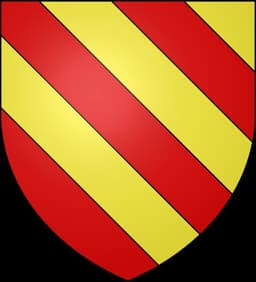
John II of Avesnes
Emperor · Medieval
44.9Total
Basic Information
Born
713
1248
Died
759
1304
Era
Medieval
Medieval
Nationality
Uyghur Khaganate
Hainaut
Occupation
Emperor
Emperor
Civilization
Eastern
Western
Score Comparison
Military (10%)
61.7
45.0
Political (20%)
72.0
35.1
Influence (20%)
58.3
51.0
Legacy (20%)
52.0
40.8
Leadership (15%)
72.0
55.3
Strategy (15%)
60.7
38.6
TOTAL
61.4
44.9
Bayanchur Khan — Complete Timeline
747 AD
Establishment of the Uyghur Khaganate as a Major PowerPolitical Action◆ Major
Bayanchur Khan consolidated Uyghur control over the former Gokturk territories, establishing the Uyghur Khaganate as the dominant steppe power. He built a capital at Ordu-Baliq and organized the Uyghur state on a model combining steppe traditions with Chinese administrative practices.
State BuildingCapitalUyghur Empire
Impact: regionalconstructive
750 AD
Military Campaigns against the Kyrgyz and KarluksWar
Bayanchur Khan led campaigns against the Kyrgyz and Karluk tribes to secure the northern and western borders of the Uyghur Khaganate. He defeated these groups and incorporated them into the Uyghur confederation, expanding Uyghur territory.
ExpansionMilitary CampaignSteppe Tribes
Impact: regional
756 AD
Alliance with Tang China against the An Lushan RebellionPolitical Action◆ Major
Bayanchur Khan sent Uyghur cavalry to aid the Tang dynasty in suppressing the An Lushan Rebellion. The Uyghur forces helped recapture the Tang capital Chang'an and Luoyang, cementing the Uyghur-Tang alliance.
AllianceAn Lushan RebellionTang Dynasty
Impact: regionalconstructive
John II of Avesnes — Complete Timeline
1280 AD
Inherited County of Hainaut and HollandPolitical Action◆ Major
John II of Avesnes inherited the County of Hainaut from his mother Margaret II of Flanders, and later the County of Holland from his father John I of Avesnes. This united the two counties under the Avesnes dynasty.
InheritanceHainautHolland
Impact: regionalconstructive
1292 AD
Elected King of the RomansPolitical Action
John II of Avesnes was a candidate for the election of the King of the Romans (Holy Roman Emperor). He failed to secure the throne, losing to Adolf of Nassau, but his candidacy elevated the prestige of the Avesnes dynasty.
ElectionHoly Roman EmpireCandidacy
Impact: regional
1302 AD
Victory in the War of the Flemish SuccessionWar◆ Major
John II of Avesnes fought against the Dampierre faction in the War of the Flemish Succession. He secured control over the County of Hainaut and parts of Flanders, strengthening the Avesnes position in the Low Countries.
WarFlandersAvesnes
Impact: regionalconstructive
Expert Analysis
Origins
Bayanchur Khan (born c. 713) was a member of the Uyghur tribal confederation, which rose to power after the collapse of the Second Turkic Khaganate. He came from the Yaglakar clan, the ruling dynasty of the Uyghurs. Little is known of his early life, but he likely received training in steppe warfare and diplomacy. The Uyghurs were a nomadic people inhabiting the Orkhon Valley in present-day Mongolia, and Bayanchur grew up in a world of tribal alliances and conflicts with the Tang Empire.
John II of Avesnes (born 1247) was the son of John I of Avesnes and Margaret II of Flanders. He inherited the County of Hainaut from his mother and the County of Holland from his father. The Avesnes family was a noble house in the Low Countries, often embroiled in the Flemish succession disputes with the Dampierre family. John II grew up in the political intrigues of medieval Europe, with a focus on feudal alliances and territorial claims.
Rise to Power
Bayanchur Khan became khagan of the Uyghur Khaganate in 747, after the death of his father, Kutluk Bilge Kol. He quickly consolidated power by defeating rival tribes and expanding Uyghur territory. His major breakthrough came during the An Lushan Rebellion (755-763), when the Tang dynasty requested Uyghur military aid. Bayanchur sent cavalry forces that helped recapture the Tang capital Chang'an in 757. This alliance elevated the Uyghur Khaganate to a major power, granting them trade privileges and tribute from the Tang.
John II of Avesnes inherited his titles in the 1280s. His rise was marked by the War of the Flemish Succession (1244-1254), fought between the Avesnes and Dampierre families over the counties of Flanders and Hainaut. John II secured control over Hainaut after the Battle of Westkapelle (1253), where his father defeated the Dampierre forces. However, John II failed to gain the title of King of the Romans in 1292, losing to Adolf of Nassau. His political influence remained limited to the Low Countries.
Leadership & Governance
Bayanchur Khan ruled as an absolute monarch over a nomadic empire. He centralized authority by building a capital at Ordu-Baliq on the Orkhon River, with fortified palaces and administrative buildings. He adopted Manichaeism as the state religion in 763, which was a unique move among steppe empires. He also maintained close ties with the Tang, securing a marriage alliance with a Tang princess. His governance focused on military expansion and trade control along the Silk Road.
John II of Avesnes governed as a feudal count, relying on vassals and charters. He faced constant conflicts with the Dampierre family and the French crown. He introduced administrative reforms in Holland and Hainaut, such as standardizing coinage and promoting trade. However, his political score of 35.1 reflects his limited success in expanding his power beyond his inherited territories. He failed to secure the imperial throne, which constrained his influence.
Triumph & Tragedy
Bayanchur Khan's greatest triumph was his alliance with Tang China during the An Lushan Rebellion, which saved the Tang dynasty and brought immense wealth to the Uyghurs. He also successfully expanded the khaganate's borders. His tragic failure was the conversion to Manichaeism, which alienated many traditionalist Uyghur nobles and contributed to the khaganate's later decline. The religion did not spread widely, and the Uyghurs eventually abandoned it after the khaganate fell.
John II of Avesnes' triumph was securing the County of Hainaut after the War of the Flemish Succession, which solidified Avesnes control. His tragedy was his inability to become King of the Romans, which limited his legacy. He also faced revolts in Holland and had to cede some territories to France.
Character & Destiny
Bayanchur Khan was a pragmatic strategist, scoring 60.7 in strategy. He used diplomacy and military force to secure his position. His adoption of Manichaeism shows a willingness to innovate, but it also reveals a disconnect from his people's traditions. His leadership score of 72.0 indicates effective command, but his influence score of 58.3 suggests limited long-term impact.
John II of Avesnes was a cautious nobleman, scoring 55.3 in leadership and 38.6 in strategy. He preferred legal and diplomatic means over warfare. His political score of 35.1 reflects his inability to rise above regional politics. He was overshadowed by more powerful contemporaries like Philip IV of France.
Legacy
Bayanchur Khan is remembered as one of the greatest Uyghur khagans. His alliance with Tang China made the Uyghur Khaganate a dominant force in Central Asia. The adoption of Manichaeism is a unique historical footnote. However, his legacy score of 52.0 reflects the eventual collapse of the khaganate in 840. The Uyghurs later migrated and assimilated, but Bayanchur's rule is a key chapter in their history.
John II of Avesnes has a legacy score of 40.8. He is remembered as a competent count but not a major historical figure. The Avesnes dynasty continued in Hainaut and Holland until the 15th century, but John II's personal impact was limited. He failed to achieve broader influence.
Conclusion
Bayanchur Khan had a greater impact than John II of Avesnes, with a total score of 61.4 vs 44.9. Bayanchur's actions shaped the fate of the Tang dynasty and the Uyghur Khaganate, while John II's influence was confined to regional feudal politics. Bayanchur's alliance with Tang China and his adoption of Manichaeism were transformative events, whereas John II's achievements were minor in comparison. The score gap of 16.5 points reflects this disparity. Bayanchur Khan is the clear winner in historical significance.
Rankings
🥇
Bayanchur KhanLeader
Mil: 61.7Pol: 72.0Inf: 58.3
61.4
🥈
John II of Avesnes
Mil: 45.0Pol: 35.1Inf: 51.0
44.9
+16.5 behind
How This Comparison Works
Algorithm
Each figure is scored on 6 dimensions (0—100 scale) based on structured historical data: Military (10%), Political (20%), Influence (20%), Legacy (20%), Leadership (15%), Strategy (15%). The weighted total produces the final ranking.
Data Sources
Scores are computed from structured sub-indicators in the database. Scale factors adjust for era (Ancient ×0.85, Modern ×1.0) and civilization size (Eastern ×1.05, Other ×0.80) to account for differences in population and military scale.
Maximum 3 Figures
Comparisons are limited to 2—3 figures to ensure readability and statistical meaningfulness.
Error Margins
±5 points per dimension — Sub-scores are derived from historical records with inherent uncertainty. Two figures within 5 points on a dimension should be considered roughly equivalent in that area.
Total Score Accuracy
±3 points overall — The weighted combination of 6 dimensions produces a total score with approximately ±3 points of uncertainty. Differences of less than 3 points are not statistically significant— the figures are effectively tied.
Known Limitations
- Historical records are incomplete and uneven across civilizations
- Figures from oral-tradition societies may be underrepresented
- Occupation labels can misclassify multi-role figures
- Scores measure capability and impact, not moral character
- Quantitative scoring is a comparison tool, not absolute truth
Capability Radar
Military (10%) — Battles & Warfare
Battles
65
25
Win Rate
70
30
Expansion
70
30
Political (20%) — Governance & Reform
Reform
60
25
Diplomacy
80
35
Economy
65
30
Influence (20%) — Cultural & Global Reach
Cultural
55
20
Global
55
15
Legacy (20%) — Historical Impact
Historical
60
25
Longevity
50
20
Leadership (15%) — Power & Stability
Tenure
75
40
Stability
70
30
Strategy (15%) — Tactics & Innovation
Strategy
65
25
Tactics
60
20
Reform
55
15
Similar Comparisons
Comments & Discussion
No comments yet. Be the first to share your thoughts!