Loading...
Alexios I Komnenos vs John II of Avesnes
Alexios I Komnenos leads by 33.5 pts · 2 figures compared
…
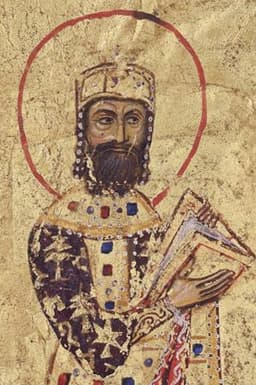
Alexios I Komnenos
Emperor · Medieval
78.4Total
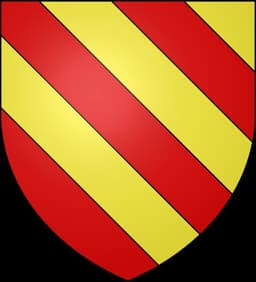
John II of Avesnes
Emperor · Medieval
44.9Total
Basic Information
Born
1048
1248
Died
1118
1304
Era
Medieval
Medieval
Nationality
Byzantine Empire
Hainaut
Occupation
Emperor
Emperor
Civilization
Western
Western
Score Comparison
Military (10%)
61.7
45.0
Political (20%)
78.0
35.1
Influence (20%)
88.0
51.0
Legacy (20%)
80.0
40.8
Leadership (15%)
78.0
55.3
Strategy (15%)
68.0
38.6
TOTAL
78.4
44.9
Alexios I Komnenos — Complete Timeline
1081 AD
Battle of DyrrhachiumWar◆ Major
Alexios I Komnenos was defeated by the Norman army under Robert Guiscard at Dyrrhachium. The Byzantine forces were routed, and Alexios barely escaped. This loss allowed the Normans to occupy much of the western Balkans, though Alexios later recovered some territory.
Norman InvasionDefeatBalkans
Impact: regionaltragic
1090 AD
Reforms of the Byzantine Military and EconomyReform◆ Major
Alexios I implemented a series of reforms to restore Byzantine power. He reorganized the army by relying more on foreign mercenaries, reformed the currency (the hyperpyron), and granted tax exemptions to the Church. These measures stabilized the empire after decades of decline.
Military ReformEconomic ReformKomnenian Restoration
Impact: nationalconstructive
1095 AD
Appeal to the West: Council of PiacenzaPolitical Action
Alexios I sent envoys to Pope Urban II at the Council of Piacenza, requesting military aid against the Seljuk Turks. This appeal contributed to Urban's call for the First Crusade at the Council of Clermont later that year, initiating the Crusader movement.
First CrusadePope Urban IISeljuk Turks
Impact: global
1097 AD
First Crusade: Siege of NicaeaWar◆ Major
Alexios I cooperated with the Crusader army to besiege and capture Nicaea from the Seljuk Turks. The city was surrendered to Byzantine control, and Alexios used the Crusaders to recover key territories in Anatolia, though tensions later arose over land claims.
First CrusadeNicaeaByzantine-Crusader Relations
Impact: regionalconstructive
John II of Avesnes — Complete Timeline
1280 AD
Inherited County of Hainaut and HollandPolitical Action◆ Major
John II of Avesnes inherited the County of Hainaut from his mother Margaret II of Flanders, and later the County of Holland from his father John I of Avesnes. This united the two counties under the Avesnes dynasty.
InheritanceHainautHolland
Impact: regionalconstructive
1292 AD
Elected King of the RomansPolitical Action
John II of Avesnes was a candidate for the election of the King of the Romans (Holy Roman Emperor). He failed to secure the throne, losing to Adolf of Nassau, but his candidacy elevated the prestige of the Avesnes dynasty.
ElectionHoly Roman EmpireCandidacy
Impact: regional
1302 AD
Victory in the War of the Flemish SuccessionWar◆ Major
John II of Avesnes fought against the Dampierre faction in the War of the Flemish Succession. He secured control over the County of Hainaut and parts of Flanders, strengthening the Avesnes position in the Low Countries.
WarFlandersAvesnes
Impact: regionalconstructive
Expert Analysis
Alexios I Komnenos vs John II of Avesnes
# The Emperor and the Count: Two Medieval Rulers Who Shaped Different Fates
On a summer day in 1081, Alexios I Komnenos stood on the battlefield of Dyrrhachium, watching his elite Varangian Guard—those axe-wielding Norse and English mercenaries—march into a trap set by the Norman Robert Guiscard. The Byzantine emperor, barely a year on the throne, saw his army disintegrate, the bodies of his finest soldiers littering the Albanian coast. Two centuries later, in 1302, John II of Avesnes would achieve what Alexios could not: a decisive victory in the War of the Flemish Succession, securing control over territories that his family had long coveted. One man founded a dynasty that would revive a dying empire; the other inherited a county and spent his life trying to become something more. Their stories reveal how the same medieval stage could produce vastly different dramas, driven by the accidents of birth, the weight of history, and the limits of ambition.
Origins
Alexios I was born in 1048 into the Komnenos family, a military clan that had already produced emperors and generals. The Byzantine Empire he entered was a civilization in crisis: the Battle of Manzikert in 1071 had shattered its Anatolian heartland, Norman adventurers were carving out kingdoms in southern Italy, and internal revolts had become a seasonal plague. Alexios grew up in a world where survival depended on cunning, alliances, and the willingness to betray before being betrayed. His education was that of a soldier and a courtier—he learned to read men as well as battlefields.
John II of Avesnes, born exactly two centuries later in 1248, inherited a different kind of inheritance. His mother, Margaret II of Flanders, ruled the County of Hainaut, while the Avesnes family had long contested control of Flanders and Holland with the rival Dampierre faction. John was born into a world of feudal politics, where power meant controlling castles, collecting taxes, and manipulating marriages. The grand imperial ambitions of Byzantium were alien to him; his horizon was defined by the Low Countries, a patchwork of counties and bishoprics where every river crossing was a border. Where Alexios dreamed of restoring Roman glory, John dreamed of securing a crown.
Rise to Power
Alexios’s path to the throne was forged in rebellion and civil war. In 1081, at age 33, he led a coup against the incompetent Emperor Nikephoros III Botaneiates, marching on Constantinople with an army of loyal soldiers and disgruntled aristocrats. The city’s gates opened not through siege but through negotiation—a pattern that would define his career. He was crowned emperor in the Hagia Sophia, but the crown was a poisoned gift: the treasury was empty, the army was shattered, and enemies surrounded the empire on every side.
John II’s rise was quieter, more predictable. When his mother died in 1280, he inherited the County of Hainaut. Later, through a complex web of marriages and deaths, he added the County of Holland. His great ambition was to become King of the Romans—the title that preceded the Holy Roman Emperor. In 1292, he was a candidate in the imperial election, but he failed to secure enough votes. The great princes of Germany preferred Rudolf of Habsburg, a man with deeper pockets and older bloodlines. John returned to his counties, a prince without a kingdom.
Leadership & Governance
Alexios I governed as a survivor. After Dyrrhachium, he did not retreat into despair; he rebuilt. His reforms of the Byzantine military and economy in 1090 were masterpieces of pragmatism. He reduced the army’s reliance on unreliable native troops, instead hiring foreign mercenaries—Pechenegs, Cumans, Normans, and Turks—who had no local loyalties to exploit. He debased the currency to pay his soldiers, then stabilized it through careful management. He made deals with Venetian merchants, trading trading privileges for naval support. His genius was not in grand visions but in keeping the empire alive one day at a time.
John II governed as a feudal lord. His power rested on controlling the nobility of Hainaut and Holland, a task that required constant negotiation, marriage alliances, and the occasional show of force. His victory in the War of the Flemish Succession in 1302 was his greatest achievement, but it was a local triumph. He never commanded armies on the scale of Alexios; his wars were fought with a few thousand knights and militia, not the tens of thousands that clashed in Anatolia. His political wisdom was that of a county court, not an imperial palace.
Triumph & Tragedy
Alexios’s greatest moment came in 1097, when the First Crusade arrived at the gates of Nicaea. He had made a desperate gamble in 1095, sending envoys to Pope Urban II at the Council of Piacenza, begging for western knights to fight the Seljuk Turks. The result was a flood of armed pilgrims that he could barely control. Yet at Nicaea, he managed the impossible: he cooperated with the Crusader army to besiege the city, then tricked the Turkish garrison into surrendering to him rather than the Crusaders. For a moment, the Byzantine Empire was again a power to be reckoned with.
But the tragedy was already unfolding. The Crusaders did not trust him, and he did not trust them. The First Crusade would eventually capture Jerusalem, but it also revealed the deep chasm between Byzantine and Latin Christendom. Alexios spent his final years watching the Crusader states establish themselves in lands he considered his own, and the empire he had saved from destruction was now surrounded by new, unpredictable neighbors.
John II’s triumph was the War of the Flemish Succession, where he defeated the Dampierre faction and secured Hainaut and Holland for his descendants. His tragedy was that he never achieved the crown he sought. He died in 1304, a count who had dreamed of being a king.
Character & Destiny
Alexios was a man of immense resilience, capable of enduring defeat and betrayal with equanimity. He was also ruthless: he blinded his rivals, married his daughters to foreign princes, and manipulated the Church for political ends. His daughter Anna Komnene, who wrote his biography, described him as a man who “could not bear to be idle,” always scheming, always planning. His personality shaped his destiny: he saved the Byzantine Empire but could not restore it, because his methods were those of a survivor, not a reformer.
John II was a man of limited ambition matched by limited circumstances. He was competent, cautious, and loyal to his family’s interests. He did not dream of restoring a Roman Empire; he dreamed of adding a few more counties to his collection. His destiny was to be a footnote in medieval history, remembered only by specialists and genealogists.
Legacy
Alexios I Komnenos founded a dynasty that would rule Byzantium for a century. His grandson Manuel I would dazzle the West with gold and ambition, but the seeds of decline were already sown. The Crusades, which Alexios helped unleash, would eventually destroy the empire he saved. Today, he is remembered as a brilliant politician and a flawed military commander, a man who kept the empire alive through sheer will.
John II of Avesnes left no such legacy. His descendants would rule Hainaut and Holland for a few more generations, then fade into the endless shuffle of medieval dynasties. He is a name in a chronicle, a face on a coin, a footnote in the history of the Low Countries.
Conclusion
Standing at Dyrrhachium, watching his army die, Alexios I Komnenos could not have known that his greatest achievement—the appeal to the West—would eventually doom what he sought to save. John II of Avesnes, failing to become King of the Romans, could not have known that his modest success would be enough for his family to survive, if not to flourish. Their stories remind us that history rewards not the magnitude of ambition but the fit between a ruler and his age. Alexios was a giant in a dying empire; John was a competent man in a small corner of Europe. Both did what they could with what they had. In the end, that is all any ruler can do.
Rankings
🥇
Alexios I KomnenosLeader
Mil: 61.7Pol: 78.0Inf: 88.0
78.4
🥈
John II of Avesnes
Mil: 45.0Pol: 35.1Inf: 51.0
44.9
+33.5 behind
How This Comparison Works
Algorithm
Each figure is scored on 6 dimensions (0—100 scale) based on structured historical data: Military (10%), Political (20%), Influence (20%), Legacy (20%), Leadership (15%), Strategy (15%). The weighted total produces the final ranking.
Data Sources
Scores are computed from structured sub-indicators in the database. Scale factors adjust for era (Ancient ×0.85, Modern ×1.0) and civilization size (Eastern ×1.05, Other ×0.80) to account for differences in population and military scale.
Maximum 3 Figures
Comparisons are limited to 2—3 figures to ensure readability and statistical meaningfulness.
Error Margins
±5 points per dimension — Sub-scores are derived from historical records with inherent uncertainty. Two figures within 5 points on a dimension should be considered roughly equivalent in that area.
Total Score Accuracy
±3 points overall — The weighted combination of 6 dimensions produces a total score with approximately ±3 points of uncertainty. Differences of less than 3 points are not statistically significant— the figures are effectively tied.
Known Limitations
- Historical records are incomplete and uneven across civilizations
- Figures from oral-tradition societies may be underrepresented
- Occupation labels can misclassify multi-role figures
- Scores measure capability and impact, not moral character
- Quantitative scoring is a comparison tool, not absolute truth
Capability Radar
Military (10%) — Battles & Warfare
Battles
75
25
Win Rate
70
30
Expansion
60
30
Political (20%) — Governance & Reform
Reform
85
25
Diplomacy
90
35
Economy
70
30
Influence (20%) — Cultural & Global Reach
Cultural
70
20
Global
75
15
Legacy (20%) — Historical Impact
Historical
85
25
Longevity
80
20
Leadership (15%) — Power & Stability
Tenure
80
40
Stability
75
30
Strategy (15%) — Tactics & Innovation
Strategy
85
25
Tactics
80
20
Reform
75
15
Similar Comparisons
Comments & Discussion
No comments yet. Be the first to share your thoughts!