Loading...
This comparison has not been analyzed yet.
One-time AI generation (~1 minute). Scores and timeline are already available below.
Batu Khan vs Murad II
Murad II leads by 0.6 pts · 2 figures compared
…
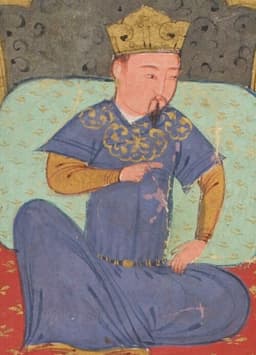
Batu Khan
Emperor · Medieval
64.8Total
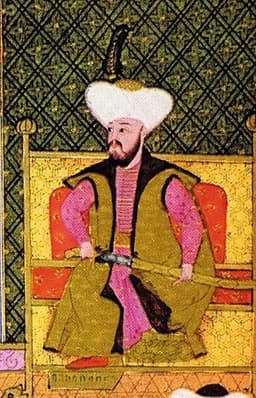
Murad II
Emperor · Medieval
65.4Total
Basic Information
Born
1207
1404
Died
1255
1451
Era
Medieval
Medieval
Nationality
Golden Horde
Ottoman Empire
Occupation
Emperor
Emperor
Civilization
Eastern
Middle Eastern
Score Comparison
Military (10%)
79.9
79.6
Political (20%)
55.0
67.2
Influence (20%)
68.0
62.0
Legacy (20%)
55.0
58.0
Leadership (15%)
72.0
69.6
Strategy (15%)
70.0
69.1
TOTAL
64.8
65.4
Batu Khan — Complete Timeline
1223 AD
Battle of the Kalka RiverWar◆ Major
Batu Khan, as a subordinate commander under Subutai, participated in the Mongol victory over a coalition of Rus' princes and Cumans at the Kalka River. This battle was a precursor to the full-scale invasion of the Rus' lands.
Mongol EmpireKievan Rus'BattleCumans
Impact: regional
1240 AD
Sack of KievWar
Batu Khan led the Mongol army in the siege and sack of Kiev, the capital of the Kievan Rus'. The city was destroyed, and its population was massacred. This event marked the subjugation of the Rus' principalities to Mongol rule.
Mongol EmpireKievan Rus'SiegeDestruction
Impact: globaldestructive
1241 AD
Invasion of Hungary and PolandWar◆ Major
Batu Khan led the Mongol invasion of Central Europe, defeating the Hungarian army at the Battle of Mohi and the Polish army at the Battle of Legnica. The campaign devastated Hungary and Poland before the Mongols withdrew due to the death of
Mongol EmpireHungaryPolandInvasion
Impact: globaldestructive
1242 AD
Foundation of the Golden HordePolitical Action
After the Mongol invasion of Europe, Batu Khan established the Golden Horde, a khanate that controlled the western part of the Mongol Empire. The Golden Horde's territory stretched from the Ural Mountains to the Danube River, with Sarai as its capital.
Mongol EmpireGolden HordeFoundationSarai
Impact: global
Murad II — Complete Timeline
1421 AD
Accession as Ottoman SultanPolitical Action◆ Major
Murad II became Ottoman Sultan after the death of his father, Mehmed I. He faced a rebellion from his uncle, Mustafa, which he suppressed.
SuccessionOttoman Empire
Impact: regional
1422 AD
Siege of ConstantinopleWar◆ Major
Murad II besieged Constantinople but failed to capture it due to strong Byzantine defenses and lack of naval support. The siege demonstrated Ottoman ambition but ended in withdrawal.
SiegeByzantine Empire
Impact: regional
1444 AD
Battle of VarnaWar
Murad II returned to lead the Ottoman army against a crusader force led by King W
BattleCrusade
Impact: regionalconstructive
First abdicationPolitical Action◆ Major
Murad II abdicated the throne in favor of his young son, Mehmed II, seeking a life of religious contemplation. The decision was controversial and led to instability.
AbdicationSuccession
Impact: regional
1446 AD
Second abdication and returnPolitical Action◆ Major
Murad II abdicated again but was recalled to the throne in 1446 due to Janissary unrest and threats from the West. He ruled until his death.
AbdicationReturn
Impact: regional
1448 AD
Battle of Kosovo (1448)War◆ Major
Murad II defeated a Hungarian-led coalition at the Second Battle of Kosovo. The victory secured Ottoman control over the Balkans and prevented further crusades.
BattleBalkans
Impact: regionalconstructive
This comparison has not been analyzed yet.
One-time AI generation (~1 minute). Scores and timeline are already available below.
Rankings
🥇
Murad IILeader
Mil: 79.6Pol: 67.2Inf: 62.0
65.4
🥈
Batu Khan
Mil: 79.9Pol: 55.0Inf: 68.0
64.8
+0.6 behind
How This Comparison Works
Algorithm
Each figure is scored on 6 dimensions (0—100 scale) based on structured historical data: Military (10%), Political (20%), Influence (20%), Legacy (20%), Leadership (15%), Strategy (15%). The weighted total produces the final ranking.
Data Sources
Scores are computed from structured sub-indicators in the database. Scale factors adjust for era (Ancient ×0.85, Modern ×1.0) and civilization size (Eastern ×1.05, Other ×0.80) to account for differences in population and military scale.
Maximum 3 Figures
Comparisons are limited to 2—3 figures to ensure readability and statistical meaningfulness.
Error Margins
±5 points per dimension — Sub-scores are derived from historical records with inherent uncertainty. Two figures within 5 points on a dimension should be considered roughly equivalent in that area.
Total Score Accuracy
±3 points overall — The weighted combination of 6 dimensions produces a total score with approximately ±3 points of uncertainty. Differences of less than 3 points are not statistically significant— the figures are effectively tied.
Known Limitations
- Historical records are incomplete and uneven across civilizations
- Figures from oral-tradition societies may be underrepresented
- Occupation labels can misclassify multi-role figures
- Scores measure capability and impact, not moral character
- Quantitative scoring is a comparison tool, not absolute truth
Capability Radar
Military (10%) — Battles & Warfare
Battles
85
75
Win Rate
88
80
Expansion
90
76
Political (20%) — Governance & Reform
Reform
70
68
Diplomacy
75
74
Economy
70
65
Influence (20%) — Cultural & Global Reach
Cultural
60
55
Global
75
55
Legacy (20%) — Historical Impact
Historical
75
65
Longevity
70
60
Leadership (15%) — Power & Stability
Tenure
75
72
Stability
65
60
Strategy (15%) — Tactics & Innovation
Strategy
85
82
Tactics
80
78
Reform
70
70
Similar Comparisons
Comments & Discussion
No comments yet. Be the first to share your thoughts!