Loading...
Ferdinand III of Castile vs Murad II
Murad II leads by 8.8 pts · 2 figures compared
…
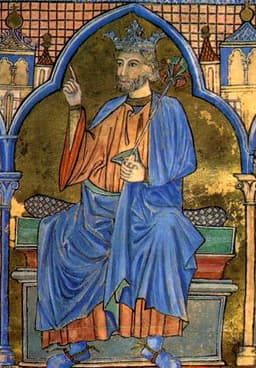
Ferdinand III of Castile
Emperor · Medieval
56.6Total
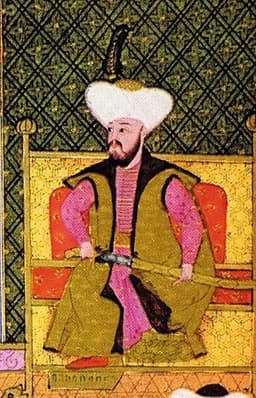
Murad II
Emperor · Medieval
65.4Total
Basic Information
Born
1199
1404
Died
1252
1451
Era
Medieval
Medieval
Nationality
Castile
Ottoman Empire
Occupation
Emperor
Emperor
Civilization
Western
Middle Eastern
Score Comparison
Military (10%)
60.0
79.6
Political (20%)
45.0
67.2
Influence (20%)
58.3
62.0
Legacy (20%)
52.0
58.0
Leadership (15%)
72.0
69.6
Strategy (15%)
55.0
69.1
TOTAL
56.6
65.4
Ferdinand III of Castile — Complete Timeline
1230 AD
Union of Leon and CastilePolitical Action
Ferdinand III inherited the Kingdom of Castile from his mother and the Kingdom of Leon from his father, permanently uniting the two crowns. This union created the largest Christian kingdom in Iberia and strengthened the Reconquista.
UnionLeonCastileReconquista
Impact: regionalconstructive
1236 AD
Conquest of CordobaWar◆ Major
Ferdinand III captured the city of Cordoba, the former capital of the Umayyad Caliphate, after a long siege. The conquest brought the Great Mosque of Cordoba under Christian control and was a major symbolic victory in the Reconquista.
ReconquistaConquestCordoba
Impact: regionalconstructive
1248 AD
Conquest of SevilleWar◆ Major
Ferdinand III besieged and captured Seville, the largest city in Moorish Iberia, with the aid of a Castilian fleet. The conquest gave Castile control of the Guadalquivir River and a major port for trade and naval operations.
ReconquistaConquestSeville
Impact: regionalconstructive
Murad II — Complete Timeline
1421 AD
Accession as Ottoman SultanPolitical Action◆ Major
Murad II became Ottoman Sultan after the death of his father, Mehmed I. He faced a rebellion from his uncle, Mustafa, which he suppressed.
SuccessionOttoman Empire
Impact: regional
1422 AD
Siege of ConstantinopleWar◆ Major
Murad II besieged Constantinople but failed to capture it due to strong Byzantine defenses and lack of naval support. The siege demonstrated Ottoman ambition but ended in withdrawal.
SiegeByzantine Empire
Impact: regional
1444 AD
Battle of VarnaWar
Murad II returned to lead the Ottoman army against a crusader force led by King W
BattleCrusade
Impact: regionalconstructive
First abdicationPolitical Action◆ Major
Murad II abdicated the throne in favor of his young son, Mehmed II, seeking a life of religious contemplation. The decision was controversial and led to instability.
AbdicationSuccession
Impact: regional
1446 AD
Second abdication and returnPolitical Action◆ Major
Murad II abdicated again but was recalled to the throne in 1446 due to Janissary unrest and threats from the West. He ruled until his death.
AbdicationReturn
Impact: regional
1448 AD
Battle of Kosovo (1448)War◆ Major
Murad II defeated a Hungarian-led coalition at the Second Battle of Kosovo. The victory secured Ottoman control over the Balkans and prevented further crusades.
BattleBalkans
Impact: regionalconstructive
Expert Analysis
Origins
Ferdinand III of Castile was born in 1199 or 1201, son of King Alfonso IX of Leon and Berenguela of Castile. His parents' marriage was annulled, but he was raised in the Castilian court. He inherited Castile from his mother in 1217 and Leon from his father in 1230, uniting the crowns. Murad II, born in 1404, was the son of Mehmed I, the Ottoman sultan who reunified the empire after the Ottoman Interregnum. Murad was raised in the Ottoman tradition and became sultan in 1421, facing rebellions that tested his authority.
Rise to Power
Ferdinand III became King of Castile in 1217 at age 18, after his mother Berenguela renounced her claim. He faced opposition from nobles but quickly consolidated power. In 1230, he inherited Leon, permanently uniting the two kingdoms. His reign focused on the Reconquista, launching campaigns against Moorish taifas. Murad II ascended the throne in 1421 after his father's death. He suppressed a rebellion by his uncle Mustafa, then turned to expand Ottoman territory. He besieged Constantinople in 1422 but failed due to Byzantine resilience and lack of naval support. Despite this, he continued campaigns in the Balkans and Anatolia.
Leadership & Governance
Ferdinand III was a devout Catholic, later canonized. He promoted the use of Castilian as an official language and oversaw the compilation of the "Siete Partidas" legal code (though completed after his death). He was known for his piety and justice. Murad II was a capable military leader who also showed political flexibility. He abdicated twice (1444 and 1446) to pursue religious contemplation, but returned due to Janissary unrest and external threats. His governance relied on the devshirme system and Janissaries. He scored 69.6 in leadership, while Ferdinand scored 72.0.
Triumph & Tragedy
Ferdinand III's greatest triumph was the capture of Cordoba (1236) and Seville (1248), bringing vast territories under Christian control. He also secured the submission of Murcia. His tragedy was his early death in 1252, leaving the Reconquista unfinished; his son Alfonso X struggled to maintain momentum. Murad II's triumph was the Battle of Varna (1444), where he defeated a crusader army and killed King Władysław III. His tragedy was his failed siege of Constantinople (1422), which revealed Ottoman limitations. He died in 1451, just before his son Mehmed II conquered Constantinople.
Character & Destiny
Ferdinand III was known for his piety, justice, and strategic patience. His canonization reflects his reputation as a saintly ruler who prioritized faith. Murad II was more pragmatic, willing to abdicate and return. His character was shaped by the Ottoman tradition of fratricide and rebellion. Both leaders faced internal opposition: Ferdinand from nobles, Murad from Janissaries and family. Their destinies were tied to the Reconquista and Ottoman expansion, respectively. Murad scored 65.4 total, Ferdinand 56.6, but Ferdinand's legacy as a saint may be more enduring.
Legacy
Ferdinand III is remembered as a saint and unifier of Castile and Leon. His conquests laid the foundation for the eventual completion of the Reconquista under his descendants. The Castilian language and legal traditions flourished. Murad II's legacy is as a consolidator of the Ottoman Empire, who defeated a major crusade and set the stage for the conquest of Constantinople. He is also known for his abdications, which were unusual for an Ottoman sultan. His scores: Military 79.6, Political 67.2, Influence 62.0, Legacy 58.0. Ferdinand's: Military 60.0, Political 45.0, Influence 58.3, Legacy 52.0.
Conclusion
While Ferdinand III's spiritual legacy is notable, Murad II had greater impact on world history. His military victories and political maneuvers preserved and strengthened the Ottoman Empire, enabling its transformation into a major power. Ferdinand's achievements were regional, while Murad's shaped the trajectory of Europe and the Middle East. The score gap of 8.8 points reflects this: Murad II's total of 65.4 exceeds Ferdinand's 56.6. Therefore, Murad II had greater impact.
Rankings
🥇
Murad IILeader
Mil: 79.6Pol: 67.2Inf: 62.0
65.4
🥈
Ferdinand III of Castile
Mil: 60.0Pol: 45.0Inf: 58.3
56.6
+8.8 behind
How This Comparison Works
Algorithm
Each figure is scored on 6 dimensions (0—100 scale) based on structured historical data: Military (10%), Political (20%), Influence (20%), Legacy (20%), Leadership (15%), Strategy (15%). The weighted total produces the final ranking.
Data Sources
Scores are computed from structured sub-indicators in the database. Scale factors adjust for era (Ancient ×0.85, Modern ×1.0) and civilization size (Eastern ×1.05, Other ×0.80) to account for differences in population and military scale.
Maximum 3 Figures
Comparisons are limited to 2—3 figures to ensure readability and statistical meaningfulness.
Error Margins
±5 points per dimension — Sub-scores are derived from historical records with inherent uncertainty. Two figures within 5 points on a dimension should be considered roughly equivalent in that area.
Total Score Accuracy
±3 points overall — The weighted combination of 6 dimensions produces a total score with approximately ±3 points of uncertainty. Differences of less than 3 points are not statistically significant— the figures are effectively tied.
Known Limitations
- Historical records are incomplete and uneven across civilizations
- Figures from oral-tradition societies may be underrepresented
- Occupation labels can misclassify multi-role figures
- Scores measure capability and impact, not moral character
- Quantitative scoring is a comparison tool, not absolute truth
Capability Radar
Military (10%) — Battles & Warfare
Battles
65
75
Win Rate
70
80
Expansion
75
76
Political (20%) — Governance & Reform
Reform
70
68
Diplomacy
65
74
Economy
60
65
Influence (20%) — Cultural & Global Reach
Cultural
65
55
Global
55
55
Legacy (20%) — Historical Impact
Historical
70
65
Longevity
65
60
Leadership (15%) — Power & Stability
Tenure
75
72
Stability
70
60
Strategy (15%) — Tactics & Innovation
Strategy
70
82
Tactics
60
78
Reform
55
70
Similar Comparisons
Comments & Discussion
No comments yet. Be the first to share your thoughts!