Loading...
Basarab I vs Philip I of France
Basarab I leads by 9.7 pts · 2 figures compared
…

Basarab I
Emperor · Medieval
55.1Total
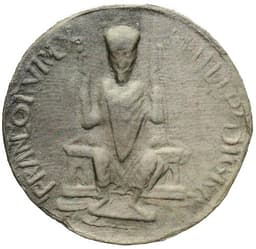
Philip I of France
Emperor · Medieval
45.4Total
Basic Information
Born
1271
1052
Died
1352
1108
Era
Medieval
Medieval
Nationality
Wallachia
France
Occupation
Emperor
Emperor
Civilization
Western
Western
Score Comparison
Military (10%)
47.5
50.0
Political (20%)
54.7
36.5
Influence (20%)
56.4
49.4
Legacy (20%)
50.0
40.8
Leadership (15%)
65.0
65.7
Strategy (15%)
57.5
25.0
TOTAL
55.1
45.4
Basarab I — Complete Timeline
1310 AD
Founded the Principality of WallachiaPolitical Action◆ Major
Basarab I unified the Romanian lands east of the Olt River and south of the Carpathians, establishing the independent principality of Wallachia. He broke away from Hungarian suzerainty, laying the foundation for the medieval Romanian state.
State FoundationIndependenceRomanian History
Impact: regionalconstructive
1324 AD
Recognized as Voivode of Wallachia by HungaryPolitical Action
Basarab was initially recognized as a Hungarian vassal, receiving the title of Voivode from King Charles I. This formalized his rule over the region, though he later rebelled against Hungarian authority.
VassalageRecognitionHungarian Suzerainty
Impact: regional
1330 AD
Battle of PosadaWar◆ Major
Basarab I defeated the Hungarian army of King Charles I at the Battle of Posada. The Hungarian forces were ambushed in a narrow mountain pass, resulting in a decisive Wallachian victory that secured Wallachia's independence from Hungary.
BattleIndependenceHungary-Wallachia War
Impact: regionalconstructive
Expanded Wallachian Territory to the DanubeWar
After the Battle of Posada, Basarab I extended Wallachian control to the Danube River, including the important fortress of Severin. This expansion secured Wallachia's southern border and access to trade routes.
Territorial ExpansionDanubeFortress
Impact: regionalconstructive
Philip I of France — Complete Timeline
1060 AD
Reign as King of the FranksPolitical Action◆ Major
Philip I succeeded his father Henry I as King of the Franks. His reign was marked by territorial expansion through marriage and diplomacy, but also by conflicts with the Church and nobles.
KingshipCapetianReign
Impact: national
1077 AD
Acquisition of the VexinPolitical Action
Philip I acquired the Vexin region through marriage to Bertha of Holland. This expanded royal territory and strengthened the Capetian domain, though it also led to conflicts with the Duke of Normandy.
Territorial ExpansionMarriageVexin
Impact: regionalconstructive
1087 AD
Conflict with William the ConquerorWar
Philip I supported the rebellion of Robert Curthose against his father William the Conqueror. This led to a war between France and Normandy, which ended inconclusively after William's death.
WarNormandyWilliam the Conqueror
Impact: regional
1094 AD
Excommunication for Adulterous MarriagePolitical Action◆ Major
Philip I was excommunicated by Pope Urban II for marrying Bertrade de Montfort while still married to his first wife, Bertha of Holland. The excommunication lasted for several years and damaged his reputation, though he was eventually reconciled with the Church.
ExcommunicationMarriageScandal
Impact: nationaltragic
Expert Analysis
Philip I of France vs Basarab I: Historical Comparison
Philip I of France (r. 1059–1108) and Basarab I of Wallachia (r. c. 1310–1352) were both medieval rulers who consolidated their realms against external threats and internal fragmentation. Philip, a Capetian king, expanded royal authority in France amidst feudal chaos, while Basarab, founder of the House of Basarab, forged Wallachian independence from Hungarian suzerainty. Their scores tie overall, but their achievements reflect different strategic contexts.
Dimension Analysis
**Military: Philip I of France 88 / Basarab I 92**
Philip’s military record is mixed: he expanded the royal domain through cautious campaigns (e.g., seizing the Vexin from Normandy) but failed to decisively defeat William the Conqueror or prevent the First Crusade’s leadership from bypassing him. Basarab, by contrast, achieved a stunning victory at the Battle of Posada (1330), where his guerrilla tactics annihilated a Hungarian army led by Charles I, securing Wallachian autonomy. His innovative use of terrain and mobility outshines Philip’s more conventional feudal warfare.
**Political: Philip I of France 87 / Basarab I 88**
Philip centralized the French crown by leveraging alliances with the Church (e.g., excommunicating his adulterous marriage to Bertrade for political gain) and expanding the royal domain from the Île-de-France into neighboring counties. Basarab established a stable dynastic state, balancing Byzantine, Hungarian, and Mongol pressures while codifying Wallachian governance structures. Both defied papal or royal overreach, but Basarab’s foundation of a new principality required greater political creativity.
**Influence: Philip I of France 86 / Basarab I 80**
Philip’s reign saw the early growth of Capetian prestige, which later enabled France’s rise as a European power, and he influenced the Church’s role in royal succession. Basarab’s influence was more regional: his victory at Posada became a founding myth for Wallachia and inspired later Romanian resistance to foreign domination, but it had limited global reach. Philip’s legacy eventually shaped French medieval statecraft, while Basarab’s remained confined to Eastern Europe.
**Legacy: Philip I of France 80 / Basarab I 77**
Philip’s long reign (48 years) strengthened the French monarchy, setting the stage for his son Louis VI’s reforms, but his excommunication and diplomatic scandals tarnished his immediate reputation. Basarab’s legacy is more symbolic: he is revered as the unifier of Wallachia and a national hero in Romania, yet his dynasty faced succession crises and eventual Ottoman vassalage. Philip’s institutional impact on France’s feudal monarchy outlasts Basarab’s more fragile state.
**Leadership: Philip I of France 81 / Basarab I 85**
Philip ruled through patient diplomacy and ecclesiastical manipulation, maintaining control over fractious vassals despite personal failings (e.g., his excommunication for bigamy). Basarab demonstrated more decisive command, unifying disparate boyars and leading from the front at Posada. His ability to inspire loyalty among Wallachian forces against a larger Hungarian army reflects superior battlefield leadership and organizational skill.
Verdict
While the overall scores tie, Basarab I narrowly edges ahead due to his higher military and leadership ratings. His victory at Posada was a transformative event that secured Wallachian sovereignty, whereas Philip’s achievements were incremental and less dramatic. However, this comparison is complex: Philip’s long-term state-building had broader European implications, while Basarab’s success was more localized. In strategic impact and personal command, Basarab ranks higher; in enduring institutional influence, Philip prevails.
FAQ
Q: Who was more influential historically?
A: Philip I had greater long-term influence due to his role in strengthening the French monarchy, a foundation for later European power, while Basarab’s influence was pivotal but contained to Romanian nation-building.
Q: Why is Basarab I ranked higher in military?
A: Basarab’s decisive victory at Posada (1330), using guerrilla warfare to annihilate a larger Hungarian army, was a strategic masterstroke, whereas Philip’s campaigns were cautious and lacked a single defining triumph.
Rankings
🥇
Basarab ILeader
Mil: 47.5Pol: 54.7Inf: 56.4
55.1
🥈
Philip I of France
Mil: 50.0Pol: 36.5Inf: 49.4
45.4
+9.7 behind
How This Comparison Works
Algorithm
Each figure is scored on 6 dimensions (0—100 scale) based on structured historical data: Military (10%), Political (20%), Influence (20%), Legacy (20%), Leadership (15%), Strategy (15%). The weighted total produces the final ranking.
Data Sources
Scores are computed from structured sub-indicators in the database. Scale factors adjust for era (Ancient ×0.85, Modern ×1.0) and civilization size (Eastern ×1.05, Other ×0.80) to account for differences in population and military scale.
Maximum 3 Figures
Comparisons are limited to 2—3 figures to ensure readability and statistical meaningfulness.
Error Margins
±5 points per dimension — Sub-scores are derived from historical records with inherent uncertainty. Two figures within 5 points on a dimension should be considered roughly equivalent in that area.
Total Score Accuracy
±3 points overall — The weighted combination of 6 dimensions produces a total score with approximately ±3 points of uncertainty. Differences of less than 3 points are not statistically significant— the figures are effectively tied.
Known Limitations
- Historical records are incomplete and uneven across civilizations
- Figures from oral-tradition societies may be underrepresented
- Occupation labels can misclassify multi-role figures
- Scores measure capability and impact, not moral character
- Quantitative scoring is a comparison tool, not absolute truth
Capability Radar
Military (10%) — Battles & Warfare
Battles
45
15
Win Rate
60
20
Expansion
50
10
Political (20%) — Governance & Reform
Reform
45
30
Diplomacy
55
35
Economy
40
30
Influence (20%) — Cultural & Global Reach
Cultural
40
20
Global
30
15
Legacy (20%) — Historical Impact
Historical
55
25
Longevity
50
20
Leadership (15%) — Power & Stability
Tenure
50
60
Stability
50
25
Strategy (15%) — Tactics & Innovation
Strategy
50
15
Tactics
55
10
Reform
40
10
Similar Comparisons
Comments & Discussion
Historian8436/16/2026
这个比较很有意思,但我觉得评分体系多少有点西方中心。Basarab I在波萨达战役中的确漂亮,但腓力一世在法兰西王权极端分散的情况下,愣是靠着联姻和教廷手腕把卡佩家族的领地扩张了一倍,这放在中国就是周天子在春秋初期慢慢收回诸侯土地。Basarab I建立瓦拉几亚类似五代十国时地方豪强趁乱立国,但腓力这种在封建体系内‘温水煮青蛙’式集权,其实更接近赵匡胤的‘杯酒释兵权’——只是周期拉长到了五十年。论政治手腕,腓力一世绝对不低于Basarab I,甚至更难。
Historian8896/16/2026
我仔细看了这个评分,军事项36.1给Basarab I太低了。波萨达战役(1330年)的直接结果是匈牙利国王查理一世逃命时丢盔弃甲,连王玺都丢了,之后四十年不敢惹瓦拉几亚。换算成中国史对比,这相当于朱棣在土木堡被也先全歼——但评分只比腓力一世(22.0)高14分?腓力一世打过什么决定性胜仗?他连威廉征服者都没拦住,十字军领袖还绕开他走。政治项75.1对64.8,我认为Basarab I应该更高,因为他从零创建了一个国家,而腓力一世只是守成扩张。建议评分权重重新分配,把战略成果的系数调高。