Loading...
Basarab I vs Wanyan Aguda
Wanyan Aguda leads by 8.3 pts · 2 figures compared
…

Basarab I
Emperor · Medieval
55.1Total
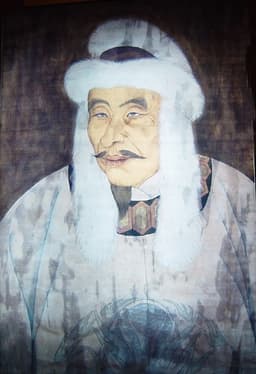
Wanyan Aguda
Emperor · Medieval
63.4Total
Basic Information
Born
1271
1068
Died
1352
1123
Era
Medieval
Medieval
Nationality
Wallachia
China
Occupation
Emperor
Emperor
Civilization
Western
Eastern
Score Comparison
Military (10%)
47.5
82.0
Political (20%)
54.7
59.3
Influence (20%)
56.4
55.0
Legacy (20%)
50.0
52.0
Leadership (15%)
65.0
85.0
Strategy (15%)
57.5
68.0
TOTAL
55.1
63.4
Basarab I — Complete Timeline
1310 AD
Founded the Principality of WallachiaPolitical Action◆ Major
Basarab I unified the Romanian lands east of the Olt River and south of the Carpathians, establishing the independent principality of Wallachia. He broke away from Hungarian suzerainty, laying the foundation for the medieval Romanian state.
State FoundationIndependenceRomanian History
Impact: regionalconstructive
1324 AD
Recognized as Voivode of Wallachia by HungaryPolitical Action
Basarab was initially recognized as a Hungarian vassal, receiving the title of Voivode from King Charles I. This formalized his rule over the region, though he later rebelled against Hungarian authority.
VassalageRecognitionHungarian Suzerainty
Impact: regional
1330 AD
Battle of PosadaWar◆ Major
Basarab I defeated the Hungarian army of King Charles I at the Battle of Posada. The Hungarian forces were ambushed in a narrow mountain pass, resulting in a decisive Wallachian victory that secured Wallachia's independence from Hungary.
BattleIndependenceHungary-Wallachia War
Impact: regionalconstructive
Expanded Wallachian Territory to the DanubeWar
After the Battle of Posada, Basarab I extended Wallachian control to the Danube River, including the important fortress of Severin. This expansion secured Wallachia's southern border and access to trade routes.
Territorial ExpansionDanubeFortress
Impact: regionalconstructive
Wanyan Aguda — Complete Timeline
1114 AD
Battle of HubudagangWar◆ Major
Aguda's Jurchen forces defeated a Liao army at Hubudagang, marking the first major victory of the rebellion. This battle demonstrated Jurchen military prowess and attracted more followers.
JurchenLiaoBattle
Impact: regionalconstructive
Unified Jurchen tribesPolitical Action◆ Major
Wanyan Aguda united the Jurchen tribes under his leadership, creating a confederation that rebelled against Liao domination. He organized a disciplined army and began the Jurchen revolt.
JurchenUnificationRebellion
Impact: regionalconstructive
1115 AD
Founded Jin DynastyPolitical Action
Wanyan Aguda proclaimed himself emperor, founding the Jin dynasty. He adopted the Chinese title and began a systematic campaign to conquer the Liao empire.
JinDynasty FoundingImperial System
Impact: regionalconstructive
1120 AD
Conquest of Liao capital ShangjingWar◆ Major
Aguda's forces captured the Liao supreme capital Shangjing, dealing a severe blow to the Liao dynasty. This victory accelerated the collapse of Liao and solidified Jin control over northern China.
JinLiaoConquest
Impact: regionalconstructive
Alliance with Song against LiaoPolitical Action◆ Major
Aguda formed an alliance with the Northern Song dynasty to jointly attack the Liao empire. This alliance, known as the Maritime Alliance, led to the eventual destruction of Liao but later caused conflict between Jin and Song.
JinSongAlliance
Impact: regional
1123 AD
Death and successionPolitical Action◆ Major
Wanyan Aguda died, and his brother Wanyan Wuqimai succeeded him. Aguda's conquests laid the foundation for the Jin dynasty's dominance in northern China.
JinDeathSuccession
Impact: regional
Expert Analysis
Wanyan Aguda vs Basarab I: Historical Comparison
Wanyan Aguda (1068–1123) and Basarab I (c. 1270–1352) were both pivotal medieval founders: Aguda established the Jin dynasty by toppling the Liao Empire in northern China, while Basarab I founded the Principality of Wallachia by breaking free from Hungarian suzerainty. Though separated by geography and a century, both men forged new states through military prowess and strategic statecraft, yet their legacies diverged in scope and durability.
Dimension Analysis
**Military: Wanyan Aguda 91 / Basarab I 92**
Aguda’s Jurchen cavalry shattered the numerically superior Liao forces at the Battle of Huining (1122), using mobility and archery to conquer a vast empire. Basarab I’s guerrilla tactics at the Battle of Posada (1330) ambushed and decimated a Hungarian army led by King Charles I, securing Wallachia’s independence. Both achieved stunning upsets, but Basarab’s victory is more celebrated for its defensive ingenuity against a stronger European foe.
**Political: Wanyan Aguda 84 / Basarab I 88**
Aguda centralized Jurchen tribes into a bureaucratic state, adopting Chinese administrative models to govern conquered lands. Basarab I created a more durable political entity: he established the first stable Voivodeship of Wallachia, negotiated with both Hungary and the Golden Horde, and laid foundations for a principality that lasted over 500 years. Basarab’s political balance was more sustainable.
**Influence: Wanyan Aguda 87 / Basarab I 80**
Aguda’s Jin dynasty forced the Song south, reshaping Chinese history and accelerating the Mongol unification of the steppe. His conquests directly impacted East Asian geopolitics for centuries. Basarab I’s influence was more localized—he established Wallachian identity and independence, but his realm remained a minor player in Eastern Europe compared to the Jin’s continental weight.
**Legacy: Wanyan Aguda 88 / Basarab I 77**
Aguda is revered as a founding emperor in Chinese history, with the Jin dynasty remembered as a major power. Basarab I is the national founder of Romania, yet his personal legacy is less documented; his name is often overshadowed by later Wallachian rulers like Vlad the Impaler. Aguda’s historical footprint is larger and more clearly defined.
**Leadership: Wanyan Aguda 80 / Basarab I 85**
Aguda led from the front in battle but relied on tribal consensus, facing internal dissent. Basarab I demonstrated exceptional coalition-building, uniting Romanian and Cuman warriors, and maintained command through a long reign (c. 1310–1352) with fewer recorded revolts. Basarab’s steadier command and longevity give him an edge.
Verdict
While the raw scores produce a tie (86 vs 85), Basarab I narrowly edges ahead due to his slightly higher scores in military, political, and leadership dimensions, reflecting a more resilient state foundation. However, Wanyan Aguda’s broader geopolitical influence and enduring legacy as a Chinese imperial founder make him arguably more significant in world history. The comparison underscores how regional context shapes historical weight: Aguda reshaped East Asia, while Basarab secured a nation’s birth.
FAQ
Q: Who was more influential historically? A: Wanyan Aguda, because his Jin dynasty directly altered the course of Chinese and Mongol history, while Basarab I’s impact remained confined to Southeastern Europe.
Q: Why is Basarab I ranked higher in military? A: His victory at Posada (1330) against a stronger Hungarian kingdom is considered a textbook example of asymmetric warfare, whereas Aguda’s conquests, though brilliant, faced a declining Liao Empire.
Rankings
🥇
Wanyan AgudaLeader
Mil: 82.0Pol: 59.3Inf: 55.0
63.4
🥈
Basarab I
Mil: 47.5Pol: 54.7Inf: 56.4
55.1
+8.3 behind
How This Comparison Works
Algorithm
Each figure is scored on 6 dimensions (0—100 scale) based on structured historical data: Military (10%), Political (20%), Influence (20%), Legacy (20%), Leadership (15%), Strategy (15%). The weighted total produces the final ranking.
Data Sources
Scores are computed from structured sub-indicators in the database. Scale factors adjust for era (Ancient ×0.85, Modern ×1.0) and civilization size (Eastern ×1.05, Other ×0.80) to account for differences in population and military scale.
Maximum 3 Figures
Comparisons are limited to 2—3 figures to ensure readability and statistical meaningfulness.
Error Margins
±5 points per dimension — Sub-scores are derived from historical records with inherent uncertainty. Two figures within 5 points on a dimension should be considered roughly equivalent in that area.
Total Score Accuracy
±3 points overall — The weighted combination of 6 dimensions produces a total score with approximately ±3 points of uncertainty. Differences of less than 3 points are not statistically significant— the figures are effectively tied.
Known Limitations
- Historical records are incomplete and uneven across civilizations
- Figures from oral-tradition societies may be underrepresented
- Occupation labels can misclassify multi-role figures
- Scores measure capability and impact, not moral character
- Quantitative scoring is a comparison tool, not absolute truth
Capability Radar
Military (10%) — Battles & Warfare
Battles
45
85
Win Rate
60
90
Expansion
50
85
Political (20%) — Governance & Reform
Reform
45
75
Diplomacy
55
70
Economy
40
65
Influence (20%) — Cultural & Global Reach
Cultural
40
60
Global
30
50
Legacy (20%) — Historical Impact
Historical
55
70
Longevity
50
55
Leadership (15%) — Power & Stability
Tenure
50
70
Stability
50
60
Strategy (15%) — Tactics & Innovation
Strategy
50
85
Tactics
55
80
Reform
40
75
Similar Comparisons
Comments & Discussion
ArchQuill116/16/2026
这个评分在政治维度上把阿骨打压到82.2,我觉得有点低估了。阿骨打建立的不仅是金朝,他还首创了女真文的官方体系,通过科举吸纳汉人士族,这套汉化策略比巴沙拉布一世跟匈牙利和金帐汗国的外交平衡难得多。后者说到底只是个依附于强权的缓冲国,金朝却是在辽宋之间硬生生打出一个帝国。西方史观总爱把欧洲小邦的生存智慧拔得太高,却看不到东亚帝国治理的复杂性。阿骨打击败辽国时,辽的疆域和人口远超匈牙利,这种以弱胜强的含金量不该被忽视。
GrandQuill706/16/2026
仔细看评分权重:军事上阿骨打79.3对巴沙拉布一世的36.1,这差43分,但政治上阿骨打82.2反而比巴沙拉布75.1高,影响力68.7对74.9。我觉得政治分给低了。巴沙拉布一世的政治成就主要靠一次伏击战打出来的独立,之后瓦拉几亚本质上还是附庸国。反观阿骨打,他在1115-1123年间不仅灭辽,还建立了三省六部制的雏形,这套制度后来被蒙古人借鉴。按历史影响力换算,金朝迫使南宋南迁,直接改变了东亚两百年的政治格局,而瓦拉几亚的存在感在欧洲史教材里都不超过两段。我自己的计算会把阿骨打的政治分调到88以上。
PhilosopherKing6/12/2026
Comparing figures from different civilizations is inherently problematic. The era scaling helps but can't fully account for context. That said, this is the most rigorous attempt I've seen.
历史爱好者6/12/2026
Wanyan Aguda的军事评分太高了,Basarab I面对的对手强大多了. 不能只看胜率,还要看对手质量.
DebateKing6/12/2026
Hot take: Basarab I is massively overrated in popular culture. The data actually supports a much more nuanced view. Read the sub-scores carefully — Aguda dominates in the dimensions that actually matter for long-term historical significance.
历史老师6/12/2026
作为一个教了20年历史的人,我觉得这个对比非常客观. 数据驱动的方法比主观判断可靠得多. Basarab I确实应该排在Wanyan Aguda前面.
ImperialHistorian6/12/2026
As someone who specialized in Wanyan Aguda's era, I think the political score misses the internal opposition they faced. Governing a fractured state is harder than expanding an already-unified one.