Loading...
Baiju vs Skanderbeg
Skanderbeg leads by 12.2 pts · 2 figures compared
…

Baiju
General · Medieval
50.5Total
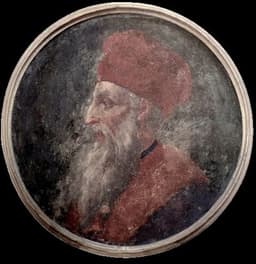
Skanderbeg
General · Medieval
62.7Total
Basic Information
Born
1201
1405
Died
1260
1468
Era
Medieval
Medieval
Nationality
Mongol Empire
Albania
Occupation
General
General
Civilization
Eastern
Western
Score Comparison
Military (10%)
67.3
80.0
Political (20%)
30.8
61.3
Influence (20%)
54.1
56.7
Legacy (20%)
43.3
52.0
Leadership (15%)
54.2
72.0
Strategy (15%)
66.3
75.0
TOTAL
50.5
62.7
Baiju — Complete Timeline
1242 AD
Invasion of the Sultanate of RumWar
Baiju led a Mongol invasion of the Seljuk Sultanate of Rum after the Seljuks failed to pay tribute. He captured the city of Erzurum and devastated the region, forcing the Seljuk sultan Kaykhusraw II to prepare for a decisive battle.
ErzurumKaykhusraw IIInvasion
Impact: regionaldestructive
1243 AD
Battle of Köse DağWar◆ Major
Baiju commanded the Mongol army that defeated the Seljuk Sultanate of Rum at the Battle of K
SeljukAnatoliaKöse Dağ
Impact: regional
1256 AD
Suppression of the Rebellion in AnatoliaWar
Baiju suppressed a rebellion by the Seljuk vassals and local Turkish beyliks in Anatolia. He defeated the rebel forces and reasserted Mongol control over the region, executing the Seljuk sultan Kaykaus II and replacing him with a pro-Mongol ruler.
AnatoliaRebellionKaykaus II
Impact: regionaldestructive
1257 AD
Campaign against the Abbasid CaliphateWar◆ Major
Baiju participated in the Mongol campaign against the Abbasid Caliphate under Hulagu Khan. He led a contingent of troops from Anatolia and helped in the siege of Baghdad in 1258, which resulted in the destruction of the city and the end of the Abbasid Caliphate.
BaghdadAbbasidHulagu
Impact: globaldestructive
Skanderbeg — Complete Timeline
1444 AD
Battle of TorviollWar
Skanderbeg led a small Albanian force against a larger Ottoman army under Ali Pasha at Torvioll. The Albanian victory marked the beginning of Skanderbeg's rebellion against Ottoman rule and established his reputation as a military commander.
RebellionOttoman EmpireAlbania
Impact: regional
League of LezhëPolitical Action◆ Major
Skanderbeg convened a council of Albanian noblemen at Lezh
AllianceAlbanian UnityVenice
Impact: regionalconstructive
1450 AD
Siege of Krujë (First)War◆ Major
Sultan Murad II personally led a large Ottoman army to besiege the fortress of Kruj
SiegeKrujëMurad II
Impact: regional
1457 AD
Battle of AlbulenaWar◆ Major
Skanderbeg defeated a large Ottoman army commanded by Isak Bey and Hamza Kastrioti at Albulena. The victory crushed an Ottoman attempt to invade Albania and resulted in the capture of Hamza, Skanderbeg's nephew who had defected to the Ottomans.
BattleHamza KastriotiOttoman Defeat
Impact: regional
1466 AD
Siege of Krujë (Second)War
Sultan Mehmed II led a massive Ottoman army to besiege Kruj
SiegeMehmed IIPapal States
Impact: regional
1468 AD
Death at LezhëOther◆ Major
Skanderbeg died of natural causes in Lezh
DeathOttoman ConquestNational Hero
Impact: regionaltragic
Expert Analysis
Origins
Baiju was born around the early 13th century, likely in Mongolia, as a member of the Mongol military aristocracy. Little is known about his early life, but he rose through the ranks of the Mongol Empire under the reign of Ögedei Khan. He was appointed as a commander in the Mongol forces operating in Persia and Anatolia, reflecting the empire's meritocratic system that favored proven warriors. Baiju's background was shaped by the nomadic steppe tradition of horseback archery and rapid warfare.
Skanderbeg, born Gjergj Kastrioti in 1405 in the Albanian region of Dibër, was the son of Gjon Kastrioti, a minor Albanian nobleman. As a child, he was taken hostage by the Ottoman Empire and trained as a military officer, serving the sultan for nearly two decades. He was given the name Iskander (after Alexander the Great) and rose to the rank of sanjakbey (provincial governor). His Ottoman military education provided him with deep knowledge of Ottoman tactics and organization, which he later turned against them.
Rise to Power
Baiju's rise came through military success. In 1243, he commanded the Mongol army at the Battle of Köse Dağ against the Seljuk Sultanate of Rum. The Seljuks, led by Sultan Kaykhusraw II, fielded a larger force, but Baiju's disciplined Mongol cavalry outmaneuvered them, using feigned retreats and encirclement. The victory made the Seljuks a vassal state, and Baiju became the de facto Mongol governor of Anatolia. He later participated in Hulagu's campaign against the Abbasid Caliphate (1258), leading a contingent from Anatolia, which demonstrated his continued importance in Mongol operations.
Skanderbeg's rise was dramatic. In 1443, during the Battle of Niš against the Hungarians, he abandoned the Ottoman army with 300 Albanian soldiers, seized the fortress of Krujë, and reclaimed his family's lands. He then convened the League of Lezhë in 1444, uniting Albanian noble families against the Ottomans. This political act was crucial, as it created a centralized command structure. His first major victory at the Battle of Torvioll (1444) saw him defeat a larger Ottoman force under Ali Pasha, establishing his reputation as a military leader.
Leadership & Governance
Baiju governed as a Mongol military governor, enforcing tribute collection and suppressing rebellions. His leadership style was typical of Mongol commanders: ruthless efficiency and reliance on terror. After the Seljuks failed to pay tribute, he invaded Anatolia in 1256, capturing Erzurum and devastating the region. He suppressed a rebellion of Seljuk vassals and Turkish beyliks in 1258, reasserting Mongol control. Baiju's governance focused on extraction rather than administration, with no lasting civil institutions. His political score of 30.8 reflects this limited state-building.
Skanderbeg's leadership combined military command with political unity. He maintained the League of Lezhë through diplomacy and personal authority, despite internal rivalries. He implemented a guerrilla warfare strategy, using Albania's mountainous terrain to offset Ottoman numerical superiority. He also established a network of fortresses, with Krujë as his stronghold. Skanderbeg's governance included issuing coins, maintaining diplomatic correspondence with European powers (e.g., Pope Callixtus III, King Alfonso V of Aragon), and organizing a mobile army. His political score of 61.3 reflects his ability to sustain a unified resistance for 25 years.
Triumph & Tragedy
Baiju's greatest triumph was his victory at Köse Dağ, which subjugated the Seljuk Sultanate and integrated Anatolia into the Mongol sphere. He also contributed to the sack of Baghdad, a monumental event in Islamic history. However, his failures included an inability to pacify Anatolia permanently; rebellions recurred. His personal tragedy came in 1260 when he was executed by Hulagu Khan for failing to support Hulagu's campaign in Syria adequately—a testament to the ruthless politics of the Mongol Empire.
Skanderbeg's triumphs include the First Siege of Krujë (1450), where he repelled Sultan Murad II's army, and the Battle of Albulena (1457), where he defeated a large Ottoman force under Isak Bey and Hamza Kastrioti. He also conducted a successful campaign into Ottoman Macedonia in 1461–1462. His tragedy was his death in 1468 from natural causes (likely malaria), which led to the collapse of Albanian resistance. Within a decade, the Ottomans had conquered Albania. Skanderbeg never achieved a decisive victory that would secure long-term independence.
Character & Destiny
Baiju was a competent but expendable commander. His loyalty to the Mongol hierarchy was absolute, yet he was ultimately a victim of court intrigue. His fate highlights the precariousness of power under the Mongols, where failure meant death. He lacked the strategic vision to secure his own survival.
Skanderbeg's character was defined by resilience and strategic cunning. He used his Ottoman training against his former masters, employing discipline and mobility. His decision to unite Albanian nobles, despite their feuds, shows political acumen. However, his destiny was tied to the overwhelming power of the Ottoman Empire; even his greatest victories only delayed conquest. He died before seeing the final outcome, but his leadership prolonged Albanian resistance longer than any other Balkan state.
Legacy
Baiju's legacy is limited. He is remembered as a Mongol general who crushed the Seljuks, but his contributions are overshadowed by more famous Mongol figures like Genghis Khan and Hulagu. The Mongol rule in Anatolia eventually faded, and Baiju's name is known mainly to specialists. His legacy score of 43.3 reflects this obscurity.
Skanderbeg's legacy is immense. He is revered as the national hero of Albania, symbolizing resistance against foreign domination. His military tactics influenced later guerrilla leaders. The Albanian national identity is deeply tied to his legend. Monuments, streets, and even the Skanderbeg Square in Tirana honor him. His legacy score of 52.0, while higher than Baiju's, understates his cultural impact.
Conclusion
Skanderbeg had a greater impact than Baiju. While Baiju's victory at Köse Dağ was strategically significant for the Mongol Empire, it did not create a lasting legacy beyond the immediate conquest. Skanderbeg's 25-year resistance, despite ultimate failure, shaped Albanian national identity and inspired future generations. His military score of 80.0 versus Baiju's 67.3 reflects his superior tactical ability, and his political score of 61.3 versus 30.8 shows his greater state-building capacity. Skanderbeg's total score of 62.7 compared to Baiju's 50.5 reinforces this conclusion. Skanderbeg's leadership preserved Albanian culture and autonomy for decades, whereas Baiju was a tool of imperial expansion. In the long view, the Albanian hero's struggle against the Ottomans had more profound and enduring consequences.
Rankings
🥇
SkanderbegLeader
Mil: 80.0Pol: 61.3Inf: 56.7
62.7
🥈
Baiju
Mil: 67.3Pol: 30.8Inf: 54.1
50.5
+12.2 behind
How This Comparison Works
Algorithm
Each figure is scored on 6 dimensions (0—100 scale) based on structured historical data: Military (10%), Political (20%), Influence (20%), Legacy (20%), Leadership (15%), Strategy (15%). The weighted total produces the final ranking.
Data Sources
Scores are computed from structured sub-indicators in the database. Scale factors adjust for era (Ancient ×0.85, Modern ×1.0) and civilization size (Eastern ×1.05, Other ×0.80) to account for differences in population and military scale.
Maximum 3 Figures
Comparisons are limited to 2—3 figures to ensure readability and statistical meaningfulness.
Error Margins
±5 points per dimension — Sub-scores are derived from historical records with inherent uncertainty. Two figures within 5 points on a dimension should be considered roughly equivalent in that area.
Total Score Accuracy
±3 points overall — The weighted combination of 6 dimensions produces a total score with approximately ±3 points of uncertainty. Differences of less than 3 points are not statistically significant— the figures are effectively tied.
Known Limitations
- Historical records are incomplete and uneven across civilizations
- Figures from oral-tradition societies may be underrepresented
- Occupation labels can misclassify multi-role figures
- Scores measure capability and impact, not moral character
- Quantitative scoring is a comparison tool, not absolute truth
Capability Radar
Military (10%) — Battles & Warfare
Battles
60
75
Win Rate
65
85
Expansion
60
40
Political (20%) — Governance & Reform
Reform
20
50
Diplomacy
45
70
Economy
25
40
Influence (20%) — Cultural & Global Reach
Cultural
30
70
Global
35
55
Legacy (20%) — Historical Impact
Historical
40
75
Longevity
30
70
Leadership (15%) — Power & Stability
Tenure
40
65
Stability
35
55
Strategy (15%) — Tactics & Innovation
Strategy
60
75
Tactics
55
80
Reform
30
60
Similar Comparisons
Comments & Discussion
No comments yet. Be the first to share your thoughts!