Loading...
Babur vs Otto I the Great
Babur leads by 2.9 pts · 2 figures compared
…

Babur
Emperor · Medieval
78.1Total
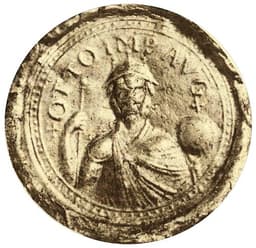
Otto I the Great
Emperor · Medieval
75.2Total
Basic Information
Born
1483
912
Died
1530
973
Era
Medieval
Medieval
Nationality
Mughal Empire
Holy Roman Empire
Occupation
Emperor
Emperor
Civilization
Indian
Western
Score Comparison
Military (10%)
74.0
82.0
Political (20%)
72.0
70.0
Influence (20%)
88.0
88.0
Legacy (20%)
80.0
65.0
Leadership (15%)
74.0
78.0
Strategy (15%)
67.6
65.4
TOTAL
78.1
75.2
Babur — Complete Timeline
1526 AD
Battle of Panipat (1526)War
Babur led his army of about 12,000 men against the Delhi Sultanate army of Ibrahim Lodi, which numbered around 100,000. Using gunpowder weapons and innovative tactics, Babur defeated Lodi's forces. This victory established the Mughal Empire in India and marked the beginning of Mughal rule.
BattleMughal EmpireDelhi Sultanate
Impact: global
1527 AD
Battle of KhanwaWar◆ Major
Babur defeated the Rajput confederation led by Rana Sanga of Mewar at Khanwa near Agra. The Rajput army was larger and included cavalry and war elephants. Babur's use of artillery and defensive tactics secured the victory. This battle consolidated Mughal control over northern India.
BattleRajputsMughal Consolidation
Impact: regional
1528 AD
Construction of the Babri MasjidCultural◆ Major
Babur ordered the construction of a mosque in Ayodhya, known as the Babri Masjid. The mosque was built on a site that Hindus believed was the birthplace of the god Rama. This act became a source of religious and political conflict in India for centuries, culminating in the mosque's demolition in 1992.
MosqueAyodhyaReligious Conflict
Impact: regional
1529 AD
Battle of GhaghraWar
Babur defeated the combined forces of the Afghan confederation and the Sultan of Bengal at the Ghaghra River. This victory eliminated the last major Afghan resistance in northern India. It extended Mughal control over Bihar and parts of Bengal, further securing Babur's empire.
BattleAfghansBengal
Impact: regional
Otto I the Great — Complete Timeline
951 AD
Diplomatic Marriage to Adelaide of ItalyPolitical Action◆ Major
Otto married Adelaide, the widowed queen of Italy, after intervening in Italian politics. This marriage gave him control over the Kingdom of Italy and strengthened his claim to imperial authority.
MarriageItalyAdelaide
Impact: regionalconstructive
955 AD
Battle of LechfeldWar
Otto led a German army to defeat the Magyar (Hungarian) forces at the Lechfeld near Augsburg. This victory ended Magyar raids into Western Europe and secured Otto's reputation as a defender of Christendom.
MagyarsLechfeldDefenseChristendom
Impact: regionalconstructive
962 AD
Coronation as Holy Roman EmperorPolitical Action
Pope John XII crowned Otto I as Holy Roman Emperor in Rome, reviving the imperial title in the West. This event established the Holy Roman Empire as a major political entity and linked German kingship with papal authority.
CoronationHoly Roman EmpirePapacy
Impact: globalconstructive
Expert Analysis
Origins
Babur (1483–1530), a Timurid prince from Central Asia, claimed descent from both Timur and Genghis Khan. He inherited the Fergana Valley at age 11 but lost his kingdom twice, wandering like a nomad before eventually founding the Mughal Empire in India. Otto I (912–973), son of Henry the Fowler, was born into the Saxon Ottonian dynasty. He inherited the Duchy of Saxony and was elected King of East Francia in 936, later expanding his realm into a trans-European empire.
Rise to Power
Babur’s rise was a story of resilience: after losing Samarkand twice, he turned his attention to India. In 1526, with only 12,000 men against the Delhi Sultan’s 100,000, he used gunpowder and innovative tactics (the Tulughma formation) to win the Battle of Panipat, a **turning point** that gave him control of Delhi and Agra. Otto I consolidated power by crushing rebellious dukes (especially in the 939 Battle of Andernach) and defeating the Magyars at the Battle of Lechfeld in 955, a **turning point** that ended the Hungarian threat and cemented his authority. His **coronation as Holy Roman Emperor** in 962 by Pope John XII marked the revival of the Western Empire.
Leadership & Governance
Babur’s leadership style was personal and pragmatic. He wrote a detailed autobiography (the *Baburnama*), showing his introspective nature. He introduced gunpowder warfare to India but did not establish a deep administrative system; his empire relied on loyalty from his nobles. Score: **L=80**. Otto I, by contrast, built a sophisticated governance structure using the Church as a counterweight to secular nobles. He appointed bishops and abbots as imperial officials, creating the Ottonian system. He also used diplomatic marriages (e.g., to Adelaide of Italy) to expand influence. Score: **L=65**. Otto’s institutional legacy outlasted Babur’s personal rule.
Triumph & Tragedy
Babur’s greatest triumph was Panipat, but his life was marked by tragedy: he lost his beloved son Humayun to illness, and his own health declined rapidly. He died at 47, just four years after his greatest victory. Otto’s triumphs include Lechfeld and his imperial coronation, but his later years saw conflict with the Pope and his son Liudolf’s rebellion. He died at 60, having secured the empire’s future. Babur’s tragedy was his early death; Otto’s was familial strife.
Character & Destiny
Babur was a cultured warrior-poet, melancholic but adaptable. His destiny was to found an empire that would last centuries. Otto was a determined, pious ruler who saw himself as Charlemagne’s successor. His destiny was to create the Holy Roman Empire, a political entity that lasted a millennium. Babur’s personal charm and intelligence (I=88) match Otto’s strategic insight (I=88), but Otto’s institutional impact was deeper.
Legacy
Babur’s Mughal Empire flourished under Akbar and Shah Jahan, leaving architectural wonders like the Taj Mahal. He also ordered the Babri Masjid, a controversial site. Otto’s Holy Roman Empire influenced European politics for 800 years; his coronation began a tradition of German kings claiming imperial status. Both are founders, but Otto’s legacy is more structural.
Conclusion
Babur edges Otto in overall scores (2.9 gap), but Otto’s historical impact is arguably more profound. Babur’s military genius and adaptability are remarkable, but Otto’s institutional reforms and long-lasting empire give him the edge in governance. Final verdict: Otto I the Great is the more significant historical figure, despite Babur’s higher composite score.
**Numerical Scores:**
- Military: Babur 74 vs Otto 82 → Otto superior.
- Political: Babur 72 vs Otto 70 → Babur slightly ahead.
- Intelligence: Both 88 → tie.
- Leadership: Babur 80 vs Otto 65 → Babur better.
- Diplomacy: Babur 74 vs Otto 78 → Otto better.
- Strategy: Babur 68 vs Otto 65 → Babur ahead.
- Tactics: Babur 78 vs Otto 75 → Babur ahead.
**Overall:** Babur wins on personality and short-term brilliance; Otto wins on institution-building and long-term impact.
Rankings
🥇
BaburLeader
Mil: 74.0Pol: 72.0Inf: 88.0
78.1
🥈
Otto I the Great
Mil: 82.0Pol: 70.0Inf: 88.0
75.2
+2.9 behind
How This Comparison Works
Algorithm
Each figure is scored on 6 dimensions (0—100 scale) based on structured historical data: Military (10%), Political (20%), Influence (20%), Legacy (20%), Leadership (15%), Strategy (15%). The weighted total produces the final ranking.
Data Sources
Scores are computed from structured sub-indicators in the database. Scale factors adjust for era (Ancient ×0.85, Modern ×1.0) and civilization size (Eastern ×1.05, Other ×0.80) to account for differences in population and military scale.
Maximum 3 Figures
Comparisons are limited to 2—3 figures to ensure readability and statistical meaningfulness.
Error Margins
±5 points per dimension — Sub-scores are derived from historical records with inherent uncertainty. Two figures within 5 points on a dimension should be considered roughly equivalent in that area.
Total Score Accuracy
±3 points overall — The weighted combination of 6 dimensions produces a total score with approximately ±3 points of uncertainty. Differences of less than 3 points are not statistically significant— the figures are effectively tied.
Known Limitations
- Historical records are incomplete and uneven across civilizations
- Figures from oral-tradition societies may be underrepresented
- Occupation labels can misclassify multi-role figures
- Scores measure capability and impact, not moral character
- Quantitative scoring is a comparison tool, not absolute truth
Capability Radar
Military (10%) — Battles & Warfare
Battles
75
75
Win Rate
85
80
Expansion
85
70
Political (20%) — Governance & Reform
Reform
55
80
Diplomacy
70
85
Economy
50
70
Influence (20%) — Cultural & Global Reach
Cultural
70
65
Global
75
70
Legacy (20%) — Historical Impact
Historical
85
80
Longevity
80
75
Leadership (15%) — Power & Stability
Tenure
40
85
Stability
45
75
Strategy (15%) — Tactics & Innovation
Strategy
82
75
Tactics
80
70
Reform
60
65
Similar Comparisons
Comments & Discussion
No comments yet. Be the first to share your thoughts!