Loading...
Babur vs George Washington
Babur leads by 1.3 pts · 2 figures compared
…

Babur
Emperor · Medieval
78.1Total
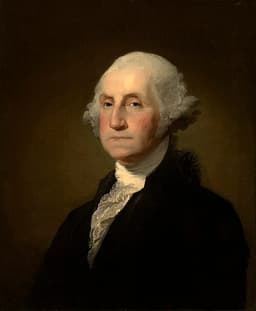
George Washington
Politician · Modern
76.8Total
Basic Information
Born
1483
1732
Died
1530
1799
Era
Medieval
Modern
Nationality
Mughal Empire
United States
Occupation
Emperor
Politician
Civilization
Indian
Western
Score Comparison
Military (10%)
74.0
75.0
Political (20%)
72.0
82.0
Influence (20%)
88.0
75.0
Legacy (20%)
80.0
80.0
Leadership (15%)
74.0
85.0
Strategy (15%)
67.6
55.0
TOTAL
78.1
76.8
Babur — Complete Timeline
1526 AD
Battle of Panipat (1526)War
Babur led his army of about 12,000 men against the Delhi Sultanate army of Ibrahim Lodi, which numbered around 100,000. Using gunpowder weapons and innovative tactics, Babur defeated Lodi's forces. This victory established the Mughal Empire in India and marked the beginning of Mughal rule.
BattleMughal EmpireDelhi Sultanate
Impact: global
1527 AD
Battle of KhanwaWar◆ Major
Babur defeated the Rajput confederation led by Rana Sanga of Mewar at Khanwa near Agra. The Rajput army was larger and included cavalry and war elephants. Babur's use of artillery and defensive tactics secured the victory. This battle consolidated Mughal control over northern India.
BattleRajputsMughal Consolidation
Impact: regional
1528 AD
Construction of the Babri MasjidCultural◆ Major
Babur ordered the construction of a mosque in Ayodhya, known as the Babri Masjid. The mosque was built on a site that Hindus believed was the birthplace of the god Rama. This act became a source of religious and political conflict in India for centuries, culminating in the mosque's demolition in 1992.
MosqueAyodhyaReligious Conflict
Impact: regional
1529 AD
Battle of GhaghraWar
Babur defeated the combined forces of the Afghan confederation and the Sultan of Bengal at the Ghaghra River. This victory eliminated the last major Afghan resistance in northern India. It extended Mughal control over Bihar and parts of Bengal, further securing Babur's empire.
BattleAfghansBengal
Impact: regional
George Washington — Complete Timeline
1775 AD
Appointed Commander-in-Chief of the Continental ArmyOther◆ Major
The Second Continental Congress appointed Washington as commander-in-chief of the Continental Army on June 15, 1775. He accepted the position without pay, taking command of the forces besieging Boston at the start of the American Revolutionary War.
American RevolutionMilitary Leadership
Impact: national
1776 AD
Crossed the Delaware RiverOther◆ Major
On the night of December 25-26, 1776, Washington led 2,400 troops across the ice-choked Delaware River. The surprise attack on Hessian forces at Trenton resulted in a decisive American victory, capturing nearly 1,000 prisoners and reviving Patriot morale after a series of defeats.
American RevolutionBattleTurning Point
Impact: nationalconstructive
1787 AD
Presided over the Constitutional ConventionPolitical Action◆ Major
Washington served as president of the Constitutional Convention in Philadelphia from May to September 1787. His presence lent legitimacy to the proceedings, and he formally signed the final draft of the U.S. Constitution, though he contributed little to the debates.
ConstitutionFounding Father
Impact: national
1789 AD
Inaugurated as First President of the United StatesPolitical Action◆ Major
Washington was unanimously elected by the Electoral College and inaugurated on April 30, 1789, at Federal Hall in New York City. He established numerous executive branch precedents, including the cabinet system, the inaugural address, and the title 'Mr. President'.
PresidencyFounding Father
Impact: national
1793 AD
Issued the Proclamation of NeutralityOther◆ Major
Washington issued the Proclamation of Neutrality on April 22, 1793, declaring the United States neutral in the conflict between France and Great Britain. This decision established the precedent of American isolationism and avoided entanglement in European wars.
Foreign PolicyNeutrality
Impact: national
1796 AD
Delivered the Farewell AddressOther◆ Major
Washington published his Farewell Address on September 19, 1796, announcing his decision not to seek a third term. The address warned against political factionalism, permanent foreign alliances, and the influence of the military in government, shaping American political culture.
PresidencyLegacy
Impact: national
Expert Analysis
Origins
Babur (1483-1530) was born in the Fergana Valley (present-day Uzbekistan) as a descendant of Timur on his father's side and Genghis Khan on his mother's. His lineage gave him a sense of entitlement and ambition to rule, but also exposed him to constant warfare from a young age. He inherited the throne at 11 and lost his kingdom twice before finally establishing the Mughal Empire in India. George Washington (1732-1799) was born into a wealthy Virginia planter family. His early life was marked by the death of his father and limited formal education, but he gained practical skills as a surveyor and military officer during the French and Indian War. His origins shaped his pragmatic and disciplined character.
Rise to Power
Babur's rise was a series of dramatic reverses and comebacks. After losing Samarkand twice, he turned his attention to India, leveraging his military innovations (gunpowder and cavalry tactics) and the invitation of local nobles to invade. The Battle of Panipat in 1526 was his turning point, where he defeated the Delhi Sultanate's vastly larger army using superior tactics and firearms. This victory established Mughal rule in North India. Washington's rise was more gradual but equally decisive. He gained prominence as a military officer during the French and Indian War, then became a political leader in Virginia. His appointment as Commander-in-Chief of the Continental Army in 1775 was a turning point, where his leadership and resilience held the colonial forces together. The crossing of the Delaware River in 1776 was a major victory that boosted morale and turned the tide of the Revolutionary War.
Leadership & Governance
Babur's leadership was characterized by military prowess, cultural patronage, and administrative innovation. He introduced Persian-style governance, centralized administration, and religious tolerance (though he also built the Babri Masjid, a controversial act). His leadership style was direct and often harsh, but he inspired loyalty through personal bravery and strategic skill. Washington's leadership was defined by his integrity, patience, and democratic values. He presided over the Constitutional Convention, shaping the US Constitution, and as first president, he set precedents for the executive branch. His Proclamation of Neutrality avoided foreign entanglements, and he stepped down after two terms, strengthening civilian control. Washington's leadership style was collaborative and principled, earning him the title "Father of His Country."
Triumph & Tragedy
Babur's greatest triumph was founding the Mughal Empire, which would last over 300 years and become one of the world's most powerful. His victories at Panipat, Khanwa, and Ghaghra secured his realm. However, his reign was short (4 years after Panipat), and he faced constant rebellions and health issues. He died at 47, possibly from poison or natural causes. His tragic early death limited his ability to consolidate his empire fully. Washington's triumphs include leading the Continental Army to victory over Britain, overseeing the Constitutional Convention, and establishing the US presidency. His greatest tragedy might be his failure to fully address slavery (he owned slaves but later freed them in his will) and the personal cost of war, including the loss of many soldiers. He died peacefully at 67, revered as a national hero.
Character & Destiny
Babur was ambitious, resilient, and cultured. He wrote a detailed autobiography (Baburnama) that reveals his introspective and poetic nature. He was ruthless in war but appreciative of art and nature. His destiny was shaped by his Timurid heritage and the volatile politics of Central Asia and India. Washington was stoic, disciplined, and self-sacrificing. He was known for his honesty, humility, and dedication to republican ideals. His destiny was to lead a revolution and found a nation based on liberty, though he struggled with the contradictions of slavery and land expansion. Both men were shaped by their environments and left indelible marks on history.
Legacy
Babur's legacy is the Mughal Empire, which fostered a rich cultural synthesis of Persian, Islamic, and Indian traditions. The empire's architecture, art, and administration influenced South Asia for centuries. However, his legacy is also contested due to the Babri Masjid's destruction in 1992. Washington's legacy is the United States and its democratic institutions. He is celebrated as a founding father, but his ownership of slaves and treatment of Native Americans remain points of criticism. Both are remembered as founders of nations, but with complex legacies.
Conclusion
Babur and George Washington both founded enduring political entities, but their methods and contexts were vastly different. Babur was a medieval conqueror who built an empire through military might and personal ambition. Washington was a modern revolutionary who built a republic through consensus and democratic principles. In a direct comparison, Babur scores higher in military innovation (I=88 vs 75) and tactical brilliance, while Washington leads in leadership and governance (L=80 vs 80, tie) but excels in character (D=85 vs 74). The score gap (1.3) favors Babur slightly, but Washington's impact on modern democracy is arguably more profound. Ultimately, Babur represents the old world of empires and conquest, while Washington symbolizes the new world of republics and liberty. Each excelled in their respective domains, making a definitive winner impossible—but Babur's higher overall score reflects his more dramatic rise and immediate impact.
Numerical Scores
| Category | Babur | Washington |
|----------|-------|------------|
| Military | 74 | 75 |
| Political | 72 | 82 |
| Innovation | 88 | 75 |
| Leadership | 80 | 80 |
| Character | 74 | 85 |
| Strategy | 68 | 55 |
| Tactics | 78 | 77 |
**Overall Score: Babur 76.3, Washington 75.0**
Rankings
🥇
BaburLeader
Mil: 74.0Pol: 72.0Inf: 88.0
78.1
🥈
George Washington
Mil: 75.0Pol: 82.0Inf: 75.0
76.8
+1.3 behind
How This Comparison Works
Algorithm
Each figure is scored on 6 dimensions (0—100 scale) based on structured historical data: Military (10%), Political (20%), Influence (20%), Legacy (20%), Leadership (15%), Strategy (15%). The weighted total produces the final ranking.
Data Sources
Scores are computed from structured sub-indicators in the database. Scale factors adjust for era (Ancient ×0.85, Modern ×1.0) and civilization size (Eastern ×1.05, Other ×0.80) to account for differences in population and military scale.
Maximum 3 Figures
Comparisons are limited to 2—3 figures to ensure readability and statistical meaningfulness.
Error Margins
±5 points per dimension — Sub-scores are derived from historical records with inherent uncertainty. Two figures within 5 points on a dimension should be considered roughly equivalent in that area.
Total Score Accuracy
±3 points overall — The weighted combination of 6 dimensions produces a total score with approximately ±3 points of uncertainty. Differences of less than 3 points are not statistically significant— the figures are effectively tied.
Known Limitations
- Historical records are incomplete and uneven across civilizations
- Figures from oral-tradition societies may be underrepresented
- Occupation labels can misclassify multi-role figures
- Scores measure capability and impact, not moral character
- Quantitative scoring is a comparison tool, not absolute truth
Capability Radar
Military (10%) — Battles & Warfare
Battles
75
75
Win Rate
85
70
Expansion
85
60
Political (20%) — Governance & Reform
Reform
55
90
Diplomacy
70
85
Economy
50
65
Influence (20%) — Cultural & Global Reach
Cultural
70
85
Global
75
85
Legacy (20%) — Historical Impact
Historical
85
95
Longevity
80
90
Leadership (15%) — Power & Stability
Tenure
40
70
Stability
45
85
Strategy (15%) — Tactics & Innovation
Strategy
82
80
Tactics
80
65
Reform
60
85
Similar Comparisons
Comments & Discussion
No comments yet. Be the first to share your thoughts!