Loading...
Dinh Tien Hoang vs George Washington
George Washington leads by 16.4 pts · 2 figures compared
…
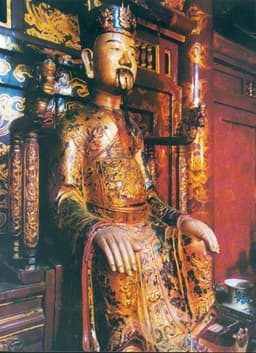
Dinh Tien Hoang
Emperor · Medieval
60.4Total
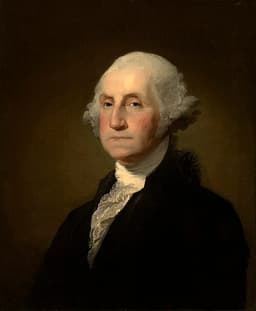
George Washington
Politician · Modern
76.8Total
Basic Information
Born
924
1732
Died
979
1799
Era
Medieval
Modern
Nationality
Vietnam
United States
Occupation
Emperor
Politician
Civilization
Eastern
Western
Score Comparison
Military (10%)
60.0
75.0
Political (20%)
72.0
82.0
Influence (20%)
65.0
75.0
Legacy (20%)
40.0
80.0
Leadership (15%)
77.2
85.0
Strategy (15%)
58.0
55.0
TOTAL
60.4
76.8
Dinh Tien Hoang — Complete Timeline
968 AD
Defeat of the Twelve WarlordsWar
Dinh Bo Linh, later known as Dinh Tien Hoang, unified Vietnam by defeating the Twelve Warlords who had divided the country after the collapse of Chinese rule. He established the Dinh dynasty and became the first emperor of an independent Vietnam.
UnificationDinh DynastyVietnamese Independence
Impact: nationalconstructive
Establishment of the Dinh DynastyPolitical Action◆ Major
Dinh Tien Hoang founded the Dinh dynasty and declared himself Emperor. He moved the capital to Hoa Lu and implemented administrative reforms to consolidate power. This marked the beginning of a new era of Vietnamese independence after centuries of Chinese domination.
Dynasty FoundingCapital MoveAdministrative Reform
Impact: nationalconstructive
979 AD
Assassination of Dinh Tien HoangPolitical Action◆ Major
Dinh Tien Hoang and his crown prince were assassinated by a court official while sleeping. The murder plunged the Dinh dynasty into chaos, leading to a succession crisis and eventual takeover by Le Hoan. The assassination ended the short-lived Dinh dynasty.
AssassinationSuccession CrisisEnd of Dinh Dynasty
Impact: nationaltragic
George Washington — Complete Timeline
1775 AD
Appointed Commander-in-Chief of the Continental ArmyOther◆ Major
The Second Continental Congress appointed Washington as commander-in-chief of the Continental Army on June 15, 1775. He accepted the position without pay, taking command of the forces besieging Boston at the start of the American Revolutionary War.
American RevolutionMilitary Leadership
Impact: national
1776 AD
Crossed the Delaware RiverOther◆ Major
On the night of December 25-26, 1776, Washington led 2,400 troops across the ice-choked Delaware River. The surprise attack on Hessian forces at Trenton resulted in a decisive American victory, capturing nearly 1,000 prisoners and reviving Patriot morale after a series of defeats.
American RevolutionBattleTurning Point
Impact: nationalconstructive
1787 AD
Presided over the Constitutional ConventionPolitical Action◆ Major
Washington served as president of the Constitutional Convention in Philadelphia from May to September 1787. His presence lent legitimacy to the proceedings, and he formally signed the final draft of the U.S. Constitution, though he contributed little to the debates.
ConstitutionFounding Father
Impact: national
1789 AD
Inaugurated as First President of the United StatesPolitical Action◆ Major
Washington was unanimously elected by the Electoral College and inaugurated on April 30, 1789, at Federal Hall in New York City. He established numerous executive branch precedents, including the cabinet system, the inaugural address, and the title 'Mr. President'.
PresidencyFounding Father
Impact: national
1793 AD
Issued the Proclamation of NeutralityOther◆ Major
Washington issued the Proclamation of Neutrality on April 22, 1793, declaring the United States neutral in the conflict between France and Great Britain. This decision established the precedent of American isolationism and avoided entanglement in European wars.
Foreign PolicyNeutrality
Impact: national
1796 AD
Delivered the Farewell AddressOther◆ Major
Washington published his Farewell Address on September 19, 1796, announcing his decision not to seek a third term. The address warned against political factionalism, permanent foreign alliances, and the influence of the military in government, shaping American political culture.
PresidencyLegacy
Impact: national
Expert Analysis
Dinh Tien Hoang vs George Washington
### The Founder and the Unifier
History rarely offers a clean comparison between two men who built nations from chaos, yet George Washington and Dinh Tien Hoang share this singular burden. One crossed the icy Delaware on a desperate Christmas night; the other crushed a dozen warlords to forge a kingdom from the ashes of a thousand years of Chinese rule. Both stood at the birth of their nations, but their paths—and their endings—could not have been more different. Washington died peacefully in his bed, hailed as the father of his country. Dinh Tien Hoang was stabbed to death in his sleep by a courtier, his dynasty shattered within months. What drove these two founders to such divergent fates? The answer lies not just in their times, but in the very marrow of their character.
### Origins
George Washington was born in 1732 into the Virginia gentry, a world of tobacco plantations and British deference. His father died when he was eleven, thrusting him into a life of self-reliance and land surveying. The American colonies were a restless frontier, full of opportunity and tension with the Crown. Washington absorbed the values of the Enlightenment—reason, order, and the belief that men could govern themselves—but he also learned the hard calculus of power from the wilderness and the French and Indian War.
Dinh Tien Hoang, born in 924 in what is now northern Vietnam, emerged from a far older, more brutal world. For nearly a thousand years, Vietnam had been a province of China, ruled by distant emperors. The collapse of the Tang Dynasty in 907 created a power vacuum, and the land splintered into a dozen warring lords—the Twelve Warlords. Dinh Bo Linh, as he was then known, grew up in a village of buffalo herders, but legend says he organized his playmates into mock armies, punishing disobedience with death. His era was one of constant warfare, where survival demanded ruthlessness and absolute loyalty.
### Rise to Power
Washington’s rise was a slow accumulation of reputation. He was not a brilliant military theorist—his strategic score of 65 reflects a man who often lost battles—but he was a master of endurance. In 1775, the Continental Congress appointed him commander of the Continental Army, a ragtag force of farmers and merchants. His great turning point came on Christmas night 1776, when he crossed the Delaware River to surprise Hessian forces at Trenton. It was a small victory, but it saved the revolution from collapse.
Dinh Tien Hoang’s rise was swifter and more violent. In 968, after years of campaigning, he defeated the last of the Twelve Warlords and declared himself Emperor. He took the reign name Dinh Tien Hoang, meaning “First Emperor of the Dinh.” Where Washington had to persuade, Dinh commanded. He moved his capital to Hoa Lu, a natural fortress of limestone mountains, and imposed a harsh but effective administrative system. His political score of 90.2 reflects a man who understood that in a world of chaos, power must be absolute.
### Leadership & Governance
Washington’s leadership was built on restraint. As president from 1789 to 1797, he refused titles like “Your Majesty,” insisted on being called “Mr. President,” and voluntarily stepped down after two terms. He presided over the Constitutional Convention in 1787, not as a dictator but as a chairman, letting the delegates argue while he guided the ship. His military genius was not in tactics but in holding an army together through starvation, betrayal, and cold. He was the father of American civil-military relations—a general who always deferred to civilian authority.
Dinh Tien Hoang’s governance was the opposite. He centralized power ruthlessly, executing anyone who challenged his rule. He placed five bronze statues of himself in front of the palace, a warning to all who might rebel. He married his daughters to powerful generals to secure alliances, but he never trusted anyone completely. His military score of 62 is lower than Washington’s 70, but his leadership score of 84.2 suggests a man who commanded absolute obedience through fear and reward. He built a stable kingdom, but it was a kingdom held together by his own iron will.
### Triumph & Tragedy
Washington’s greatest moment was not a battle but a resignation. In 1783, after winning the Revolutionary War, he voluntarily surrendered his commission to Congress. King George III reportedly said that if Washington did that, he would be “the greatest man in the world.” It was an act that stunned Europe, where generals typically seized power. His tragedy was the unfulfilled promise of the American Revolution—the persistence of slavery and the failure to fully unite the states, a problem he left for future generations.
Dinh Tien Hoang’s triumph was the unification of Vietnam, a feat that had eluded his predecessors for centuries. He gave his people a national identity independent of China. But his tragedy was swift and brutal. In 979, while he and his crown prince slept, a court official named Do Thich crept into their chamber and murdered them both. The motive remains unclear—perhaps a personal grudge, perhaps a power play. The Dinh dynasty collapsed within months, plunging Vietnam into another cycle of chaos. Washington died of a throat infection at age 67, surrounded by family. Dinh died at 55, betrayed in the dark.
### Character & Destiny
Washington’s character was forged in the Enlightenment. He believed in duty, honor, and the idea that power must be checked. He was reserved, almost cold, but his self-control was his greatest weapon. He could have been a king, but he chose to be a citizen. That choice shaped American destiny.
Dinh Tien Hoang’s character was forged in war. He trusted no one, and with good reason—betrayal was the currency of his world. He built a kingdom on fear, and fear destroyed him. His assassin was a man he had promoted, a man who slept in the palace. Dinh’s tragedy was not that he was cruel, but that he could not imagine a world where power could be shared.
### Legacy
Washington’s legacy is the American presidency itself. Every president who steps down after two terms, every general who salutes a civilian, every peaceful transfer of power—these are Washington’s monuments. He is remembered as the indispensable man, the one who could have taken everything but gave it all away.
Dinh Tien Hoang’s legacy is more fragile. He is remembered as the father of Vietnamese independence, the man who broke the Chinese yoke. But his dynasty died with him. Later Vietnamese historians honored him as a unifier, but his methods were too harsh to last. His capital at Hoa Lu remains a historical site, a reminder that founding a nation requires more than iron will—it requires institutions that survive the founder.
### Conclusion
Standing at the edge of Hoa Lu’s limestone cliffs, you can almost feel the weight of Dinh’s ambition. And standing in the quiet Virginia fields of Mount Vernon, you sense Washington’s restraint. Both men built nations from nothing. But one built a system that outlived him; the other built a kingdom that died with him. The difference was not in their strength, but in their vision of what power should become. Washington understood that the greatest leader is the one who makes himself unnecessary. Dinh never learned that lesson—and it cost him everything.
Rankings
🥇
George WashingtonLeader
Mil: 75.0Pol: 82.0Inf: 75.0
76.8
🥈
Dinh Tien Hoang
Mil: 60.0Pol: 72.0Inf: 65.0
60.4
+16.4 behind
How This Comparison Works
Algorithm
Each figure is scored on 6 dimensions (0—100 scale) based on structured historical data: Military (10%), Political (20%), Influence (20%), Legacy (20%), Leadership (15%), Strategy (15%). The weighted total produces the final ranking.
Data Sources
Scores are computed from structured sub-indicators in the database. Scale factors adjust for era (Ancient ×0.85, Modern ×1.0) and civilization size (Eastern ×1.05, Other ×0.80) to account for differences in population and military scale.
Maximum 3 Figures
Comparisons are limited to 2—3 figures to ensure readability and statistical meaningfulness.
Error Margins
±5 points per dimension — Sub-scores are derived from historical records with inherent uncertainty. Two figures within 5 points on a dimension should be considered roughly equivalent in that area.
Total Score Accuracy
±3 points overall — The weighted combination of 6 dimensions produces a total score with approximately ±3 points of uncertainty. Differences of less than 3 points are not statistically significant— the figures are effectively tied.
Known Limitations
- Historical records are incomplete and uneven across civilizations
- Figures from oral-tradition societies may be underrepresented
- Occupation labels can misclassify multi-role figures
- Scores measure capability and impact, not moral character
- Quantitative scoring is a comparison tool, not absolute truth
Capability Radar
Military (10%) — Battles & Warfare
Battles
70
75
Win Rate
75
70
Expansion
65
60
Political (20%) — Governance & Reform
Reform
70
90
Diplomacy
65
85
Economy
60
65
Influence (20%) — Cultural & Global Reach
Cultural
65
85
Global
55
85
Legacy (20%) — Historical Impact
Historical
75
95
Longevity
70
90
Leadership (15%) — Power & Stability
Tenure
60
70
Stability
55
85
Strategy (15%) — Tactics & Innovation
Strategy
70
80
Tactics
65
65
Reform
60
85
Similar Comparisons
Comments & Discussion
No comments yet. Be the first to share your thoughts!