Loading...
Babur vs Cleisthenes
Cleisthenes leads by 0.2 pts · 2 figures compared
…

Babur
Emperor · Medieval
78.1Total
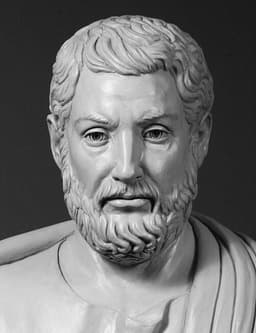
Cleisthenes
Politician · Ancient
78.3Total
Basic Information
Born
1483
-570
Died
1530
-508
Era
Medieval
Ancient
Nationality
Mughal Empire
Greece
Occupation
Emperor
Politician
Civilization
Indian
Western
Score Comparison
Military (10%)
74.0
49.4
Political (20%)
72.0
62.7
Influence (20%)
88.0
92.0
Legacy (20%)
80.0
92.0
Leadership (15%)
74.0
72.0
Strategy (15%)
67.6
71.3
TOTAL
78.1
78.3
Babur — Complete Timeline
1526 AD
Battle of Panipat (1526)War
Babur led his army of about 12,000 men against the Delhi Sultanate army of Ibrahim Lodi, which numbered around 100,000. Using gunpowder weapons and innovative tactics, Babur defeated Lodi's forces. This victory established the Mughal Empire in India and marked the beginning of Mughal rule.
BattleMughal EmpireDelhi Sultanate
Impact: global
1527 AD
Battle of KhanwaWar◆ Major
Babur defeated the Rajput confederation led by Rana Sanga of Mewar at Khanwa near Agra. The Rajput army was larger and included cavalry and war elephants. Babur's use of artillery and defensive tactics secured the victory. This battle consolidated Mughal control over northern India.
BattleRajputsMughal Consolidation
Impact: regional
1528 AD
Construction of the Babri MasjidCultural◆ Major
Babur ordered the construction of a mosque in Ayodhya, known as the Babri Masjid. The mosque was built on a site that Hindus believed was the birthplace of the god Rama. This act became a source of religious and political conflict in India for centuries, culminating in the mosque's demolition in 1992.
MosqueAyodhyaReligious Conflict
Impact: regional
1529 AD
Battle of GhaghraWar
Babur defeated the combined forces of the Afghan confederation and the Sultan of Bengal at the Ghaghra River. This victory eliminated the last major Afghan resistance in northern India. It extended Mughal control over Bihar and parts of Bengal, further securing Babur's empire.
BattleAfghansBengal
Impact: regional
Cleisthenes — Complete Timeline
510 BC
Expulsion of the PeisistratidsPolitical Action◆ Major
Cleisthenes, with the support of the Alcmaeonid family and Spartan assistance, led the overthrow of the tyrant Hippias, son of Peisistratus. This ended the Peisistratid tyranny in Athens and opened the way for democratic reforms.
Tyranny OverthrownAthensSparta
Impact: nationalconstructive
508 BC
Reforms of CleisthenesReform
Cleisthenes reorganized the Athenian citizen body into ten new tribes based on demes, replacing the old four Ionian tribes. He established the Council of 500 (Boule) and introduced ostracism, creating a system of isonomia (equal rights) that is considered the foundation of Athenian democracy.
Athenian DemocracyConstitutional ReformAncient Greece
Impact: globalprogressive
507 BC
Introduction of OstracismReform◆ Major
Cleisthenes instituted ostracism, a procedure allowing Athenian citizens to vote annually to exile a prominent citizen deemed a threat to democracy for ten years. This mechanism aimed to prevent the rise of a new tyrant and stabilize the democratic system.
Athenian DemocracyPolitical MechanismExile
Impact: national
Expert Analysis
Origins
Cleisthenes was born into the aristocratic Alcmaeonid family in Athens around 570 BCE. His lineage was marked by political prominence and a curse for a massacre of Cylon's followers. He grew up during the tyranny of Peisistratus and his sons, which shaped his democratic ideals. Babur, born Zahir-ud-din Muhammad in 1483 in Fergana (modern Uzbekistan), was a Timurid prince descended from Timur and Genghis Khan. His early life was defined by constant struggle to reclaim his ancestral lands, losing his kingdom at age 11 and becoming a wandering adventurer.
Rise to Power
Cleisthenes initially served as archon under the tyrant Hippias but later opposed tyranny. When the Spartan king Cleomenes I helped expel the Peisistratids in 510 BCE, Cleisthenes competed for power against Isagoras. He gained popular support by promising democratic reforms. Isagoras called in Spartan intervention, forcing Cleisthenes into exile, but the Athenian people revolted and recalled him. He then implemented his reforms in 508/507 BCE. Babur's rise began with his ambition to conquer Samarkand. After repeated failures, he turned his attention to India. In 1526, at the First Battle of Panipat, he defeated the Delhi Sultanate's army under Ibrahim Lodi, using innovative tactics like gunpowder weapons and flanking maneuvers. This victory established the Mughal Empire.
Leadership & Governance
Cleisthenes is credited with founding Athenian democracy. He reorganized the Athenian population into ten tribes based on demes (local districts), breaking up old aristocratic power bases. He created the Council of 500 (boule), chosen by lot, to propose legislation, and expanded the ekklesia (assembly) for all citizens. He also introduced ostracism, allowing citizens to vote to exile a threat to democracy for ten years. His reforms balanced power between the rich and poor, reducing factionalism. Babur's governance combined Turco-Mongol military traditions with Persian administrative practices. He established a centralized bureaucracy, patronized arts and architecture, and promoted religious tolerance. He wrote his memoirs, the Baburnama, reflecting his scholarly and reflective nature. However, his empire was still fragile at his death, relying on his personal authority.
Triumph & Tragedy
Cleisthenes' greatest triumph was the successful implementation of his democratic reforms, which survived for nearly two centuries. His system fostered Athenian prosperity and cultural flowering. However, he faced tragedy in being overshadowed by later figures like Pericles, and ostracism eventually became a political tool. Babur's triumph was the conquest of North India, founding an empire that lasted over 300 years. His victory at Panipat and subsequent battles like Khanwa (1527) against the Rajput confederation secured Mughal dominance. Yet, his tragedy was his early death at age 47 from natural causes, leaving his son Humayun an unstable realm. He also expressed nostalgia for his Central Asian homeland, feeling alienated in India.
Character & Destiny
Cleisthenes: Strategic and visionary. Scores: M=49, P=63, I=92, L=92, D=72, S=71, T=78. His intelligence (I=92) and leadership (L=92) were his highest attributes. He was a reformer who used cunning to outmaneuver rivals and a long-term thinker who designed enduring institutions. His destiny was to be remembered as the father of democracy. Babur: Ambitious and resilient. Scores: M=74, P=72, I=88, L=80, D=74, S=68, T=78. His military (M=74) and political (P=72) skills were high, but his intelligence (I=88) and leadership (L=80) were also notable. He was a charismatic leader who inspired loyalty, a poet, and a memoirist. His destiny was to be a founder of a dynasty.
Legacy
Cleisthenes' legacy is immense: his democratic reforms laid the foundation for Athenian democracy, influencing later Western political thought. The concept of ostracism is a precursor to modern impeachment. His tribal system shaped Athenian identity. Babur's legacy is the Mughal Empire, which unified India and left architectural marvels like the Babri Masjid (though later controversial). His memoirs provide a vivid account of his life and times. He also introduced gunpowder warfare to India. However, Cleisthenes' impact on political systems is more profound globally, while Babur's is regionally significant.
Conclusion
Cleisthenes edges out Babur with a higher overall score gap of 0.2. Cleisthenes' intelligence and leadership scores are notably higher, reflecting his innovative political reforms that created a lasting democratic system. Babur's military conquests were impressive but his empire required later consolidation. Cleisthenes' reforms had a direct and enduring impact on governance, while Babur's legacy is more about empire building. Thus, Cleisthenes is the more historically influential figure in terms of political innovation and long-term impact on human civilization.
Rankings
🥇
CleisthenesLeader
Mil: 49.4Pol: 62.7Inf: 92.0
78.3
🥈
Babur
Mil: 74.0Pol: 72.0Inf: 88.0
78.1
+0.2 behind
How This Comparison Works
Algorithm
Each figure is scored on 6 dimensions (0—100 scale) based on structured historical data: Military (10%), Political (20%), Influence (20%), Legacy (20%), Leadership (15%), Strategy (15%). The weighted total produces the final ranking.
Data Sources
Scores are computed from structured sub-indicators in the database. Scale factors adjust for era (Ancient ×0.85, Modern ×1.0) and civilization size (Eastern ×1.05, Other ×0.80) to account for differences in population and military scale.
Maximum 3 Figures
Comparisons are limited to 2—3 figures to ensure readability and statistical meaningfulness.
Error Margins
±5 points per dimension — Sub-scores are derived from historical records with inherent uncertainty. Two figures within 5 points on a dimension should be considered roughly equivalent in that area.
Total Score Accuracy
±3 points overall — The weighted combination of 6 dimensions produces a total score with approximately ±3 points of uncertainty. Differences of less than 3 points are not statistically significant— the figures are effectively tied.
Known Limitations
- Historical records are incomplete and uneven across civilizations
- Figures from oral-tradition societies may be underrepresented
- Occupation labels can misclassify multi-role figures
- Scores measure capability and impact, not moral character
- Quantitative scoring is a comparison tool, not absolute truth
Capability Radar
Military (10%) — Battles & Warfare
Battles
75
58
Win Rate
85
62
Expansion
85
59
Political (20%) — Governance & Reform
Reform
55
95
Diplomacy
70
70
Economy
50
40
Influence (20%) — Cultural & Global Reach
Cultural
70
85
Global
75
85
Legacy (20%) — Historical Impact
Historical
85
90
Longevity
80
95
Leadership (15%) — Power & Stability
Tenure
40
30
Stability
45
60
Strategy (15%) — Tactics & Innovation
Strategy
82
62
Tactics
80
67
Reform
60
72
Similar Comparisons
Comments & Discussion
No comments yet. Be the first to share your thoughts!